
New vs. Second-Hand Greenhouse: Which Should You Choose?
A used greenhouse can be a smart find when its history is clear, its parts are present, and the structure suits your site. It can also become an open-ended project if panels, fasteners, doors, vents, or instructions are missing. Before comparing offers, decide how much inspection, transport, repair, and problem-solving you are genuinely prepared to take on.
A new greenhouse offers a known starting point: you can select a current configuration, plan the foundation around its dimensions, and assemble from a complete set of specified components. That does not remove the need for careful site preparation or installation, but it makes the project easier to scope. For many gardeners, that clarity is the central value rather than a feature list.
The right choice depends on the condition of the particular used greenhouse, not on the word “used” alone. A lightly used, carefully dismantled structure may be worthwhile. A weathered model with uncertain parts and an awkward footprint may not be, even if it looks attractive in photos. Use this guide to compare the full project, from inspection to long-term upkeep.
Stage one
Start with the job your greenhouse must do
Begin with your purpose, because it determines whether a used structure is truly a fit. Are you raising seedlings, extending seasonal growing, sheltering tender containers, or creating a garden destination? Consider how many people will use it, how often you expect to access it, and whether shelving, benches, or a work surface belong in the plan. A greenhouse that is charming but undersized can disappoint just as quickly as one with damaged parts.
Next, walk the proposed site. Note sun through the growing season, shade from trees or buildings, access from the house, nearby water, and space for doors to open. A second-hand greenhouse must fit the available footprint exactly or be altered with parts and skills you may not have. With a new greenhouse, you can choose a format that works with circulation and the garden layout from the outset. Also consider who will handle the work if the project becomes more demanding than expected. A used structure may call for careful lifting, sorting, and adjustment, while a new installation still benefits from realistic preparation and help.
Sketch your intended uses before shopping, including propagation, potting, storage of empty pots, and room to move comfortably.
Measure the clear site area, approach path, and door swing zone rather than relying on an estimated corner of the yard.
For a flexible freestanding starting point, explore a standard Classic greenhouse that can be planned around the way you garden.
Stage two
Inspect a used frame before you commit
Do not assess a used greenhouse from a distant overall photograph. Examine the frame in person wherever possible, looking along rails and uprights for bends, twists, impact damage, corrosion, worn finishes, and improvised repairs. Check joints closely, especially at the base, roof line, door opening, and ventilation points. A frame may appear intact when assembled but reveal distortion once it is dismantled and handled.
Ask how long the greenhouse has stood, whether it has been moved before, and why it is being sold. Those answers are useful context, not proof of condition. Look for signs that the base shifted, glazing rattled, or water repeatedly collected around the structure. If the seller cannot allow a careful inspection, assume uncertainty remains and decide whether that uncertainty suits your budget and tolerance for remedial work.
Bring a tape measure, photos of your site, gloves, and a simple written checklist so the inspection stays systematic.
Photograph every joint, door track, vent mechanism, and unusual repair before arranging collection or dismantling.
If you prefer to begin with a specified structure, consider a full-size regular Lean-To greenhouse for a wall-side growing area planned as one project.
Stage three
Account for glazing and moving parts
Glazing deserves the same scrutiny as the frame. Count every panel and inspect edges, corners, holes, cracks, clouding, and chips. Ask whether any panes have been substituted with a different material or cut on site. Glass and panel dimensions may look interchangeable until reassembly exposes a mismatch. Handle existing glazing cautiously during dismantling; even usable panels can be vulnerable once clips and frame support are removed.
Open and close every door and vent yourself. They should move without excessive force, rubbing, lifting, or sticking. Check hinges, handles, catches, stays, rollers, seals, clips, and any automatic opening equipment as separate items. These components are easy to overlook in a listing yet central to everyday use. A greenhouse that cannot be ventilated or secured properly may require a more involved repair than its appearance suggests.
Count panels and retaining pieces together; a complete pane is not useful if its compatible clips or seals are absent.
Test openings in several positions and note whether movement changes when you gently support the surrounding frame.
A complete new kit can simplify this stage; see the standard Classic greenhouse range when dependable everyday openings are a priority.
Stage four
Make a complete-parts inventory
A used greenhouse should be sold as a documented collection of parts, not merely as a standing structure. Request an assembly manual, parts list, model name, original dimensions, and clear photos before collection. During dismantling, label rails, posts, brackets, doors, roof pieces, and hardware by location. Put fasteners in marked bags. Without this discipline, reassembly can become a frustrating puzzle where a small missing bracket holds up the entire build.
Separate essential components from nice-to-have accessories. Structural rails, base elements, glazing, door hardware, vents, fixings, and seals belong in the essential category. Staging, shelves, hooks, and decorative details may be replaceable or optional. Confirm that the used greenhouse includes what is needed for your intended layout rather than assuming accessories shown in old photos are included. A written inventory protects both buyer and seller from misunderstandings.
Compare physical parts against the manufacturer’s manual, not just the seller’s recollection of what was originally supplied.
Label parts as they come down and take wide photos of each elevation before dismantling begins.
For a wall-oriented plan with known components, look at a full-size regular Lean-To greenhouse kit before taking on an uncertain parts hunt.
Stage five
Price the whole project, not the listing
The initial amount is only one line in a new vs second hand greenhouse comparison. For a used structure, allow for inspection trips, careful dismantling, packing materials, vehicle or professional transport, replacement pieces, cleaning supplies, a new base, and the time needed to sort and rebuild it. If help is needed for glazing or lifting, include that in your planning. A low purchase amount can lose its appeal when these practical tasks accumulate.
A new greenhouse also requires a realistic project budget. Site preparation, foundation materials, drainage decisions, installation help, and interior growing equipment are separate considerations from the structure itself. The advantage is that you can request current information for the selected configuration and plan in sequence. Compare quotations and inclusions carefully, and avoid treating either a used asking amount or a new product price as the full cost of ownership.
Write two project lists: unavoidable costs and possible contingencies, then compare the totals rather than headline amounts.
Assign a value to your time if dismantling, cleaning, sourcing parts, and troubleshooting would replace weekends in the garden.
When you want a defined starting specification, review a standard Classic greenhouse option alongside the full used-project estimate.
Site and setup
Match the structure to its new location
A greenhouse that worked beautifully in one garden may not suit another. The original owner’s site could have had different sun, exposure, ground conditions, access, and surrounding shelter. Check whether the used dimensions allow practical paths around the structure and whether rainwater runoff, trees, fences, or rooflines create complications. A wall-side design also depends on the condition, orientation, and usable length of the selected wall.
Plan the foundation before collection or delivery. The base needs to be level, stable, and prepared according to the requirements of the chosen product or the condition of the used structure. Do not try to correct major frame irregularities by forcing pieces onto an uneven base. Where local rules, setbacks, homeowner association requirements, or other permissions may apply, check with the relevant local authority or property manager before work begins.
Check access for long rails and glazing panels from the street or driveway to the final installation location.
Confirm wall condition and clearance around downspouts, windows, vents, and utilities before choosing a wall-side greenhouse.
For a purpose-designed wall installation, consider a full-size regular Lean-To greenhouse design that aligns with the available wall and garden circulation.
Future ownership
Think about repairs, support, and upkeep
Before buying used, find out whether replacement parts are still identifiable and obtainable for that particular model. A seller’s claim that it is “complete” does not answer what happens if a clip breaks, a panel is damaged during installation, or a door component wears out later. Brand, model, age, and retained documentation all affect the chance of finding compatible replacements. Avoid assuming that visually similar components will fit safely.
New ownership can make future planning more straightforward because the model, instructions, and currently offered options are known at the time of purchase. Still, maintain the greenhouse: keep drainage areas clear, clean surfaces with appropriate care, inspect seals and moving parts, and address small alignment issues promptly. Whether new or used, regular attention preserves usability. Store manuals, spare pieces, and your installation photos somewhere accessible for future maintenance.
Ask the seller for original paperwork, spare clips, unused seals, and any parts removed during prior repairs.
Keep a maintenance record with photos so future adjustments are based on what changed, not memory.
For a current model to build into your maintenance plan, browse a standard Classic greenhouse collection with the documentation you need from day one.
Final decision
Choose certainty or a restoration project
A second-hand greenhouse is a good choice when it passes a detailed inspection, comes with its essential components, fits the site without compromise, and leaves room in your plan for collection and reassembly. It can be especially appealing to a hands-on gardener who enjoys restoration and has safe transport, patient helpers, and flexibility. The decision becomes weaker when the model is uncertain, parts are missing, or the seller cannot demonstrate how it goes together.
Choose new when your priority is confidence in what you are ordering and a cleaner route from site preparation to planting. It is also sensible when the greenhouse will be a visible architectural feature, a wall-side installation needs accurate planning, or you do not want to spend time resolving unknowns. Review applicable written product conditions, scope, and care guidance before purchase. Before deciding, list unresolved questions for each option: for used, documentation, condition, transport, and replacement parts; for new, layout, foundation, access, and accessories. If either route depends on assumptions you cannot verify, pause rather than letting an attractive listing or preferred design decide for you.
Walk away from a used offer when core components, model identification, or a safe collection plan remain unclear.
Choose the option that leaves you ready to garden, rather than committed to repairs you do not want to manage.
To plan a polished wall-side project from the outset, explore a full-size regular Lean-To greenhouse for a wall suited to your chosen garden wall.
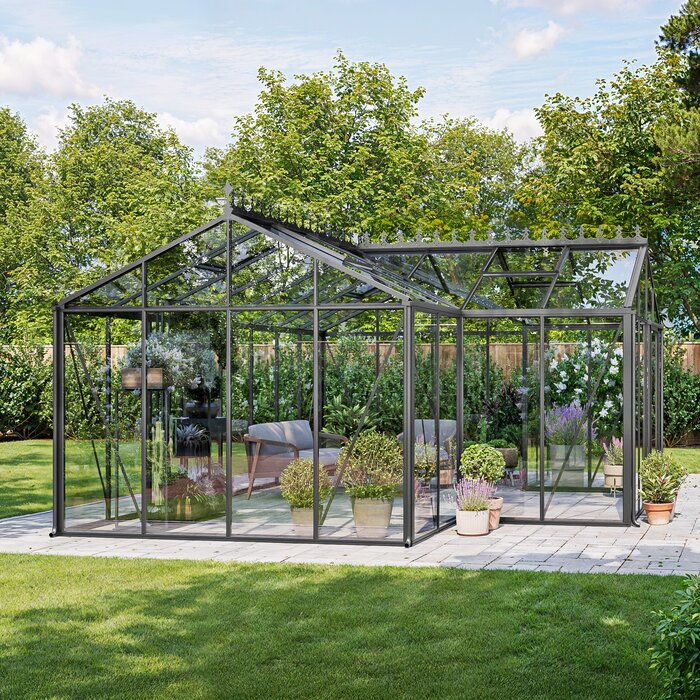
Comparison
New versus second-hand at a glance
Use this matrix to compare project realities rather than assuming one route is always cheaper or better. The condition and completeness of a specific used greenhouse can change the result, while a new model offers a different kind of planning clarity.
| Decision factor | New greenhouse | Second-hand greenhouse |
|---|---|---|
| Condition | Known at ordering; inspect after delivery. | Must be verified component by component before purchase. |
| Parts completeness | Supplied to the selected current configuration. | May be complete, partial, mixed, or undocumented. |
| Site fit | Choose dimensions and layout for your site. | Existing dimensions may force compromises in placement. |
| Assembly planning | Instructions and component sequence support preparation. | Requires labeling, inventory, and careful reassembly planning. |
| Transport | Plan around packaged components and site access. | Dismantling, protection, loading, and panel handling are critical. |
A practical decision process
Give both options the same disciplined review. The goal is not to justify the first attractive listing, but to choose a greenhouse you can install, use, and maintain confidently.
01
Define the growing brief
List crops, storage, potting needs, expected users, and the level of visual importance the greenhouse will have in your garden.
02
Survey the site
Measure the footprint, access route, clearances, sun, wall opportunities, and foundation area before looking seriously at any particular structure.
03
Inspect or specify
For used, inspect every structural and moving component. For new, select a configuration that answers your site and use requirements.
04
Build the project estimate
Include base work, transport or delivery arrangements, installation labor, tools, accessories, repairs, and a reasonable contingency for unknowns.
05
Confirm before committing
Check documentation, written inclusions, applicable conditions, local planning questions, and the safe sequence for installation before finalizing your choice.
Used greenhouse inspection checklist
Take this list to the viewing and record answers with photos. If a key point cannot be checked, treat it as an unresolved risk rather than a minor detail.
01. Identify the manufacturer, model, approximate age, overall dimensions, and whether an assembly manual is available.
02. Inspect frame rails, posts, corners, and base pieces for bends, corrosion, cracks, or unapproved-looking repairs.
03. Count all glazing panels and inspect them for chips, cracks, cloudy areas, mismatched materials, and damaged edges.
04. Operate doors, vents, catches, hinges, rollers, and stays; note sticking, looseness, poor alignment, or missing hardware.
05. Confirm essential fixings, clips, seals, brackets, and fasteners are included, sorted, and compatible with the structure.
06. Ask how the greenhouse will be dismantled, labeled, protected, loaded, and safely transported to your property.
07. Measure your site and route again, including gates, turns, overhead obstacles, and room for careful panel handling.
08. Check whether replacement components can be identified before purchase if anything is damaged or missing later.
Questions buyers ask
Is a used greenhouse always the lower-cost choice?
Not necessarily. The purchase amount is only part of the project. Dismantling, transport, replacement components, cleaning, base work, and installation time can materially change the comparison. Assess the complete project cost and effort against a current quotation for a new greenhouse, using your own site and support needs.
What should make me walk away from a used greenhouse?
Walk away if the frame appears distorted, glazing is extensively damaged, vital hardware is missing, the model cannot be identified, or the seller will not allow a proper inspection. Also reconsider when collection requires unsafe handling or the greenhouse simply does not fit your site without major alteration.
Can I move a greenhouse that is already assembled?
Many structures need to be dismantled for safe transport, especially where glazing and long frame members are involved. The correct approach depends on the particular model and its condition. Photograph, label, and inventory everything, and use suitable handling help rather than trying to rush the process.
How important is the original instruction manual?
It is very important. The manual helps identify parts, assembly order, fixing locations, and compatible components. Without it, you may spend considerable time reconstructing the layout from photos. If a used seller does not have the manual, try to establish the exact model before making a commitment.
Do I need to check permits for a greenhouse?
Requirements can depend on location, size, placement, property rules, and other local factors. Do not rely on a neighbor’s experience or a general online answer. Check with the relevant local authority and, where applicable, your homeowner association or property manager before installation.
Should I insure a greenhouse?
Insurance needs and coverage vary by policy, property, location, and insurer. If coverage matters to your decision, speak with your insurer before purchase and explain the type of structure and intended location. Ask for written clarification rather than assuming a greenhouse is automatically included.
Explore greenhouse options
Buy the greenhouse that fits the whole project
The best new vs second hand greenhouse choice is the one that matches your site, skills, schedule, and appetite for uncertainty. A carefully inspected used greenhouse can be rewarding, but only when completeness and condition are demonstrated. A new greenhouse brings a more defined route to a finished garden space.
Make the decision after measuring the site, reviewing the full project scope, and checking what support you will need at installation and later. Bloomcabin can help you explore greenhouse formats that suit a planned garden project, whether your priority is freestanding flexibility or a wall-side growing space.
Start with the format that works for your garden, then plan the foundation, access, and growing layout around it.
