
Pergolas for Windy and Coastal Locations: What to Consider
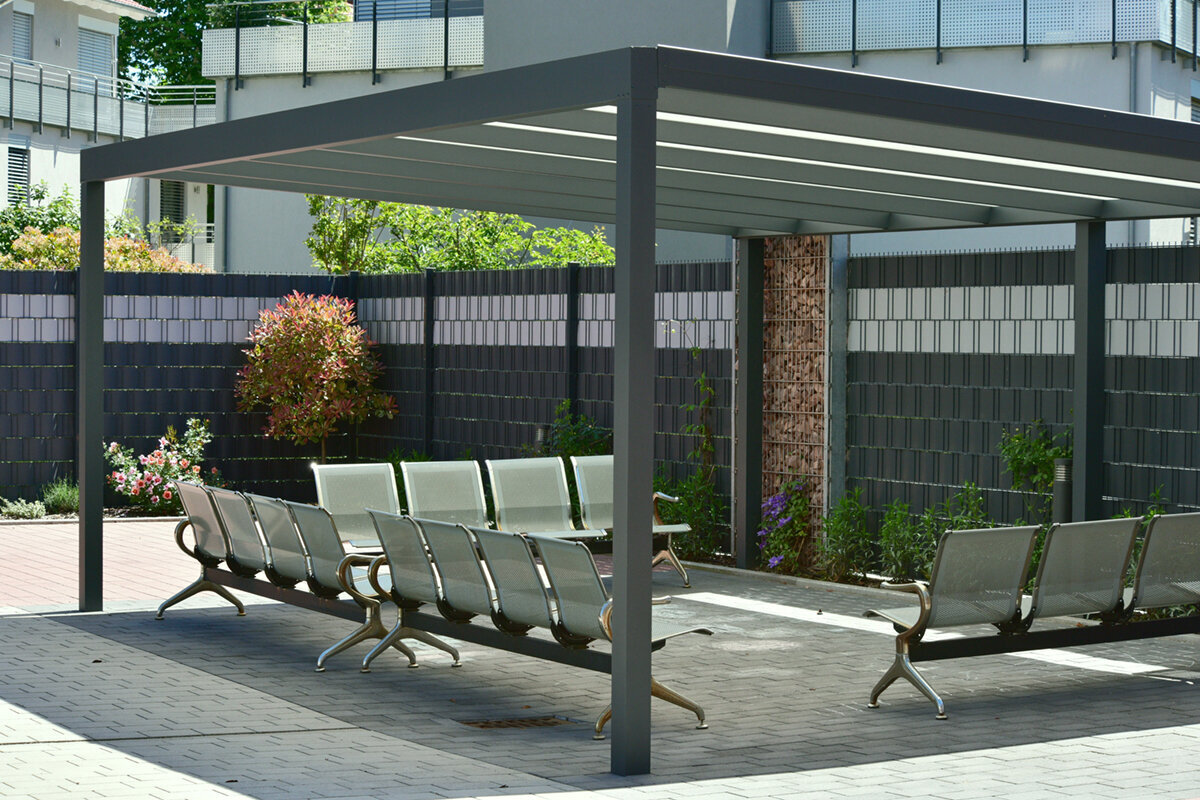
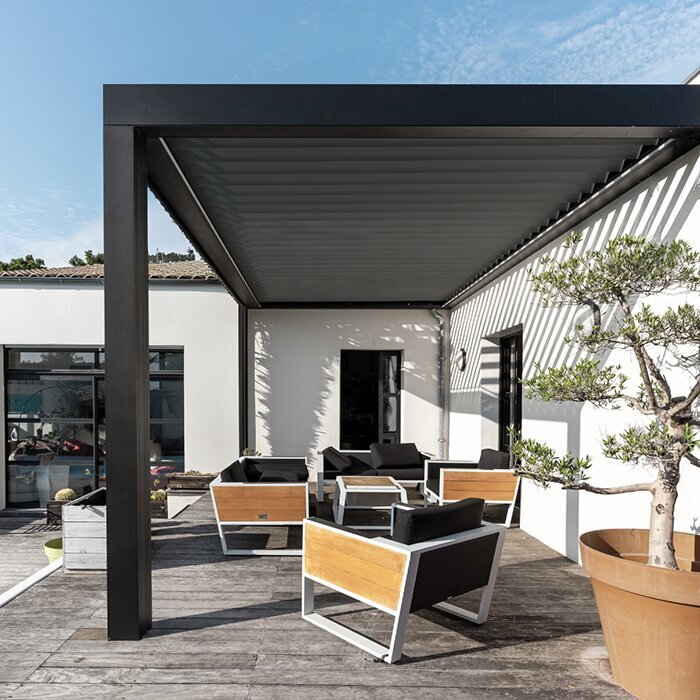
A coastal deck or wind-swept terrace can be a wonderful place for an aluminum pergola, but it asks more of the planning process. Before comparing finishes or accessories, assess how wind reaches the structure, what supports it, and how salt-laden air affects the maintenance routine.
Wind is rarely uniform across a property. It can funnel between buildings, accelerate around corners, rise from an open shoreline, or sweep down a sloped yard. A spot that feels calm while you visit may behave very differently during a seasonal storm. Start by observing the intended location over time and by asking local installers or contractors what they see on comparable nearby sites.
Coastal exposure adds another layer of consideration. Airborne salt, sand, moisture, and frequent weather changes can collect on outdoor surfaces and in less visible joints. That does not make a pergola unsuitable; it means material care, access for cleaning, drainage routes, and the placement of nearby landscaping deserve attention from the outset.
The most useful buying decision combines a realistic site assessment with the documentation for the exact pergola configuration under consideration. Treat wind guidance, anchoring details, and operating instructions as connected parts of one plan. A thoughtful approach helps you choose an outdoor structure that suits how you actually use the patio, rather than simply filling an empty area.
Site assessment · 01
Start with the wind path across your property
Look beyond a broad description such as “near the coast” or “a windy terrace.” Stand in the proposed location and identify where gusts arrive, where they rebound from walls, and where they pass through gaps. Open water, a long driveway, neighboring rooflines, and a hill crest can all alter the experience. Take notes during different weather conditions, including when the patio is not in use.
Also consider the outdoor room you are trying to create. A pergola placed tightly against a busy circulation route or at the unprotected edge of a deck may be harder to use and care for than one moved slightly inward. Positioning can preserve a view while allowing room for safe access, cleaning, and a sensible relationship to doors, grills, planting beds, and seating. Photographs and short notes can make these observations easier to compare later. Record the direction of gusts, weather conditions, and changes caused by open doors, neighboring construction, or seasonal vegetation.
- Mark exposed edges, corner turbulence, and gaps between buildings before choosing the structure’s orientation or footprint.
- Check whether trees, fences, or neighboring buildings provide shelter today and whether that shelter may change over time.
For adaptable shade planning, explore a bioclimatic pergola for exposed patios alongside the site layout.
Design choice · 02
Match the pergola type to everyday use
Begin with the outdoor experience you want most often: a defined dining area, a visual frame for a terrace, or a flexible overhead setting for changing daylight. A regular pergola may be the straightforward choice when the aim is an architectural structure with a simpler visual presence. A bioclimatic design may appeal when adjustable overhead elements are part of the planned use. Compare the exact options, not broad categories alone.
In an exposed location, accessories should be considered as part of the overall configuration rather than added on impulse later. Screens, side elements, lighting, or other additions can change how the space feels and how it is used. Discuss their suitability for the selected product and site with the supplier and installer. Keep a clear route around the structure for inspection and seasonal cleaning. Think about how the space will be used when weather changes unexpectedly. A dining layout, lounge area, or walkway may need different clearances and a different relationship to overhead coverage.
- Choose based on shade preferences, patio use, and the exact configuration documented for your selected product.
- Avoid treating optional sides or screens as universal wind solutions; assess their intended use and operating guidance first.
If a clean architectural frame is your priority, compare a regular pergola for a coastal terrace with the available configuration details.
Product documentation · 03
Use wind information in the right context
A wind figure is meaningful only when read with its conditions. Bloomcabin pergolas are specified for wind speeds up to 30 m/s, subject to the relevant product configuration, installation requirements and operating guidance. That wording is a reason to review the exact documentation closely, not a substitute for a site assessment. An exposed corner lot, elevated deck, or shoreline terrace can require project-specific discussion.
Ask which details apply to your chosen dimensions, roof arrangement, accessories, and installation method. Clarify what the guidance says about preparation for severe weather, normal operation, and any components that need particular attention. Keep these instructions with your project records. If a local contractor, engineer, or installer identifies unusual exposure or support concerns, incorporate their recommendations before work begins. When reviewing documents, make a list of assumptions that need confirmation for your property. This keeps conversations focused on the proposed location instead of relying on generalized examples or informal advice.
- Request documentation for the exact pergola arrangement, rather than relying on a general product description.
- Record site-specific questions about elevation, surrounding structures, and accessory choices before finalizing the order.
Review the configuration guidance for a bioclimatic pergola with adjustable overhead elements before making site-specific decisions.
Foundations and anchoring · 04
Treat anchoring as a project decision
Anchoring begins with the supporting surface. A concrete patio, masonry terrace, raised deck, and paver area each raise different questions about load paths, condition, thickness, reinforcement, waterproofing, and access below the surface. Do not assume a visually solid-looking patio is automatically suitable. The installation team or an appropriately qualified local professional should assess the actual base and specify the work needed for the selected pergola.
A good plan also accounts for drainage and the building envelope. Water should not be directed toward a home’s foundation or trapped around attachment points. On an existing deck, confirm how the framing, connections, and any membrane will be handled before drilling begins. Coordinate pergola work with electrical, landscape, and patio upgrades so that completed surfaces are not unnecessarily reopened later. Ask early whether the proposed work affects existing finishes, drainage layers, or concealed services. Resolving these details before installation helps the team plan access and protect the surrounding patio area.
- Have the existing slab, deck, or terrace reviewed before installation hardware and placement are finalized.
- Plan drainage, electrical routes, and surface protection together to avoid conflicts around footings and attachment points.
For a simpler open-air structure, consider the installation needs of a regular pergola with a fixed frame on your chosen base.
Coastal care · 05
Build maintenance into the ownership routine
Salt residue and airborne grit can settle even where the ocean is not visible from the patio. Establish a gentle cleaning routine based on the product care instructions, paying attention to accessible surfaces, channels, corners, and areas protected from rainfall. Fresh-water rinsing may be part of a sensible local routine, but use the manufacturer’s guidance for suitable cleaning methods and avoid abrasive tools or unapproved products.
Inspection matters as much as washing. Periodically look for accumulated debris, blocked drainage paths, finish changes, loose visible fasteners, or signs that nearby plants are rubbing against the structure. Document concerns with photographs and seek advice before attempting adjustments beyond ordinary care. Regular attention is especially useful after storms, pollen seasons, landscaping work, or periods of wind-driven sand. Choose a care routine that is realistic for the property's access and seasonal use. If some surfaces are difficult to reach safely, discuss that practical limitation before finalizing the layout.
- Rinse and clean according to product care guidance, reaching sheltered ledges where deposits can collect.
- Keep vines, shrubs, and stored items from blocking drainage, hiding fittings, or rubbing against finished surfaces.
For a patio used through changing weather, see how a bioclimatic pergola for flexible shade fits into a practical cleaning routine.
Layout and surroundings · 06
Use the architecture to reduce avoidable exposure
The house and landscape can help shape a more comfortable outdoor zone. A wall may create welcome shelter, while a narrow passage beside it can intensify gusts. Low planting, privacy elements, and furniture placement can define a room without pretending to solve a structural wind question. Leave enough clearance for doors, utility access, roof runoff, and the maintenance path needed around the pergola.
Scale is equally important. A pergola should relate to the patio and the people using it, not simply occupy every available inch. Allow for chairs being pulled back, circulation around a dining table, and seasonal storage elsewhere. On a compact terrace, a carefully placed structure with open sightlines can feel calmer and more useful than a larger footprint pressed against boundaries or exposed edges. Consider where windblown leaves, sand, and garden debris naturally collect. Keeping these areas accessible supports routine cleanup and helps prevent furniture, planters, or landscaping from crowding maintenance routes.
- Use existing walls and planting for spatial comfort, while recognizing that wind behavior still needs independent assessment.
- Preserve clearance for doors, walkways, drainage, and cleaning rather than maximizing the pergola footprint.
When defining an outdoor dining room, a regular pergola for open-air dining can provide a clear visual boundary.
Planning and approvals · 07
Coordinate local questions before work begins
Rules for outdoor structures can vary by municipality, neighborhood, lot conditions, and the nature of the work. Setbacks, height, attachment to a home, historic districts, drainage, and coastal considerations may all be relevant. Contact the relevant local authority early and describe the actual proposal, including its location and foundation approach. If you have a homeowners association, review its process and design requirements separately.
Insurance and property records are worth considering as well. Ask your insurer what information it needs about an outdoor structure, rather than assuming coverage or reporting requirements. Keep product documents, installation records, photographs, and approvals in one place. This organized file can support future maintenance, property discussions, and any questions that arise after a major weather event. Bring a simple site sketch to early conversations with local contacts. Showing the proposed position, surrounding structures, and access routes can lead to more useful questions than a description alone.
- Check local authority and association requirements using your final site plan, not an early sketch alone.
- Ask your insurer directly about documentation or notification relevant to the completed outdoor structure.
As you prepare drawings and questions, include the exact layout of a bioclimatic pergola for a windy yard in the project file.
Buying with confidence · 08
Compare proposals beyond appearance alone
A useful quote conversation covers more than the visible pergola. Ask what is included in the selected configuration, what site preparation is assumed, who evaluates the base, and how installation responsibilities are divided. Discuss access to the patio, handling of existing finishes, electrical coordination, and the practical sequence of work. Current quotations should be your source for project-specific cost information, since site conditions can change the scope.
Before committing, make sure every decision has a home in writing: finish selection, footprint, orientation, accessory choices, anchoring plan, drainage coordination, and care instructions. Compare like with like if you receive more than one proposal. The least detailed option is not necessarily the simplest project; missing preparation or unclear responsibilities can create uncertainty once installation is underway. Request clarity about the handoff after installation, including the records and care information you should retain. Organized documentation makes it easier to revisit the original decisions as needs change.
- Compare written scopes for site preparation, installation responsibilities, accessories, and any assumptions about existing surfaces.
- Keep the final configuration, care guidance, and installation records together for easier future reference.
For a straightforward starting point, review a regular pergola for a sheltered patio while confirming its fit for your exposure.
Comparison
Questions to compare before choosing
Use this table to organize the conversation with a supplier, installer, and local professionals. It is not a substitute for product documentation or a review of your individual site, but it helps separate visual preferences from the decisions that affect installation and long-term care.
| Decision area | What to examine | Why it matters |
|---|---|---|
| Site exposure | Wind direction, elevation, nearby gaps | Reveals where gusts concentrate |
| Pergola style | Fixed-frame or bioclimatic layout | Aligns design with intended use |
| Support surface | Slab, deck, masonry, or pavers | Determines anchoring review needed |
| Drainage | Runoff paths and clear channels | Helps protect surrounding surfaces |
| Accessories | Exact components and operating guidance | Avoids assumptions about performance |
Read the site
Observe prevailing gusts, wind funnels, open edges, and changing seasonal conditions before settling on orientation, size, or accessory choices.
Plan the base
The patio, deck, or slab must be evaluated for suitable anchoring by the people responsible for the installation and local structural work.
Maintain deliberately
Coastal care is practical and recurring: remove deposits, keep drainage clear, inspect visible fittings, and address wear before it becomes a larger issue.
A practical planning sequence
Move from observation to documentation before selecting the final configuration. This sequence keeps the windy-site conversation focused and makes it easier to coordinate suppliers, installers, and any local professionals involved.
01
Observe the patio
Visit the intended location in different conditions. Note prevailing wind, gusty corners, sun direction, runoff, and obstacles that affect circulation or access.
02
Sketch the usable zone
Mark doors, furniture space, utilities, property edges, planting, and drainage routes. Test the layout against everyday activities, not only an empty patio.
03
Review the support
Identify the existing surface and arrange an appropriate assessment of its condition and anchoring suitability for the selected pergola arrangement.
04
Confirm the configuration
Discuss dimensions, finish, roof type, accessories, installation guidance, and severe-weather operating instructions using the exact product documentation.
05
Coordinate local details
Check relevant authority, association, and insurer questions. Keep written scopes, approvals, care guidance, and photographs in one organized project folder.
Windy and coastal pergola checklist
Use this checklist before requesting a final proposal. It highlights the details most likely to affect a coastal or wind-exposed outdoor project.
01. I have observed wind direction and gust patterns at the proposed location across more than one weather condition.
02. I have marked doors, walkways, furniture clearance, utility routes, and drainage before selecting the footprint.
03. I understand whether my surface is concrete, decking, masonry, pavers, or another construction requiring assessment.
04. I have shared the site’s elevation, open edges, and nearby structures with the installation team or advisor.
05. I have reviewed documentation for my exact pergola configuration, including operating and care guidance.
06. I have considered cleaning access around posts, overhead components, drainage areas, and adjacent planting.
07. I have checked relevant local authority and association requirements for my proposed location and design.
08. I will obtain current written project details rather than relying on assumptions about scope or site preparation.
Frequently asked questions
Is an aluminum pergola suitable near the coast?
It can be considered for a coastal setting, provided the specific product, configuration, installation approach, and care requirements suit the site. Coastal air and wind make routine cleaning and inspection particularly important. Review the manufacturer’s care guidance and discuss the local exposure with the people assessing and installing the project.
How do I know whether my patio is too windy?
There is no reliable answer based on a single calm-day visit. Observe the location through different weather, look for wind funnels around walls and openings, and note whether the site is elevated or broadly open. Share those observations with an installer or qualified local professional when discussing the selected pergola configuration.
Can a pergola be anchored to an existing deck?
Possibly, but it should not be assumed. Deck framing, connections, material condition, waterproofing, and access below the deck can all affect the approach. Have the supporting structure reviewed by the appropriate person before finalizing placement or installation. A deck that supports daily use may require a different evaluation for this project.
Do side screens solve wind problems?
Side elements may affect comfort, privacy, and how the space is used, but they are not a universal answer to an exposed site. Their suitability depends on the exact product arrangement, site conditions, and operating instructions. Discuss them as part of the complete configuration rather than treating them as an afterthought.
What maintenance matters most at a coastal property?
Follow the applicable product care instructions, remove salt residue and debris as advised, and keep accessible drainage areas clear. Inspect for accumulated grit, plant contact, finish changes, or loose visible components. After severe weather or landscaping work, a prompt visual check can help you identify concerns that need professional advice.
Will I need a permit for a pergola?
Requirements vary with the municipality, property, dimensions, attachment method, setbacks, and local conditions. Contact the relevant local authority with your actual plan before beginning work. If your neighborhood has an association or design review process, check that separately. Do not rely on a neighbor’s project as proof that your proposal is treated the same way.
Plan your outdoor space
Make the site the starting point
A pergola can bring structure and purpose to a coastal patio, but exposed settings reward careful preparation. Begin with the wind path, the supporting surface, and the realities of cleaning access. Then select the design and configuration that fit both the intended use and the documented guidance for the project.
Bloomcabin can be part of a well-planned outdoor update when the decision is grounded in site information rather than assumptions. Gather current project details, consult the relevant local professionals, and keep care and installation records close at hand. That preparation creates a clearer path from first sketch to everyday use.
Explore pergola options with your site notes and project questions ready.
