
Raised Floor Bed: How to Choose, Set Up, and Use One

Bloomcabin · Raised-bed guides
Raised Floor Bed: How to Choose, Set Up, and Use One
If you're shopping for a raised floor bed for gardening, check the bottom first. The Bloomcabin models here are open-bottom frames for prepared ground. If you need to hold soil above pavement or at a comfortable working height, look for a planter with a supported, draining base instead.
Check the base
Check whether a raised floor bed actually has a bottom. The featured frames are open to prepared ground.
Test your reach
Mock up the bed and test whether you can reach the middle from the path.
Measure before filling
Use inside dimensions and planned fill depth, not the outside footprint and wall height.
Plant for your area
Use seed packets and local Extension guidance for crops, spacing, and planting dates.
The word “floor” can suggest a bottom panel, but it isn't a specification. In this guide, a raised floor bed means a garden bed you're evaluating by how it meets the ground. The featured frames raise the sides of the planting area without putting a floor under it. That makes the quality of the ground beneath them part of the buying decision.
Start with your site and the crops you want to grow. Then mark out the frame and test your reach before choosing a wall height. Once you know how the bed will fit, verify the exact model specifications and assembly instructions. You'll be able to estimate how much soil to order without mistaking the advertised footprint for usable space.
01
Find out what supports the soil
The first question to ask about a raised floor bed is what supports the soil. In an open-bottom design, the ground supports it and the walls hold it in place at the sides. In a planter with a floor, the base must retain the growing mix while allowing excess water to drain. A tall wall or a photo taken from above cannot tell you which design you're looking at. Read the base specification before comparing sizes.
An open-bottom raised floor bed suits a gardener who has a usable patch of ground and wants a defined planting area, such as a narrow herb strip or a square vegetable plot. It is a poor substitute for a contained planter where soil must stay off pavement, and wall height alone won't tell you whether you can garden while seated. If standing or seated access is the priority, measure your comfortable working height and reach rather than assuming a taller frame will solve both.
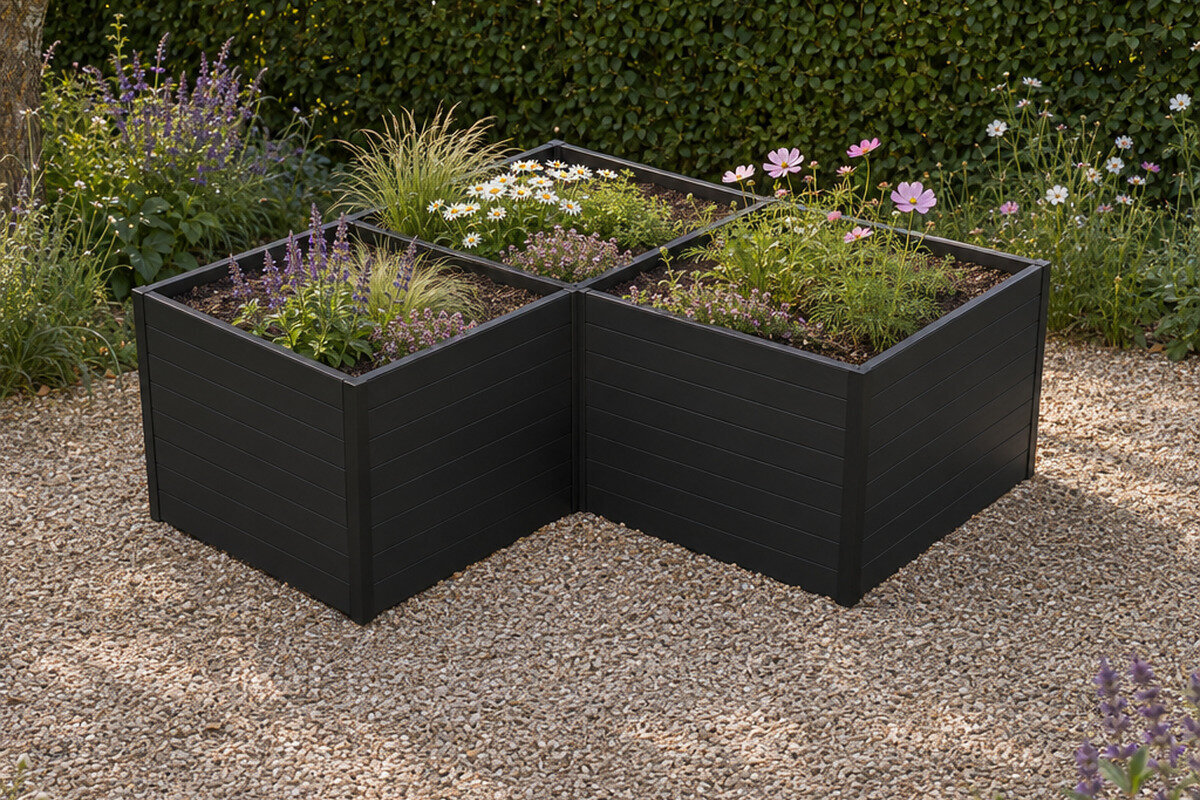
The featured Bloomcabin models are ground-set garden frames, not legged planters. The Classic models listed here use aluminum wall panels and corner posts. On the Narrow Accoya Raised Garden Bed 39.37×19.69×23.62 in, Accoya boards make up the top 3.94 inches of all four walls; the wall sections below are aluminum. That difference changes the wall material, not what sits under the soil.

02
Compare footprint, planting room, and reach
Use the nominal outside footprint of a raised floor bed to check whether the frame fits. Use the clear inside dimensions to plan planting and estimate fill. The advertised planting area is useful for comparing models, but it doesn't tell you the exact clear distance between assembled walls and posts. If a few inches would decide whether a path or planting row fits, verify the relevant measurement before ordering.
The Narrow Aluminum Raised Garden Bed 39.37×19.69×3.94 in has a nominal planting area of 5.38 square feet and a 3.94-inch wall. Its short, narrow footprint can mark out an herb or salad strip where space is tight, provided the ground below offers suitable rooting room. The Square Aluminum Raised Garden Bed 39.37×39.37×15.75 in has a nominal planting area of 10.76 square feet and a 15.75-inch wall. If you're considering that square raised floor bed, plan access along two opposite sides and test the reach from those sides.
For a U-shaped raised floor bed, distinguish the outside footprint from the bays and the space you stand in. The U-Shaped Aluminum Raised Garden Bed 118.11×78.74×11.81 in has five planting bays around a nominal 39.37 × 39.37-inch notch. That notch is access space, not planting area. Confirm its clear width and test your approach with whatever you need to bring in, such as a kneeling pad or watering can. The nominal notch size alone doesn't establish accessibility.

03
Test the site before committing to it
Mark the proposed outline with string or stakes before committing to the site. Check the light against the needs of the crops you intend to grow, and confirm that your hose or watering can can reach. Then walk the route from the soil delivery or unloading point. A raised floor bed may fit neatly beside a fence and still leave you nowhere to stand while you fill or weed it.
Test the layout from the position you'll actually work in. Put an empty pot where the center or far edge of the planting area will be and try to pick it up without stepping inside the outline. Mimic the planned wall height with a box or another visible marker: reaching across an outline on the ground is not the same as reaching over a tall wall. If you can't reach comfortably, choose a narrower frame or open up another working side.
Look below the proposed raised floor bed, too. If water collects there, check why before installing a frame. If the site's history raises concerns about contamination, seek local advice on appropriate testing before growing food. An open base leaves the imported soil in contact with the ground underneath; a taller model does not create a barrier. If you can't establish that the ground is suitable, choose another site or investigate a planter designed for contained growing.

04
Assemble the frame and inspect it before filling
Clear the marked area and bring the ground to the condition specified for the model. Compare the parts in the package with the parts list for your raised floor bed. The featured models come unassembled, and the hardware depends on the configuration. For example, the Narrow Aluminum Raised Garden Bed 78.74×19.69×23.62 in uses two wall sections along each long side, joined by aluminum T connectors. Don't use a photo of a smaller model as an assembly guide.
Follow the model's instructions for assembly and placement. If the kit has multiple bays, check that each divider and wall section is in the intended position before adding soil. On a U-shaped kit, make sure the opening faces the approach you tested. If a part is missing, the frame won't sit as directed, or you encounter a gap you can't explain, stop and resolve it rather than filling the bed or improvising a fix.
With the raised floor bed still empty, repeat the reach check and measure inside the assembled frame. Check that gates still swing, that the corners don't obstruct the path, and that you can get soil to every bay. This is the easiest time to correct the location or orientation. Record the measurements before filling so you can estimate the order from the bed you actually have.

05
Work out how much soil to order
Estimate the fill for a raised floor bed from its clear inside length and width and the depth of soil you intend to add. For a rectangular bay, convert all three measurements to feet and multiply to get cubic feet. Measure each bay separately in a divided or U-shaped model. Multiplying the kit's overall length, width, and height can count paths as soil and miss differences in fill depth between bays.
Hypothetical worked example: A gardener wants an open-bottom raised floor bed for salad greens on a suitable, prepared plot. Paths on opposite sides make the Square Aluminum Raised Garden Bed 39.37×39.37×15.75 in a candidate. For this example only, assume the assembled inside measures 38 × 38 inches and the gardener plans to add 12 inches of soil after checking crop guidance and the ground below. The 38-inch figure is an assumption, not a Bloomcabin specification. With two working sides, the center is about 19 inches in from either inside edge; the gardener tests that reach from the actual path, across the wall, before proceeding.
The fill estimate is (38 ÷ 12) × (38 ÷ 12) × (12 ÷ 12), or about 10 cubic feet. That number is for the new soil layer only. It does not turn the 15.75-inch wall into a measured rooting depth. To adapt the example to your raised floor bed, replace the assumed numbers with the actual inside measurements and your intended fill depth, then compare the result with bag volumes or the soil supplier's ordering units.
For purchased soil, ask what you're buying and inspect it when possible. Use soil-test results and local crop advice to decide whether amendments are needed. If the existing soil is usable, consider it part of the rooting environment rather than trying to solve every growing requirement with the imported layer.

06
Plant to the space you can actually tend
Draw your planting plan using the measured inside space of the raised floor bed. Start with the spacing on the seed packet, not the number of seedlings in a tray. If the bed is worked from one side, place crops you harvest often where they're easy to reach. In a divided bed, use a divider to organize crops or planting dates, not as a reason to cram a full row into a bay that is too short.
Check your local Extension planting guidance alongside the packet before sowing or transplanting. A plan for salad greens should tell you which variety you're growing, how much room to leave, and when local conditions suit planting. If a crop needs more room or light than you have, change the crop or the layout rather than assuming extra wall height will make up for it.
After planting, check moisture where the crop is growing. A seed row and an established plant may need attention at different times. Apply water near the roots as appropriate, and check more than one spot in a long bed before deciding that the whole strip needs water. If parts of the raised floor bed dry at different rates, adjust where you water first rather than changing the routine for every plant.

07
Use the first season to improve the setup
Use the first growing cycle to see which decisions worked. If the middle of the raised floor bed is hard to weed or harvest, note exactly where your reach stops. In the next planting, keep frequently picked crops closer to the path. If access itself is poor, address the layout before the next fill or installation rather than relying on a planting change to fix it.
If a raised floor bed is dry in some spots but wet in others, check moisture in both places before changing how much you water. See whether the problem follows where you apply water or where water collects on the site. If plants struggle, check the growing conditions before adding fertilizer or treating for pests. A symptom is a reason to investigate, not a diagnosis.
Keep the model name, measured bay sizes, fill estimate, and a simple planting sketch. Add one note after harvest about what you'd change. If you're moving the garden to pavement next season, revisit the base decision before moving the frame: a raised floor bed that worked over soil still needs a different design if the new location requires a contained, draining planter.

Questions readers ask
Can I put a raised floor bed directly on concrete?
Don't choose the featured open-bottom frames for direct placement on concrete. They are specified for prepared ground. For pavement, look for a planter designed to retain growing mix and drain on that surface, and check where runoff will go. If the site is a deck or balcony, confirm that the structure can support the filled and watered setup before buying.
Does a taller raised floor bed give roots more room?
A taller wall can hold a deeper layer of fill, but the usable root zone depends on where the soil surface sits and what lies beneath it. Over suitable prepared ground, roots can extend below an open frame. Over a solid base, they are limited to the usable growing depth inside the planter.
How do I estimate soil for a divided raised floor bed?
Measure each bay's usable inside length and width and the depth you intend to fill there. Convert each measurement to feet, multiply the three measurements for each rectangular bay, then add the volumes. Do not include divider space or access openings in the estimate, and calculate bays of different heights separately.
Choose the base before the size
Choose an open-bottom raised floor bed only after confirming that the ground and access suit your planting plan. Then assemble it as directed, measure the usable space before ordering soil, and let local crop guidance determine what you plant and when.
Find a raised bed for your plan
Compare layouts and check the dimensions on the product page.
