
Slugs and Snails in a Greenhouse: How to Keep Them Under Control
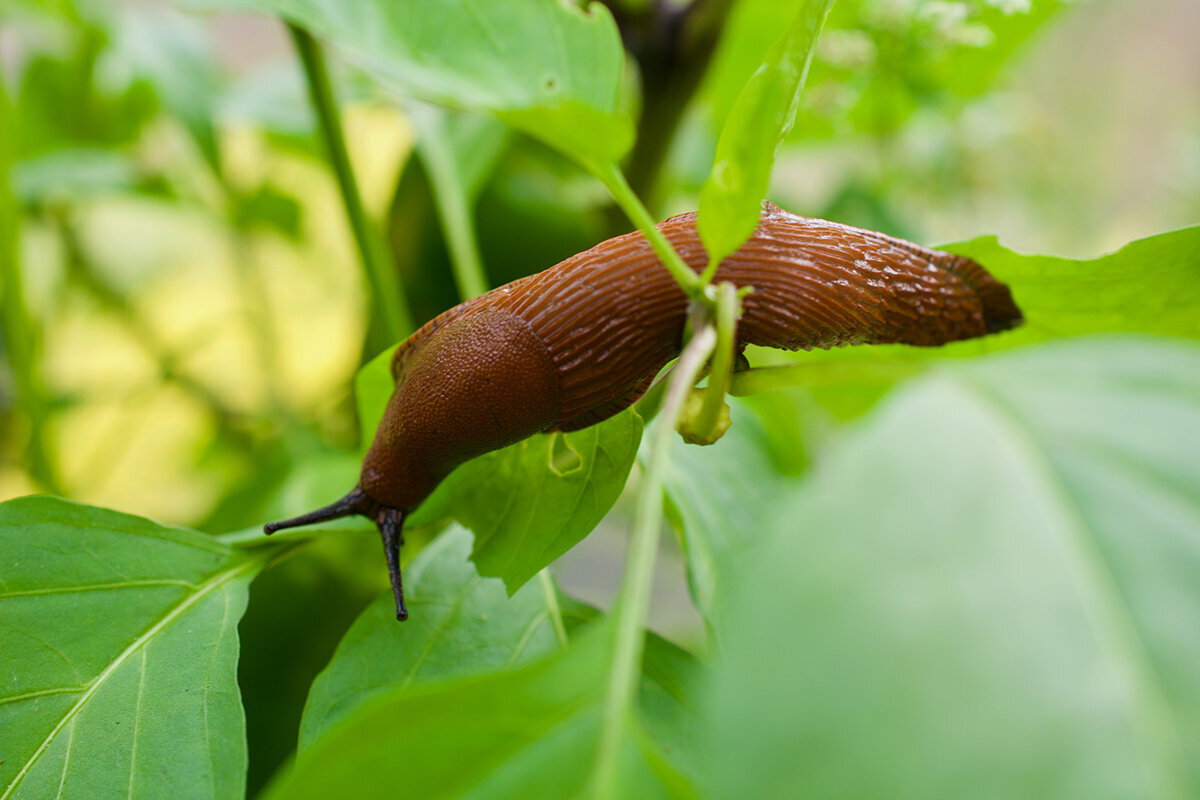
Greenhouse IPM / the silver-trail threshold
Slugs and Snails in a Greenhouse: How to Keep Them Under Control
At first light, the problem often appears as a thin, reflective line across the floor—not as the creature that made it. Follow that line. It can lead from a tender seedling to a damp pot foot, under a bench, across a door sill, and back outside. The most durable answer is rarely one product. It is a greenhouse whose night routes have been deliberately interrupted.
01
First light, before watering
Read the floor before you treat the crop.
A cool, damp greenhouse can conceal mollusk activity by day. Morning is when the evidence is still legible: drying mucus, fresh rasping, and the exact line of travel between refuge and plant. Record what you see for several mornings before declaring victory or escalating a control method.
| Evidence | What it suggests | Check before concluding |
|---|---|---|
| Reflective or dried slime on floor, pots, leaves, or bench legs | Strong evidence of slug or snail movement. Trails often reveal a repeated route, not just a single visitor. | Trace both directions. The shelter is often beneath an object or just outside the house, rather than beside the damaged plant. |
| Irregular holes with smooth, rasped-looking edges | Typical mollusk feeding on soft leaves, cotyledons, flowers, and ripe fruit. | Look under leaves at night. Caterpillars may leave frass; earwigs may be present in tight crevices but do not leave a slime trail. |
| Seedling cut down or apparently gone | Slugs can consume very young plants quickly, especially lettuce, basil, brassicas, and ornamentals. | Examine the soil surface at dusk and dawn. Cutworms tend to sever stems near soil level; rodents leave different clues, including droppings or gnaw marks. |
| Shallow scars on strawberries, tomatoes, or cucumbers near the floor | Possible night feeding, particularly where fruit touches damp media or rests near a pot rim. | Lift fruit and inspect the supporting surface. Mechanical rubbing, cracking, and fungal decay can look similar but lack trails. |
| Damage only after a humid, overwatered spell | Conditions may be favoring mollusk activity rather than indicating a permanent population surge. | Review irrigation timing, leaks, standing water, and density of pots before adding more controls. |
02
Two forms, one management logic
Shell or no shell, follow the same ecological needs.
A slug is not simply a “snail without a shell” in a management sense—but both are gastropod mollusks with a shared dependence on moisture and shelter. Both feed with a rasping mouthpart, move with mucus, and become most visible in cool, humid, dim conditions. Your greenhouse plan should account for both.
Slug
Soft-bodied route runner
Slugs can slip into very low, dark spaces: under trays, behind hose loops, beneath staging, into gaps around pots, and along damp cracks in a floor or bed edge. They lose moisture easily, so daytime shelter is central to their survival.
- Often leave a more obvious trail through dusty floors or on glossy leaves.
- Can hide in potting debris, beneath flats, and inside piled containers.
- Young slugs may be small enough to be missed during casual daytime checks.
Snail
Portable shelter, same appetite
Snails carry a shell, which makes them easier to see when they are out, but not necessarily easier to manage. Shells may remain tucked beneath a bench, around the greenhouse base, behind stored materials, or in vegetation immediately outside the door.
- Often accumulate around protected perimeter features and dense exterior planting.
- May use the greenhouse as a favorable feeding room rather than a permanent home.
- Hand collection can be especially effective when routes and refuges are known.
Shared behavior
Both look for a dependable sequence: protected hiding place by day, damp travel surface at night, vulnerable food nearby, and a route that does not require crossing a dry, exposed interruption. Break any part of that sequence and pressure falls. Break several parts and the house becomes much less inviting.
03
Timing is a control tool
Make your routine arrive before their route does.
Activity varies with weather, temperature, irrigation, and greenhouse humidity. The clock below is not a promise of exact behavior; it is a practical sequence for observing and reshaping the wet period that favors movement.
Late afternoonReset the floorClear debris and standing water.
DuskInspect routesUse a low flashlight sweep.
Cool, damp nightMovement windowCollect and test barriers.
Pre-dawnReturn to refugeTrace trails back to cover.
MorningRead and dryLog damage; reset surfaces.
Late afternoon is the moment to remove fallen leaves, harvested fruit, empty trays, and standing water. Check the door sill and exterior edge before the light fades. This small reset makes it easier to see a new trail later and removes food or cover that can support repeat feeding.
At dusk, use a flashlight held low to the floor and inspect beneath benches, inside stacked pots, around door tracks, and at plant labels touching media. Cool, damp nights are especially useful for hand collection and for finding out whether a copper tape or other barrier is truly continuous rather than bridged by soil, leaves, moisture, or foliage.
Before sunrise, follow fresh trails backward toward cover. Removing only a visible feeder gives temporary relief; changing the refuge and route is what reduces the next night’s pressure. In the morning, record damage, empty monitoring shelters, and water at the root zone early enough for pathways and pot exteriors to dry before evening.
04
The threshold-continuity audit
Inspect the house as a set of connected elevations.
Mollusks do not need a dramatic opening. A door that stays ajar at ground level, a wet drainage channel, foliage bridging an edge, or a stack of pots touching the wall can be enough. Walk the greenhouse at floor height, inside and out, after watering or rain.
Door sill & floor joint
Look for the low line.
- Clear soil, leaf fragments, and potting media from sliding tracks and sill edges.
- Check that weather seals and door alignment meet the base as designed.
- Keep a dry, sweepable strip immediately inside the entrance.
Wall base & exterior planting
Remove the soft bridge.
- Pull leaves, weeds, and dense groundcover away from the greenhouse perimeter.
- Do not lean bags, boards, or unused pots against the wall base.
- Correct low spots that keep the foundation edge wet after rain.
Vent, drain & service opening
Preserve function; reduce shelter.
- Never block necessary drainage or ventilation in the name of pest exclusion.
- Instead, keep drains clear and inspect protected edges where moisture and debris collect.
- Repair damaged screening or trim only with materials appropriate to the structure and its airflow needs.
Benches, pots & crop bridges
Separate the crop from cover.
- Raise vulnerable trays and pots off the floor where practical.
- Keep bench legs, pot feet, and barrier edges free of soil and fallen leaves.
- Train vines and remove low leaves so foliage does not create a ramp from a damp floor to a crop.
Thoughtful layout makes these checks easier. The practical planning principles in Bloomcabin’s greenhouse setup guide—clear walkways, cleanable floors, accessible benches, and sensible staging—also make a better inspection route. If you are planning a new growing space, browse the full Bloomcabin greenhouse and conservatory collection with this floor-level workflow in mind.
Habitat correction
Water for roots—not for a long, humid night.
The aim is not to run a greenhouse dry. It is to avoid creating persistent wet travel surfaces and protected, decomposing debris. For most greenhouse crops, morning root-zone watering gives foliage, pathways, and pot exteriors more time to dry before nocturnal activity begins. Drip irrigation or careful hand watering can be a useful fit where it suits the crop and setup.
Begin with leaks and spill patterns. A slow drip at a hose connection, a saucer that never empties, a blocked gutter outlet near the threshold, or a wet patch under closely packed pots can maintain the small humid refuges mollusks prefer. Increase spacing where plants are packed tightly, remove dead lower leaves, and avoid turning the lower greenhouse into a storage room for damp bags, cardboard, and abandoned containers.
Good air movement matters for many greenhouse reasons. Roof vents and thoughtful ventilation support a healthier growing environment, but ventilation alone does not solve a slug problem if the floor remains cluttered and wet. A Classic Aluminum Greenhouse can be configured as a refined growing room; protect that usefulness by preserving open access around the base, benches, and door rather than filling every inch with material.
05
Control hierarchy
Use the controls that endure before the controls that disappear.
The best sequence starts with exclusion and habitat correction. Direct controls can reduce a population, but they are less satisfying—and often less effective over time—when a damp shelter and an easy route remain intact.
1
Exclude and interrupt
Maintain doors, seals, screens, floor edges, and greenhouse surroundings so the route is not continuous. Use a barrier only around an area you can keep clean and inspect. Copper can deter slugs and snails, but it is defeated when soil, leaves, moisture, or touching foliage creates a bridge over or around it.
2
Remove daytime shelter
Eliminate stacked pots, boards, dense debris, and persistent damp patches. A simple trap board or raised shelter can be useful when treated as a monitoring station: place it where activity is suspected, inspect it every morning, and remove the animals found beneath it.
3
Hand collect on the right night
With gloves, a flashlight, and a container of soapy water, collect slugs and snails during a cool, damp evening or from designated refuge traps in the morning. This is labor-efficient when the greenhouse is small, routes are known, and the first two tiers have already reduced hiding places.
4
Use products only with label discipline
Traps and baits can be part of an integrated plan, not a substitute for it. Beer or yeast traps operate over a limited area and require regular cleaning. If considering a molluscicide, choose only a product registered and labeled for your exact location, crop, greenhouse or garden situation, and application method. Follow the label as the law.
06
Keep the routes closed
Seasonal follow-up is quieter than an outbreak.
In much of the United States, cool, wet spells in spring and fall make mollusk problems more conspicuous. Yet a greenhouse can support activity outside those patterns when irrigation, dense stock, and shelter create a favorable microclimate. Match your checks to the conditions inside the house, not only to the calendar.
Late winter
Prepare
Before seed-starting begins, sweep beneath benches, clean reused pots and trays, inspect seals and drains, and remove stored materials that create low, damp shelter.
Spring
Protect seedlings
Scout more often during wet spells. Tender cotyledons and fresh transplants are the highest-value crop to protect, so patrol at dusk before damage becomes mysterious.
Summer
Mind irrigation
Hot weather may suppress activity outdoors, while shade, frequent watering, and humid corners keep it alive inside. Repair leaks and remove ripe fruit before it becomes an attractant.
Fall
Reset the perimeter
Clear exterior vegetation from the base, tidy nearby supplies, and monitor after rains. Preventing sheltered egg-laying sites and overwintering cover makes the next growing season easier.
A premium greenhouse earns its calm appearance through routines that are easy to repeat. When selecting a model and layout, prioritize door access, ventilation, cleanable edges, and space to move around benches. Explore Bloomcabin’s U.S. greenhouse range, revisit the setup and care guide, or see the considered proportions of the Classic Aluminum Greenhouse as a foundation for an orderly, inspection-friendly growing space.
07
Frequently asked questions
Practical answers at floor level.
Why do I have slugs in a greenhouse that is usually closed?
They may arrive on new plants, trays, pots, soil, or stored materials; enter through small threshold or base gaps; or use vegetation and clutter outside as a bridge. Closed doors reduce access, but do not replace inspection of tracks, drains, seals, and incoming stock.
Are copper tapes and barriers enough on their own?
No. Copper can be useful where the barrier is wide enough, clean, unbroken, and not bridged by soil, leaves, moisture, pot rims, or foliage. It is one layer in a system, not a universal perimeter solution.
What is the best time to look for slugs and snails?
Check with a flashlight at dusk or during a cool, damp evening, then inspect refuge spots again at first light. The ideal timing follows your local weather and greenhouse humidity, especially after irrigation or rain.
Can diatomaceous earth solve a greenhouse slug problem?
Its deterrent effect depends on remaining dry, so it is unreliable in a damp greenhouse or around frequently watered crops. Treat it as a limited, dry-condition tactic—not the foundation of your program.
Should I use slug bait around edible crops?
Only if the product label specifically permits use for your crop and setting, and only at the stated rate, timing, and placement. Read current label directions and check state and local requirements. Keep bait out of reach of children, pets, and non-target wildlife.
When should I call a local extension office or professional?
Seek local help when losses are substantial, identification is uncertain, a commercial-scale crop is involved, or you need pesticide guidance for a particular state, crop, and greenhouse situation. A local extension service can also help separate slug damage from other pests and diseases.
08
Sources & further reading
Reliable references for a local decision.
Pesticide registrations, labels, and local restrictions can change. Use the resources below to deepen diagnosis and verify any product decision for your state and crop.
University of Connecticut IPM: Managing Slugs in the Greenhouse
Greenhouse-specific biology, signs, scouting, sanitation, and management context.
UC Integrated Pest Management: Snails and Slugs
Integrated management, trap guidance, barrier limitations, and bait safety context.
University of Minnesota Extension: Slugs in Home Gardens
Damage identification, watering practices, habitat reduction, barriers, and hand collection.
Colorado State University Extension: Slugs
Moisture management, trap boards, greenhouse bench barriers, and the risks of salt around plants.
Oregon State University Extension: How to Control Slugs in Your Garden
Barrier and trapping context, with an emphasis on checking controls regularly.
U.S. Environmental Protection Agency: Pesticide Product Label System
A starting point for locating current pesticide label information; always follow the product label and applicable local rules.
A five-minute repeatable close
Walk the house at blue hour.
Do this before the night becomes invisible: a brief, calm route that turns observation into prevention. The silver trail has no story to tell when the paths are dry, the shelters are gone, and the threshold is continuous.
1ThresholdClear the sill, track, and exterior edge.
2PotsLift likely refuges; remove leaf litter and water.
3BenchesLook beneath, around legs, and along bridges.
4SeedlingsInspect soft new growth and low fruit.
5Waste areaEmpty debris and reset the floor for dawn.
For more considered growing-space ideas, visit the Bloomcabin U.S. journal or explore a Classic Aluminum Greenhouse designed to make your daily greenhouse ritual feel as composed as the garden itself.
