
Which Greenhouse Shape Is Right for Your Garden?
Greenhouse Planning Guide
The Short Answer
Which greenhouse shape is best depends on whether your priority is productive growing area, separate work zones, an architectural centerpiece, or a relaxed place to spend time among plants. Start with the activities you expect to repeat most often, then choose the form that gives those activities enough clear, usable room.
For straightforward growing, a traditional greenhouse is often the easiest plan to furnish. Choose a T-shape when you want distinct zones, a pyramid when visual impact matters in a smaller setting, and a hexagonal greenhouse when the building should feel as much like a garden room as a growing space.
01
Traditional
A rectangular footprint favors orderly bench runs, central circulation, and a clear growing routine. It suits gardeners who value simple planning and familiar proportions.
02
T-shaped
The projecting section can help divide propagation, potting, display, or seating from the main growing area without making every activity compete for one aisle.
03
Pyramid and hexagonal
These more sculptural forms make a deliberate visual statement. Compare their interior geometry carefully with your preferred furniture, shelving, and day-to-day planting needs.
Which greenhouse shape is best for the way you grow?
A greenhouse should start with your routine, not a sketch you happened to like online. Consider what you will carry through the door, where you will pot up seedlings, how many people may use the space, and whether growing is the sole purpose. Shape becomes much easier to judge when you picture those ordinary moments rather than an empty, newly installed structure.
Traditional, T-shaped, pyramid, and hexagonal greenhouses each organize space differently. A long rectangular plan is familiar and efficient; a T-shaped layout separates tasks; a pyramid makes a strong focal point in a compact footprint; and a hexagonal plan encourages a more social, pavilion-like use. None is automatically right for every yard or every gardener.
Before choosing, mark the proposed footprint on the ground and walk around it. Check door clearance, nearby beds, views from indoors, and access for watering and supplies. Also consider how the greenhouse will relate to a house, garage, fence, or mature planting. A form that works on paper still needs to feel comfortable from every side of the garden.
01 · Start With Daily Use
Let Your Routine Choose the Form
Write down what you want the greenhouse to do in its busiest season. Starting seeds, overwintering containers, growing food, arranging cut flowers, and relaxing with a cup of coffee all ask different things of the interior. The most satisfying choice gives priority to the task that will happen most often, rather than trying to make every square inch perform every possible role.
Think about movement as well as planting capacity. You may be carrying trays, a watering can, bags of growing medium, or a chair through the space. A shape with a clear route from door to work surface can feel more generous than a larger footprint broken into awkward corners. Sketch bench depth and aisle width before falling in love with a silhouette.
Choose a rectangular plan when uninterrupted bench lines and predictable aisle space are central to your growing routine.
Favor distinct wings or zones when potting, display, and plant care need to happen without crowding one another.
For a familiar, grower-focused starting point, explore a standard Classic greenhouse with proportions that are easy to plan around.
02 · Traditional Form
Why Rectangles Remain So Versatile
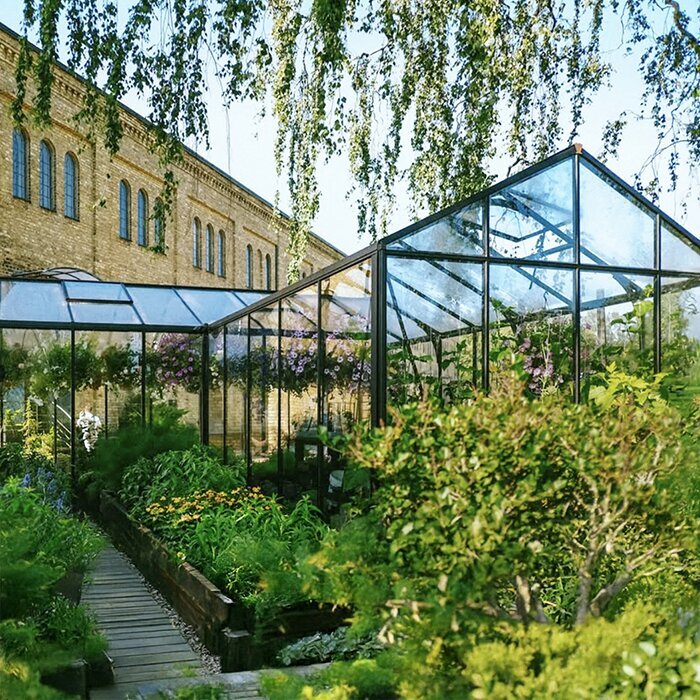
A traditional greenhouse usually has a straightforward rectangular footprint with a central path and planting space on one or both sides. That clarity is its strength. You can organize benches in long runs, group plants by light or watering needs, and see the whole collection at a glance. It also sits quietly alongside vegetable beds, cutting gardens, and practical backyard work areas.
The shape is especially useful when the site itself is long or narrow. Aligning the longer side with existing paths or beds can make the greenhouse feel intentionally placed rather than dropped into open lawn. Still, do not assume the rectangle is the only efficient answer. If entertaining, display, or a dedicated work area matters just as much as production, a divided plan may serve you better.
Use a simple rectangular layout for seedling benches, staging shelves, and a direct route between the entrance and the far end.
Set the long side in relation to existing beds, paths, and views so maintenance access remains practical year-round.
Where a wall offers a protected edge and a direct route from home, consider a full-size regular Lean-To greenhouse as an alternative to a freestanding rectangular plan.
03 · T-Shaped Form
Create Room for Different Tasks
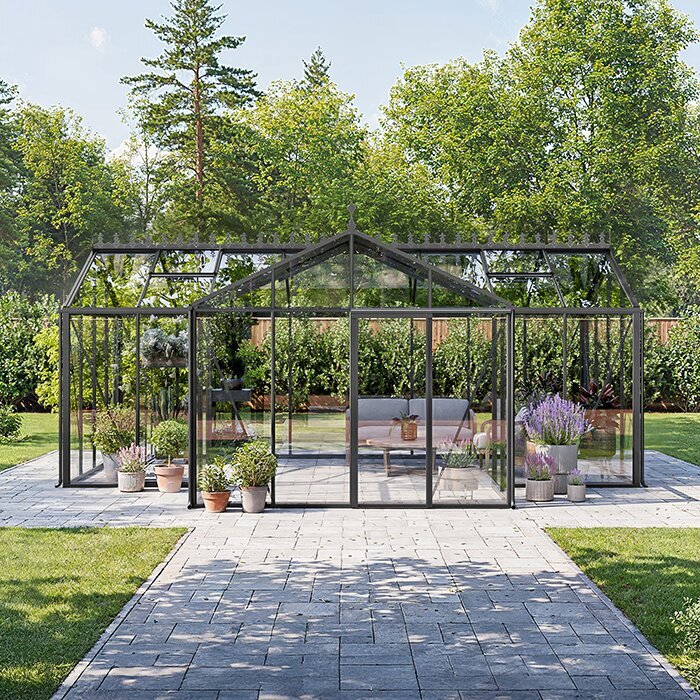
A T-shaped greenhouse adds a crosswing to a main body, giving the plan a natural sense of separation. One area can support the everyday growing collection while another becomes a potting corner, a display space, or a place to pause. This is valuable for gardeners whose greenhouse is active throughout the year and who dislike continually moving tools or plants aside to make room for the next task.
The extra geometry needs deliberate furnishing. Map the central junction carefully so paths do not pinch where the wings meet, and decide which zone deserves the most accessible position. A T-shape can look formal and generous from outside, but its advantage comes from purposeful zoning inside. It is a strong fit for a larger garden where the greenhouse should have presence without becoming purely ornamental.
Assign each wing a primary purpose before selecting benches, so the junction remains a circulation space rather than a storage bottleneck.
Place frequently used supplies near the entrance and reserve the quieter area for display plants, seating, or slower seasonal projects.
If you prefer a clean freestanding structure as the basis for a zoned garden plan, view a standard Classic greenhouse collection alongside your layout sketches.
04 · Pyramid Form
Choose a Strong Garden Focal Point
A pyramid greenhouse concentrates attention upward, giving even a modest garden a distinct architectural landmark. Its sloping geometry can be especially appealing where the structure will be seen from a patio, kitchen window, or approach path. Rather than disappearing into a border, it becomes part of the garden composition. This makes it a thoughtful choice for gardeners who value the building as much as the plants it shelters.
Inside, the plan calls for a realistic furniture test. Corners and sloping sides may affect where taller staging, shelves, or large containers feel most natural, so work from actual objects you expect to use. A pyramid is not simply a traditional greenhouse with a different roofline; it creates a different spatial experience. Keep the central working zone clear and avoid designing entirely around the exterior view.
Use a pyramid where a centered, sculptural landmark will improve the view from key outdoor or indoor living spaces.
Test the placement of tall plants and work surfaces early, especially where sloping sides influence usable headroom and wall-adjacent space.
For gardeners who want a wall-attached alternative to a sculptural freestanding form, consider a full-size wall-attached Lean-To greenhouse before choosing the final layout.
05 · Hexagonal Form
Make Growing Feel More Social
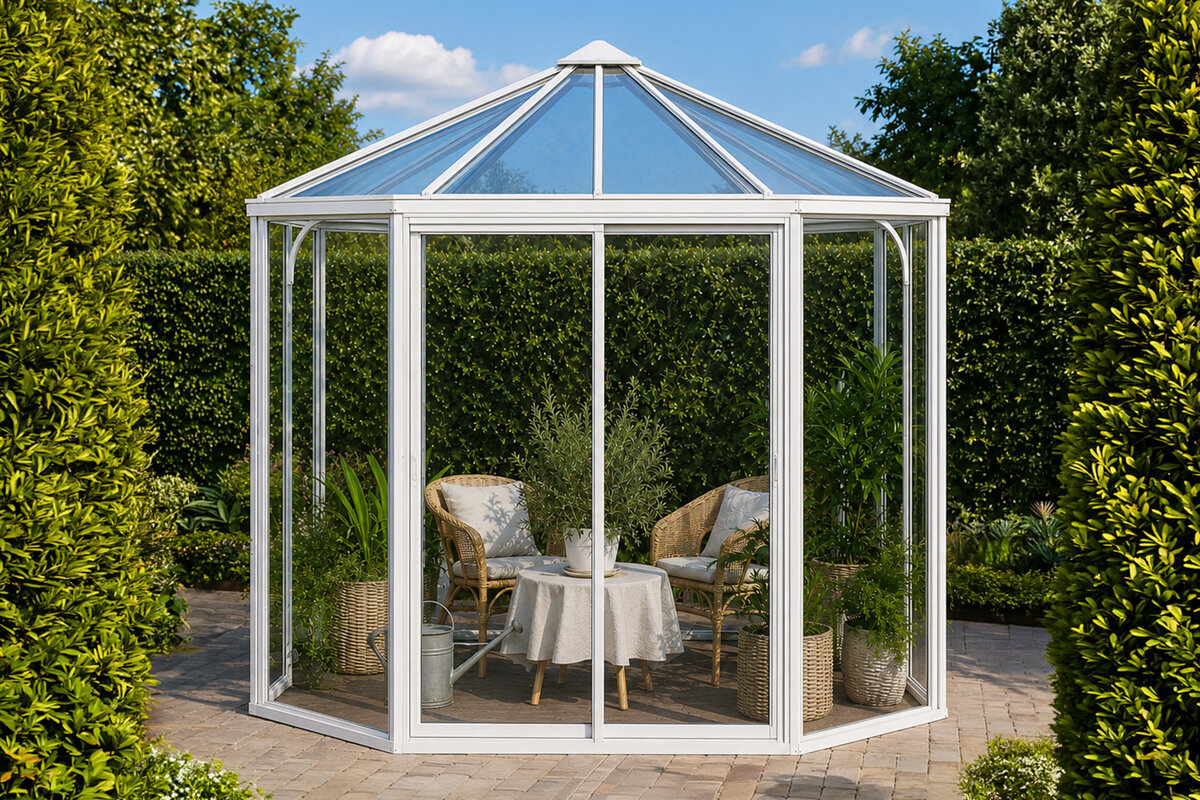
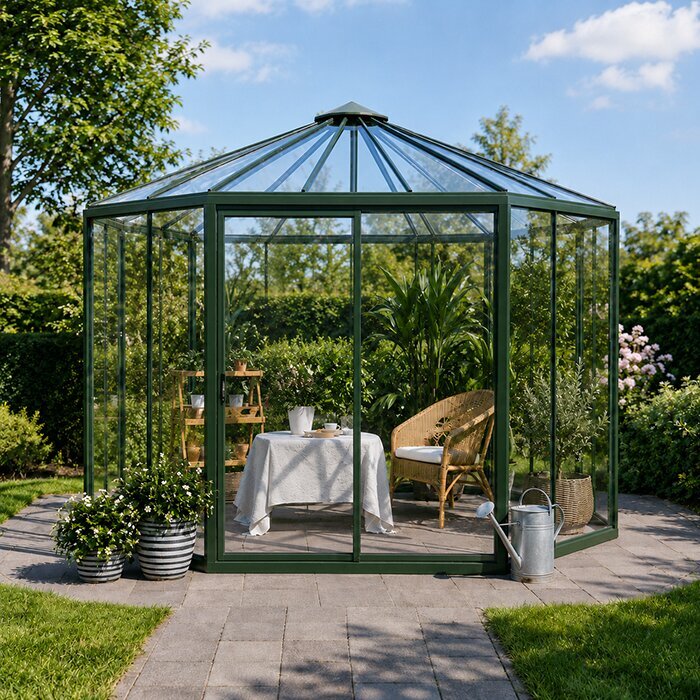
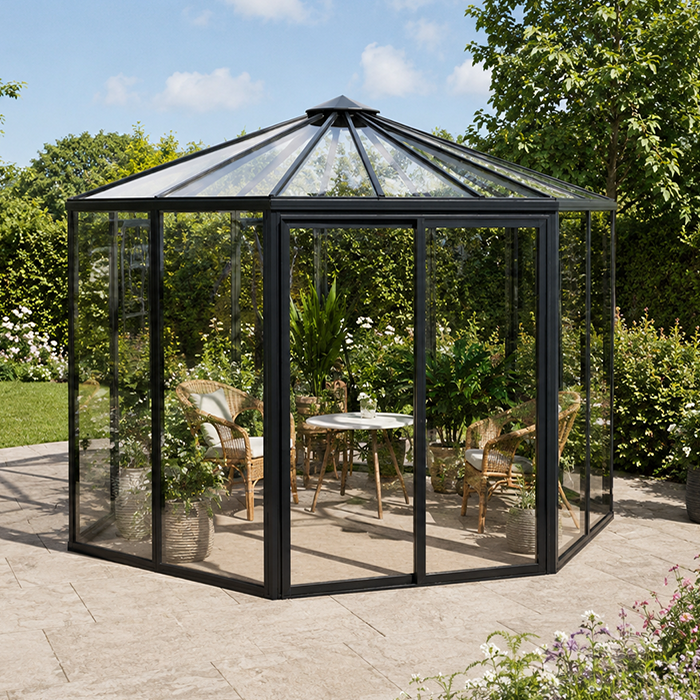
A hexagonal greenhouse has a pavilion quality that can turn plant care into a more leisurely garden experience. Its multi-sided footprint invites views in several directions and can suit a central position where paths arrive from different parts of the yard. It is often a compelling option for ornamental collections, display planting, or households that want the greenhouse to feel welcoming when friends and family are outside.
That character does not remove the need for disciplined planning. Decide where the door, primary work surface, and tallest plants should go, then use the remaining sides for lower display or shelves. The central area can be valuable for circulation or a small table, but it should not become a dumping ground. A hexagonal layout rewards editing: choose fewer, more intentional interior elements rather than filling every edge.
Choose a hexagonal plan when the greenhouse will be viewed from multiple paths and should contribute to the garden’s gathering spaces.
Keep the center usable for movement, then arrange lower displays around the perimeter to preserve sightlines and an open feeling.
For gardeners who decide a practical, classic footprint better supports their planting plans, compare a standard Classic greenhouse design before choosing a more sculptural form.
06 · Fit the Site
Read Your Yard Before Choosing
Site conditions can rule out an otherwise attractive shape. Measure the buildable area, but also leave room to open the door, wash glass, maintain planting around the base, and move a wheelbarrow or supplies nearby. Check where large trees, fences, downspouts, and existing paths influence the space. A greenhouse that can be approached comfortably will be used more often than one squeezed into a leftover corner.
Look beyond the footprint to how the structure appears from the house and neighboring areas of the yard. A long traditional form may reinforce a productive garden axis, while a pyramid or hexagon may work best where it can be appreciated in the round. If a wall-adjacent location is the clearest option, consider drainage, access, and how the greenhouse changes the elevation before making a final decision.
Mark the proposed outline with stakes or a hose, then test approach routes, door swing, maintenance clearance, and nearby planting access.
View the marked area from windows, patios, and main paths to judge scale, privacy, and how the chosen shape changes the garden.
When the most logical footprint runs along a building, review a full-size regular Lean-To greenhouse option with the wall, access route, and drainage plan in mind.
07 · Style and Setting
Match Architecture Without Copying It
A greenhouse can echo the character of a home and still hold its own in the landscape. Traditional forms tend to blend easily with structured beds, cottage planting, and utilitarian kitchen gardens. T-shaped designs can lend a formal garden a sense of order, while pyramid and hexagonal forms provide a more pronounced focal point. The goal is a relationship in scale, materials, and placement—not a forced imitation of the house.
Color, surrounding hardscape, and planting all affect how prominent the shape feels. A greenhouse framed by repeated paths, clipped hedges, or symmetrical beds reads differently from one softened by grasses and informal perennials. Consider the view in every season, including when beds are bare. Give the structure enough visual breathing room so its geometry remains legible, especially for more complex forms.
Pair formal paths and repeated planting lines with a shape that supports a deliberate garden composition rather than competing with it.
Use surrounding planting to soften the base, while preserving enough open space to maintain the greenhouse and appreciate its silhouette.
For a timeless form that can adapt to many garden styles, start with a standard Classic greenhouse range and refine the setting through paths and planting.
08 · Make the Final Call
Balance Ambition With Long-Term Use
When two shapes both appeal, choose the one that makes your regular routine easier. A greenhouse is most rewarding when it supports the way you actually garden in spring, summer, fall, and winter—not only the way it photographs on installation day. Revisit your wish list, separating essential tasks from occasional ones. Then compare each candidate against the same simple plan for circulation, storage, plant display, and outdoor access.
Planning questions deserve an early answer. Requirements can vary by location and project details, so check with the relevant local authority before work begins. If the structure affects an insured property or sits near boundaries, discuss the project with the appropriate insurer and review any applicable conditions. Ask for current product information and a quotation when you are ready to compare configurations and scope.
Select the form that supports your most frequent task with the fewest compromises in walking room, work surface, and accessible storage.
Confirm site-specific planning, boundary, and insurance considerations before finalizing a layout or arranging installation work.
For a house-adjacent growing space that may simplify everyday access, explore a full-size regular Lean-To greenhouse format after confirming its fit with your site plan.
Compare Greenhouse Shapes at a Glance
Use this comparison as a first filter, not a substitute for laying out your own benches and paths. The best choice is the form whose interior supports your regular tasks while its exterior fits the available site and the character of your garden.
Traditional
Productive growing and straightforward layouts
Long benches, clear central aisle, efficient storage
T-shaped
Gardeners wanting separate activity zones
Keep the wing junction open for easy circulation
Pyramid
Compact sites needing an architectural centerpiece
Test furnishings against sloping sides and central space
Hexagonal
Display planting and sociable garden settings
Balance perimeter displays with an uncluttered center
Wall-adjacent alternative
Sites directly beside a building
Coordinate access, wall conditions, drainage, and working space
A Practical Way to Decide
Move from broad preference to a site-specific decision in five steps. This process helps prevent a beautiful shape from becoming an inconvenient workspace once benches, plants, and seasonal supplies arrive.
01
List the core jobs
Name the three activities the greenhouse must handle most often, such as seed starting, container care, vegetable growing, or displaying an ornamental collection.
02
Measure usable ground
Mark the actual buildable area, including approach routes and maintenance clearance. Do not count space that will be blocked by paths, planting, walls, or doors.
03
Draw your interior
Sketch benches, shelves, a potting surface, and circulation for each candidate shape. Use realistic dimensions from items you already own whenever possible.
04
Study the views
Look at the marked footprint from indoors, main paths, and seating areas. Decide whether the structure should blend into the garden or become its focal point.
05
Verify project details
Discuss local planning and site questions with the relevant authority when needed, and obtain current configuration information before making your final selection.
Greenhouse Shape Selection Checklist
Bring this list to your site walk-through. A clear answer to each point will reveal whether a shape is genuinely useful for your garden or simply appealing in isolation.
01. I can identify the greenhouse task that will happen most often and give it priority in the layout.
02. The marked footprint leaves comfortable room for entry, cleaning, maintenance, and moving garden supplies around the structure.
03. My proposed benches and work surfaces fit without narrowing the main route through the greenhouse.
04. The door location works with the nearest path, water source, and the direction I naturally approach from.
05. I have considered how tall plants, shelves, and containers will work with the chosen interior geometry.
06. The greenhouse shape looks appropriate from primary windows, patio seating, and the main route through the yard.
07. I have checked whether local authority, boundary, or insurer questions apply to my particular project.
08. I am comparing current product configurations and quotations only after confirming the preferred site and working layout.
Frequently Asked Questions
Which greenhouse shape is best for growing vegetables?
A traditional rectangular greenhouse is often a practical starting point because long bench runs and a central aisle are easy to organize. That said, vegetables are not the only consideration. Choose the shape that still leaves convenient room for watering, harvesting, storing supplies, and carrying trays in and out.
Is a T-shaped greenhouse larger than a traditional one?
A T-shaped plan can create more distinct areas, but its value is not simply about size. The crosswing may help separate growing from potting, display, or seating. Compare usable bench length and unobstructed circulation, since the connecting area needs careful planning to remain functional.
Are pyramid greenhouses practical for everyday gardening?
They can be, provided the interior is planned around their geometry. A pyramid is especially appealing when you want a visually striking garden feature, but shelves, tall plants, and work surfaces should be mapped first. Keep the central working area clear and avoid assuming every edge will furnish like a rectangle.
What makes a hexagonal greenhouse different?
A hexagonal greenhouse offers views in several directions and often feels more like a garden pavilion than a purely utilitarian workspace. It can suit display planting and a central garden location. Its angled perimeter calls for a more edited interior plan, with clear circulation and thoughtfully chosen furniture.
Should greenhouse shape affect where I place it?
Yes. The form and the site should be chosen together. A rectangular greenhouse may follow the logic of beds and paths, while a pyramid or hexagon can suit a focal position. Measure access and maintenance space, observe views, and assess nearby walls, trees, and drainage before deciding.
Do I need to check permits before installing a greenhouse?
Requirements depend on your location, property, structure, and project details. Contact the relevant local authority for guidance before proceeding, especially if boundaries, setbacks, or existing structures are involved. If appropriate, also speak with your insurer about the project and review their written requirements rather than relying on assumptions.
Explore greenhouse options
Choose the Shape That Supports Your Garden
There is no universal answer to which greenhouse shape is best. Traditional forms make organized growing easy to visualize, T-shaped layouts help separate tasks, pyramids create a strong vertical statement, and hexagonal greenhouses bring a garden-room quality to planting and display. The right choice is the one that makes your space more useful and more inviting.
Start with a marked footprint, a realistic interior sketch, and an honest picture of your gardening habits. Once the site and routine point toward a form, you can compare configurations with confidence. Bloomcabin can be part of that research, but the strongest decision begins with your own garden, access, and growing plans.
Compare forms with your site measurements and interior sketch close at hand.
