
White Garden Box: What to Check Before You Buy or Paint

Bloomcabin · Raised-bed guides
White Garden Box: What to Check Before You Buy or Paint
Choose a white garden box by verifying what it’s made of, which surfaces are white, and where the finish can be used. If you’re repainting, identify the existing surface and get compatible preparation instructions before buying paint. Color alone tells you none of those things.
Check what’s underneath
For a white garden box, verify the substrate and the exact finish before judging suitability.
Check each surface
Ask which surfaces may contact soil and what the instructions say about edible planting.
Check the shade in place
Compare a finish sample beside the fence, siding, or trim you want it to match.
Know the upkeep
Get cleaning and touch-up directions before buying or repainting.
The easiest white garden box to choose is one whose finish, material, and care instructions are documented for the way you’ll use it. That matters whether you’re matching porch trim, growing herbs beside a path, or deciding if an existing frame is worth repainting.
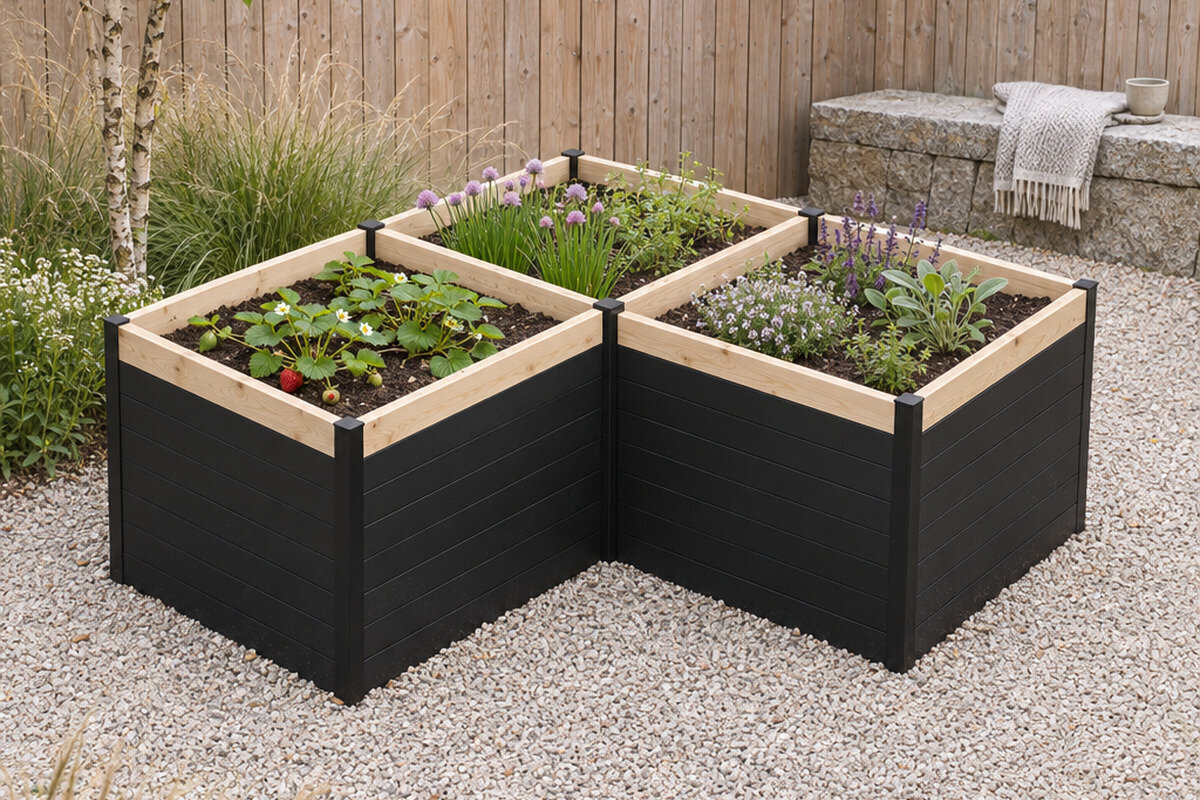
The Bloomcabin specifications shown here identify aluminum frames and one design with Accoya boards above aluminum panels. They don’t identify a white finish. Use the documented dimensions and materials to compare the frames, then confirm the color and care requirements for the exact model before placing an order.
01
Decide which parts actually need to be white
Start by deciding whether you need the whole frame to be white or just the surfaces you’ll see. A white garden box beside a fence might only need to coordinate with the fence on the exposed faces. One visible from a walkway on both sides may need a consistent finish on the posts, joins, and upper edges. If you don’t care what the inside looks like, don’t add a coating there just to make it match.
For a ready-made white garden box, ask for the finish name or code tied to the exact model. Find out whether white is the color of the material itself or a finish applied over it, and ask which parts it covers. A listing might describe the wall panels without telling you the color of the posts, connectors, or fasteners. If the answer is simply “white,” ask for a sample or a more specific description if matching nearby trim matters.
If you’re repainting an existing frame to make a white garden box, start with its model number or original instructions. That gives you a better basis for a coating decision than a photo of the surface. Make the distinction explicit in your notes: “existing finish identified” means you can ask about a compatible system; “existing finish unknown” means you don’t yet have enough information to choose one. If a documented factory finish meets your needs, you can avoid taking on a refinishing job at all.

02
Read the specifications beneath the color
The substrate is the material beneath the finish. For a metal white garden box, verify the metal and any grade or surface treatment the supplier specifies. For wood, ask for the species or product grade, board thickness, and any treatment already applied. If the box is made from plastic or composite panels, ask for the exact material and whether the maker permits refinishing. Don’t assume instructions for one substrate apply to another simply because both look white.
Check mixed-material designs part by part. For example, the Bloomcabin Narrow Accoya Raised Garden Bed 39.37×19.69×23.62 in has aluminum corner posts and lower wall panels, with Accoya boards along the upper 3.94 inches of all four walls. The boards are 0.79 inches thick. Those facts describe the construction; they do not confirm a white finish. If you were considering a color change on a frame like this, you’d need to check the wood and aluminum separately rather than select a single preparation method based on the product name.
Before buying a white garden box, match the component list to the assembly instructions. Confirm the panel thickness where it matters to your choice, which fasteners the supplier specifies, and whether any are meant to remain exposed. Don’t swap hardware just to get a color match unless the supplier confirms the substitution. Keep unknowns separate from documented facts: no stated treatment doesn’t mean untreated, and no stated thickness doesn’t tell you anything about how the assembled frame will handle soil.

03
Verify the coating system before preparing the surface
Before painting a white garden box, list the exact surfaces you want to coat: the outside panels, posts, top rim, joints, or inside faces. Mark any surface that may touch soil, including a bottom edge against prepared ground or an inner face behind the finished soil line. If you’ll grow herbs or vegetables, say so when you ask the bed supplier and coating manufacturer about suitability. An exterior-use label alone doesn’t answer whether the proposed application is appropriate for that planting setup.
For an existing white garden box that needs repainting, identify both the substrate and what’s on it now. Ask whether the new system can go over the current finish and what the instructions require for sound areas, chips, exposed substrate, and edges. Follow the specified cleaning method and check whether scuffing, spot preparation, or primer is required. Don’t start sanding an unidentified finish or assume that a primer will make an incompatible topcoat work. If you hit bare material during preparation, use the directions for that surface rather than treating it like the intact finish beside it.
Once you have a documented system, confirm the application conditions and the cure time before assembly, filling, or returning the bed to use, as applicable. If the instructions allow a test patch, put it somewhere inconspicuous and use it to check the appearance. A patch that looks good doesn’t establish suitability for soil contact or edible planting. If you can’t confirm the intended use, leave those surfaces uncoated only if the bed maker allows it, or choose a different finish or frame.

04
Check what the site asks of the frame and finish
A white garden box that suits a border on prepared ground isn’t automatically suitable for a patio. The Bloomcabin frames shown here have open bottoms, not floor panels. If you’re shopping for a freestanding planter to go on paving, look for a model with documented soil retention, drainage, and installation requirements for that surface. The specifications for the open-bottom models don’t establish a hard-surface load rating or tell you to add a floor.
Over prepared ground, check the soil and drainage at the proposed location. An open frame does not isolate the bed from potentially contaminated ground or fix a drainage problem by itself. Where plant roots can extend into suitable soil below, the wall height is not necessarily the full rooting depth. Use your seed instructions or local extension guidance to judge the needs of your intended crops rather than choosing by sidewall height alone.
Look at where water, mud, and soil are likely to meet the finish. If watering repeatedly splashes the side that faces the path, that’s the surface you’ll want to inspect and clean most easily. When deciding where to put a white garden box, make sure you can reach the corners and lower edges without moving a filled bed or stepping into the growing area. If you plan to put the frame close to a fence, decide in advance whether you’re willing to leave the hidden side alone or need clearance to reach it.

05
Compare shade and sheen in the actual setting
Compare a finish sample where the white garden box will actually stand. Hold it upright beside the siding, fence, or trim rather than judging it flat on a kitchen counter. Look at it in the light the site typically gets and from the path or window you use most. Two samples both sold as white may look different next to the same fence, and two similar shades can still look mismatched if one surface is much glossier than the other.
Decide whether you want a close match or deliberate contrast. If the surrounding trim is off-white and an exact match isn’t available, a visibly different white may look more intentional than a near miss. If the frame has two materials or contrasting hardware, ask to see how the parts look together. A small sample can help with shade and sheen, but it may not show the contrast between a panel, its edge, and the posts beside it.
Look at the parts of a white garden box you’ll touch or pass often: the top rail, path-side corners, and lower panels. A pale surface may make dark soil splashes or scuffs easier to notice, which is a reason to think about cleanup rather than a prediction about durability. If you can’t get a sample and color matching is the main reason for the purchase, decide whether you can accept a visible difference before you order.

06
Plan for assembly marks, cleanup, and touch-ups
Before you assemble a white garden box, compare the delivered finish and parts with the order and the parts list. Check the visible faces, panel edges, and places where pieces join. If a part arrives damaged or doesn’t match, ask the supplier what to do before filling the frame. Follow the exact model’s assembly instructions rather than drilling a new hole, forcing a joint, or disguising damage with paint.
Keep the finish name, cleaning directions, and any approved touch-up instructions together. After a muddy planting session or when you clear the bed between crops, look for soil buildup, chips, lifted coating, and loose hardware. Clean using the method the maker permits; don’t reach for an abrasive pad or strong cleaner just because a mark shows up against white. If you find damage at a joint or exposed edge, ask whether it needs a repair beyond a cosmetic touch-up.
Set a standard you’ll be happy to maintain. If the white garden box is prominent from the porch, you may want a finish with documented cleaning instructions and a compatible touch-up option. If you’re comfortable with a few visible marks, you may only need straightforward routine care. Neither choice justifies assuming that an unspecified finish is maintenance-free or that repainting will be needed on a fixed schedule.

07
Work through the choice: repaint or buy factory-finished?
Hypothetical example: Maya wants a white garden box for herbs beside cream-colored porch trim. The bed will sit on prepared ground next to the porch, not on it. Her existing metal frame has a chipped finish, no model label, and no paperwork. She’d prefer to repaint the visible faces, but she can’t identify the original coating or confirm what preparation it would need. Instead of buying paint and hoping it bonds, she puts that option on hold.
She compares it with the Square Aluminum Raised Garden Bed 39.37×39.37×15.75 in. The listed nominal footprint is 39.37 by 39.37 inches, the stated planting area is 10.76 square feet, and the walls are 15.75 inches high. Maya marks the nominal footprint on the ground and checks that she can reach it from two opposite sides. She doesn’t treat the footprint as a measured interior or use the wall height as the total rooting depth. The dimensions help her check the space, but they don’t establish the finish.
Her deciding question is specific: “Is this exact model available with a white factory finish, what parts are white, and what are the care instructions for an herb bed over soil?” If white is confirmed, Maya asks for a sample or finish code and checks it against her trim. If it isn’t confirmed, she treats the square model as a size and material reference, not as a verified white garden box. She can then drop the color requirement or keep looking without committing to an undocumented paint job.

Questions readers ask
Can I order a white garden box from the Bloomcabin models shown here?
The available specifications identify the materials but don’t confirm a white finish for any model shown. Ask Bloomcabin to confirm the current finish for the exact model and configuration before ordering. The gallery is useful for comparing shapes, not for verifying a color option.
Can I make a white garden box by painting only the outside?
Possibly, if the bed supplier and coating maker confirm that the proposed system suits the existing surface and the way the bed will be used. Define what “outside” covers: paint on an upper rim, seam, or bottom edge might reach an area that contacts soil. Follow the approved preparation and cure directions before putting the bed back into use.
What if a touch-up dries a different shade?
Check the original finish name and sheen, not just the color on the lid. Ask whether the maker offers an approved touch-up or a method for refinishing a whole panel. Don’t keep adding layers to hide a mismatch, and don’t assume that covering a chip with matching paint addresses damage beneath it.
Make the color decision last
Buy or repaint a white garden box only after you know what the surface is, where the finish can go, and how you’ll care for it. If the material or coating is still unknown, make that the next question you ask—not a problem to solve after the bed is filled.
Find a raised bed for your plan
Compare layouts and check the dimensions on the product page.
