
Buying a 44 mm timber garden shed: what the wall thickness means
Garden sheds
Wall thickness is one of the first figures many people notice when comparing timber garden sheds. A stated 44 mm can help describe the wall construction, but it answers only a narrow question: what thickness is being specified, and for which part? It does not tell you by itself how much room is inside, whether the shed will suit your site, what its timber or finish requires, or which components are included. For a sound purchase decision, confirm the measurement in the product specification, then compare the full shed against your intended use and the practicalities of ordering it.
01
What the 44 mm figure measures
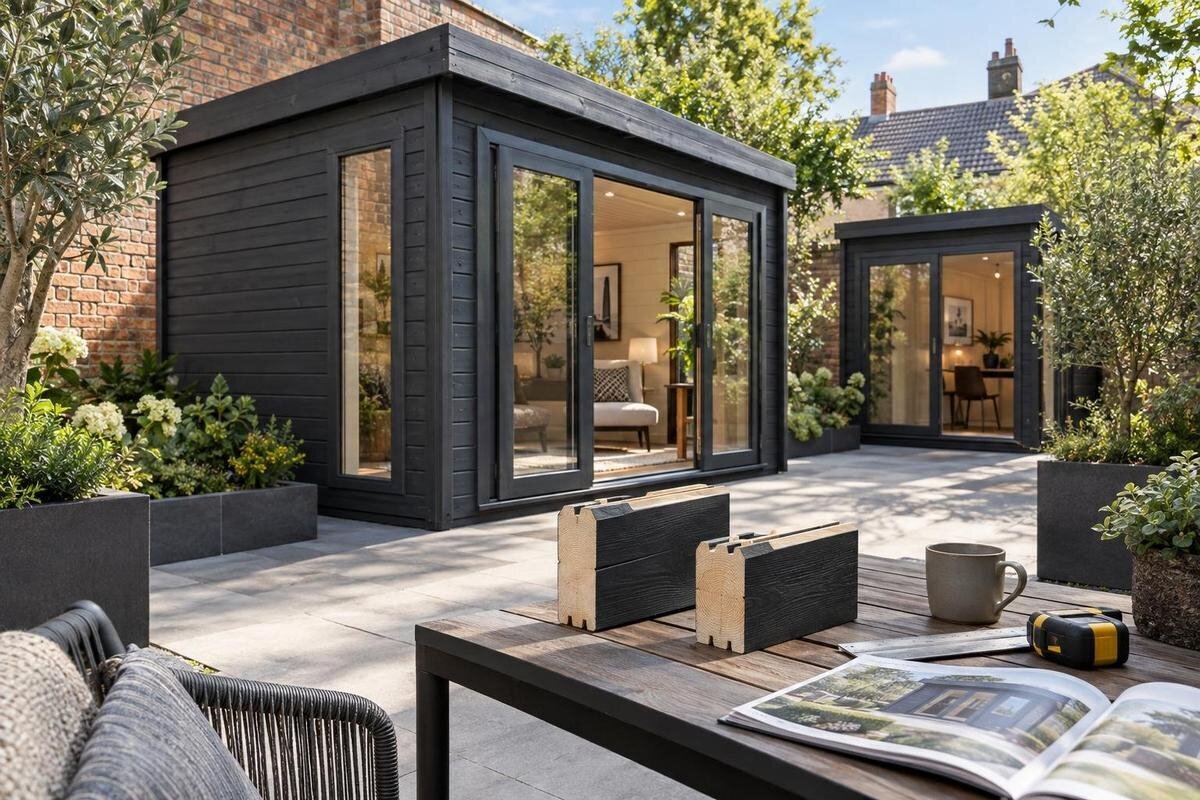
On a timber garden shed specification, 44 mm is a thickness figure, but the listing should identify which part is being measured. It may refer to a timber board or profile rather than the full wall build-up; the product wording and construction drawing determine that. Ask whether the figure is nominal or the finished component measurement, and whether machining, joints, linings or separate layers are included. Do not assume it measures from the outside face of the completed wall to the inside face. If a listing gives only a headline number, request the technical description before treating it as a like-for-like specification. Confirm that the stated construction applies to the exact size and option you intend to order.
Keep wall thickness separate from other dimensions. It is not the shed's length or width, the height of a wall, or the size of a doorway. Nor does it tell you the usable floor area after the walls and internal arrangement are accounted for. Write down the exact wording used for each model and save any plan or written clarification. When looking at the Verdana 1 garden shed listing, check the specification for the exact option rather than treating the model name as evidence of a 44 mm wall. A product title helps identify a model; the stated construction details are what you need for comparison.
What wall thickness can and cannot tell you
Wall thickness is one part of a shed's construction, not a complete measure of performance. A 44 mm figure alone does not establish strength, stiffness, durability or weather resistance. Those matters also depend on the timber species and grade, the profile and joints, wall layout and openings, framing or bracing, fixings, roof design, base support, assembly and maintenance. If your site or use calls for a particular capacity or exposure rating, look for explicit manufacturer guidance for the exact model and configuration. If you plan to attach shelves or secure equipment to a wall, check the maker's fixing guidance too; wall thickness alone does not say what it can hold.
Nor does a thickness measurement prove insulation or thermal performance. Ask whether insulation is included and what is specified for the rest of the structure, including the roof and floor. Doors, windows and joints may also affect how the space works, so a wall figure cannot stand in for information about the whole shed. The same caution applies to noise reduction and condensation: 44 mm is not a rating for either. For any candidate, including the Verdana 2 garden shed listing, look for written performance details that apply to the model rather than inferring them from its name, appearance or wall measurement.
02
Compare specifications on equal terms
Use the same comparison points for every shortlisted shed. Make a table with the exact wall-thickness wording, the part measured, timber type or grade if stated, wall height, external and internal dimensions, roof and floor details, and supplied components. Note the selected size and options, and keep any written clarification with the product information. This makes gaps easier to spot: one specification might describe a timber profile, while another gives only a general wall figure. If an important detail is missing, ask for it rather than filling it in from a photograph, a model name or information for a different shed.
Terms that look similar may describe different measurements. Nominal timber size, finished profile size and completed wall assembly are not automatically interchangeable, so ask the seller to explain the wording used. Check whether the figure applies to all sides and whether construction varies around openings. If you receive a drawing, confirm which faces the dimensions refer to and ask about any stated tolerance or variation. A written reply tied to the exact model and option is more useful than a general statement about timber sheds. Add the Durano garden shed listing to the same table only after its own wall and dimension details have been identified.
Check the usable space inside
Wall thickness affects the relationship between outside and inside measurements, but a 44 mm headline does not tell you how much floor area you can use. Look for both the external footprint and the manufacturer's stated internal dimensions. Check whether outside figures include trim, roof overhang or other projections, and where inside measurements are taken. If only an external size is shown, ask for a dimensioned plan instead of calculating an exact room size from the wall figure alone. Corners, joints, floor construction and the layout may affect the space available, so use the measurements provided for the assembled shed.
Match those dimensions to the items that must fit: garden tools, bins, shelving or a bench, for example. Measure the largest item and consider the route from the access point to the shed, not just the space where it will sit. Check the clear door opening and threshold rather than relying only on the outside door dimensions. If you will stand or work inside, compare the internal wall height as well as the footprint. The Veltor 1 garden shed listing can be one shortlist entry, but the usable size has to come from its stated dimensions, not its name.
03
Match the specification to your intended use
Decide what the shed needs to do before judging whether 44 mm suits it. For straightforward storage, internal dimensions, access, ventilation, the floor arrangement and the needs of the items being stored may matter more than the headline wall measurement. List the largest item, how it will get through the doorway, how often you will use the space and whether anything has particular storage conditions. That turns a general preference for a substantial wall into questions a seller can answer. Check those requirements against the manufacturer's information instead of assuming the timber thickness guarantees a suitable environment.
For regular work or hobbies, check for information about ventilation, natural light, insulation, ceiling height, the floor and any planned services. The description 44 mm does not confirm that these features are provided or that the shed is intended for your particular use. Ask what the manufacturer says about suitability and whether adaptations would change that. If you plan electrical services or other building work, discuss the requirements with a qualified professional rather than relying on a product description. You can include the Orello 1 garden shed listing in a shortlist, then assess it against your written requirements and the details for that exact model.
Check the timber, treatment and finish
Wall thickness does not identify the timber species, grade or treatment. Ask what timber is used, how it is supplied and whether preservative treatment or a factory-applied finish is included. Find out whether the finish covers the required surfaces or whether further treatment is expected after assembly. If a product description uses a broad phrase such as solid timber, ask for the material information relevant to your purchase. Appearance alone cannot establish the timber's treatment or maintenance needs. Keep the answer with the model details so you can confirm it relates to the configuration you are considering.
A finish can also affect what you need to do after delivery. Ask which coatings, if any, are supplied, which surfaces need attention, what preparation is required and what care the manufacturer recommends for the product's location. Do not assume that a colour shown in an image is included or that timber needs no further maintenance. If upkeep or finish is important to your choice, compare the written care instructions alongside the construction and purchase details. For the Modano 1 garden shed listing, check the listing or request material and finish information rather than inferring it from an image.
04
Check the site and base requirements
Assess the proposed position as well as the shed. Note how exposed it is to wind, rain and strong sun, what nearby structures or planting may provide shelter, and whether water tends to collect there. A wall thickness figure does not state the product's permitted exposure conditions or resolve a poorly chosen position. Ask the manufacturer for siting guidance and any clearances, protection or maintenance requirements for the exact shed. If the site is near the coast or has another unusual exposure, describe those conditions when seeking advice rather than assuming a general specification covers them.
Clarify the base and floor requirements before ordering. Check whether a floor is part of the kit, what supporting surface the manufacturer specifies, whether anchoring is required and what access or clearance is needed for maintenance. Confirm these points from the supplied instructions; an illustration is not enough to establish what the base needs. If the ground is sloped, soft or otherwise uncertain, get an appropriately qualified person to assess the site and installation requirements. For questions about planning or approval for your intended use, check with your local council or a qualified building professional. Record the advice when comparing the timber garden shed M listing with other candidates.
Confirm what is included and how assembly works
Read the kit contents and exclusions alongside the wall specification. A drawing may show a floor, roof, door, window, trim or fittings, but an image does not establish that every pictured item is included. Request a written list of components supplied with the exact model and selected options. Check which fasteners, hardware, floor parts and finish products are included or need to be sourced separately. Confirm whether the advertised dimensions refer to the assembled shed and whether optional items change them. This helps prevent a necessary component or accessory being overlooked when you compare the purchase.
Assembly is another buying consideration. Read the instructions before ordering if they are available, and ask about the tools, skills, number of people or professional support expected. Make sure the instructions relate to the exact wall specification and any options you choose, rather than assuming generic kit advice applies. Check that the route to the prepared site can accommodate the delivered components and that you have a suitable place to keep them until assembly. Confirm delivery arrangements and site access with the retailer. The Wooden Garden Shed S listing can join a shortlist, but its included parts and assembly requirements need to be checked in its own documentation.
05
Compare the full purchase cost and terms
Compare the whole purchase rather than just the listed shed amount. Ask for an itemised total that identifies the shed, any required floor or base components, finish, accessories, assembly, delivery and unloading charges. If site preparation, professional assessment or services are needed, account for them separately. Do not assume that an illustrated component or a headline price includes everything required. If the retailer offers optional packages, compare the same set of included items across each option. A written, like-for-like breakdown is useful whether or not any offer is involved.
Before placing an order, check the model, selected options, wall-thickness description, dimensions, materials and contents list on the order confirmation. Read the retailer's current terms for payment, delivery, inspection, damage, changes, returns and any warranty that may apply; do not rely on a summary that omits the conditions. Confirm delivery access, who is responsible for unloading, how to report an issue and what happens if site preparation is not ready. If an answer changes the total or specification, ask for an updated written quote. Keep the correspondence and order document together so you can verify what was agreed.
Make your choice using the documented details
Put the essentials on one page before choosing: what 44 mm measures; whether that wording is nominal or finished; internal and external dimensions; material and treatment; intended use; site and base requirements; kit contents; and full purchase terms. Mark each item as stated, confirmed in writing or still unclear. That is more useful than scoring a shed on wall thickness alone. If two listings seem close, ask the same questions about each and compare the answers side by side. If an essential detail remains unclear, decide whether you are comfortable with that uncertainty before ordering.
Treat 44 mm as a specification to understand, not a verdict that a shed is automatically suitable. The right choice depends on the precise construction, usable dimensions, maintenance expectations and site conditions matching your requirements. A larger wall figure may be one relevant difference between products, but it does not settle questions of performance, comfort, durability or value by itself. Once you have verified the details that matter for your use, you can decide whether the 44 mm option meets the need or whether another specification is justified. Let the documented fit, rather than the headline number, make the final choice.
Frequently asked questions
Does 44 mm mean the entire garden shed wall is 44 mm thick?
Not necessarily. The figure may refer to a timber component or profile, while the completed wall can involve other construction details. Ask for a drawing and a definition of the measurement, including whether it is nominal and whether any additional layers are counted.
Does a 44 mm timber wall mean the shed is insulated?
No. Thickness alone is not an insulation specification. Ask whether insulation is included, how the wall, roof and floor are constructed, and whether documented thermal information applies to the exact model. If indoor comfort is essential, do not infer it from 44 mm.
Is a 44 mm shed necessarily stronger than one with thinner walls?
No. Strength depends on more than wall depth, including the material, joinery, overall design, openings, support and assembly. For a particular load or site exposure, ask for relevant written guidance for the chosen configuration rather than comparing thicknesses alone.
Can I work out the inside dimensions by subtracting the wall thickness?
Avoid relying on a simple subtraction. External dimensions, corner construction, floor layout and the way measurements are defined can affect the space available. Request a plan with internal measurements, then check the doorway clearance and height where you need them.
What should I confirm before ordering a 44 mm garden shed?
Confirm what 44 mm measures, the internal and external dimensions, timber and finish details, intended-use guidance, base requirements, included components, assembly needs, delivery access and full purchase terms. Keep written answers tied to the exact model and options.
A 44 mm timber garden shed may suit your needs when its specified construction, usable dimensions and included components match the way you plan to use it. The figure alone cannot settle questions about performance, site suitability, upkeep or value. Get a clear definition of the wall measurement, compare the full specifications, and confirm the base, kit contents and order terms before committing. With those details in hand, you can make the choice on what the shed actually provides rather than on a single number.
