
Buying a Garden Shed Direct from a Manufacturer
Garden shed buying guide
Buying a garden shed directly from a manufacturer can make it easier to ask about the product and the order in one place, but the word “direct” does not tell you exactly what you will receive or who will support you. Find out who makes the shed, who is selling it, and which details the quote and delivery actually cover. Then compare the same model and specification across written offers. This guide focuses on getting clear answers before you commit, so the shed, site and terms line up.
Before you order 1
What buying directly from a manufacturer means
First confirm what “direct” means in this transaction. The manufacturer may sell to you itself, or a separate retailer may take the order while the maker supplies the goods; a website can show either arrangement. Ask for the business name that will appear on the quote and invoice, whether payment goes to that business, and which organisation will answer questions about the product. If transport, installation or customer service is handled by another company, note that too. These details identify who to contact at each stage; they are more useful than relying on a “factory direct” label alone. Also ask whether the shed is made by the named company or sourced from another producer.
Direct contact can be valuable when you need a precise answer about a drawing, option or missing item. It does not automatically mean a lower price, quicker delivery, a broader choice or a simpler support claim. The maker may still use a freight company, installer or sales agent, and its production process may have a queue. Ask who will confirm specifications, record a change, organise a delivery query and handle product questions after delivery. Put the answers in the quote or order confirmation. That gives you a realistic picture of the relationship instead of assuming one contact owns every part of the purchase.
Choose a shed around its intended use
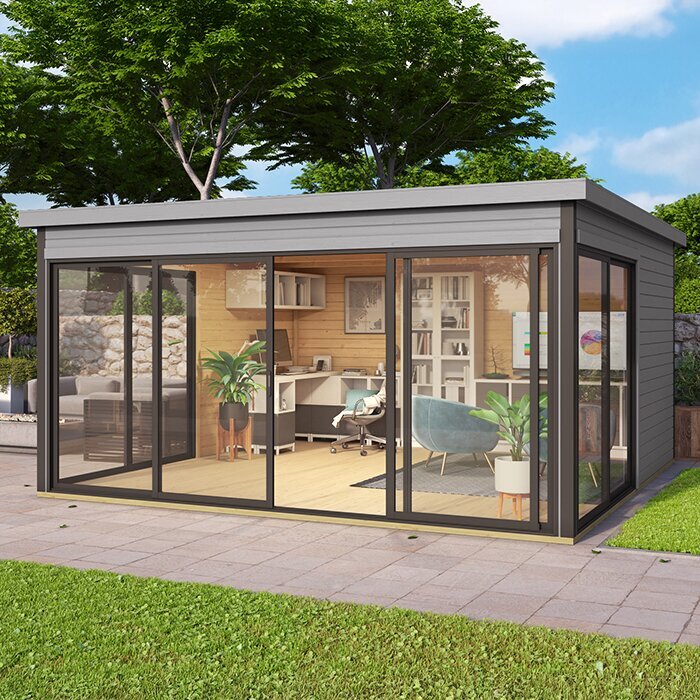
List what needs to fit before browsing. For gardening tools, note the longest and widest items; for bikes, allow for handles, pedals and room to manoeuvre; for seasonal gear, include boxes that may be stacked. Decide whether the shed is mainly for storage, a hobby area or a place where you expect to spend time. Those purposes place different demands on floor area, headroom, access, light and ventilation. A product name or attractive image cannot establish those features. Use the Verdana 1 product page as a model reference, then check its stated details against your own list rather than treating the name as a recommendation.
Measure bulky items and consider the room needed to take them in and out, not just the floor space they occupy once stored. A narrow route between shelves can make a shed awkward even where the overall area looks adequate. Allow for opening the chosen doors and for standing beside equipment while using it. If you expect to work inside or use the shed for more than storage, ask the manufacturer for its stated intended use and relevant construction details; do not infer suitability from a room-like appearance. Write down what you want to store now and what you may add later, so any compromise on size is deliberate.
Before you order 2
Compare external dimensions and usable space
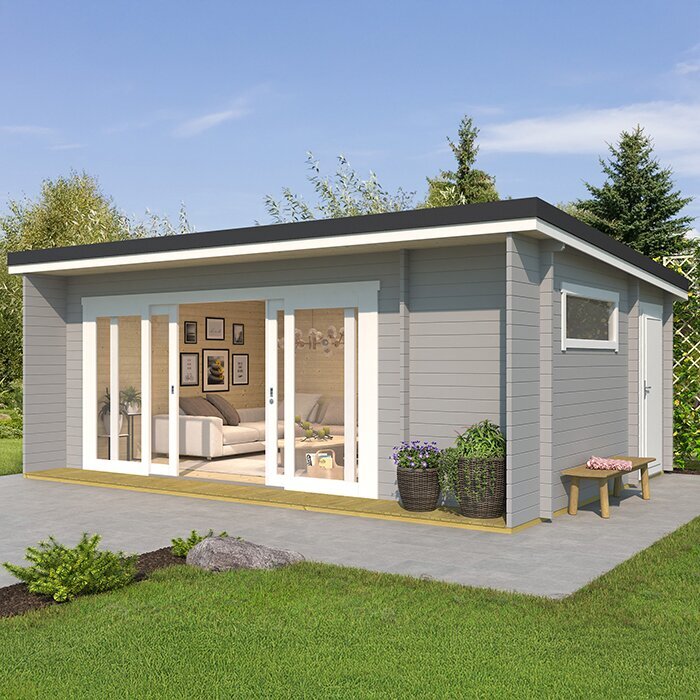
Compare the dimensions in the manufacturer's drawing, not just a headline size. Ask which measurements are overall external dimensions, which describe the base or wall footprint, and whether roof overhangs are included. Check the interior floor dimensions and the clear doorway opening; a building's listed width does not tell you how easily a mower or boxed item will pass through the entrance. Confirm that measurements apply to the exact configuration in your quote, and ask what points each measurement runs between. Use the Verdana 2 product listing to identify a model for comparison, then request a dimensioned drawing if any figure you need is not stated.
Mark the proposed footprint on the ground or a plan and compare it with the usable access around the shed. Measure paths, gates and turning space for both delivered components and the things you intend to store. Check for nearby fences, trees, drains, windows and other structures, allowing space to build or maintain the shed. A spot where a shed physically fits may not be convenient for its doors or daily use. Confirm the maker's required clearances and base dimensions before settling on a position; if site constraints or local requirements are unclear, ask the relevant professional or authority rather than guessing.
Get the construction specification in writing
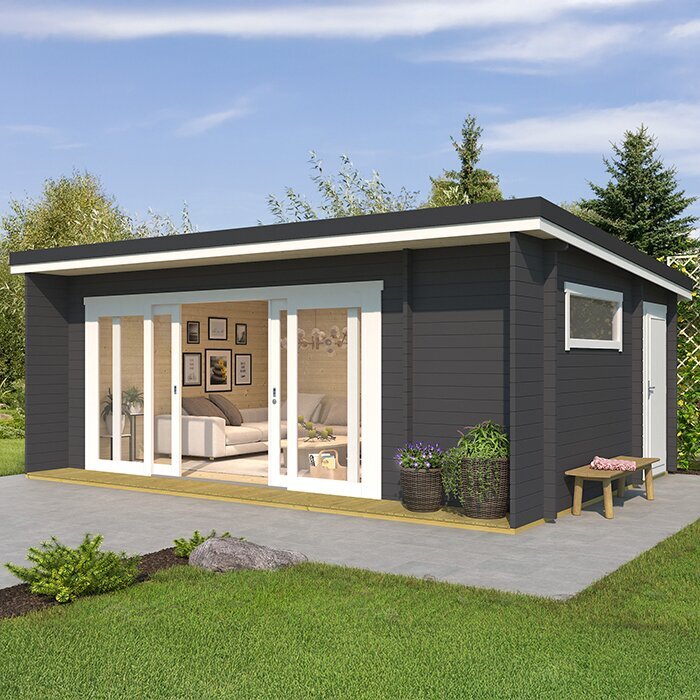
Ask for a written specification that names the materials and construction details, rather than relying on terms such as premium, solid or contemporary. For a timber shed, ask what timber is used, whether treatment is applied, what maintenance is expected and whether the roof and floor are included. For other configurations, identify the wall, roof and floor materials, glazing where applicable, and the supplied hardware. Product photos can help you understand appearance, but they do not reliably show thickness, treatment, fixings or what comes in the package. A model name on the Durano product page identifies an item, not a full bill of materials; ask for the specification behind the exact version you are pricing.
Ask how the shed is supplied: for example, whether it arrives as prepared components or whether extra finishing is expected, and whether assembly instructions are available before purchase. Confirm what is included in the standard configuration and what is an optional upgrade, including any roof covering, floor, fasteners, glazing, locks or finishing products relevant to the design. If a detail matters for appearance or upkeep, ask for its exact description and whether it is included. Do not treat an illustrated accessory as part of the order unless the quote says so. Keep the specification with the quote so later discussions refer to the same version, not a similar-looking model.
Before you order 3
Compare the complete price, not the headline figure
Ask the manufacturer to break the offer into the shed itself and each extra charge or optional item. A headline price is hard to compare if one offer includes a floor or roof covering while another does not, or if freight is quoted separately. Request an itemised written quote showing the exact model and configuration, quantity, included components, delivery charge, any assembly charge, and any taxes or other charges that apply. Confirm the currency and whether the amount is firm for the period stated in the offer. Do not assume “direct” makes the listed price the delivered total; compare what you would actually pay for equivalent goods and services.
Identify the option precisely when you request a price. For instance, cite the Veltor 1 product page and ask the supplier to quote the exact version you mean, then have the quote state its contents. Check whether delivery is to the address, to a boundary or to another agreed drop-off point, and whether unloading is included. Ask whether site preparation, installation, assembly or old-shed removal are outside the quote. If an item is excluded, add the cost of arranging it elsewhere before comparing offers. Keep optional items separate so you can see whether they are essential or simply available. Ask the seller to confirm any conditions that could change the quoted amount.
Confirm the base and site requirements
Before ordering, get the manufacturer's written site-preparation and base requirements for the specific model and size. Ask what surface, levelness, support and fixing provisions the design requires, and whether those requirements change with a different layout or floor option. Do not infer the base from a photograph or build one to a generic dimension: the shed and its base need to match. If the ground is sloping, soft, prone to collecting water or otherwise difficult, describe it accurately and ask whether a qualified builder or other suitable professional should advise. The manufacturer's answer can clarify what information they need, but it is not a substitute for a site assessment where one is needed.
Clarify who is responsible for the work and when it must be completed. Confirm the boundary between the shed kit, the prepared base and any anchoring or assembly service instead of assuming one includes another. Ask for any diagram or written tolerances that the installer will use, and have the person preparing the site review them before work begins. The Orello 1 product page can identify the model in a request for model-specific requirements; it is not evidence of a particular base design or installation method. Record the required dimensions and level criteria alongside the order.
Before you order 4
Check freight, access and delivery timing
A manufacturer-direct order can still travel through a separate warehouse or freight provider, so establish the delivery arrangement before paying. Ask where the order will be sent, what the quoted freight covers, whether the goods are brought to the property or only to a stated drop-off point, and what unloading equipment or help is expected from you. Give the supplier accurate access details: road width, gate openings, overhead obstructions, turning space, slope and any limits on delivery vehicles. Ask which package dimensions and weights they need to check access; do not estimate them from the finished shed dimensions.
Get an estimated dispatch or delivery window in writing, and ask when it can be confirmed and how a delay will be communicated. If the shed is made or finished to order, ask what affects the timeline; if it is already available, ask what dispatch estimate applies. These are questions to settle, not a reason to assume a particular wait. Confirm how delivery is booked, who needs to be present, where a vehicle can stop and what to do if a package arrives damaged or parts appear to be missing. When discussing options, name the Modano 1 product page so the freight and delivery answer refers to the correct model and configuration.
Clarify assembly and any changes to the standard model
Clarify the level of assembly before comparing offers. Ask whether the price covers a kit only, a separate assembly service or another arrangement, and request the scope in writing. Check who supplies tools, handles packaging, clears waste and checks the completed work, as well as what access and preparation the assembly crew expects. Confirm whether site preparation is included or excluded explicitly. If you plan to assemble the shed yourself, ask for the instructions before purchase and find out what tools, skills and time the manufacturer says are required. That information helps you decide whether the offer suits your plans without assuming that every kit is assembled the same way.
If you want changes to standard dimensions, openings, finish or accessories, ask whether that exact alteration is available for the model and get a revised drawing and price. A manufacturer may not offer every change, and changing one detail can affect supply timing, parts, the assembly plan or support terms; ask rather than assuming. Make sure every non-standard feature appears on the final order, not only in an email or conversation. Use the Timber Garden Shed M listing as a model identifier in a query, but do not treat its name as confirmation of dimensions, specifications or custom options. Have the maker approve any site adaptation before you proceed.
Before you order 5
Read the order, warranty and support terms
Read the written sale terms before placing an order, including the stated payment schedule, any cancellation or change conditions, and the process for resolving a discrepancy. Do not assume a direct sale has the same terms as a reseller, or that an informal assurance overrides the document you accept. Ask which version of the specification is attached to the order and how you can correct an error before dispatch. If anything is unclear, request a written explanation and keep the reply with your quote. The aim is not to anticipate a problem; it is to know what happens if an order needs to change or a delivery does not match the agreed details.
Ask how product questions are handled after delivery: who supplies assembly guidance, maintenance information, replacement parts or help identifying a missing component, and what details they need from you. Request the applicable warranty or product-support terms and read the exclusions, process and any responsibilities stated in them; do not infer coverage from the manufacturer's involvement. The Wooden Garden Shed S listing can identify the item you are asking about, but support should be confirmed for the exact model and version. Save the quote, drawings, order confirmation, delivery records and correspondence together so another staff member can follow the history if your original contact is unavailable.
Make a like-for-like comparison before ordering
Compare the written offer with any alternative, even if one comes from a retailer and one is direct from a manufacturer. Put the model and version beside dimensions, materials, included parts, delivery, site preparation, assembly, estimated timing, payment terms and after-sales contact. Mark each item as confirmed, excluded or still unanswered rather than filling gaps with assumptions. For a fair comparison, ask each supplier to quote the same configuration and delivery location; different bundles make headline prices misleading. A manufacturer's answer is most useful when it is specific enough to appear in the order documents, not just when it sounds reassuring.
Before submitting payment, read the final order summary against your list: check the model, size, options, delivery address, agreed services, amount and terms. Make sure any essential requirement, such as a particular clear opening, flooring inclusion or delivery arrangement, is written down and not merely implied by a photo or product title. If there is a mismatch, pause and ask for a corrected confirmation. You do not need to resolve every minor preference before choosing, but you should understand which details are fixed, which can still change and who will confirm them.
Frequently asked questions
Does buying directly from a manufacturer guarantee a lower price?
No. A direct purchase does not establish the final cost or what is included. Compare equivalent configurations with freight, optional components, site work and assembly shown separately. Ask each supplier to quote for the same delivery address and specification so you can compare the complete amounts, rather than headline prices.
How can I tell whether I am buying from the manufacturer?
Ask which business is the seller on your quote and invoice, which business receives payment, and whether the manufacturer or another party handles delivery and support. Have the seller identify the maker and explain the relationship in writing. A product page or “direct” label alone may not clarify who handles each part of the order.
What should I ask the manufacturer to provide before I order?
Request the exact model and version, a dimensioned drawing, a written specification of materials and inclusions, site requirements, delivery and assembly scope, a quote, and the applicable terms. If a particular feature matters to you, ask for it to be stated explicitly in the order documents.
Can I ask the manufacturer to customise a standard shed?
You can ask, but do not assume every model can be altered or that a change leaves the price, timing or support terms unchanged. Get confirmation that the exact alteration is available, then request an updated drawing and written quote. Have the final order list every agreed change.
Who arranges the base and assembly in a direct purchase?
That depends on what is offered and recorded in your order. A shed may be supplied without site preparation or assembly, so ask where each responsibility begins and ends, what the other party requires, and whom to contact if plans change. If site conditions are uncertain, seek appropriate professional advice.
The useful part of a manufacturer-direct purchase is access to answers, provided those answers are specific and make it into the order. Choose on the exact shed, its fit with your site, the complete cost and the responsibilities set out in writing—not on the route alone. If one unresolved detail could change your decision, settle it before ordering.
