
Buying a Garden Shed for a Corner of Your Garden
Garden shed buying guide
A corner can look like spare space, but the fence lines, ground shape and route to it may leave less usable room than a quick glance suggests. When you buy a garden shed for a corner of your garden, decide what it needs to hold, measure the area the building will occupy and allow for doors, delivery and maintenance. That turns a vague idea of “it should fit” into a practical comparison. The aim is not to fill every centimetre; it is to choose a shed you can reach and use without disrupting the rest of the garden.
01
Decide what the shed needs to hold
Before comparing styles, write down what the shed is for and what must fit inside. Long-handled tools, a mower, potting supplies, outdoor cushions and boxes all need different kinds of room: some items need to stand upright, some need a clear approach, and frequently used tools should not be buried behind seasonal gear. List the largest objects and measure them, including handles or wheels where relevant. Add any task the shed must support, such as sorting seed trays, rather than assuming a storage-only layout will also work as a workspace. Think about likely additions realistically; an unspecified plan to store anything can lead to buying more space than you can sensibly use.
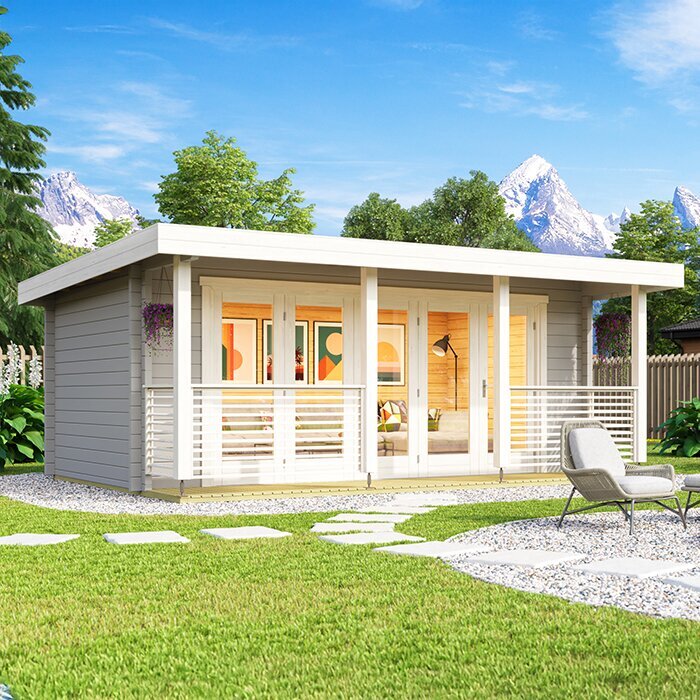
Separate essentials from items that could live elsewhere, then note how often you will retrieve each group. That makes it easier to weigh a smaller footprint against a layout that gives access to the things you use every week. Consider whether shelves or storage boxes will reduce clear floor space, and leave room to put down what you are carrying. A listing such as the Verdana 1 listing can be compared with your inventory once its actual dimensions and interior details are confirmed. Neither a product name nor a photograph tells you its usable capacity.
Measure the corner as it is
Measure the corner as it exists, rather than treating the fences as two ideal straight lines. Note the length of each boundary, then check the clear width at more than one point, particularly if a hedge, tree trunk, garden bed or retaining edge takes up space. A corner may not be square, and one boundary may taper; the longest measurement alone will not describe the usable footprint. Sketch the area from above and mark fixed obstructions, gate openings and paths. If you are considering a rectangular footprint, lay out its full outline with string or temporary markers and check that it fits without crossing into a path or removing planting you want to keep.
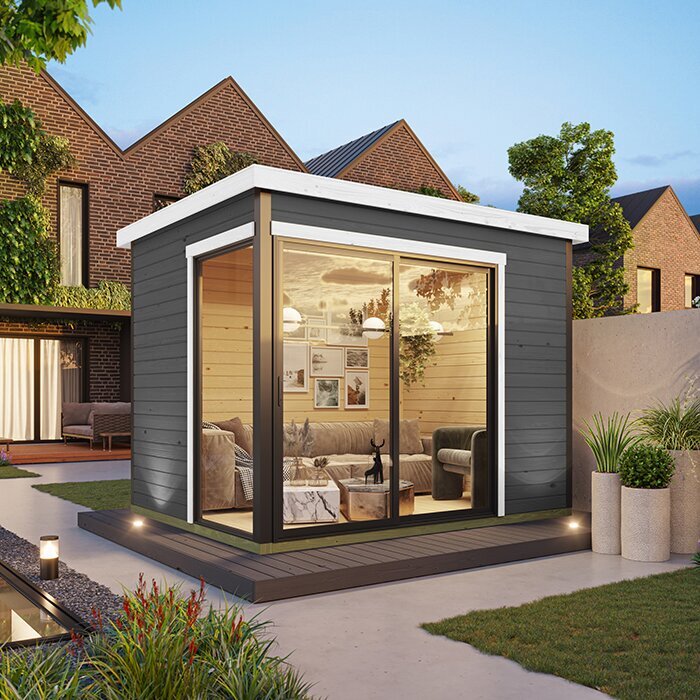
Compare the marked area with confirmed outside measurements for each shed. Check which dimension belongs along each boundary and whether any projecting parts are included; do not estimate the footprint from a photograph. The Verdana 2 listing is one option to assess using its published measurements, not its name or image. If the dimensions are unclear, ask for a dimensioned drawing before deciding. A sketch showing the boundaries, the shed outline and nearby access points makes it easier to spot a mismatch before you order.
02
Compare garden shed dimensions with usable space
An outside footprint tells you how much garden a shed occupies, but not how much storage space you get. Compare exterior and interior measurements, and check whether any stated dimensions include roof edges or other projections. Wall framing, internal fittings and the shape of the roof can affect usable room, so a floor-area figure alone may not tell you whether a tall or bulky item will fit. Look for a dimensioned plan and check the available height as well as the floor. If useful interior measurements are missing, request them rather than treating the outside size as a reliable guide to capacity.
Measure items that have to lie flat or stand upright, and consider whether you can turn them through the doorway once the shed is in place. Shelves may make storage more organised but can narrow the space available for larger objects. Compact garden sheds can be a good fit for a corner only if their interior still works for the items you plan to store. For the Durano listing, compare the confirmed interior measurements and layout with your own list; do not infer usable space from the product name.
Check the door and route into the shed
A shed can fit in the corner and still be difficult to use if its entrance faces the wrong way. Check the clear opening width and height against the largest item you expect to carry through it. For a hinged door, allow room for its swing; for a sliding or folding system, confirm how it operates and what needs to remain clear. Door descriptions and photographs can be easy to misread, so use the stated opening measurements and instructions. Make sure the chosen orientation lets you reach the doorway without squeezing between the shed and a fence or moving stored items outside first.
Trace the full route from the gate or driveway to the proposed site. Check passage widths, tight turns, steps, changes in level and any obstacles that would affect carrying tools or equipment in. Think about where you can stand while opening the door, too; a path that ends directly against a fence may leave little working room. The Veltor 1 listing should be assessed using its confirmed entrance details, not an assumption based on its name. Check the delivery and assembly route separately, since it may need more space than everyday access.
03
Leave room around the shed
A footprint that just fits between a fence and a garden bed may leave no practical way to inspect or maintain the shed. Allow access in line with the product instructions and the care it requires, especially where you would otherwise be unable to reach a side or rear wall. Consider how nearby plants may grow and whether you can still clear leaves, trim vegetation or reach the garden behind it. Do not assume that the same amount of clearance is needed on every side; use the actual maintenance guidance and the layout of your site.
Check the property boundary and any relevant requirements before settling on a close position. Requirements can depend on the property and the proposed work, so confirm them with your local council or other relevant authority rather than relying on a general rule. Also check where water runs and whether there are services in the area before preparing the ground. For any shortlisted option, including the Orello 1 listing, look for its stated clearance and installation information; if the details are not available, ask before making a decision.
Choose an orientation that suits the site
Once the footprint fits, decide which way the shed should face. A door that opens onto the route you already use may be more convenient than one facing a narrow gap, while a position that blocks a favourite garden view or access to another area may become frustrating. Visit the corner at different times of day and notice how light and shade change. Also observe where water tends to collect or flow after rain and how exposed the spot is. These site conditions can affect how practical the location will be, but they do not by themselves confirm that a particular shed is suitable.
Check product information for guidance about the intended siting, ventilation and conditions the shed is designed for. Do not treat a styled image as proof of weather performance or assume every model has the same requirements. The Modano 1 listing can be part of your comparison once you have checked its own documentation against the corner you have in mind. Think about the shed from inside the house and from the main garden path as well as from the fence line; the most convenient position is not always the one that looks best on a simple plan.
04
Confirm the base requirements
Check what base the selected shed requires before buying it. The instructions should explain the required base dimensions and any expectations for the surface; these details matter when the corner is sloped, uneven, paved or affected by tree roots. A base that is too small or poorly matched to the site can complicate installation, so do not assume that existing paving or a patch of firm-looking ground is suitable. Compare the stated base area with your sketch and make sure there is room to prepare it without obstructing paths or disturbing features you want to keep.
If the site is uneven, soft or close to a retaining wall, ask a qualified builder or other suitable site professional to assess the ground and the work needed. Avoid choosing a shed first and trying to make a difficult site work around it without checking the installation requirements. Before ordering the Timber Garden Shed M listing, find the relevant base and assembly information; the listing name cannot tell you whether a particular surface or location will suit. Include any base preparation in your plans for the total purchase and installation cost.
Compare materials, care and appearance
Look beyond the exterior style and check the stated construction, finish and care instructions for each option. Different materials and finishes can have different maintenance needs, so choose one that fits the time and effort you are prepared to spend. Find out whether the product needs a particular treatment, cleaning routine or ongoing inspection, and read any written warranty terms and exclusions rather than assuming all sheds are covered in the same way. If the corner is shaded, damp or exposed, check that the manufacturer’s guidance suits those conditions before treating the material as a good fit.
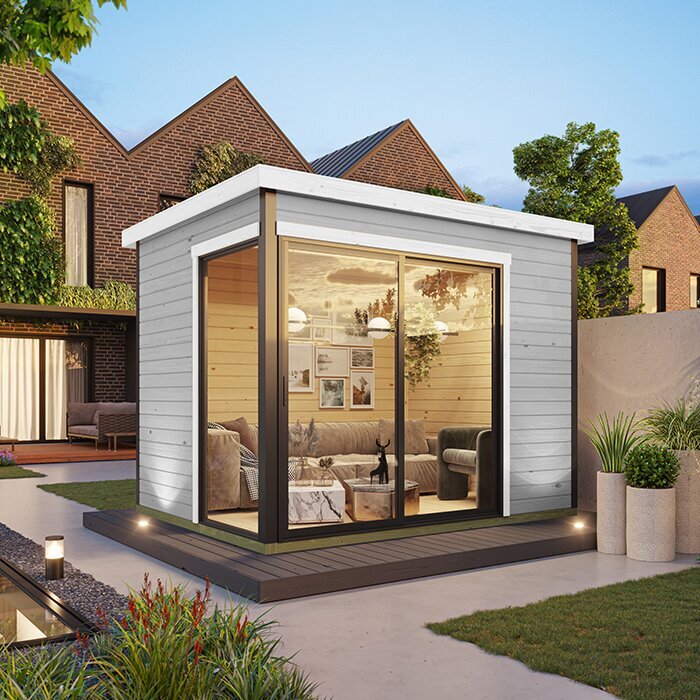
Appearance still matters, but pictures can make a shed look smaller or more open than it will in your garden. Compare its proportions with the marked footprint and consider how its colour and visible sides will sit beside fences, planting and the house. For the Wooden Garden Shed S listing, check the actual material, finish, measurements and care guidance in the product information rather than inferring them from the listing name. A design that looks right in a photograph should also work with the site and the maintenance you are willing to do.
05
Check delivery and assembly before ordering
A corner can be easy to reach on foot but difficult to supply. Check the width of the driveway, gate and side passage, the route around the house and any steps or tight turns. Ask what the delivery arrangements involve, where the order will be left and whether the delivery team can reach the intended access point. If the product is supplied in packages, request their dimensions where these are not stated, then compare them with the route and any place where you can safely set them down. Do not assume that delivery to the property means delivery to the garden corner.
Find out whether assembly is included or needs to be arranged separately, and what the instructions say about tools, people and preparation. If you expect to assemble it yourself, make sure you can follow the requirements and have room to work; otherwise, include a suitable installer in your plans. Compare the full expected cost, including the shed, delivery, base preparation, assembly and any finish or fittings you choose. Confirm the exact model and included components in the current product information before placing an order, rather than relying on an image or an earlier note.
Make a final shortlist using your measurements
A short comparison table can bring the main checks together. For each option, record confirmed outside dimensions, interior measurements, usable height, doorway size, required base, clearance and care instructions. Add notes on delivery access and assembly, and mark any missing information as something to confirm rather than filling the gap with an estimate. Then check each candidate against the sketch of the corner and your storage list. This makes trade-offs clear: one option may occupy less garden while another offers a more useful interior, but only the measurements and details can establish which fits your needs.
Before committing, mark the proposed footprint and door area on the ground once more, then walk the route you will use with the items you plan to store. Check that the layout still leaves access to the rest of the garden and that you can reach the shed for routine care. Confirm that the product page and any drawing refer to the same model and configuration, and resolve questions about dimensions, base or delivery before ordering. A careful fit check is more useful than choosing the shed that appears smallest or most spacious in a photograph.
Frequently asked questions
Can a garden shed sit directly in the corner against two fences?
Not without checking the shed’s instructions and the space you need to open doors and maintain it. Measure the clear area, including any projections, and check the requirements that apply to your property with your local council or other relevant authority before committing to a position close to a boundary.
What if the corner is not square?
A square corner is not essential, but the actual shape matters. Map the boundaries and obstructions, then mark out the shed’s full footprint to see whether it fits. Compare that outline with the product’s confirmed outside dimensions rather than assuming the fences meet at a right angle.
Which garden shed dimensions should I compare?
Check the outside width and depth, including any projecting parts, as well as internal dimensions, usable height and the clear doorway opening. Also look for the required base size and any stated clearance. If a measurement or drawing is missing, ask for it before ordering.
How much room should I leave around a garden shed?
There is no single clearance that suits every shed and site. Follow the product instructions, allow for the door to operate and leave enough access for the maintenance it requires. Check any requirements that apply to your property rather than assuming a tight fit is acceptable.
How can I tell whether a small shed will hold my equipment?
Measure your largest items, including handles, and check that they will pass through the doorway and fit inside in the arrangement you have in mind. Mark out the footprint and door area in the garden, then compare the product’s confirmed internal measurements with your inventory.
The best garden shed for a corner is the one whose confirmed dimensions suit the real shape of the site and whose door, base and maintenance needs fit your routine. Measure the corner, test the footprint and access route, then compare product details against the items you intend to store. That way, the space works as part of the garden rather than becoming an awkward spot to get into or look after.
