
What to Consider When Buying a Garden Shed with Folding Glass Doors
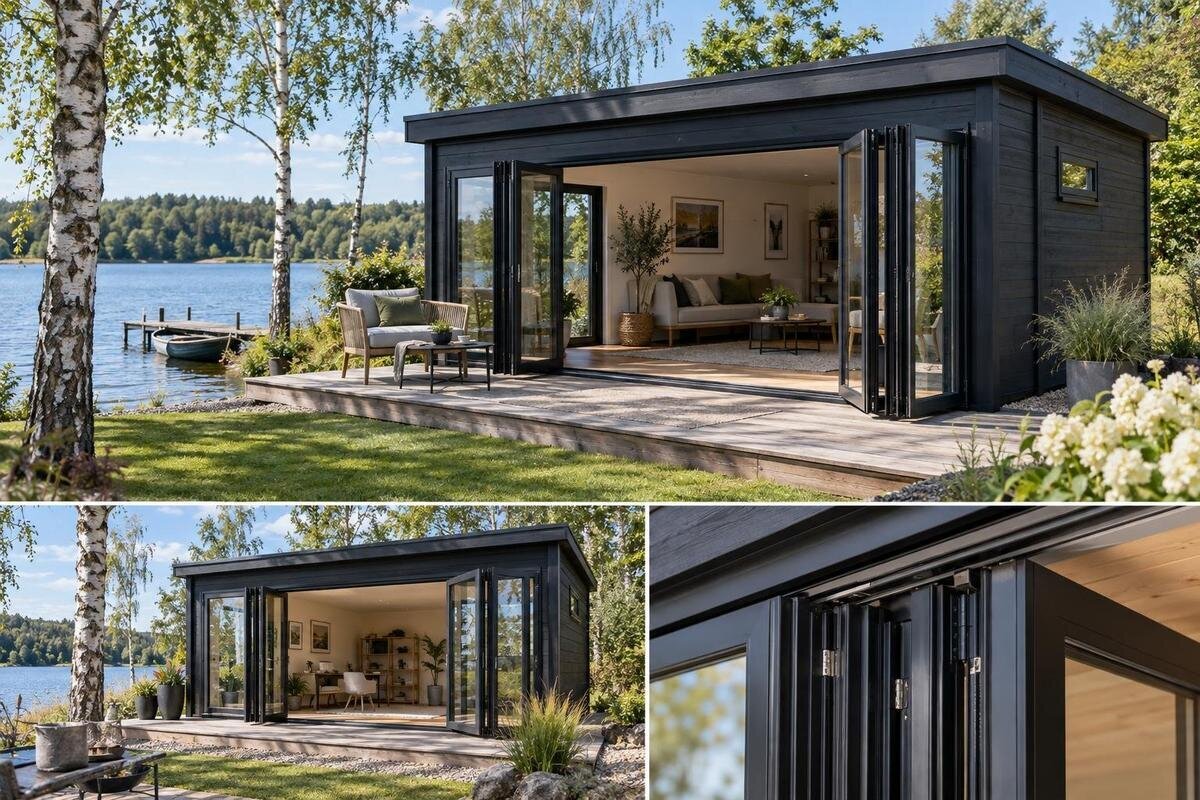
Garden shed buying guide
Looking to buy a garden shed with folding glass doors? The opening can make a garden room feel connected to the outdoors, but the panels need room to fold and stack without blocking access. Their operation, clear opening and threshold affect everyday use just as much as the shed’s footprint. Before ordering, measure the site and approach, decide what the shed must do, and check the product-specific details for the doors, glazing, construction and delivery. Photographs alone cannot answer those questions.
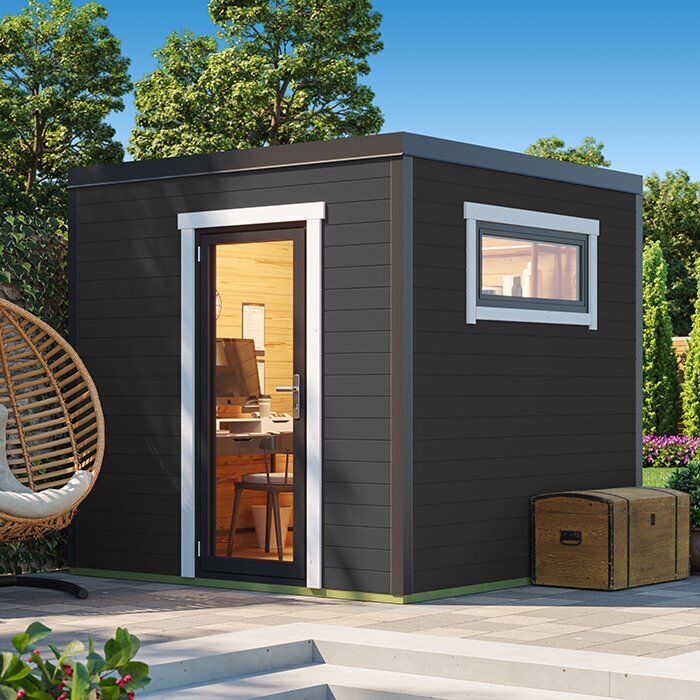
Decide how you will use the shed
First decide what job the shed needs to do. Storage for a mower, bikes or seasonal gear has different priorities from a place for potting, hobbies or occasional sitting. List what needs to fit, note the largest item’s dimensions and how you will carry it in, and decide how often you need access. If you plan to add a bench or shelving, include their footprint and enough room to stand and work. A broad-looking glazed opening is only useful if it suits the task and does not leave the working area crowded. Think about whether you can reach frequently used gear without shifting other items.
Separate essentials from preferences: capacity, daylight, privacy and how much you want the opening to connect the shed to the garden. Make a separate note if you expect regular work inside. Do not assume a garden shed is automatically set up as a year-round workspace; check its exact floor, glazing, ventilation and weather-performance details, and ask a qualified professional about any services you plan to add. Treat garden shed Verdana 1 as a listing to inspect for stated dimensions and inclusions, not as proof drawn from its name or picture. That keeps the decision tied to published information.
Measure the site and the approach
Measure the proposed position in metres and compare the available space with the listing’s outside dimensions, not just a floor-area figure. Check what those dimensions cover: roof overhangs, eaves, the door frame or other projections may be shown separately. Mark the likely base outline on the ground with string or removable markers, then note nearby fences, retaining walls, trees, garden beds, drains and outdoor furniture. Allow a practical route around the shed for opening the doors and routine care, rather than squeezing it into the only gap on the plan.
Measure the approach as carefully as the final spot. Record gate width, tight turns, steps and any low overhead obstruction between the street or driveway and the intended location. The assembled shed or its parts need to reach the site. Mark the area required for the folding panels as well as the closed footprint, including any swing or stack. A scaled plan can reveal where a fence or path might interfere. When viewing garden shed Verdana 2, check which published dimensions refer to the building and which refer to the roof or opening. Take these measurements before comparing sizes, because a nominal footprint does not show the full working area.
Understand how the folding doors open
The label folding glass doors does not describe every layout. Ask for a drawing that shows how many leaves there are, which way they fold, where they stack and whether the panels open to one side or split between both sides. Check whether a leaf can be opened independently for everyday entry, or whether the whole set has to move. Confirm whether the doors fold inwards or outwards and how they are secured in each position. These details affect furniture placement and the route past the entrance; do not assume every glazed folding system clears the full width. A sales image may show the doors partly open without showing the limits of their movement.
Use the open-position plan, rather than a staged photograph, to compare the usable opening with the width the front of the shed appears to offer. Mark the likely stack position on your site plan and check whether it overlaps a path, outdoor setting or planting you want to keep. If you are reading the Durano garden shed listing, look for an explicit description and drawing of the opening mechanism; do not infer folding, sliding or swing movement from a model name. Ask for written clarification if the page does not establish how the panels move. A small difference in the open position can change how you use the space beside the building.
Check the clear opening and threshold
Compare the clear opening with the items you actually need to move through it. Overall shed width and advertised opening width are not the same measure: frames, stiles, handles and folded leaves can reduce the space left for passage. Ask for the clear width and height when the doors are in the position you expect to use, and check whether the measurements are taken at the narrowest point. A mower handle, bike or storage box can be awkward to angle through even when its nominal width seems close. Measure the item at its widest point, including handles or attachments, and allow room to turn it.
Look at the threshold too. Ask how the floor meets the doorway, whether there is a raised sill or track, and how that transition affects carrying heavy or wheeled items. Water management and ease of sweeping are also worth discussing, but do not assume a low threshold is available or suitable for your site. For the Veltor 1 listing, look for stated entrance measurements and threshold details, if provided, and request the same information for any other candidate. Confirm that handles and locking hardware do not conflict with stored gear or narrow the passage. Judge the entrance in everyday use, not only with every panel folded back.
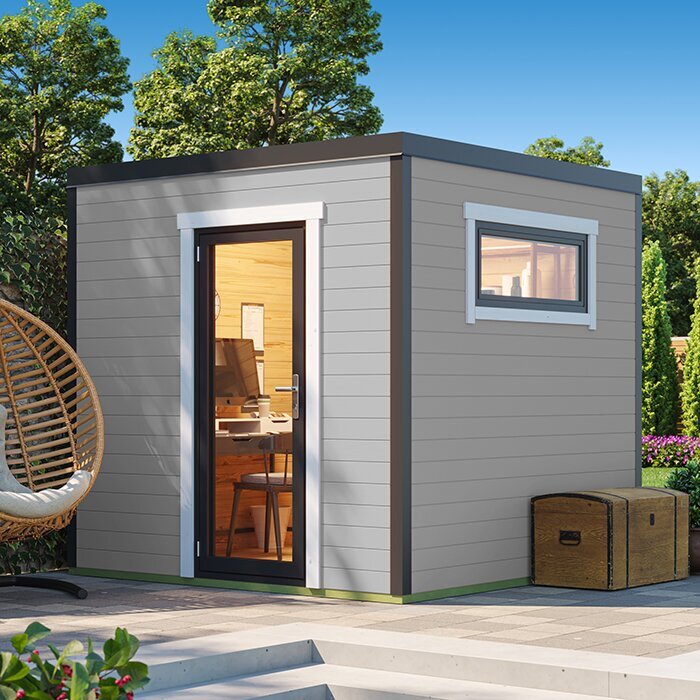
Compare glazing, frames and weather details
Glass is not a complete specification by itself. Ask what glazing is used, what material the frames and fittings are made from, and what information is supplied about seals, hinges, pivots and locking points. If the shed will be used often, it is worth knowing how the door hardware is described and where replacement parts can be obtained. Check whether finishes or other components shown in product images are included or optional. For details that affect safe use or long-term performance, rely on the product documentation or seek advice from someone qualified to assess the exact model rather than guessing from its appearance.
Consider the conditions at your site. Wind exposure, heavy rain, direct sun, humidity and salt air can all make product-specific performance and care information relevant. Ask whether there is stated information for the complete door assembly, what installation conditions it assumes, and how the frame, seals and hardware should be maintained. A general word such as weather-resistant does not tell you how a particular model performs in your location. On the Orello 1 listing, look for explicit glazing and door details, and ask for model-specific information if the page leaves important points unclear.
Consider privacy and the view from inside
Think about the view through the doors when they are closed as well as the opening they create when folded back. From the spot you have in mind, look towards neighbouring windows, the street, outdoor seating areas and places where stored items might be visible. A shed that feels private in a product image may have a different outlook on your section. Consider how the door position relates to shelves, a workbench or a chair, so the panels do not place the main activity directly in an exposed line of sight.
Daylight and visibility are linked: glass can brighten the view into a shed, but reflections or direct sun may also affect how the space feels. Stand at the intended location at the times you are likely to use it and consider the view from inside and outside. If you are thinking about blinds, curtains or an applied treatment, confirm that the product maker allows it and that it will not interfere with door movement or care. Use the Modano 1 listing to check any stated glazing and dimension details, then judge actual sightlines on site; a product image cannot show your neighbours’ windows or your preferred furniture layout.
Check construction, maintenance and assembly
Look beyond the doors and read the construction information for the exact model. Check what is specified for the walls, roof, floor, frame and finish, and which parts are included in the quoted product. Find out whether the product information describes a complete structure or leaves particular components to be supplied separately. Assembly drawings can help you understand the layout and identify questions, but a photograph or model name is not a substitute for written details. When reviewing the garden shed M listing, look for the same itemised information you would want for any candidate, rather than assuming materials or construction from the name.
Folding doors add moving parts that need to work smoothly over time. Ask what care the maker recommends for the particular hinges, pivots, catches, seals or other hardware specified, and whether the guidance covers cleaning and adjustment. Check how often finishes need attention, if any such schedule is supplied, and what parts may require replacement. Separately clarify who assembles the shed, what preparation is expected before assembly and whether those tasks are included in your quote. Product-specific instructions are more useful than a general promise of low maintenance, especially when the door system will be used regularly.
Compare the full order, not just the shed
Compare written quotes on the same basis. Check whether each figure includes the structure, glazing, door hardware, floor, finish and any items shown in the images. Ask separately about freight to your address, unloading, assembly and any site preparation, so you can see what you will need to arrange yourself. If something is optional, ask for its price and whether it is needed for the way you intend to use the shed. Do not assume that accessories, finishing or installation are included simply because they appear in a product photograph.
Before ordering, make sure the paperwork sets out the exact model, its stated dimensions and door configuration, the items supplied, delivery arrangements and any exclusions. Ask about the terms for changes, cancellations, returns and warranty coverage; do not infer them from a general product description. If delivery access is restricted, explain that before accepting a quote and ask how unloading is handled. Use the garden shed S listing as another page to review for explicit inclusions, then compare it with the other candidates in writing. A like-for-like comparison is more reliable than choosing on a headline price alone.
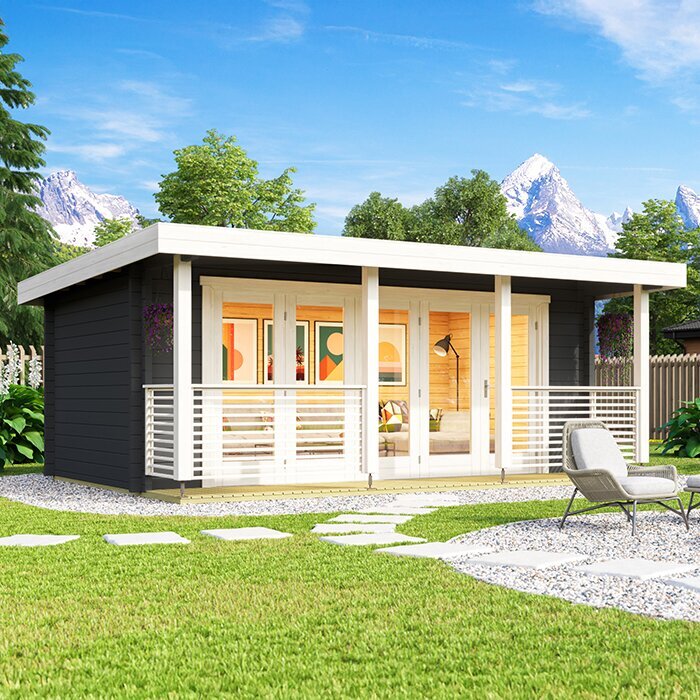
Check site preparation and delivery access
The position needs to work for the doors and for the building itself. Notice whether the ground is sloped, soft or prone to holding water, and whether trees, roots or garden features could affect the chosen location. Check that folded panels will not hit a fence, outdoor furniture or plants, and that the entrance will open onto a usable path. Ask the supplier or installer what base is required for the specific model and who is responsible for preparing it. If the site is uneven or drainage is a concern, have a qualified professional assess it rather than relying on a guess.
Think through the full delivery route, not just the driveway. Measure gates and narrow passages, note steps and turns, and check for overhead obstructions or places where items cannot be unloaded. Ask what size the delivered components or packaging will be and what access the delivery crew needs. If consent, covenants, a lease or other property restrictions might apply, check with your local council or a suitably qualified adviser before committing. Requirements depend on the circumstances of the property, so do not rely on a neighbour’s experience as a substitute for checking your own.
Bring the comparison together
Put the candidates side by side using the same questions: outside dimensions, clear opening, threshold, panel direction and stack position, glazing and frame details, maintenance guidance, included components and delivery arrangements. Mark any answer that is missing instead of filling the gap with an assumption. Then separate must-haves from preferences. A model that looks right but has no clear drawing of its door operation may be harder to assess than one with complete information, even if the two appear similar in photographs.
Before you commit, mark the closed footprint and open-panel area at the actual site, then walk the route you will use to carry items inside. Recheck the largest item’s dimensions against the stated clear opening and confirm that the open doors leave the paths and nearby spaces usable. Make sure the written order matches the details you compared, including any agreed delivery or assembly arrangements. If an unresolved question affects fit, weather performance or intended use, settle it before ordering rather than treating it as a minor detail.
Frequently asked questions
How much clearance do folding glass doors need?
There is no single clearance figure: the number and width of the panels, their opening direction and where they stack all affect the space required. Ask for a drawing showing the doors fully open, then mark that area on your site plan and check it against paths, furniture and planting.
Do folding doors always open the whole front of a shed?
Not necessarily. The layout may include panels that stack to one side, split between both sides or leave some of the frontage fixed. Check the open-position drawing and ask for the measured clear opening rather than assuming the whole front becomes an unobstructed entrance.
What should I measure before ordering?
Measure the intended base area, the shed’s stated outside dimensions, nearby obstructions and the route from the road or driveway to the site. Also check the clear opening, threshold and space taken up by the panels when folded. Include the dimensions of anything bulky you need to move inside.
Can I use a garden shed with folding glass doors as a home office?
Do not assume that a garden shed is ready for regular work use. Check the specific information on flooring, glazing, ventilation and weather performance, and get qualified advice about any services you plan to add. If consent or property restrictions might apply, check with your council or a suitably qualified adviser.
What should I ask about the glass and weather performance?
Ask for the product-specific details on glazing, frames, seals, door hardware and care. For a windy or coastal site, ask what performance information is available for the complete door assembly and whether it applies to your conditions. Do not rely on a general description or a photograph.
Folding glass doors are worth choosing when their opening pattern, stack position and threshold suit the way you will use the shed—not simply because an open-door photograph looks spacious. Measure the site, the route in and the usable opening, then compare model-specific information on glazing, weather performance, care, assembly and inclusions. If a detail that affects fit or performance is unclear, resolve it before placing the order.
