
Buying a Garden Shed for a Holiday Home
Garden shed buying guide
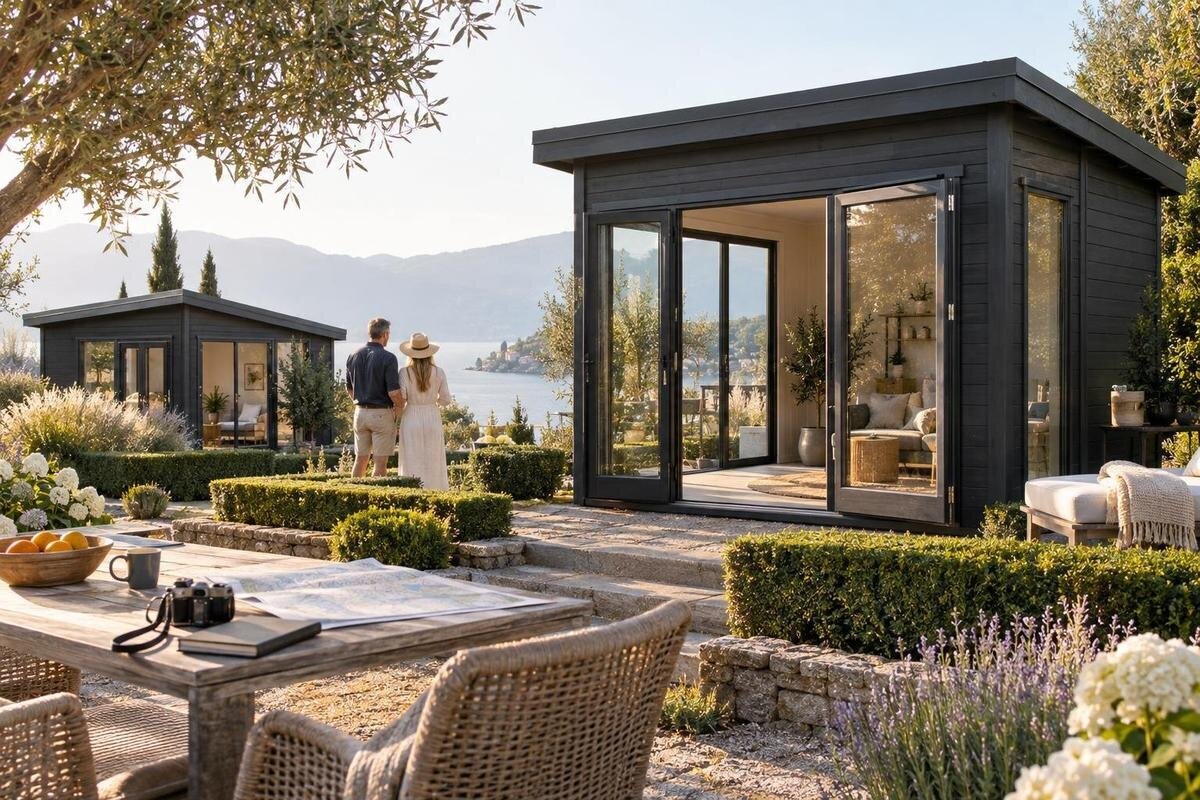
At a holiday home, a shed may need to hold equipment through long gaps between visits, yet it may be difficult to inspect or maintain as often as a building at your main home. That changes the buying question: choose storage that fits the things you genuinely leave there, works with the site and access route, and has care requirements you can manage. Start by listing what needs a permanent place, then check measurements, day-to-day use, security and order details. A careful comparison is more useful than choosing by a product name or an attractive photograph.
01
List what the shed needs to hold
Make an inventory before opening product tabs. Split it into items that live at the holiday home year-round, seasonal equipment that comes out for certain visits, and things you currently bring each time. Include garden tools, outdoor furniture, maintenance gear or recreation equipment only if you genuinely plan to store them there. Note the largest item's length, height and awkward shape, not just the number of boxes: a long-handled tool or folded chair uses space differently from a stack of small containers. Record quantities, too. A note that says garden gear is too broad to guide a size decision; a list of actual items gives you something to compare with a shed's stated dimensions.
Separate must-haves from occasional extras. At a holiday property, anything left behind may sit untouched for weeks, so consider whether it is appropriate to leave there and whether you can retrieve it without shifting everything else. Mark items that need frequent access separately from seasonal pieces. Compare the list with options such as the Verdana 1 listing, checking published dimensions and internal layout details if provided rather than guessing from a name or image. If a key measurement is not available, ask before treating the item as a fit. The inventory should set the capacity target; browsing should not create one.
Measure the site and clearance around the shed
Measure the proposed position on the ground and mark the full outside footprint. Use the maker's stated external dimensions, including any projections shown in its drawing, rather than estimating from a photo. Check room to use the entrance, approach with stored items and move around the building for cleaning or upkeep. A shed may fit within a bare rectangle yet become awkward if a fence, hedge, tap, tree or parked vehicle blocks the route. Record the nearest fixed obstacles and note where rainwater collects; a convenient patch should not be treated as suitable simply because it looks level in a picture. Take measurements from fixed points so you can reproduce them when comparing another option.
Check the intended position at different times of year, too: a summer route may be obstructed by garden equipment, a vehicle or damp ground during another visit. Compare the marked area with the Verdana 2 listing only after locating its published dimensions and any stated clearance or base requirements; the model name alone cannot establish fit. If boundaries, council approvals, ground preparation or installation conditions are uncertain, confirm applicable requirements with your local council or a qualified installer before ordering. Use the same method for each shortlisted option, keeping access space separate from the building's footprint. That is more reliable than choosing first and trying to make the site work afterwards.
02
Check the route into the shed
Trace the whole route from the parking or drop-off point to the proposed shed, not just the last few metres. Note gates, narrow turns, steps, changes in level, soft ground and places where someone would need to carry a bulky item. A clear path matters when moving equipment between the car and storage, especially if you arrive with several items at once. Test the route using the largest object on your inventory list: measure its width and length, and consider whether it can be turned through each opening without lifting it over obstacles. This practical check can reveal a site problem that a plan view misses. If access is shared, identify who needs to keep the route clear.
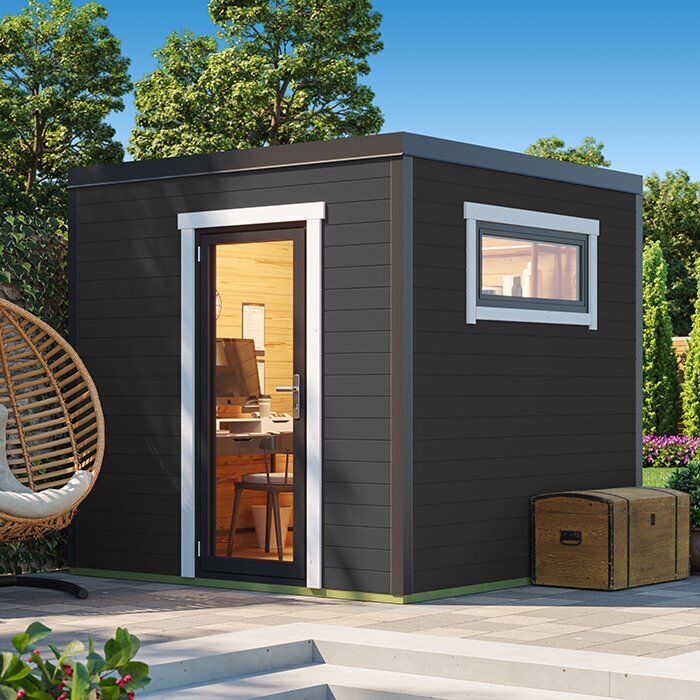
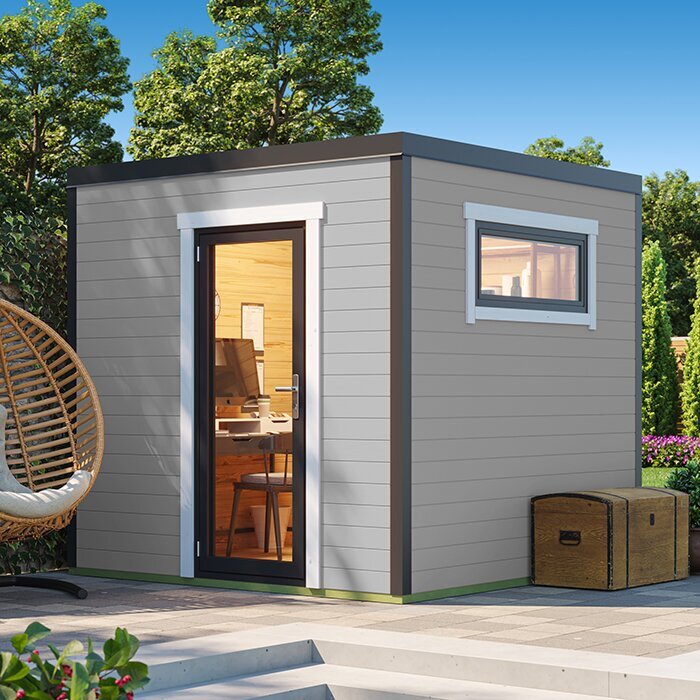
Measure the clear entrance opening, not only the wall or building width, and compare it with the widest item you expect to carry through. Check the opening method shown in the product information, the space it needs when used, and whether a threshold or step would make moving a trolley or loaded box awkward. For the Durano garden shed listing, look for those details in the current specification or ask the seller; its name is not proof of an opening size or arrangement. Keep the delivery and assembly route in mind as a separate check, because the route for a completed shed's contents may not be the one needed to bring components onto the property.
Match usable space to the stored items
An outside footprint does not tell you how much storage the inside provides. Check stated internal width, length and height, and any drawings that show areas that may be difficult to use; do not assume all the floor is accessible or that the walls are full-height throughout. Separate the space needed for bulky items from the space you might use for smaller ones, and consider how often you will need to retrieve each. If the shed will hold equipment for garden maintenance, reserve an accessible place for it rather than planning to stack unrelated belongings in front. A simple sketch of storage zones helps expose blocked access before you order.
Use the same inventory for every option, then check whether published dimensions describe the internal space, external size or both. Look for usable entrance height as well as floor dimensions, and ask whether shelves or storage fittings are included instead of budgeting as though they are. The Veltor 1 listing is another page to compare using those measurements if they are provided; the label alone does not indicate capacity. Leave some practical room for changing storage needs, but do not inflate the target for items you are unlikely to keep at the property. A shed sized from actual measurements is easier to arrange than one chosen on an untested assumption.
03
Consider conditions while the shed is unattended
Long gaps between visits make the site's exposure worth considering alongside storage volume. If you can, observe the spot after rain, in strong sun and when seasonal leaves or debris are present. Note whether water runs towards it, whether overhead plants drop material, and whether the proposed position is sheltered or exposed. These observations describe the site; they do not guarantee how a particular shed will perform. Match them to the material, finish and use information provided for the model, and ask for clarification about any condition that matters to the contents. Do not infer weather resistance, ventilation or moisture control from a product photograph. A visit in one set of conditions is only a snapshot.
Think particularly about items that may stay stored through more than one season. Soft furnishings, paper packaging, tools and other belongings can have different storage needs, so do not leave anything that requires a specific environment in a shed unless the product information supports that use. For the Orello 1 listing, check the stated construction and care information as you would for any shortlisted shed; the product title does not settle questions about finish or exposure. If moisture management matters, ask the seller what is specified and plan to inspect the contents when you return, rather than assuming a closed building will suit every stored item.
Compare maintenance with your access to the property
Upkeep can be more challenging when the property is not part of your regular weekly routine. Before choosing, find out what regular inspection and care the particular shed calls for, who can do it and how easy it is to reach all surfaces. If you are considering a timber option, ask whether it arrives with a specified finish or treatment, what care is required afterwards and what products or methods the supplier recommends. Do not assume that two timber sheds have the same needs, or that an attractive or finished appearance tells you what future work is required. Make the expected tasks part of the purchase decision.
Compare maintenance instructions in writing across your shortlist. Clarify how often the supplier recommends checks, what cleaning or refinishing involves, and whether particular parts or finishes need separate attention. If a task would require a return journey or local help, note that practical effort alongside the initial purchase and installation costs. Use the Modano 1 listing as a prompt to consult its own product information, not as evidence of a particular material or maintenance schedule. A realistic maintenance calendar can help you judge whether the stated care is workable while the property is empty.
04
Plan for security at an unoccupied home
A shed at an unoccupied property should not be treated as secure storage for every valuable item. Decide what can reasonably remain there and what should come back with you or be stored elsewhere. Consider whether the location is visible from the home or access route, whether routine visitors can find it, and whether keeping it out of sight would make legitimate checks harder. Visibility alone does not provide security, and a lock alone cannot remove all risk; treat location, storage habits and documented security features as separate considerations. If tools are essential to maintaining the property, plan for backup access rather than assuming they will always be available.
Read the details of the actual door and lock arrangement and ask what hardware is included, what would need to be purchased separately, and whether a preferred lock can be fitted. Do not infer lock strength or resistance to break-ins from a listing title or image. For the Timber Garden Shed M listing, verify the security information rather than treating the model name as a guarantee. Check your insurance policy or ask the insurer whether it sets conditions for equipment kept in a separate shed; do not assume garden contents are covered on the same terms as items inside the house. If a cleaner or groundskeeper needs access, decide how keys will be controlled. A brief inventory also makes checks on stored items more organised.
Confirm what the order includes
Before placing an order, establish exactly what the quoted product includes and what needs to be arranged separately. Check the listed components, floor or base provisions, roof covering, fixings, door hardware and any optional fittings against the current specification; these details vary, so do not infer them from a photograph. Ask who is responsible for site preparation and assembly, whether installation is available for the address, and what access a delivery or installation team needs. Measure gates and turning areas for delivery as well as for your own use. If an item or service is not explicitly described, treat it as unconfirmed until the seller clarifies it.
Include the full order in your budget: the shed, any required base or preparation, freight, unloading, assembly, additional fittings and maintenance items you expect to use. Ask whether delivery can reach the property and whether there are constraints on vehicle access or on-site handling, especially if you will not be present. The Wooden Garden Shed S listing should be assessed in the same way: verify what is supplied and what remains your responsibility, rather than reading inclusions into its name. Read the seller's stated payment, cancellation, return and warranty terms before committing, and keep the order confirmation for whoever coordinates work at the holiday home. Agree who will receive and inspect the goods if delivery takes place while you are away.
05
Keep shared storage easy to manage
Storage should be simple enough for you or another authorised person to use without searching through a pile. Divide the shed into practical zones, such as routine garden equipment, seasonal outdoor items and property-maintenance supplies, based on what actually belongs there. Keep frequently used items near the route in, and label opaque tubs so their contents remain clear after months away. Leave a clear way to reach each group rather than placing seasonal boxes in front of everyday tools. A short written inventory can note what should be in the shed and what has been taken away at the end of a visit. This makes it easier to spot missing gear or unwanted accumulation.
Where a cleaner, gardener, caretaker or family member may use the property, agree which supplies they can access and where they should go back. Keep owner-only equipment separate from shared items, and pass on access instructions securely rather than relying on memory. Avoid using spare capacity as a reason to leave belongings without a purpose; boxes no one can identify make future visits less straightforward. If you revise the list after each stay, the shed can adapt as activities change without automatically needing a bigger building. The aim is practical storage that the people who visit can check and reset, not a perfect display.
Compare the shortlist on the same evidence
Once you have a shortlist, compare each option in the same order: does its footprint fit the measured site, can the largest item pass through the entrance, is the usable space sufficient, and can you manage its stated upkeep and security arrangements? Record evidence beside each answer, such as product dimensions, a drawing, the seller's written reply or an installer's assessment. Keep unknowns visible instead of marking them as a pass. A model that cannot be checked against a must-have should not be treated as equivalent to one with clear information, even if its headline description sounds promising.
Then compare the full cost and effort of ownership, not just the listed building. Include site preparation, delivery, assembly, separate fittings and recurring care where these apply. Set a limit for optional storage that would only be useful in a hypothetical future, and decide whether reducing the inventory would resolve a capacity gap more simply. If no option meets the must-haves, pause and ask for missing details or reconsider the location; do not compromise on a requirement that cannot be changed after delivery. This gives you a reasoned choice for the holiday home's actual pattern of use.
Frequently asked questions
How big should a garden shed be for a holiday home?
Base the size on a measured list of items you will leave there, including the largest item's dimensions and how often you need to reach it. Compare internal measurements and entry clearance, not just the outside footprint. Allow for realistic changes in what you store, but avoid sizing around belongings you do not expect to keep at the property.
Can I leave valuable equipment in the shed while I'm away?
Do not assume a garden shed provides secure storage. Check the actual lock and door details, ask what hardware is included, and speak with your insurer about any conditions for items kept outside the home. Consider taking particularly valuable equipment with you or storing it elsewhere.
What should I measure besides the shed footprint?
Measure the route from the parking area to the shed, including gates, turns and steps, as well as the clear entrance opening. Check the space needed to use the entrance and move around the building. Compare these measurements with the largest item you plan to store.
Does a garden shed order include a base or installation?
Do not assume either is included. Check the current product information and ask the seller what is supplied, what site preparation is needed, and whether delivery, assembly or installation is available for the property.
How can I manage maintenance between visits?
Check the care instructions for the specific shed and decide who can carry them out while the property is empty. If regular inspections or work are needed, plan who will do them and how they will access the site. Do not infer maintenance needs from a product name or photograph.
A suitable garden shed for a holiday home is one that fits the measured site, stores the items you actually leave there and can be accessed and maintained between stays. Check the product information and order terms for each option, and make any unresolved site or installation questions part of your decision. The best fit is practical storage without unnecessary capacity or care demands.
