
Can You Put a Hot Tub on a Deck in New Zealand?
Site preparation
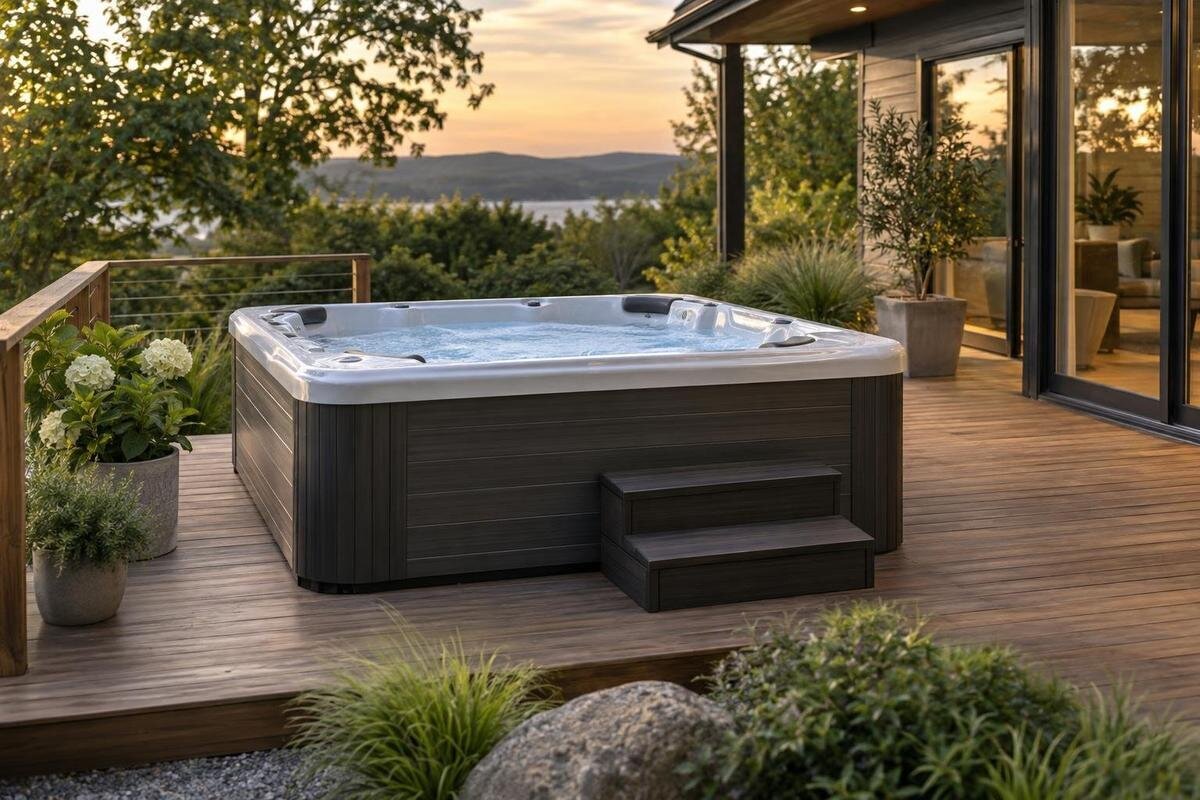
Putting an outdoor hot tub on a deck may be possible, but the deck’s appearance cannot tell you whether it can carry the filled, occupied unit. The answer depends on the actual hot tub’s verified load and support instructions, matched to the construction and condition of the specific deck. Before buying, obtain current model information and have a qualified structural engineer assess the proposed position and the complete supporting structure. The outcome can guide whether to proceed, commission a designed upgrade, choose another location or reconsider the model. Checking before purchase is more useful than trying to judge strength from the boards alone.
Before you order 1
Can your deck support a hot tub?
The answer depends on the deck’s construction and condition, as well as the exact hot tub and the way it is intended to be used. The unit itself is only part of the load: water and the people using it also add weight. That load has to pass through the deck surface and frame to the supports and foundations below. The complete path matters, so a strong-looking top layer cannot establish how the whole structure will perform. Nor can the deck’s age, past use for outdoor furniture or a general description such as “heavy-duty” settle the question. A deck’s usual use is not evidence that it has been assessed for a water-filled tub in this particular position.
Treat deck suitability as a specific structural assessment, not a DIY test. Walking across the boards, bouncing on them, placing a heavy object on one spot or asking whether they feel firm does not reproduce the proposed hot tub’s full occupied load or assess concealed framing and supports. A deck that has carried people comfortably may still have unknown details that matter for this different use. If someone quotes a general load rating, ask what structure, area and assumptions it covers; do not assume it applies to this proposal. The useful decision is based on model-specific information and a qualified assessment of this deck and the proposed location.
Confirm the model’s weight when filled and occupied
Before comparing models, ask the manufacturer or supplier for current, written information for the precise product and configuration. Request a total filled-and-occupied load that includes the tub, water and the intended occupants, or confirmed component figures and a clear explanation of what remains to be established. Ask which occupant assumption the figures use and whether any parts normally installed with the tub are excluded. Tell the supplier how you expect to use it; an empty-unit figure alone is not the total the engineer needs. For a shortlist including Bloomcabin Hot Tub Cove 2, the catalogue name identifies the item, not its weight or suitability for a deck.
Get the current placement and installation instructions for that exact model, not a generic page for a product range. If a published figure is ambiguous, absent or limited to empty weight, ask the supplier to clarify it and provide whatever the manufacturer can confirm in writing. Do not infer water volume, occupant numbers or weight from a model number, product image or another retailer’s listing. Pass unresolved questions to the engineer rather than filling gaps with an estimate; they can tell you whether the available information is enough to assess the proposal or whether a confirmed specification is still needed. Keep the documents and the supplier’s responses together so their assumptions can be checked.
Before you order 2
Why the deck frame matters as well as the boards
Deck boards are the visible walking surface, not the whole structure. Beneath them may be joists and bearers, joined by fixings and carried by posts, piles or other supports; arrangements vary between decks. The structural engineer needs to identify how the frame carries load and where the supports transfer it onward. Board condition alone cannot show the framing’s size, spacing, direction, material or condition, nor whether its connections are sound. These are reasons to have the actual construction identified and assessed, not a checklist for a homeowner to use to certify a deck. If parts of the structure are concealed, tell the engineer when arranging the assessment.
How the deck is attached or supported, and where the hot tub is proposed, can change what needs checking. An edge, opening, stair, extension or section with a different support arrangement may not perform like another part, but only an engineer can evaluate the actual structure. Do not assume the tub’s load will be shared evenly across every board, or that a general deck rating applies to the chosen position. If Bloomcabin Hot Tub Haven 6 is on your shortlist, request details of how it must be supported and give the engineer the precise location.
Record the deck’s condition and history
Tell the engineer what is known about the deck’s history. Helpful records may include original drawings, earlier engineering reports, repair or renovation details, and information about supports or materials, if available. Note changes since construction—such as an extension, a replaced surface or altered stairs—because the present structure may not match older plans. An old drawing can help explain the deck, but it does not establish its current condition. If records are missing, say so rather than treating an assumption about how the deck was built as fact. Photos from accessible viewpoints and a clear mark-up of the proposed tub position can help explain the site before an inspection is arranged.
Describe any signs you have noticed, such as movement, unusual flex, loose connections, persistent dampness, soft spots or earlier water damage. These observations help direct the professional’s attention, but none is a stand-alone test for hot tub suitability. A fresh surface can conceal the condition of framing below, and some supports may not be visible from above. Do not remove structural parts or open the deck just to investigate unless a qualified professional advises how to do so. The goal is an accurate picture of the actual structure and its condition, not a homeowner diagnosis from a short visual check.
Before you order 3
What a structural assessment should cover
Ask a qualified structural engineer to assess the proposed hot tub at the exact location, using manufacturer-confirmed load and placement information. The assessment should cover the deck’s construction and framing, supports and connections, current condition, and the route by which load is transferred through the structure. It should also consider how the tub’s specified support arrangement relates to the deck at that position, rather than treating the whole platform as interchangeable. The engineer can decide what inspection or site information is needed; photographs alone may not reveal hidden framing or foundations. Ask whether a site visit or further access is needed before they reach a conclusion.
Give the engineer available plans, photos, details of repairs or changes, the intended use and the exact tub under consideration. Ask for a written conclusion that identifies the model and location assessed, whether the deck is suitable as it stands, and any limits, repairs or reinforcement that must be addressed first. If information is missing, the report or follow-up should say what remains to be confirmed instead of leaving you to interpret an ambiguous “looks fine”. For a proposal involving Bloomcabin Hot Tub Fjord 8, make sure the conclusion refers to that model and the configuration you intend to order.
Check the manufacturer’s placement and support instructions
Manufacturer instructions matter because the tub must be supported as its maker specifies. For the exact model, ask for the current installation or placement guide and confirm what it says about the supporting surface, support or contact areas, orientation and any restrictions relevant to a deck. Ask whether the information applies to your product’s exact configuration; a guide for a wider product range may not answer every question. Do not assume that similar-looking units share the same support requirements, and do not treat a product photograph as an installation specification. Share the written instructions with the engineer so they can assess the deck against the stated conditions.
If the documents do not make clear how the unit bears on its support, or which parts need support, get the manufacturer or supplier to clarify before the engineer gives a final view. The manufacturer describes the tub’s installation requirements; the engineer assesses whether this particular deck can meet them. Both answers need to line up. For Bloomcabin Hot Tub Aurora 10, use the product page only to identify the candidate, then request its model-specific documents. Do not translate a general phrase such as “suitable surface” into a conclusion about the strength of your own deck.
Before you order 4
Check New Zealand building and pool-barrier requirements
Structural suitability is separate from questions about building work and pool safety. If the deck needs alteration or reinforcement, ask your local council what current consent or other approval requirements apply to that specific work before it starts. Check current official New Zealand building guidance, including information from MBIE Building Performance, and describe the proposed work accurately. Do not assume an alteration is exempt or automatically approved based on a general online summary; ask the council to direct you to guidance that applies to the actual circumstances. Keep relevant advice alongside the engineer’s assessment and plans for any work.
Ask the council separately whether pool-barrier requirements apply to the intended hot tub and deck arrangement, and what information is needed to decide. Do not assume that a tub’s position above ground or on a deck settles the question, or that every outdoor setup is treated identically. If Aurora 10 hot tub is a candidate, identify it in your enquiry and provide the proposed location, access arrangement and any planned deck changes. Seek current guidance for that situation. Where the guidance is unclear, ask who can give you a project-specific answer.
Compare reinforcement with another location or model
If an engineer does not approve the deck as it stands, pause before ordering. That does not automatically rule out every deck or hot tub: ask whether a defined, engineer-designed reinforcement or repair could address the identified issue, and whether it covers the complete load path and condition concerns. Have the work specified by an appropriately qualified professional and use a suitably experienced builder to complete it. Do not improvise a change to a joist, post or connection, or assume extra boards will resolve a structural issue. Check any council requirements identified for the work before it begins.
Compare the assessment and any recommended work with the cost and disruption of moving the tub or selecting a different model. There is no meaningful universal price: assessment, design, access, materials, labour, repairs and any required approvals can all affect the total, so use site-specific quotes. If you consider an alternative such as Cove 2 hot tub, compare its confirmed filled-and-occupied load and support instructions, then ask the engineer whether the earlier conclusion still applies. A report for one model and position should not automatically be transferred to another, even if the alternative appears smaller.
Before you order 5
Compare product options using confirmed details
Compare product options using confirmed evidence rather than title numbers or presumed seating. A useful comparison record gives the exact product and configuration, the manufacturer’s empty and filled-and-occupied figures—or the confirmed data needed to establish them—and the current support and placement instructions. Record the source and date for each figure, and mark anything that remains unknown instead of filling the gap with an estimate. This record is not a substitute for engineering judgement; it helps make sure the professional assesses the right product rather than relying on assumptions from another listing. Include the exact deck position intended for each option.
Send the same set of questions to the supplier for each alternative so you can compare the responses on the same basis. For Haven 6 hot tub, record any outstanding questions alongside the confirmed details, just as you would for Cove 2, Fjord 8 or Aurora 10. Distinguish information the supplier still needs to provide from matters the engineer needs to assess. This makes it easier to see why a comparison remains incomplete, rather than treating a missing figure as an advantage or disadvantage. Resolve those gaps before choosing a model for the deck.
What to confirm before placing an order
Before you commit, confirm that the engineer has assessed the exact product and proposed deck position, not simply the deck in general. Keep the manufacturer’s filled-load information and support instructions together with the engineer’s written conclusion and any conditions. Include any council advice or approval relevant to structural work or pool-barrier questions. If a specification is still outstanding, identify who will supply it and whether the assessment needs updating when it arrives. A conversation, retailer description, product photograph or generic deck rating is not a substitute for project-specific information.
Use the assessment to make the buying decision. If the engineer confirms the deck is suitable for the intended model and the manufacturer’s placement conditions can be met, proceed within the report’s conditions. If reinforcement is needed, settle its design, cost, timing and any applicable approvals before committing. If suitability cannot be confirmed, consider another location or ask the engineer to assess a different model. Before ordering Fjord 8 hot tub, for example, make sure it is the model covered by the final assessment. If the model, position or intended use changes, ask whether the assessment still applies.
Frequently asked questions
Can I tell by walking on the deck whether it will hold a hot tub?
No. How firm the boards feel does not reveal the condition or arrangement of concealed framing, connections and supports, or establish how they will carry a filled, occupied hot tub. A qualified structural engineer needs to assess the proposed model and position using relevant manufacturer information.
What weight information should I ask for?
Ask the manufacturer or supplier for the complete filled-and-occupied load, including the tub, water and intended occupants. Check what assumptions and exclusions apply. If only the empty-unit weight or partial figures are available, ask what else can be confirmed and let the engineer identify any information still needed.
Does the hot tub need to sit over a joist or a post?
There is no position you should choose by rule of thumb. Give the engineer the exact proposed location and the tub’s manufacturer instructions. They can assess how that position relates to the actual deck frame and supports; do not assume one visible joist or post proves the whole arrangement is suitable.
Who should assess my deck?
Ask a qualified structural engineer to assess the deck for the specific hot tub and location. If reinforcement is recommended, have it designed and completed by appropriately experienced professionals. A product description, informal opinion or general builder’s assessment should not replace the structural assessment.
Do hot tubs on decks in New Zealand always need consent or a pool barrier?
A blanket yes or no is not reliable for an individual project. Ask your local council about the proposed deck work and whether pool-barrier requirements apply to the exact arrangement. Check current official New Zealand guidance, including MBIE Building Performance information, and treat these questions separately from structural suitability.
A deck is suitable only when the exact tub’s confirmed requirements and the actual structure have been assessed together. The right outcome may be to use the deck, strengthen it under a professional design, choose another position or reconsider the model. If the information or assessment does not support the original plan, treat that as a reason to revise it—not as permission to rely on appearance or guesswork.
