
Garden Shed Doors That Stick: Seasonal Movement and Adjustment
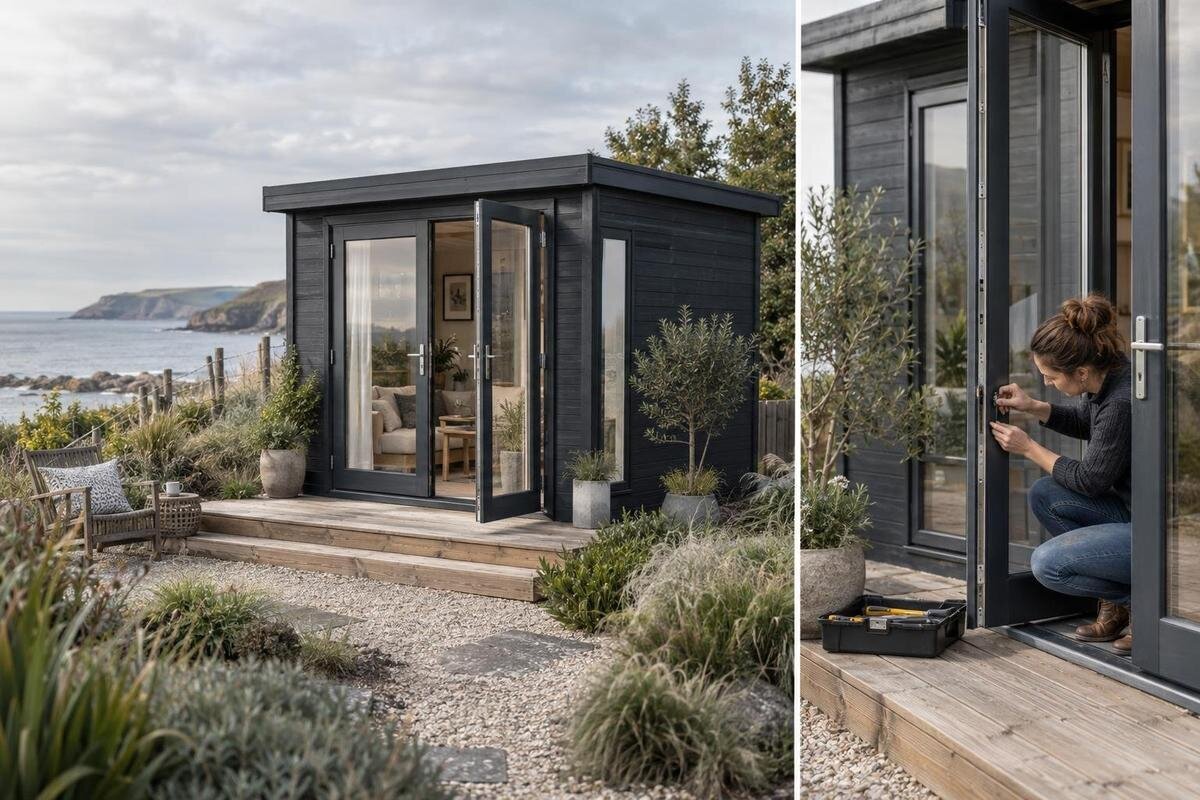
Garden shed maintenance
A garden shed door that sticks after rain can look like a simple case of swelling, but seasonal movement is only one possible cause. A loose hinge, a dirty track, a shifted frame or a latch that no longer meets its keeper can create much the same symptom. The useful first step is to identify where the door catches and whether the problem changes with the weather. From there, you can try safe, reversible checks, avoid forcing the door, and recognise when the shed’s frame or support needs a qualified look.

Note when and where the door sticks
Begin by noticing exactly when the door becomes difficult to move. Does it bind after rain, during a damp spell, only in the morning, or regardless of weather? Has the problem followed recent assembly, a strong blow, stored items being moved, or work around the shed? Record the date, conditions and whether the door is hinged or sliding. A short note over several days can reveal a pattern that a single test cannot. Don’t repeatedly push against the tight point to see if it will yield: that can stress hinges, rollers, the latch and the frame, and may create a second fault.
With the door closed, look at the visible gaps around its edges, then move it slowly without using the latch to pull it shut. Notice whether the first resistance is at the top, bottom, side or threshold, or whether it moves freely but stops at the catch. Check the floor and threshold for a moved item or grit as well as looking for fresh rub marks. Treat those marks as clues, not proof: a frame can shift and make an old mark irrelevant. If safe, compare how it opens from inside and outside. Stop if it feels heavy, unstable or needs force; a door that could fall or cannot be secured is not a routine adjustment.
How changing moisture can affect a timber door
Where a door or frame is timber, moisture in the air and wetting from rain can change its dimensions. Timber takes up moisture in humid or wet conditions and gives it back as conditions dry; movement is usually more noticeable across the grain than along it. Even a small change can narrow a clearance or alter how the door meets its latch, particularly if the door and surrounding frame respond differently. It does not mean every sticky door is swollen, and other materials do not behave in the same way. Treat a wet-weather pattern as a useful clue, not a diagnosis.
Look for local causes as well as the season: repeated splashback, water collecting at the threshold, a drip from above, or one area staying damp may affect the door edge or surrounding frame. If the door eases in a dry spell, that is useful information, but it does not prove the original fit is sound. Record whether the rubbing changes, remains constant or becomes worse, and avoid trimming the door to suit one set of conditions. A permanent cut made during a damp period may leave an unnecessarily large gap after the timber dries. Persistent damp or visible damage deserves investigation at its source.
Check the shed frame and base before adjusting the door
Before changing a hinge or latch, inspect the shed’s support and opening. From a safe position, look for a visibly uneven or displaced base, movement at the corners, a new gap where the frame meets the base, or a door frame that no longer appears square. Compare the door gaps with fixed joints around it; a change across more than one edge can point to movement beyond the door itself. Note any change rather than trying to correct it on the spot. Do not try to level the shed by inserting random wedges or lifting a loaded structure. A base or frame problem can make a careful latch adjustment temporary and may worsen if the cause is left alone.
If the support looks altered, or the door has changed suddenly after assembly or ground work, seek advice from the shed installer or a suitable building professional before adjusting the opening. If planning a replacement after recurring movement, ask for the site-preparation and assembly requirements for any model you compare, including the Verdana 1 garden shed; the product name alone cannot tell you what its base needs. Keep photos of the opening and support to explain the change, and do not assume a replacement will correct a site problem.
Inspect hinges, fixings and the door edge
For a hinged door, check whether the hinge leaves sit flat against the door and frame and whether any screw heads are visibly loose, missing or rusty. Look at the material around the fixings for splits, softness or movement. A loose fixing can let the door sag, but a bent hinge, damaged fixing point or cracked frame needs more than tightening. Avoid opening the door beyond its normal travel while inspecting it, and do not remove hinge pins or screws to test whether the door is supported. The weight of a door can make a small-looking fault hazardous when hardware is disturbed.
If the instructions allow a minor adjustment and the door is stable, use the correct hand tool and change only one accessible fixing or approved adjustment at a time. Tighten gently rather than forcing a screw; if it spins, will not hold or begins to split the surrounding material, stop. Replacing a hinge with a different type or fitting longer screws should not be improvised. When comparing a new shed after repeated hinge issues, ask about adjustment guidance for the Verdana 2 garden shed instead of assuming its fittings match another model.

For a sliding door, inspect the track and rollers
On a sliding door, hinge advice does not apply. Check the track and the parts you can see without lifting the door: leaves, grit, twigs or a small stone can obstruct travel, while a dented, loose or visibly out-of-line track may indicate a repair issue. Clear loose debris with a soft brush or cloth, then move the door gently through its normal range. Notice whether resistance returns at the same point along the track. Do not lever the panel, climb on the frame or try to lift a heavy door off its track. If it jumps, jams sharply or appears at risk of coming free, stop and arrange help.
Rollers or guides may be hidden, sealed or intended for installer adjustment, so do not dismantle them just because the door rolls unevenly. Follow the maker’s directions for cleaning and lubrication; a general-purpose oil or grease can attract grit or affect nearby finishes, seals or glazing. If you are selecting a replacement and need to understand ongoing care, ask what opening system is supplied and how its moving parts are adjusted for the Durano spacious garden shed. Its name by itself does not identify the door mechanism.
A door that closes but will not latch needs a different check
If the door swings freely but the latch misses, focus on the meeting point rather than forcing the handle. Check whether the latch tongue, catch or keeper is obstructed, loose or visibly displaced, and whether the door sits differently when it is gently held closed without latching. A small change in the door’s position can leave the latch out of line, but a bent or damaged part may be the real fault. Do not slam the door or use the latch to pull it into place; that puts extra strain on the latch and its fixing. Check whether the problem began at the same time as the door started rubbing elsewhere.
Move a keeper or strike plate only if the product instructions show that it is intended to be adjusted and you can identify the cause. Marking its original position and making one small, reversible change can help you judge the result, but shifting the plate to mask a moving frame may make matters worse when conditions change again. If the door will not latch securely, avoid relying on it to protect stored items. When considering a replacement, ask how latch alignment is addressed for the Veltor 1 shed and request the actual instructions; do not infer a latch design from its name.
Keep adjustments small and reversible
Make the least invasive check that fits what you have observed: remove loose debris, make sure no stored item is pressing on the door, or gently tighten an accessible fixing if the maker permits it. Change only one thing at a time, then open and close the door without slamming to see whether the contact point has changed. Keep a note or photo of the original position and your adjustment. This makes it easier to reverse a small change and prevents several alterations from obscuring the cause. If the door gets harder to operate, stop rather than adding another adjustment.
Do not plane, sand, cut or shave an edge simply because it rubs during damp weather. Those actions remove material permanently and can affect the finish, leave an opening or create a poor fit once conditions are drier. Likewise, avoid bending a hinge or track, drilling extra holes, or packing the frame without product guidance. If the instructions call for supporting or removing the door, or if you are unsure how its weight is carried, leave that work to an installer. A future purchase comparison, such as the Orello 1 garden shed, should include whether the maker supplies post-assembly adjustment instructions.
Follow guidance for the door’s material and mechanism
Use instructions for the actual door and hardware rather than applying a timber-door fix to every shed. A timber panel may respond to moisture, while a metal, composite or glazed arrangement can have different clearances, seals and maintenance requirements. Check for an instruction label or the documents supplied with the shed, and identify the make and model before asking for advice. If there is glass, stop using the door if a pane is cracked or loose; do not press on it while checking alignment. A rubbing seal or threshold may need a different remedy from a door edge touching its frame.
Do not assume a lubricant, cleaner, seal adjustment or replacement part is suitable because it is commonly used elsewhere; the manufacturer’s guidance should determine what can safely contact the surface or mechanism. If the instructions are missing, the seller or installer may be able to identify the correct maintenance information from the model. When comparing options such as the Modano 1 garden shed, ask what its door components require and whether routine adjustments are intended for the owner or an installer. That question is useful without assuming a particular material or mechanism.

When to stop and contact an installer
Get an installer or suitable building professional to assess the shed if the frame visibly twists, the base appears to have moved, a hinge or track is bent, fixings pull out, timber is split around a hinge, or the door is heavy or unstable. These signs suggest that moving a latch or trimming an edge may conceal a wider problem. Stop if the door cannot be secured, a glass panel is damaged, or you need to lift or dismantle the door to continue. Do not work beneath an unsupported door or try to straighten structural parts by force.
Contact the original installer or seller when the shed is new or the change began soon after installation; explain the symptoms, when they occur, and any changes to the site. Send clear photos of the gaps, hardware and support if requested, and keep your notes. Before doing work that could affect a service request, check the maker’s own conditions rather than guessing. If repair is no longer sensible, compare models on published construction and support information; for the Garden Shed M, as with any candidate, request the details relevant to your site and door use.
Keep a record to prevent repeat adjustments
After the door moves freely, watch whether it continues to do so as conditions change rather than making further adjustments on the first good day. Keep the track or threshold clear, avoid storing long items against the door, and use the handle gently so the latch is not forced. Periodically look at visible hinge or track fixings and the door’s clearance, especially if the symptom has returned before. These checks are about spotting a change early; they do not call for dismantling the mechanism or repeatedly tightening everything.
Record what the door did, what conditions were present and any approved adjustment made. That simple history helps distinguish a recurring seasonal pattern from a new, sudden shift and gives an installer useful evidence. If a replacement is being considered, check that the door opening and ongoing access suit the way you will use the shed, and ask for maintenance instructions for the Garden Shed S. A model name alone cannot establish its clearance, mechanism or adjustment method, so use the details supplied for the actual unit.
Frequently asked questions
Why does my garden shed door stick after rain?
Where the door or frame is timber, moisture can change the fit. A damp threshold or repeated splashback may also be relevant. Rain can coincide with debris, a shifted base or hardware problems, so note where the door binds and whether it eases in drier conditions before deciding that swelling is the cause.
Should I plane a shed door that is rubbing?
Not as a first response. Planing or sanding removes material permanently, while a damp timber door may fit differently once conditions dry. Check the contact point, the frame and the hardware, then follow the maker’s instructions. If the cause is unclear or the rubbing persists, ask an installer to assess it.
Can I tighten a shed-door hinge myself?
Only consider a small adjustment if the hinge is accessible, the door is stable and the maker’s instructions allow it. Use the correct hand tool and do not force a screw. If a fixing spins, the surrounding timber is split or the door feels heavy, stop and get help rather than removing the hinge.
What if the door moves freely but the latch will not catch?
Check whether the latch or keeper is obstructed, loose or visibly out of line. The door may have shifted slightly, but a damaged latch can cause the same symptom. Do not slam the door or use the latch to pull it closed. Adjust the keeper only if the instructions allow it and you know what has moved.
Will a sticking door fix itself when the weather changes?
A timber door may fit differently as it takes up or releases moisture, but you cannot rely on that to resolve the problem. A loose hinge, damaged track or moving base will not be corrected by drier weather. Keep a note of when the fault appears, and investigate any sudden change or visible damage.
Use seasonal change as a clue rather than a diagnosis. A door that rubs at one edge, a latch that misses and a sliding panel that catches can point to different problems, even when they appear after the same wet spell. Note the pattern, inspect accessible parts without force, and make only adjustments the instructions allow. If the frame or base has moved, or the door is damaged or unstable, a hinge or latch adjustment is unlikely to be the whole answer.
