
How to Inspect a Garden Shed After Strong Winds or Heavy Snow
Garden shed care
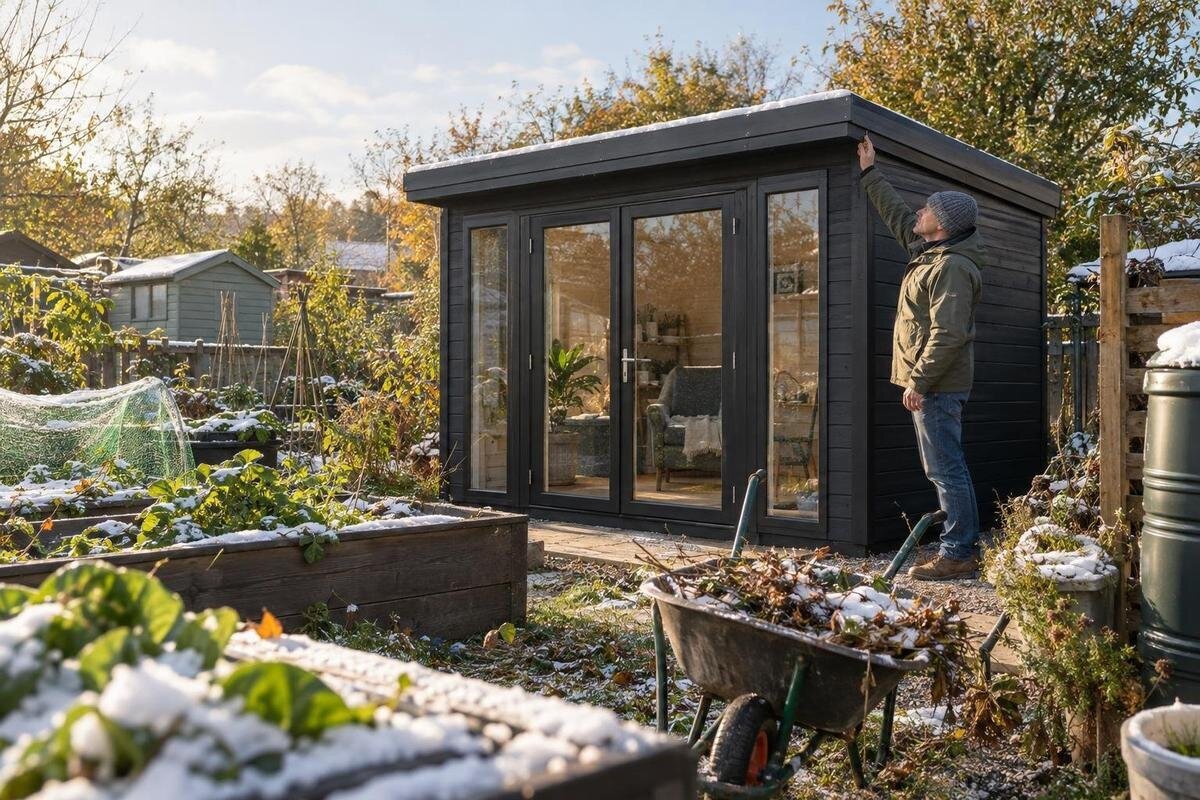
Strong winds and heavy snow can leave damage that is not obvious from the doorway. The roofline may have changed, a door may bind, or debris may hide a shifted base. A safe inspection is a visual check, not a test of whether the shed can take more weather. Wait until wind, falling debris, ice and access hazards have passed, and keep people clear if anything looks unstable. Then work from the outside in, recording what you can see without climbing, forcing an opening or moving heavy material. This guide helps you spot visible changes and decide when a closer assessment belongs with a qualified person.
01
Wait until the weather and site are safe
Do not approach while strong gusts, blowing debris, active snowfall or falling branches are still a threat. A lull does not mean a loose sheet or branch has become secure. Wait for conditions to settle and for enough daylight to see the route. Check the path from a safe place first: wet leaves, ice, mud, fallen branches and hidden holes can make it unsafe. Consider whether nearby trees, fences or other structures are still moving or unstable. If water is moving across the area or the ground is unstable, stay away rather than stepping through it. If you cannot tell whether the route is clear, wait rather than testing it on foot.
Look up before going near the shed. If power lines have fallen or are touching the shed, a tree or a fence, keep well clear and contact the relevant utility or emergency service; do not handle a line or anything touching it. Keep children and pets away from the area. A damaged roof, leaning wall, obvious shift, deep crack or unexplained creaking is a reason to stop at a distance, not to go inside for a closer look. Do not enter to retrieve tools or stored goods before an assessment. If a warning sign remains, wait for advice from a suitably qualified building professional.
Begin with a ground-level walk-around
From a safe spot, take in the whole shed before focusing on details. Compare its outline with how you remember it: does it appear to lean, twist or sit differently? Look for roof edges out of line, wall panels separated at corners, broken glazing, a door or window sitting askew, displaced debris, or a new gap. One irregularity by itself may not reveal the cause; what matters is a clear change after the event. Keep this first pass visual. Do not tug cladding, shake posts or try to see whether the structure is firm. Older photos can help with broad comparisons, but a different viewing angle can make the same wall appear changed.
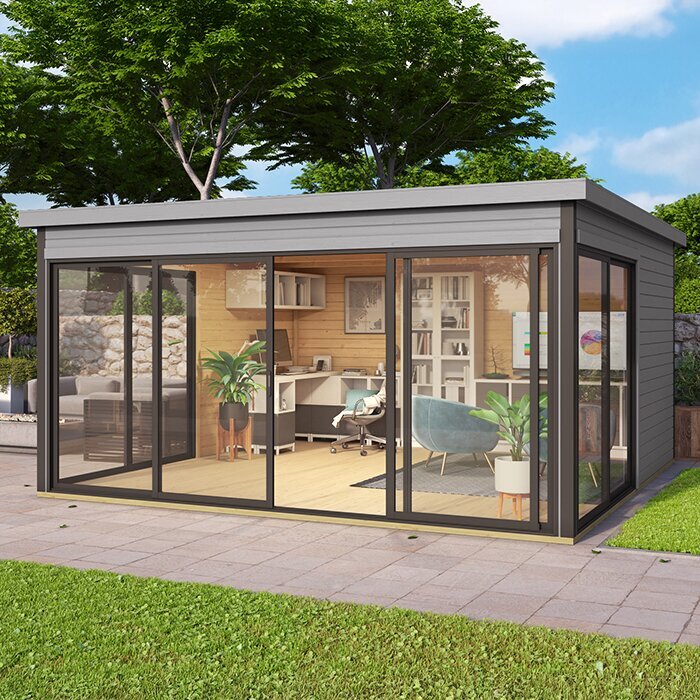
Walk only on a route that is clearly safe, giving loose roof pieces, branches and stacked items a wide berth. Check each side from a point where you are not under the eaves or leaning against the shed; a phone camera’s zoom can help you keep your distance. Photograph wide views first, then closer images only when safe. Note which side is shown in each picture, when it was taken, and what changed or remains uncertain. If replacement may be needed, record the usable space and access route before comparing product information, for example the Verdana 1 garden shed page, and rely on stated dimensions rather than judging scale from a photo.
02
Inspect the roof from below
Look at the roofline from the ground, preferably from several safe angles. After heavy snow, note a new sag, dip, uneven ridge or roof edge that appears to have shifted; after wind, look for missing or lifted-looking covering, loose-looking flashing, displaced gutters or debris lodged on top. Do not stand beneath a visibly bowed area, and do not treat a covering that looks intact from one side as proof the structure is sound. Snow can conceal movement or surface damage, so describe what you can see rather than trying to estimate how much weight the roof has carried. If snow or a tree blocks your view, record that area as unchecked rather than assuming it is undamaged.
Never climb onto a shed roof or use a ladder to get a better view after a storm. Do not push a pole up, scrape off snow or reach under an eave: those actions bring you close to unstable material and may disturb it. If the roofline has changed, a panel hangs down, or water is coming in, keep people out of the fall area and arrange an assessment. For a replacement after roof damage, check any clearly published roof and site guidance; the Verdana 2 garden shed page is a model reference to review, not evidence of wind or snow capacity.
Look for changes in walls, corners and cladding
Inspect exterior walls without touching the panels or fasteners. Look for a section that bows, leans, lifts away at a corner, has a fresh-looking gap or no longer lines up with an adjacent section. Wind can carry branches into cladding, leaving dents, splits or punctures; note where an impact mark sits and whether there is a visible opening. Treat a change in shape or separation as more serious than a surface mark until it has been assessed. A new crack can be photographed and recorded, but do not press it, widen it or use it to judge structural stability.
Notice loose trim, detached pieces, exposed fixings or material collected against a wall, but do not pull at anything that may still be attached. Record which wall section shows each sign; that makes it easier to explain whether one corner or a larger area has shifted. Look along the full height and corners from a safe position, as damage near the top may be hard to see when standing close. If wall damage prompts a replacement search, compare construction, care and assembly information that is explicitly provided. The Durano garden shed listing is a product page to examine alongside others, but its name or image alone says nothing about how it would perform on your site.
03
Check doors and windows without forcing them
Check doors and windows visually before using them. Note whether a door hangs at an angle, the frame has separated, glass is cracked, a track looks bent or a latch is displaced. A door that no longer closes can reflect a problem elsewhere in the structure; do not assume that planing, forcing or re-latching it is the right fix. Broken glazing can leave sharp fragments, so stay back and keep others clear. If there is no sign of instability or broken glass, you may try the handle gently, stopping at the first resistance rather than pushing or pulling harder.
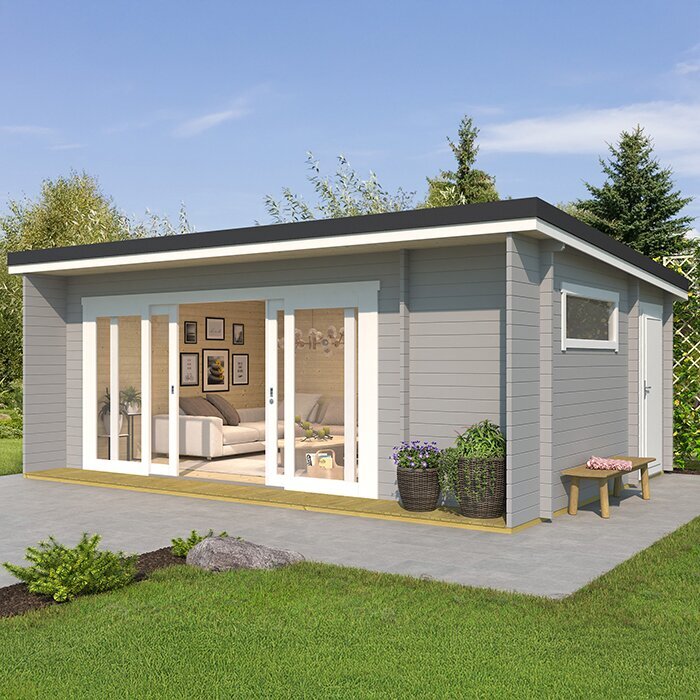
Do not enter just to inspect inside if the doorway is distorted or the roof or walls look damaged. If the shed appears stable and the route is safe, observe from the threshold first and avoid leaning on the frame. Record which opening sticks and whether it behaved that way before the weather. If replacement is being considered, note what needs to pass through the doorway and verify opening dimensions and door details in the written information for a candidate; the Veltor 1 garden shed listing is one page to check for information actually stated.
Inspect the base and surrounding ground
Look at the ground and shed base from outside, without lifting a corner or crawling underneath. Signs to note include a new gap between the base and ground, a corner that appears raised, a frame that no longer sits level by sight, exposed or washed-away soil, scouring from moving water, or posts and supports that appear to have shifted. Standing water or saturated ground can hide the base edge and make footing unsafe, so do not step onto soft patches to see more closely. A visual check can record movement; it cannot confirm the condition beneath the shed.
Photograph any separation or erosion from the same distance and note whether the ground has changed on one side or across the site. Do not wedge a block beneath the shed, dig to find a footing, tighten an anchor or try to pull the building back into place; avoid any repair where its support is uncertain. Ask a qualified builder or installer to assess visible movement. If comparing replacements, ask a qualified person what base and anchoring arrangements suit the site, then check any stated requirements on candidate pages such as the Orello 1 garden shed listing.
04
Look for water entry before entering
Water on the floor or stored items can point to a leak, but a damp mark alone does not show where water entered. From outside, look for a new stain below the roof edge, water tracks visible through an opening, or pooled water at the threshold. Do not enter if there is a sagging roof, leaning wall, damaged frame, loose overhead material or any doubt about stability. If entry is safe, stay near the doorway and scan the interior rather than walking beneath suspect roof sections or moving stacked items that could fall.
Keep clear of wet electrical equipment, exposed wiring or a damaged supply; do not touch or switch on anything that may have been affected. Arrange a qualified electrician if a cable or electrical fitting appears damaged, and a building professional for structural or water-entry concerns. Note what is wet and how far it extends without pulling apart linings or stored goods; photos can help keep a record. If replacement planning follows, decide what you need to store and what space matters, then verify any published dimensions; the Modano 1 garden shed listing is a model reference, not a guarantee of fit.
Check external fittings and nearby debris
Look at gutters, fascia, trim and anything fixed to the outside only from a safe position. Wind may leave a gutter out of line, a length of trim hanging, a vent cover loose-looking or a fixture pulled away from the wall. Record where a loose-looking item sits rather than assuming the visible fitting is the only part affected. Snow or ice may make these signs hard to see until conditions clear; do not stand under a section that could fall, reach up to test it or run a hand along a sharp edge. If a fitting is partly detached, keep people clear and ask a suitable tradesperson to assess it before attempting a repair.
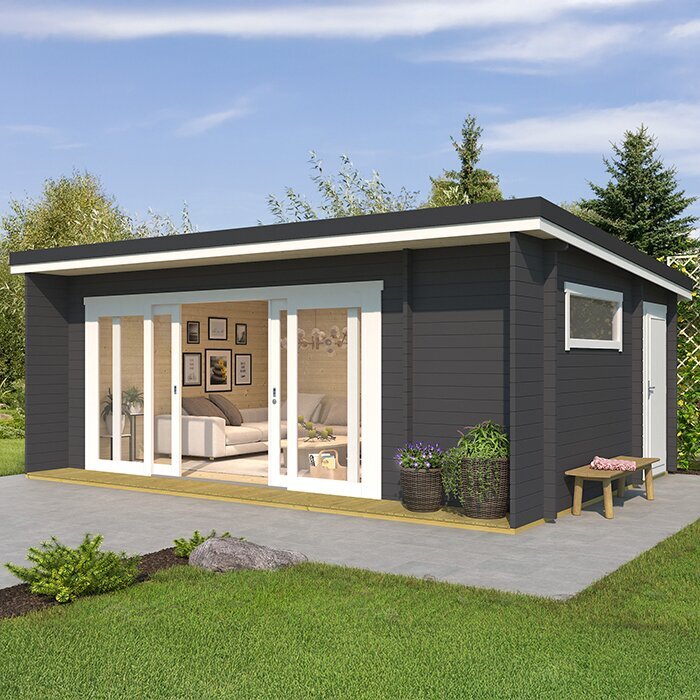
Check the immediate surroundings for branches, fence pieces or other objects that may have struck the shed, but do not remove an item trapped beneath or supporting a damaged part. Note any downpipe, light or cable that seems disconnected; if it may be electrical, leave it alone and contact an electrician. When ordering a replacement or external fittings, list what must attach and confirm compatibility and installation directions with the supplier or installer. The timber garden shed M listing is one product page to check for details actually stated, not a promise that every fitting will suit.
05
Record observations without making a diagnosis
Make a brief damage log while the sequence is clear. For each observation, write its location, what looks different, whether it was seen outside or from a safe threshold, and whether a photograph shows it. Keep fact separate from guess: a note such as panel appears separated at this corner is more useful than a claim that the whole shed is unsafe if you cannot confirm the cause. Note areas you could not inspect safely; do not create a hazard just to complete a checklist. Record the date and time, and identify what remains uncertain.
Photograph broad context and details without moving debris or entering an unstable building; retain the original images and any repair notes. If you discuss the damage with a builder, installer, insurer or supplier, a clear record can help explain what you saw, but it does not replace an on-site assessment. List uncertainties so a professional can focus on parts that were hidden or unclear. If replacement enters the conversation, record the space, access route and features you need before comparing models. The wooden garden shed S listing can be checked for its stated details; request clarification if a decision-critical fact is missing.
Know when a professional assessment is needed
Stop at visible checks if the roof sags, a wall leans or separates, the base has shifted, a door frame is distorted, glass is broken, parts are hanging, or the shed makes unusual sounds. Stop as well if you cannot reach an area without climbing, walking under unstable material or crossing unsafe ground. Keep people clear and contact a suitably qualified building professional; ask an electrician about damaged cables or fittings. Do not make an improvised repair or add a tie-down while the structure’s condition or load is uncertain.
After a professional has assessed the condition, decide whether repair is appropriate or replacement is the practical route; a visual checklist cannot determine that. If buying, compare written details that matter for the site: dimensions, assembly, base or anchoring requirements, maintenance, door access and any explicitly stated weather limits. Ask for missing information before ordering, especially if exposure to wind or snow matters. Also confirm who will assemble the shed and what site preparation is required. Do not infer resistance from a model name, product photograph or the fact that it is sold as a garden shed.
Frequently asked questions
When is it safe to inspect a shed after a storm?
There is no fixed waiting period. Go only when the wind and falling debris have stopped, visibility is good and the route is safe. Check for hazards such as unstable branches or fallen lines from a distance. If anything is still moving or the shed looks unstable, stay away and seek qualified help.
Should I climb onto the roof to check for snow damage?
No. Do not climb onto the shed, use a ladder to get closer or reach under the eaves after heavy snow or strong winds. Check the roofline from the ground. If it appears to sag or has shifted, keep people clear and arrange a professional assessment.
Can I open a jammed shed door?
Only try the handle gently if the shed looks stable, the glass is intact and the doorway is clear. Stop at the first resistance. A jammed or misaligned door may reflect movement in its frame or elsewhere in the structure, so do not force it or enter if other parts look damaged.
What signs mean I should stop and call a professional?
Stop if you see a sagging roof, leaning or separated walls, a shifted base, a distorted door frame, broken glass or anything hanging loose. Also stop if access would mean climbing or walking beneath unstable material. Contact a suitably qualified building professional; use an electrician for damaged cables or fittings.
How should I record visible damage?
Take photos from a safe distance and note the date, location and what looks different. Record areas you could not inspect safely and keep observations separate from guesses about the cause. Do not move debris, enter an unstable shed or handle damaged parts just to get a clearer photo.
An inspection after strong winds or heavy snow is most useful when it stays cautious and specific: note visible changes to the roof, walls, openings, base and fittings, and leave uncertain structural or electrical problems to the right professional. Do not climb, force a door or clear material from an unstable roof to complete the check. Clear photographs and a concise record can support a later repair or replacement decision, without pretending that a ground-level look certifies the shed’s condition.
