
Ground Screws for a Garden Shed: When to Ask for a Site Assessment
Garden shed foundation planning
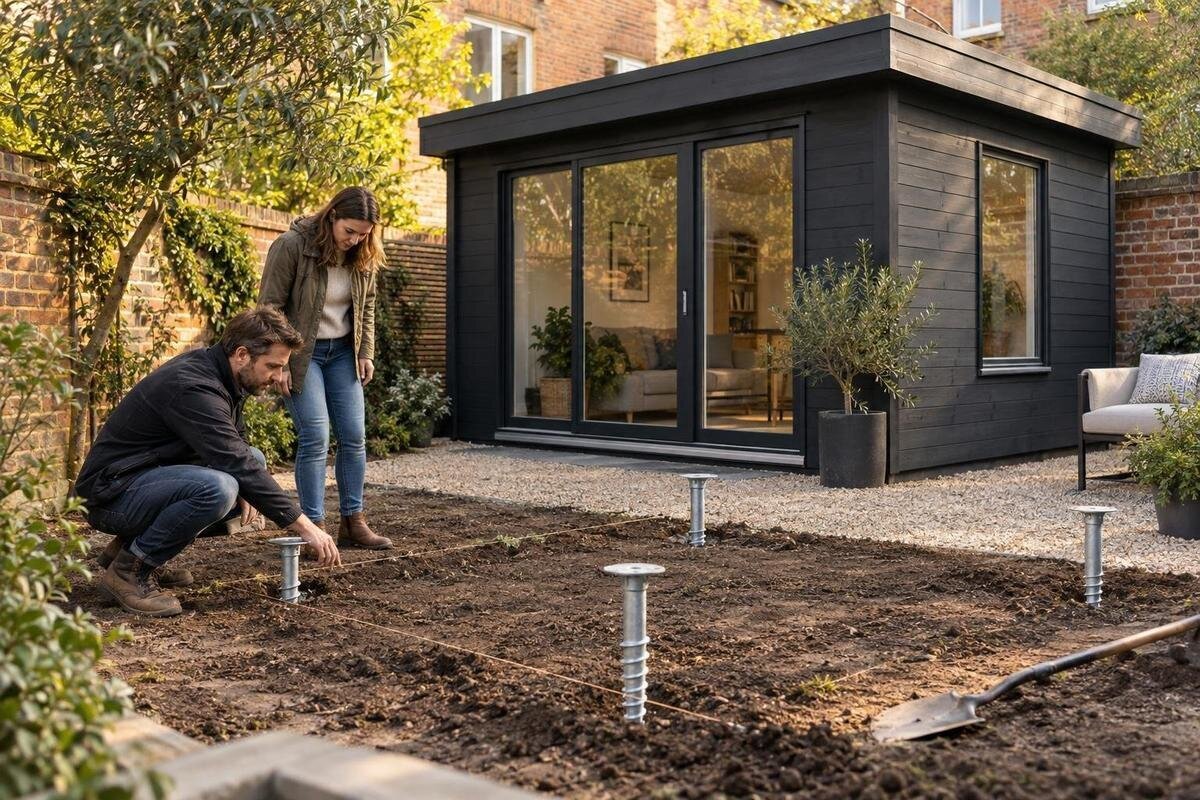
Ground screws can look straightforward on a garden shed plan, but their suitability depends on conditions at the actual support points, the shed’s foundation requirements and how the two are connected. A site assessment is most useful before you settle on the shed position or foundation order—not after installation begins and unexpected fill, water or buried material turns up. It need not mean the same level of investigation for every garden. The right scope depends on what is known, what can be observed and what remains uncertain. This guide explains when to bring in an assessor, what information to prepare and what to confirm before committing to ground screws.
What a site assessment should establish
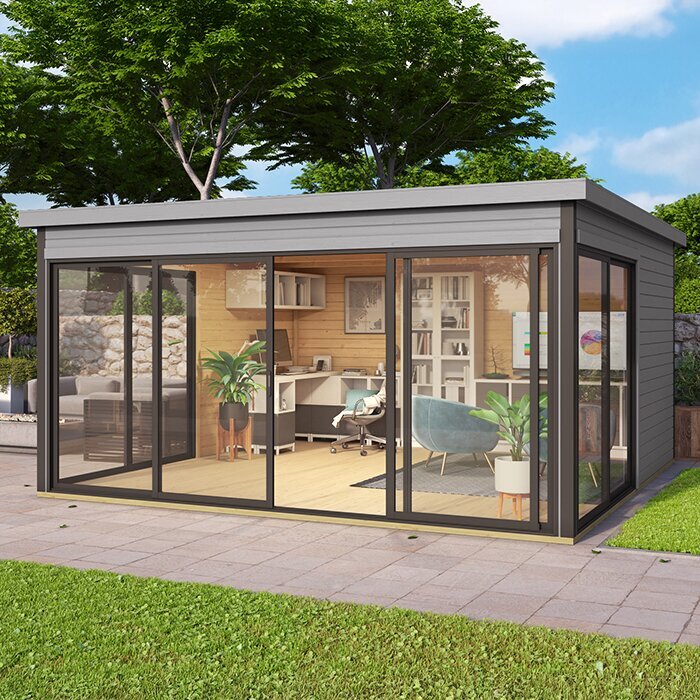
A site assessment answers a more specific question than whether a garden shed can fit in the garden: can a ground-screw foundation be designed and installed at this exact position using reliable information? It should consider the ground across the proposed footprint, visible levels and drainage, known site history and constraints, and the selected shed’s support and fixing requirements. A quick walkover and a geotechnical investigation are different kinds of work; a visual visit may flag the need for further investigation without revealing concealed layers. For a shortlisted Verdana 1 garden shed, provide the current supplier documentation and planned location, rather than asking someone to judge suitability from the product name or a photo. The findings need to relate to the area where the supports are proposed.
Before booking, ask who will carry out the review, what relevant experience they have, which parts of the site they will assess and what written outcome you will receive. Will they consider the full footprint, or only access to it? Does the scope cover ground-screw suitability and the shed-to-foundation interface, or just visible site conditions? Ask what cannot be established from a visit. A walkover is not, by itself, design approval or a guarantee. The person responsible for the foundation design and installation should be clear, along with any need for more investigation. This distinction matters when different people use site assessment to describe different levels of checking.
When to ask for advice before choosing a foundation
Seek advice early if you cannot describe the ground with confidence, particularly where there is placed fill, a recent cut or levelled area, soft ground, persistent wetness, a noticeable slope or a retaining structure nearby. A ground-screw plan depends on conditions at the proposed support locations, not a broad description such as firm garden soil. Surface observations can guide questions, but they do not confirm the ground below. If you are comparing options including Verdana 2 garden shed, tell the installer about site uncertainties before asking for a final foundation quote, so any review relates to the selected position and the information for that model.
An assessment is also worth discussing when the shed’s support or anchoring information is incomplete, the model or position may change, or the intended use is not straightforward storage. Tell the assessor about the intended use and what will be stored rather than assuming every garden shed has the same design requirements. A formal geotechnical report is not automatically needed for every site: an installer may be able to explain a suitable review process where conditions and product instructions are clear. Ask what observations would prompt referral to a specialist and what the installer can confirm themselves. Settle that boundary before committing to screw supply or installation.
Ground conditions that can vary across a garden
Past site work is a reason to ask what the ground comprises, not proof that ground screws will be unsuitable. Refilled trenches, imported soil, demolition debris, buried concrete, former building pads and areas beside retaining works can leave conditions that differ over a short distance. Information about soil from another corner of the property, a neighbour’s garden or a nearby building site is not necessarily evidence for your proposed footprint. If considering Durano garden shed, tell the assessor about known levelling or earlier structures in that exact area. Ask whether records from previous work are useful, and treat gaps in those records as uncertainty rather than filling them with a guess.
Visible changes can also prompt a closer look: a patch that stays wet, repeated pooling, erosion, exposed roots, soft ground or an abrupt change in level is worth noting. None of these observations alone decides whether a screw foundation will work, and none confirms what lies below the surface. If the garden has been filled or remodelled, describe what you know about when and where the work took place. Ask whether a visual review is enough for the decision or whether further investigation is recommended, and what question that work would answer. This helps keep the assessment proportionate: one warning sign does not automatically rule out screws, but it may change what needs checking.
Match the shed information to the foundation plan
Ground screws are one part of a foundation system; they need to align with the shed’s intended support points and connect as the supplier or designer requires. The installer therefore needs verified product information, such as the footprint, support layout, base requirements and anchoring instructions where provided. Do not estimate these details from catalogue images or infer them from a model name. For Veltor 1 garden shed, ask the supplier for the documentation needed to check the foundation interface. The product identity alone cannot confirm a screw layout or establish that a particular base is suitable.
Explain whether the model, size, configuration or position is still provisional, and describe the shed’s intended use. These are part of the brief for the people responsible for the building and foundation; they should not be replaced with a generic judgement about soil. Ask who will confirm that the proposed supports and connections match the shed’s instructions, and who will resolve any mismatch. If you change the model after an assessment, send the new information for review rather than assuming the earlier advice transfers. A foundation recommendation should make sense for both the site and the actual shed being considered.
Slopes, drainage and water movement
A slope does not automatically rule out ground screws, but it makes accurate siting and ground information important. A sloping garden may include cut or filled areas, a levelled platform, a bank or retaining works, and the surface may conceal changes in how the site was formed. The assessor should see the proposed footprint and its position relative to changes in level and retaining structures. If considering Orello 1 garden shed, mark the intended location rather than relying on an assessment of the property in general. Do not choose screw depth, spacing or layout yourself; those decisions belong with the people responsible for the design and installation.
Water movement deserves equal attention. Note where water collects after rain, whether the area remains damp, how runoff crosses the proposed footprint and whether water has caused problems there before. Seasonal conditions may be relevant even if the ground looks dry on the day of a visit. An assessor can distinguish visible drainage concerns from questions that need more information about the ground and advise whether the position or foundation plan needs review. Avoid assuming that adding drainage or moving the shed a small distance resolves an underlying issue. Ask what the findings support and whether any proposed change needs professional review.
Buried services, obstructions and installation access
Buried services and old obstructions can affect whether supports can be placed where the foundation plan requires. Gather available service information and arrange appropriate locating through the relevant provider or a competent service-location professional; recollection alone is not confirmation. Tell the assessor about known drains, cables, pipes, old footings, concrete, large roots and possible service routes. If Modano 1 garden shed is on your shortlist, share the proposed footprint and entrance orientation so the review relates to the actual position, not just a clear-looking patch nearby. A site assessment does not replace the process for locating services.
Access is part of practical suitability too. Note gates, steps, narrow paths, overhead obstructions and the route from the likely work area to the access point. Ask the installer what they need to establish whether their equipment can reach the site; requirements may depend on the method they propose. A position can look accessible on a plan but be constrained by fences, neighbouring property, trees or existing surfaces. Ask how an obstruction discovered during work would be handled and whether the work would pause for a revised decision. This also helps clarify whether access constraints or extra site work are included in the proposed scope.
What to provide before an assessment
A little preparation makes a site review more specific. Provide a simple plan showing the boundaries, house, proposed shed position, paths, retaining works and visible services; mark changes in level where you know them. Include the supplier documentation for the selected model, including any information supplied for the timber garden shed M, and ask for any missing dimensions, support instructions or foundation guidance. Add photographs of the precise area and note known fill, excavation, previous structures, drainage issues and earlier reports. If you do not know something, label it as unknown. A clear record of uncertainty is more useful than an assumption presented as fact.
Explain how the shed will be used and whether its model or position is still being decided. Photos taken at different times, particularly after wet weather if water is a concern, can help describe what you have observed, but they do not replace a site visit or further investigation when one is needed. Share reports only if they relate to the proposed area, and ask about their date, scope and limitations; information from nearby land may not describe your footprint. Before the review, find out what further evidence could change the recommendation and whether anything must be checked before work starts. Ask for the outcome in writing so you can refer to its assumptions and limits when comparing proposals.
Questions to ask the assessor and installer
Before accepting a quote, clarify who assesses the site, who selects or designs the screw arrangement and who checks that it matches the shed information. Find out whether the review is a visual visit, an examination of existing reports or a more detailed investigation, and what written result you will receive. Ask what findings would pause the project or lead to a referral to a geotechnical or other foundation professional. For a purchase involving wooden garden shed S, the useful question is not whether screws have worked elsewhere, but whether the installer can explain the basis for this position and this shed. Also ask which decisions remain outside the scope of the assessment.
Get the commercial boundaries clear before ordering: what the quote includes, what may be charged separately, whether difficult access or an obstruction could change the scope, and how unexpected ground conditions would be handled. Ask who will contact you if the site differs from the information supplied, and who can approve a change to the design or work. These questions do not demand a guaranteed outcome; they help you compare proposals on the same basis. Avoid assuming that site assessment, foundation design, screw supply and installation are all included just because a quote refers generally to ground screws.
How to use the assessment findings
Read the findings for their scope and limits, not just a headline conclusion. A useful written outcome should identify the location considered, the information used, any assumptions or exclusions, and whether further investigation or specialist design is recommended. If the assessment is preliminary, ask what remains unresolved and what evidence is needed before finalising the foundation. Confirm that the recommendation applies to your selected shed and exact position; a general statement about a neighbourhood or a different building does not answer that question. If a term is unclear, ask for an explanation before treating the document as approval to order.
Depending on the findings, you may be able to proceed with a properly specified screw solution, need further investigation, consider another position or compare a different professionally designed foundation. Ask what each option means for the shed connection, the scope of work and the project schedule, and whether revised drawings or supplier confirmation are needed. Compare complete proposals rather than a screw unit price alone: assessment, design responsibility and responses to unexpected conditions can differ. If the recommended approach no longer fits your budget or intended use, pause and revisit the plan rather than asking an installer to make an undocumented change on site.
When to review the assessment again
An assessment relates to the information and conditions it considered; it may need review after a meaningful change. Send the assessor any change in shed model, footprint, position, intended use or foundation layout before work is confirmed. Also mention new excavation, imported fill, drainage changes, retaining work or significant water issues since the visit. Ask the person responsible whether the earlier findings still apply or need updating. Do not assume that a small move or a different product is inconsequential: the revised position may have different ground conditions or constraints.
Finalise the order when the shed information, site findings and foundation responsibilities line up: the selected model and position are clear, ground uncertainties have been addressed, and the installer can explain how the proposed foundation will be delivered. On a simple, well-understood site, that may involve a straightforward documented review. Where conditions are unclear or concerning, an assessment before ordering helps keep the decision from resting on guesswork. The aim is not to commission the most extensive investigation by default; it is to establish what evidence is sufficient for a site-specific decision and who is responsible for acting on it.
Frequently asked questions
Does every garden shed on ground screws need a formal site assessment?
Not necessarily. The appropriate level of review depends on how much is known about the site and what the shed’s foundation instructions require. For a straightforward, well-understood site, an installer may be able to explain how they check suitability. If ground conditions, drainage, slope, fill or buried obstructions are uncertain, ask whether further assessment is needed before finalising the foundation.
Can I judge ground-screw suitability from the soil at the surface?
Surface observations can help identify questions for an assessor, but they do not confirm what lies below the proposed screw locations. Ground can vary across one shed footprint, particularly where there has been previous building or landscaping. Share what you have observed and ask whether a site visit is enough or whether further investigation is recommended.
When should I arrange an assessment?
Arrange it before committing to the screw foundation, and early enough to review the findings before ordering or installation. The assessor needs the actual proposed shed position and, ideally, the selected model’s foundation information. If the model, position or ground changes afterwards, ask whether the earlier findings still apply.
What information should I give the assessor?
Provide a site plan showing the proposed shed position, available product documentation, photographs and details of known fill, excavation, drainage issues, earlier structures or retaining works. Include the intended use and any known underground services. Mark information you are unsure about as unknown rather than treating an estimate as a fact.
What if the assessment raises concerns about ground screws?
Ask what the concern is based on and whether more information could resolve it. Depending on the findings, the options may include further investigation, a different shed position or a different professionally designed foundation. Have the responsible professionals confirm that any revised plan suits the selected shed before you proceed.
The key decision is not whether ground screws work in gardens generally, but whether a proposed system can be supported by evidence about this shed and this position. Ask for an assessment while there is still time to respond to its findings, and make sure any limits or unresolved questions are clear. That gives you a firmer basis for choosing a foundation and placing the garden shed order.
