
Growing broccoli in a greenhouse
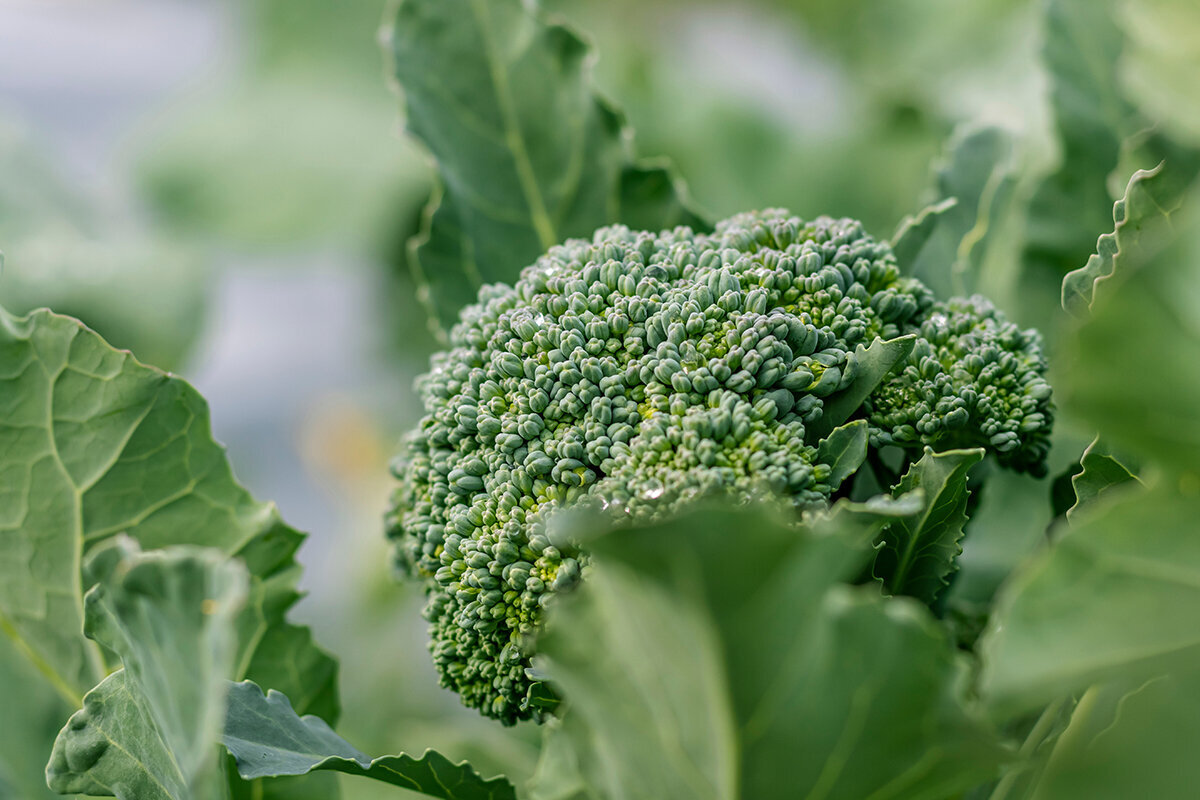
The crown reads the climate
Growing broccoli in a greenhouse
A firm, dark-green broccoli head is never accidental. Its fine structure reveals dry spells, heat peaks, cramped roots and harvests left too late.
In a greenhouse, broccoli is a rewarding crop for the cooler part of the year, provided the structure is used as a controllable shelter rather than a permanent heat store. Raise compact young plants, allow for mature leaf growth and let humid air escape reliably.
Best seasonCool spring and autumn
Plant spacing50–60 cm per plant
Useful temperature rangeAbout 18–21 °C for raising seedlings
Greatest riskWarm, humid head formation
01 · Controlled coolness
A greenhouse does not help broccoli simply by warming it.
The growing principle
Use glazing, roof vents, doors, shading and watering to soften sharp weather changes. Before head formation, the aim is a strong plant growing steadily, not soft foliage forced into rapid growth by heat.
Broccoli is a brassica for cool growing windows. Even growth, sufficient water, appropriately young plants and cool head formation encourage dense crowns. A greenhouse gives you useful controls, but it does not remove the plant’s preference for moderate temperatures.
02 · Choose the growth habit
Choose a crop type suited to your greenhouse bed.
Seed packets often focus on days to maturity. Under cover, head shape, the mature plant’s space requirement and its ability to make side shoots deserve equal attention.
Compact head
Early harvest
Short window · less space required
Sprouting
Many harvests
Small florets · extended harvest
Calabrese
Large main head
Broad leaves · generous spacing
Early-heading varieties
These forms suit a short spring greenhouse window when the bed needs to be free afterwards for tomatoes or cucumbers. They concentrate the crop into one central head. Cut it promptly once the buds are dense and closed; the side-shoot harvest varies by variety.
Sprouting types
Sprouting broccoli produces numerous smaller florets over an extended period rather than one large crown. It suits households wanting regular small kitchen harvests. The branching plants can become dense, however, and need an open airflow route and repeated checks.
Large Calabrese types
Classic blue-green Calabrese plants usually form a substantial main head followed by smaller side shoots. They need plenty of leaf space and are especially suitable for summer planting with head formation in the cooler autumn. Choose the variety for the intended harvest window.
For a first greenhouse crop, a robust heading variety with a clearly stated growing season is easiest to manage. For a longer harvest, add a few sprouting plants at the end of the bed rather than forcing every variety into the same rhythm. Keep labels until harvest: the variety name and seasonal guidance are useful clues if maturity or head shape is unexpected.
03 · The young plant sets the standard
Raise resilient young plants, not overgrown specimens.
Broccoli seedlings can look compact long after their roots have filled the propagation cell. Do not hold them in small pots merely because a later planting date is more convenient. Overgrown, stressed or severely root-bound plants are more likely to form small heads too early. This is called buttoning.
Sow one seed at a time in loose seed-raising mix and cover it by only a few millimetres of mix. Keep the sowing evenly moist, but not wet. Once seedlings emerge, they need bright light immediately and can be kept substantially cooler. Modest nutrition after the first true leaf is better than a strong growth flush from heavy fertiliser.
Once several true leaves and a firm, intact root ball have formed, begin hardening off gradually. The greenhouse eases the transition but can also conceal stress: sunny days warm quickly under glass while clear nights may still become very cool.
From seedling to head
01
SowClean mix; shallow covering.
02
EmergenceBright light; gentle air movement.
03
Pot onGive roots room.
04
Harden offIncrease exposure gradually.
05
Plant outWater in well at final spacing.
Until emergence, keep the mix evenly moist but never waterlogged. Then move seedlings straight into bright light. Gentle air movement encourages sturdy stems and prevents leaves from staying wet for long periods.
Pot on before roots begin circling tightly. Handle seedlings by their leaves where possible. Over several days of hardening off, increase light, air movement and temperature variation without allowing the small root balls to dry out.
Age in weeks is not the only deciding factor. Plant firm, actively growing plants with several true leaves, a compact root ball and a youthful habit. In New Zealand, sowing for an autumn crop is commonly timed from late summer into early autumn, with planting following as conditions cool. For a spring crop, raise plants in late winter and plant out according to your region, frost risk and greenhouse climate.
04 · Spacing is climate control
Plan for the mature plant’s leaf mass.
Many disappointments begin with a bed that looks tidy after planting but later becomes far too crowded. Small transplants seem to fit easily side by side. Once broad blue-green leaves touch, moisture lingers around the heads, checking becomes difficult and plants compete for light, water and nutrients precisely during head formation.
Use 50 cm as a practical minimum for compact plants in a well-ventilated row. Increase spacing to up to 60 cm for large varieties, long autumn crops or a greenhouse where moisture escapes slowly. Around 60 cm between rows is a dependable guide. Include paths and vent areas in the plan: a hand’s width between two young plants becomes valuable air and quality reserve when foliage reaches full size.
Keep both ends of the bed accessible. You should be able to inspect leaf undersides, check moisture below the soil surface and cut the main head without leaning through a neighbouring plant’s crown.
Layout for air and access
Incoming air
Clear ventilation path
Clear ventilation path
Broccoli row
Open leaf structure
Open leaf structure
Harvest path
Dry access
Dry access
Place the tallest broccoli plants so they do not block the airflow between the door and roof vents. In a narrow greenhouse, one generous row accessible from both sides is usually more useful than two beds squeezed tightly against glazing and paths.
Container growing is also possible, but each plant needs a deep, adequately large pot and fertile, structurally stable growing mix. Keep approximately 50 cm between plants. Containers heat up faster and dry out more quickly in sun than an in-ground bed, so moisture needs more frequent checking.
05 · Climate chamber
Head quality comes from steady averages, not one reading.
Broccoli tolerates cool conditions well, but the forming head is sensitive to accumulated heat and fluctuating soil moisture. Aim for bright, cool days with moving air. For raising seedlings, a range around 18–21 °C is practical. During head formation, keep the greenhouse as cool as the season allows. Open early on sunny days rather than waiting for leaves to wilt.
Sustained warmth above about 20–22 °C, combined with irregular watering, can encourage coarse, loose or prematurely maturing heads. Small greenhouses reach these temperatures long before outdoor air feels hot. A min-max thermometer at leaf height reveals heat peaks. For small greenhouses, the Bavarian Garden Academy recommends that at least one quarter of the floor area can be opened for ventilation.
Stress ↑Development →
High
Restricted
Loose
Open
Medium
Water
Ventilate
Harvest
Low
Even
Setting
Dense
Daily ventilation routine
- Morning
- Open roof vents and the door before direct sun turns the greenhouse into a heat store. Check that air is actually exchanging; a narrow gap alone is often inadequate in a densely planted structure.
- Midday
- Use shading sparingly on exceptionally hot, sunny days. Broccoli needs light, but neither an overheated crown nor stalled roots. Ventilation and crop timing remain more effective than permanent darkening.
- Evening
- Close in good time when cold nights are forecast, without trapping wet leaves inside. Where possible, the crop should dry before nightfall. At the same time, avoid a sudden cold draught directly across plants.
- After watering
- Ventilate enough to let excess moisture escape. Wet leaves, condensation and a permanently damp path are not suitable ways to cool a greenhouse.
06A · Water flow
Keep the root zone evenly moist.
Broccoli is sensitive to repeated swings between drying out and waterlogging. From planting to harvest, it needs a moist, oxygen-rich and evenly supplied root zone. Water deeply enough for moisture to move below the surface. Let a soil check, weather and plant development decide the next watering, not a rigid weekly timetable.
Rain does not contribute inside a greenhouse; meanwhile sun, ventilation, soil type and container size all change demand significantly. Use a finger or hand trowel to check the rooted zone. Drip irrigation or slow watering directly onto the soil keeps leaves and heads drier than daily overhead spraying. Morning watering also gives excess moisture time to escape.
06B · Nutrient flow
Feed steadily, not in surges.
Broccoli is a hungry crop. Heavy nitrogen inputs cannot replace healthy roots, light, water and a suitable temperature. Start, where possible, with a soil test and a mature, well-structured bed. Mature compost improves soil structure and water holding; fresh manure should not go directly beside the crop. Supply should suit the existing soil, rather than follow a blanket maximum rate.Soil testing first Additional fertiliser should follow results and visible growth.
A moderate feed after establishment can be useful. After cutting the main head, a restrained application may support side shoots if the plant remains healthy and active. Avoid sudden heavy fertiliser surges: excessive nitrogen, very fast growth and wide spacing can contribute to hollow stems. Do not add micronutrients speculatively without first checking.
Water and nutrient flow meet during head formation. A plant that has not repeatedly paused through drought or poor nutrition is better prepared to produce a dense, even crown.
07 · Reading the crown
How a dense broccoli head develops.
A broccoli head is made up of many undeveloped flower buds. Its quality is built before it looks like a finished head. First, the plant needs generous leaf area and a root system able to take up water and nutrients continuously. When development stage, variety and weather align, the central growing point changes and the buds arrange into a compact crown.
That is why a head can look unusual even when a problem is noticed only shortly before harvest. Tiny heads on small plants usually signal an earlier interruption to growth: a pot held too long, cold or heat stress, drought or transplant shock. Coarse, spreading buds and yellow flowers more often indicate a later disruption from heat, uneven water or a missed harvest window.
Before settingEncourage quick but balanced leaf growth. Young plants need space, oxygen around their roots, even moisture and moderate nutrition.
At head settingKeep the greenhouse particularly steady. Avoid heat peaks, dry spells and abrupt changes in fertiliser concentration.
At maturityKeep airflow open around the crown. Check often and harvest with buds firmly closed rather than risking quality for a few extra centimetres of diameter.
08 · Diagnostic zone
The head shows what did not align in the crop.
Do not treat every imperfect head with the same standard remedy. Compare the symptom with plant age, root condition, temperature pattern, watering and airflow. Many visible faults began several weeks earlier.
Early head
Buttoning
Small plant.
Coarse buds
Loose head
Heat or drought.
Yellow buds
Flowering
Harvest now.
Hollow stem
Growth stress
Check nutrition.
Small, early crown
Buttoning
Likely causes: The young plant was slowed in its growth, perhaps by a pot held too long, cold or heat stress, drought, interrupted nutrition or stress while planting out. It switched to head formation before building enough leaf area.
Gentlest response: Harvest the usable small head. For the next planting, review propagation timing, root development and planting date instead of trying to force the existing plant back into leaf growth with heavy fertiliser.
Open or coarse buds
Loose beading
Likely causes: Heat during head formation, high humidity, uneven water supply, a sudden growth surge or delayed harvest. Individual buds stand out clearly and the crown loses its dense, fine-grained surface.
Gentlest response: Ventilate earlier on sunny days, keep the root zone evenly moist and avoid strong fertiliser surges. If the head is ready, cut it promptly before the first flowers open.
Yellow flowers or yellowing
Opening crown
Likely causes: Maturity advanced faster than the checking and harvesting routine. In warm weather, firm green buds can elongate and open within a short time. This is usually a timing issue, not automatically a plant disease.
Gentlest response: Cut the head immediately. Stems, buds and flowers remain edible, but texture and appearance are better before flowering. In warm conditions, check the crop daily afterwards.
Brown patches or hollow stems
Internal stress
Likely causes: Uneven moisture, very rapid growth, excessive nutrition, wide spacing, variety sensitivity or unbalanced micronutrients can combine. A hollow cavity in a firm stem is usually a quality issue, not automatically a safety problem. Soft, discoloured or rotten tissue should be removed generously.
Gentlest response: Have the soil or growing mix tested before adding individual micronutrients speculatively. Stabilise watering and feeding. Remove damaged or rotten sections at harvest and clean the tools used.
09 · The calm inspection round
Caterpillars, aphids and moisture issues usually begin quietly.
A greenhouse excludes some weather but not every pest. White butterfly and moth caterpillars enter through doors or vents and hide in leaf folds near the crown. Aphids gather on soft shoot tips; flea beetles leave small feeding holes on young plants. Inspect at least twice weekly, and more often during head formation and warm weather.
Start with the most local and gentle measure. Hand-pick individual caterpillars, wipe away small aphid colonies or dislodge them from robust leaves with a targeted water jet. Remove heavily infested plant parts and old brassica debris from the greenhouse. Insect mesh can help, but must not restrict ventilation unreasonably. If treatment is needed, verify the exact product’s New Zealand approval and controls for broccoli, the pest, intended use and user class. Follow the label, including protection, disposal and the withholding period.
Moisture management is also practical disease prevention. Keep spacing open, water the soil rather than the crown and remove dead leaves. Do not leave the greenhouse closed after watering simply because the outdoor air feels cool.
Five-minute inspection round
- Check leaf undersides for eggs, caterpillars and aphid colonies.+
- Gently separate leaves and check that they are dry and air reaches the plant centre.+
- Before watering, feel several centimetres below the surface; a dry top crust alone is not a reliable signal.+
- Check the developing head for loosened buds, caterpillar droppings and yellowish patches.+
- Take damaged leaves out of the greenhouse rather than leaving them on the path or beneath the propagation bench.+
Plan a multi-year break between broccoli and other brassicas in the same bed area. A long rotation significantly reduces pressure from soil-borne diseases and overwintering pests. This applies to permanent greenhouse beds as much as to outdoor vegetable plots.
Height of the harvest cut
Main head
Dense green buds
Dense green buds
Cut line
Above lower leaf axils
Above lower leaf axils
Leaf bases
Leave intact
Leave intact
Side shoots
Keep axillary buds
Keep axillary buds
Cutting guide: Harvest once the central head has reached a good size and all buds remain tightly closed. Cut in the morning with a sharp, clean knife and include a sufficiently long stem. Make the cut above strong lower leaf bases and leave the healthy rooted plant in place.
After the main cut: Many Calabrese and sprouting varieties make smaller side shoots from the remaining leaf axils. Continue watering evenly. A modest feed may support this second harvest where it fits the soil and existing fertiliser plan.
10 · The clean cut
Harvest the main head, then let side shoots follow.
Do not wait for supermarket-broccoli size if the surface is already becoming looser. Closed buds, firm structure and tenderness matter more than the greatest possible diameter. Once individual buds stretch or show yellow, the ideal window has passed. In warm weather, check daily because the shift from compact green to open flowers can happen very quickly.
Side shoots are among the finest greenhouse harvests: small, tender and easy to cut in useful kitchen portions. Continue giving the plant even water after the main harvest, remove only diseased leaves and maintain airflow. Cut florets regularly while their buds remain close together.
Cool broccoli immediately after harvest and do not leave it for long in a warm kitchen. In the fridge, it keeps best in a moist but not dripping-wet environment. Use it promptly where possible, because warmth quickly reduces tenderness and flavour freshness.
For a greenhouse with clear paths, effective roof ventilation and productive growing space for spring and autumn, discover the Classic aluminium greenhouse from Bloomcabin. Its adaptable, orderly interior provides a confident setting for successive crops of broccoli, leafy vegetables and early young plants.
11 · Growing windows in New Zealand
Place head formation in a reliably cool growing window.
Cool southern and elevated regions
In cooler southern districts and elevated areas, spring can remain broccoli-friendly for longer, though raising young plants may proceed more slowly in low-light weeks. An early crop benefits from a protected start, but frost protection should still be ready for very early planting. Autumn crops can also perform well as temperatures settle lower over an extended period.
Temperate regions
Think in two shoulder seasons. An early crop can clear the bed in time for tomatoes or peppers. The autumn run is often especially dependable: sow in late summer, plant as conditions cool, and let heads form through autumn. Ventilate early in spring too, because sunny days can create surprising heat under cover.
Warm northern areas and urban gardens
Use the greenhouse mainly through the cooler months and avoid head formation in summer. In built-up or northern gardens, even a bright winter or spring day can become critical under cover. For an autumn harvest, sow after peak summer heat so the decisive development falls into shorter days and cooler nights.
Work backwards from your preferred harvest window. Use the variety’s maturity guidance from planting and add time for raising young plants. A Classic aluminium greenhouse with an observed sun path, clear paths, roof vents and an easily reached door makes timing decisions more reliable. Automatic vent openers can help when the greenhouse cannot always be opened by hand early enough in the morning.
12 · Frequently asked questions
Usually, the restrained correction is the right one.
Broccoli is a crop of small, timely adjustments. Before reaching for fertiliser, shade or pest control, establish whether heat, uneven watering, cramped roots, overcrowding or simply a missed harvest date is the real cause.
Can broccoli grow in an unheated greenhouse?+
Yes. In New Zealand, an unheated greenhouse is especially useful through the cooler growing periods. Its advantage is protection from wind, heavy rain and changeable weather, not tropical warmth. An unheated structure is not automatically frost-free during prolonged cold spells, so young plants may need extra protection. Ventilate on sunny days even when outdoor air is cool.
How many broccoli plants fit in a small greenhouse?+
Plan around the mature plant, not the seedling. At 50–60 cm spacing, one row holds only a few large plants. That limit can still be productive when side shoots are harvested after the main head. Open edge areas can temporarily hold propagation trays, salads or low herbs as long as the airflow route stays clear.
Why do my broccoli heads stay small?+
Alongside a naturally compact variety, stressed or overgrown young plants, drought, unsuitable temperatures and interrupted nutrition can all contribute. If a miniature head appears unusually early on a small plant, it is often buttoning. The head remains edible; younger plants and a steadier growing window help with the next crop.
Should broccoli be shaded in a greenhouse?+
Shading can briefly soften extreme sun peaks, but it replaces neither ventilation nor sound crop timing. Broccoli needs ample light to build leaf area and a head. Open roof vents and the door first, stabilise water supply, and use shade only as an extra measure if the temperature at plant height still rises too quickly.
Can broccoli grow in containers?+
Yes, provided every plant has a deep, generous container filled with fertile, well-drained growing mix. Allow around 50 cm between plants. Pots warm quickly in sun and have limited water reserves. Check moisture more often and water deeply without creating permanent waterlogging.
Sources and further reading
Growing guidance behind the crop plan.
More from Bloomcabin: Made-to-measure aluminium greenhouses · smart greenhouses from Bloomcabin · Read more about long-term greenhouse planning
- Bavarian Garden Academy – Plan and use small greenhouses well
- Bavarian Garden Academy – Raise or buy young plants
- German Plant Variety Office – Guidance for vegetable value trials and variety testing
- University of Minnesota Extension – Growing broccoli in the home garden
- University of Minnesota Extension – Irrigation strategies for vegetable crops
- University of Maryland Extension – Growing broccoli in the home garden
- University of Massachusetts Extension – Broccoli head quality and physiological disorders
The crown plan
Design the calmest part of the gardening year.
A quality greenhouse is not only a space for heat-loving tomatoes. It is a precisely manageable shelter for crops that produce their best quality in bright, cool conditions. Give broccoli a deliberately planned row, enough room for mature foliage, a clean harvest path and ventilation that responds before heat and humidity build up in the crown.
Configure a Classic aluminium greenhouse for your own sequence of cool crops: broccoli, salads, brassica seedlings and the first herbs of spring. Dimensions, roof vents and paths can be planned so daily care and climate management work together. Discover the Classic aluminium greenhouse and compare the possibilities of a Classic aluminium greenhouse for orderly growing spaces over the long term.
Classic aluminium greenhouseDecision 01 Set the cool harvest window first.
Decision 02 Draw the plan using mature plant spacing.
Decision 03 Keep an open, dry path for inspection and harvest.
