
Growing cut flowers in a greenhouse
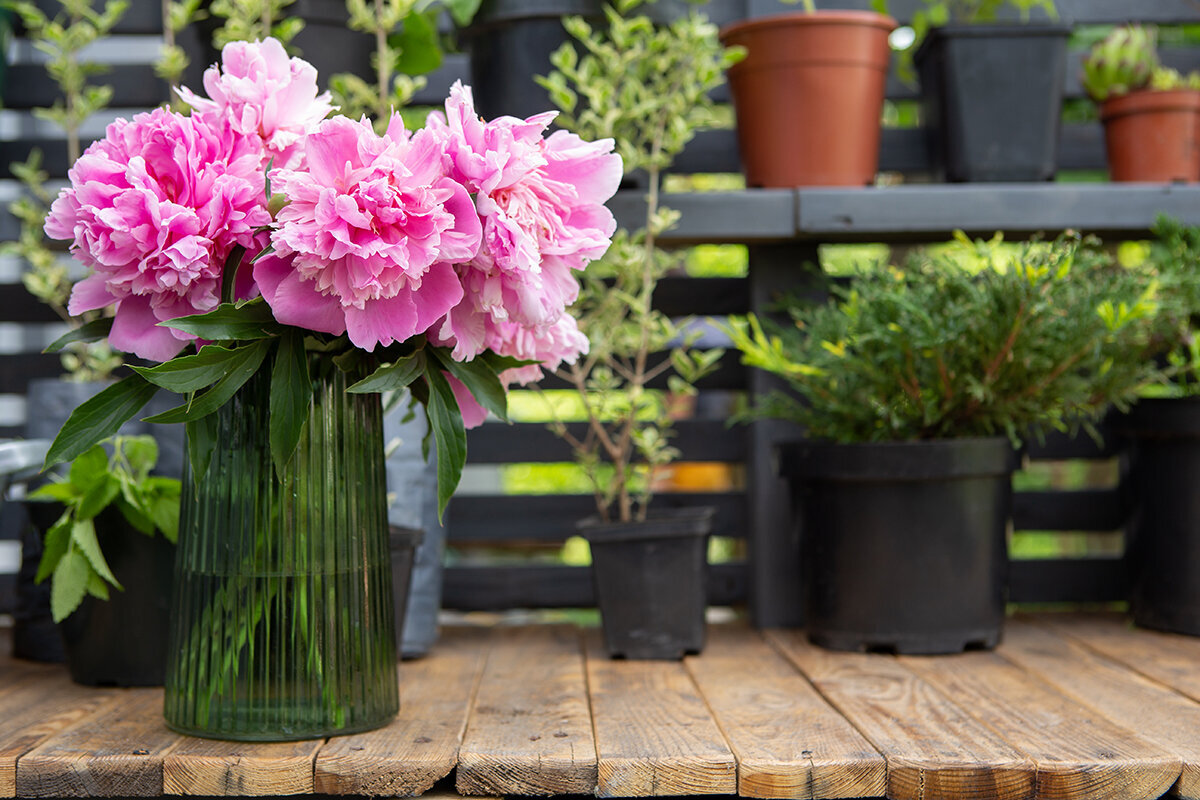
The stem stage · A protected cutting season
Growing cut flowers in a greenhouse
A greenhouse turns a short flowering summer into a composed season, with earlier stems, protected blooms, staggered crops and a calm place for harvesting and conditioning.
The aim is not to fill every square metre. Give light, air, water, time and effort to plants that produce long, straight stems ready to cut at the right moment.
Overture
Why protected growing changes the cut-flower rhythm
For New Zealand home gardeners, a greenhouse chiefly gives more control over timing. Young plants can grow on while outdoor beds are cold or waterlogged. Tender plants gain shelter from late frosts, heat-loving summer flowers get an orderly start, and hardy crops may be cut further into autumn, depending on your region. This protection works best when treated as a controllable climate: the more enclosed the house, the more carefully temperature, humidity and air movement need managing.
With cut flowers, this cultivation becomes immediately visible. Blooms stay cleaner and less damaged without driving rain. Watering at soil level supplies roots without continually wetting leaves and flowers. Netting can be stretched neatly over permanent beds. The trip from stem to prepared bucket is also short, so flowers reach water immediately rather than sitting in the sun during further cutting.
A greenhouse does not offer one universal climate for every species. Snapdragons, stock and ranunculus need a different pattern from zinnias, celosia or dahlias. Reserve protected space for crops that benefit from an early or late window, weather protection or close harvest management. Generous summer plantings can also grow outdoors when conditions suit.
Fill the season
Choose flowers for their bouquet role, not catalogue colour alone
A cut-flower greenhouse becomes more versatile when it fulfils distinct floral roles: tall line flowers, striking focal blooms, airy fillers, foliage and structural forms. Within these groups, favour dedicated cut-flower varieties described as tall, productive and sturdy, with useful stem length or good vase life. Compact balcony forms can be appealing, but usually use valuable protected bed space less efficiently unless their small scale is part of your design.
Cool line
Snapdragons
Early focus
Spring corms
Summer
Warm-season annuals
Texture
Foliage
Cool-season line flowers
Start snapdragons, stock and sweet peas early for vertical or scented spring stems. Grow them in bright, relatively mild conditions, not like heat-loving summer flowers. Spikes are usually cut when lower florets are open and buds remain above.
Plannable focal flowers
Ranunculus and anemones are planned crops, not casual gap-fillers. Buy quality starting material, follow variety-specific guidance, and establish them in cool, bright, free-draining soil. This gives the early greenhouse a clear purpose.
Repeat-flowering summer crops
Move zinnias, celosia, cosmos and dahlias into permanent beds only when the greenhouse remains reliably frost-free at night. Staggered sowings prevent one brief flowering peak. Support tall varieties early with netting or other structures.
Foliage and fragrance
Reserve a defined area for grasses, mint and other suitable foliage. These companions add depth to bouquets and spread the harvest workload. Plant them as dedicated cut crops with an accessible harvest zone, not random fillers.
The Classic Aluminium Greenhouse provides an architectural base for your growing plan. Its clear structure helps organise propagation, production beds, paths and a clean harvest station in limited space.
Backstage
Give every crop the start it genuinely needs
Seed, plugs, bulbs, corms and tubers occupy greenhouse space differently. Seed offers variety and can be sown in small, repeated batches. Plugs save time and reduce the risk of losing an important follow-on crop to poor germination. Corms concentrate their value in an early seasonal window. Dahlia tubers can produce generously, but need frost-free conditions, light, room and enough root space.
01
Sow seed to a target date
Write the intended planting date on every propagation tray. Do not sow warm-season annuals so early that they become root-bound and overgrown while nights are still too cold for their final bed. Zinnias grow quickly and usually perform better as compact, well-timed young plants than as large plants waiting on the bench for weeks.
02
Use plugs for precise crops
Plugs are useful when you need only a few reliable plants, have limited propagation space or want to grow a special variety. Check delivered young plants before adding them to the crop. Inspect leaf undersides for distortion or pests. Keep questionable material separate until its health can be assessed confidently.
03
Stage corms and tubers separately
Label varieties from unpacking through harvest. As temperature and moisture requirements differ greatly, follow supplier guidance rather than a one-size greenhouse programme. This care pays off when early stems appear while beds for summer crops are still being prepared.
Act One · The layout
Create a space where you can plant, cut and leave freely
Before filling the greenhouse, mark the route you genuinely take: door to water, water to beds, bed to harvest bucket, then to the conditioning area. A beautiful planting becomes laborious if every cut means moving pots, tools or netting. This production logic matters more than any fixed layout. Adapt it to your greenhouse and keep doors and roof vents generously clear.
Place tall, netted crops where they will not shade lower plants or restrict air movement. Put propagation on a bench rather than the floor. A closed bin near the exit can hold spent blooms, cuttings and diseased leaves. This small operational choice noticeably improves hygiene and workflow.
The Classic Aluminium Greenhouse offers an elegant, practical framework. It brings beds, propagation areas, ventilation and an extended cutting season together for committed home gardeners. Treat roof vents, shelving and automatic openers as cultivation tools, not late additions.
Greenhouse layoutAdapt to your space
Low bed
Main path
Tall bed
Propagation bench
Air corridor
Bucket station
Zone by height: Give tall, netted flowers their own side so they do not shade low spring crops or block the direct route to the door.
Ventilation and water: Keep the central path clear, place water close to beds and never use the ventilation corridor as tool storage.
Harvest route: A cut stem should travel unobstructed from bed to a clean bucket in shade.
Act Two · Repertoire
Successive crops keep the curtain moving all season
Many disappointing cutting gardens fail through timing, not enthusiasm. One sowing of each summer flower brings a brief abundance followed by a long pause. Under cover, the next crop can already be growing while the current one is still being cut. Actual dates vary across New Zealand with region, light, weather and any heating. The pattern remains: propagation, planting, flowering, clearing and replanting deliberately overlap.
Reading crop phases
Burgundy marks early or cool crops.Peacock green marks heat-loving summer flowers.Brass marks a succession crop or bed change. Keep a greenhouse notebook with actual dates for sowing, planting and the first cut. Your own observations will be more valuable next year than a general calendar.
CropAugSepOctNovDecJanFebMar
For warm-season annuals, combining young plants with well-timed sowings extends the harvest period and smooths the workload. Clear exhausted plants decisively. The next crop needs light, air and open root space rather than a tired, overcrowded old planting.
Act Three · The training studio
Pinch for more stems. Disbud for one focal bloom. Net before it seems necessary.
Training turns a decorative bedding plant into a deliberately managed cut crop. When pinching suitable branching species, remove the main shoot tip. The plant redirects growth into side shoots and usually produces more usable stems, though often flowering slightly later. Disbudding has the opposite aim: side buds are removed so one larger, clearly formed main flower develops.
Neither technique suits every species or variety. Read seed packets and supplier notes as specific cultivation guidance. Single-stem sunflowers are treated differently from deliberately branching varieties. Young zinnias, cosmos and many dahlias often respond well to timely pinching. Tall varieties of many crops also benefit from horizontal support netting installed straight after planting and raised with the crop.
- Pinch cleanly once. Work on strong, suitable plants with clean fingers or disinfected snips. Repeated cutting can prevent a durable framework from forming.
- Choose the harvest goal. Many side shoots suit generous garden bouquets; disbudded stems produce fewer but more dramatic premium flowers.
- Netting is preventative architecture. Install it while shoots are short. Threading it through a tall crop later damages leaves and buds and complicates harvest.
Main shoot
Pinched
Untouched main shoot: One dominant growing point gives earlier, simpler flowering with less branching.
Correctly pinched: Side shoots make a broader, more productive framework for several usable cut stems.
Dark interlude · The climate
Most greenhouse problems begin with a climate signal missed yesterday
Cut flowers need enough density for useful stems, but not so much that wet foliage, still air and low light create a disease-prone crop. The effective order is deliberately ordinary: inspect, ventilate, water at root level, remove damaged material and check spacing. Take these steps before reaching for a plant-protection product.
Daily air check
Roof vent↑Dry foliage
Door opening→Clear path
Soil-level watering↓Root zone
Open vents early enough for heat to escape before the crop visibly suffers. Water deeply into the root zone and let foliage dry quickly. A consistently walkable central path supports airflow: a greenhouse crowded with supplies can be neither thoroughly inspected nor effectively ventilated.
The cutting sign
Every flower form has its own harvest point
Cutting stage strongly determines vase life. A stem cut too early may never open; a flower cut too late has already spent much of its longevity on the plant. Learn the right maturity for each crop and place stems into clean water without delay.
Spike
Lower florets openFocal bloom
Colour visibleComposite flower
Open and firmBranching
Several blooms openSpike flowers
Snapdragons and similar spikes are normally cut when the lower individual flowers have opened. Closed buds remain above and can develop in the vase.
Single focal blooms
Many focal flowers are cut when colour is visible and opening begins. The exact point differs by species and variety. Test several stems and record opening and vase life.
Composite flowers
Zinnias and dahlias need to be sufficiently open when cut. A mature, firm flower holds more reliably than an immature head that may not complete development in the vase.
Branching fillers
For branching flowers and umbels, some blooms may already be open while further buds keep the stem lively. Branches cut at too early a stage may show little further colour or structural development after harvest.
Harvest on a cool morning after dew and condensation have dried, or at another cool time of day when plants are well watered. Use sharp, clean snips and cut stems slightly longer than needed for the finished arrangement. Put every stem straight into clean water. Remove foliage that would sit below the waterline and spoil bucket water.
Workroom
Careful post-harvest handling is the quiet luxury of a lasting bouquet
Growing the stem is only part of the work. Post-harvest care preserves the water supply built throughout the season. Treat the conditioning area as its own clean zone: free from potting soil, used propagation trays, stale water and heaps of wilting leaves.
01
Clean bucket02
Fresh recut03
Remove foliage04
Hydrate and cool05
Store by cropClean bucket: Clean containers thoroughly between harvests. Residue and slime impair water uptake and shorten vase life.
Fresh recut: Recut stems that have been lying dry. Sharp tools slice tissue cleanly instead of crushing water-conducting vessels.
Remove foliage: Remove all leaves that would stand in water. Leave enough healthy foliage on the stem for a natural effect.
Hydrate and cool: Move the harvest away from sun and heat. Let the stems first take up clean water in a shaded, suitably cool place.
Store by crop: Observe each species’ particular needs, keep sensitive flowers away from ripening fruit and refresh dirty vase water regularly.
Do not turn home post-harvest care into a chemistry lab. Start with hygiene, the right cutting stage, prompt hydration and a cool resting period; these basics achieve more than improvised additives. Flower preservatives may support some crops, but cannot replace clean containers. Test special treatments on a few stems first and record opening, water quality and real vase life.
For a functional yet presentable work area, discover the Bloomcabin Classic Aluminium Greenhouse and consider how shelving, watering, shading and ventilation can support your real workflow from propagation through conditioning.
Programme notes
Frequently asked questions
Cut flowers in a greenhouse stay manageable when every choice reflects the crop’s behaviour: seasonal needs, final size, support requirements, branching and correct cutting stage.
Which cut flowers suit a first greenhouse crop?
Begin with a small group of clearly defined roles: snapdragons or stock as cool-season line flowers, zinnias and celosia for summer colour and form, dahlias as focal blooms, and grasses or mint for structure. Choose varieties explicitly sold for cutting. After one season of recording stem length, flowering time, health and vase life, you can extend the repertoire deliberately.
Can I grow cut flowers year-round in an unheated greenhouse?
Not reliably in every part of New Zealand. An unheated greenhouse can extend spring and autumn, but cannot replace winter light or warmth. Winter flowering depends on region, outdoor temperatures, available light, construction and crop choice. Plan a cold house primarily as a season extender unless a technically and horticulturally considered winter programme is intended.
How often should I sow successive cut-flower crops?
That depends on species, temperature, day length and the intended harvest window. Fast-growing summer crops are often sown in several small batches rather than one large quantity. Do not rely blindly on a fixed weekly interval. Start the next crop when the previous planting is established and you can see when light, space and working capacity will be available again.
Do I need beds or benches for greenhouse cut flowers?
Use beds for tall, deep-rooted production crops and benches for propagation, smaller pots and clean harvest tools. A combination is especially practical: two accessible beds for stem production, a clear propagation space and a permanent edge position for buckets and short-term conditioning.
Why do my greenhouse zinnias develop leaf or fungal problems?
Zinnias respond poorly to an overcrowded, damp crop. Improve spacing and air movement, water at soil level rather than over foliage, and remove badly damaged plant parts. Avoid excessive nitrogen feeding and check the root zone before watering again. Also inspect leaf undersides for pests and ventilate early on sunny days.
Sources and further reading
Notes from crop management
These specialist sources support guidance on variety assessment, greenhouse climate, plant protection, support, harvest and post-harvest care. Always combine general cultivation information with seed or plant supplier advice and your own observations of site, weather and actual flowering dates.
More from Bloomcabin: “Setting up a greenhouse: layout, plants and care” · Greenhouse curtains and shading · Bloomcabin greenhouse overview
- LfULG Saxony — Biennial outdoor cut flowers: cultivation and longevity
- North Rhine-Westphalia Chamber of Agriculture — Positioning greenhouse fans correctly
- North Rhine-Westphalia Chamber of Agriculture — Ventilation and humidity in small greenhouses
- New Zealand EPA — Gardening safely
- Penn State Extension — Cut Flower Production
- Cornell High Tunnels — Cut Flowers
- Penn State Extension — Growing Cut Flowers for Joy
Opening night
Give your cutting season a dependable stage.
Plan beds and harvest routes, keep space free for the next sowing, install supports before plants gain height and place a clean bucket by the door. The reward is not simply more flowers. It is the steady pleasure of entering the greenhouse and knowing exactly which stems will be ready to cut next.
Classic Aluminium GreenhouseFor thoughtful routes, effective ventilation and a growing space that can develop with your floral ambitions, discover the Classic Aluminium Greenhouse as a lasting stage for your cut-flower season.
