
Growing flavourful melons in your own greenhouse
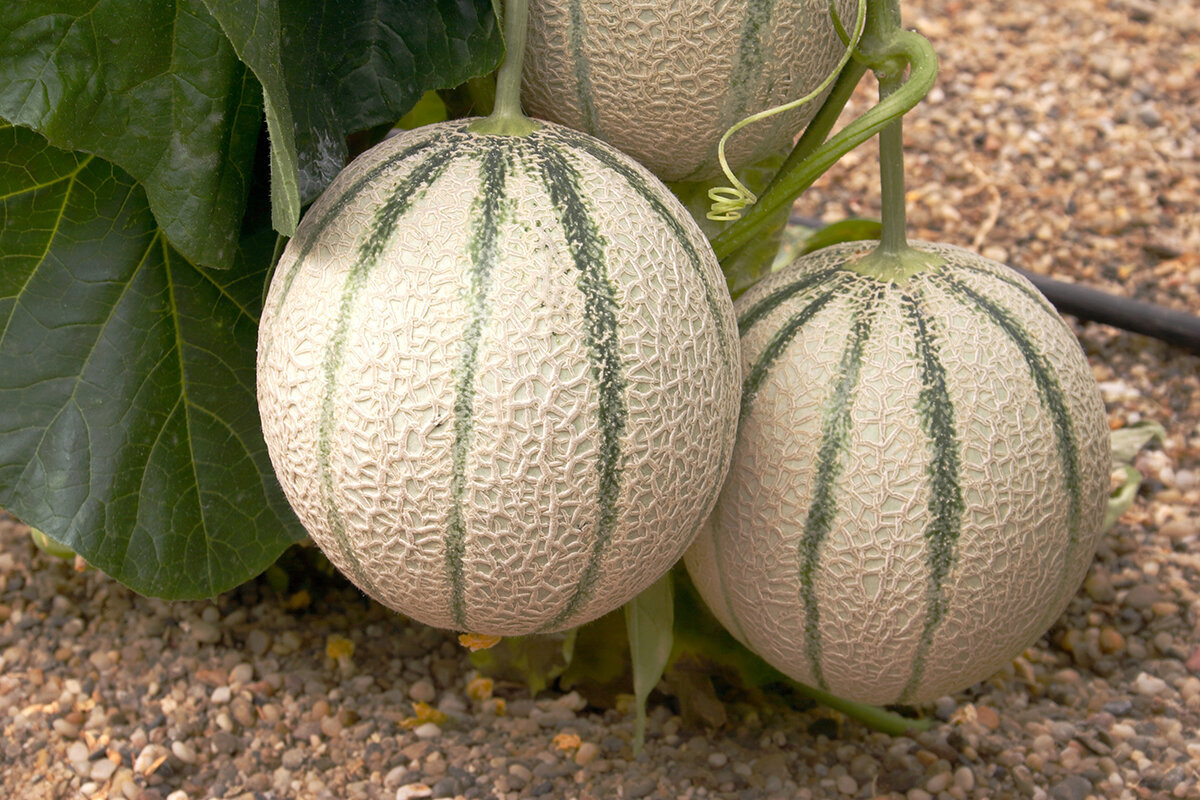
Greenhouse growing · New Zealand
Growing melons
flavourful in your own
greenhouse
A melon under glass is less a tropical fantasy than a well-managed balance of warmth, air, water and height. Give the vine a safe route upwards and it can reward you with fragrant fruit and a beautiful summer space.
From warm propagation to a fragrant late-summer harvest
The central idea
Give warmth a structure,
so sweetness can develop.
Melons are vigorous, heat-loving vines with specific needs. They need warm roots, bright light, free-draining soil, steady moisture while fruit forms, and moving air that dries foliage quickly.
Under cover, these conditions are easier to coordinate. The gardener also takes on tasks that weather and insects may partly handle outdoors: ventilating, watering, training, limiting fruit load and, where needed, hand-pollinating. Small to medium muskmelons are an elegant choice for most home greenhouses. They train vertically, their ripening scent is easy to notice, and a broad sling can safely support their weight. Small-fruited watermelons are possible too, but need more room, stronger support and especially careful variety selection. Plan the crop around light, height and accessible working routes, rather than available floor area alone.
Choose the variety before the training system
Four melon types
for a sheltered summer space.
The variety name matters, but it is even more useful to ask how the fruit will occupy your greenhouse. Look for descriptions such as early ripening,compact,small fruit,for protected growing or suitable for vertical training.
In a short or variable growing season, a brief crop time is a genuine advantage, not merely a stylistic preference. For your first crop, do not turn the greenhouse into a stage for the largest possible fruit. A melon that can be trained, supported, checked and ripened fully—without blocking the path or shading neighbouring crops—is more rewarding. Also check fruit weight, vigour and pollination guidance.
- Galia and netted melons Juicy, green-gold fruit with a distinctive netted skin. Many varieties suit fabric slings well, though ripeness signals and stem release remain variety-specific.
- Charentais and cantaloupe Small to medium intensely fragrant fruit, with notes of apricot, flowers and warm earth—ideal when flavour matters more than maximum weight.
- Honeydew and smooth-skinned melons Elegant fruit with subtler ripeness signals. Follow the variety description, ground colour, skin appearance and feel rather than relying on strong fragrance or a single colour.
- Small-fruited watermelons A striking greenhouse guest that needs height, robust training support and a generous sling. Seedless types also require a suitable pollen-producing companion.
From seed to vine
Start warm. Move gently.
Plant only when the space is ready.
01 / Sowing
Germinate warmly
02 / Seedling
True leaves
03 / Transition
Harden off
04 / Bed
Plant into warmth
Germinate warmly. From mid to late October, sow one seed into each sufficiently large pot. Melons dislike damaged roots; individual sowing avoids later pricking out and unnecessary repotting. Keep the mix evenly moist, never wet. Germination needs noticeable warmth, so a heat mat can help in a cool room. Once seedlings emerge, abundant light matters more than extra heat. This keeps them compact rather than long and soft.
The first true leaves. Bright light keeps young plants compact and sturdy. Do not repot repeatedly just because the calendar suggests it. A young, well-rooted plug plants more safely than an overgrown melon with roots circling a small pot or breaking apart when moved.
Harden off and plant out. Gradually acclimatise young plants to light, air movement and the greenhouse day-and-night rhythm. Begin with short, sheltered periods and avoid cold draughts or an abrupt move into fierce midday sun. Plant only when the house and root zone are reliably warm—often from November into December in cooler New Zealand areas, rather than in early spring. Set the root ball undamaged and no deeper than before. Two or three true leaves are a good stage, but actual conditions matter more than a fixed date.
The root zone
Build drainage first, then water attentively.
Melons need nutrients but do not tolerate a heavy, airless root zone. They start most reliably in deeply loosened, warm, well-drained soil improved moderately with mature compost—not in a small pocket of rich mix surrounded by cold, compacted ground.
Loosen the whole planting area deeply in an in-ground bed and remove hollows where irrigation water can stand. Soil should retain moisture yet regain air after watering. Mature compost supports establishment; add further nutrients in response to need, not habit. A raised bed can help where soil dries slowly. Keep the surface clean and water so that as little soil as possible splashes onto leaves. Heavy, cold ground is not improved by ever more fertiliser, but by structure, warmth and patience.
For containers, choose larger pots whenever space allows. A very small vessel dries unevenly in high summer, heats strongly and limits fruit development. For one vertically trained plant, about 30 to 40 litres is a sensible lower guide; more volume makes water and nutrients easier to manage. Use a stable, free-draining mix, secure drainage holes and a stable base. Expect to check moisture more often than in a ground bed.
The central choreography
Train the vine upwards
before it chooses its own route.
Roots
Clear base
Flowers
Fruit
Turn at the roof
One main stem
Airy base
Guide side shoots
Redirect overhead
Read the vine from the bottom up. First guide one main stem loosely along a string or trellis. Keep the lower section clear enough for air to reach beneath foliage without removing healthy leaves indiscriminately. Direct selected side shoots where they can carry leaves, flowers and fruit without making a damp, shaded wall with the neighbouring plant. Ground-touching plant parts may be removed when needed.
Once the main stem reaches the available height, you can lay it over, lead it along another string or limit it to suit vigour and planned fruit number. The Bloomcabin article Classic aluminium greenhouse offers ideas for planning paths, planting zones and training points together. Vertical melon growing works best when ventilation, access, crop areas and safe fixing points are considered from the start.
The morning appointment
Pollination is brief,
gentle and worth a daily walk.
Bees and bumblebees can enter a greenhouse through open doors and roof vents. Do not always rely on them, however: melon flowers are short-lived and not every female flower receives a dependable visit in the right window.
Identify
Morning
Transfer
Mark
Male flowers sit on a slender stem with no swelling behind the bloom. A female flower has a small, melon-like ovary directly beneath the flower base. Poor pollen transfer can mean fruit fails to set, remains small or develops unevenly. Check freshly opened flowers on bright mornings and note their position.
Choose a dry, bright morning. Use a soft brush to collect pollen from an open male flower and gently transfer it to the stigma of a female bloom. Alternatively, use the removed male flower directly. Repeat with other open flowers and note the date with a small tag or coloured tie. Do not judge success the next day; look instead for steady, even enlargement during the following week. Never work on flowers wet with condensation or make rough movements among delicate shoots.
Seedless watermelons still need pollination. Check variety information carefully and plan an appropriate pollen-producing companion; not every variety will perform this role reliably.
Deliberate selection
Fewer fruit often yield
a more rewarding harvest.
A strong greenhouse vine may look capable of carrying a small orchard. It is not. Every fruit you retain competes for leaf area, water, nutrients, light and remaining ripening time.
Once several fruit have set, choose those best positioned and growing evenly. Keep fruit on healthy shoots, with light and enough room for a sling. Remove deformed, damaged, trapped or very late sets early. The suitable number per plant depends on variety, fruit size, root volume, light, weather and crop duration. Treat fruit load as an ongoing agreement with the vine, not an unchanging number on a label.
Excess nitrogen can create the same problem from another direction: impressive dark, soft foliage and long vines, but delayed flowering and fruiting. Moderate nutrition and a realistic fruit load give the plant a clear task.
Keep
well set
well set
Keep
well lit
well lit
Remove
trapped
trapped
Remove
damaged
damaged
Support
what remains
what remains
Choose fruit with clear space around skin, stem and vine. A melon in a dense, airless cluster is difficult to inspect and dries slowly after humidity rises. Early selection is gentler than removing already heavy fruit later because it is shaded, rubbing or no longer safely supported. Check that the carrying shoot remains healthy and accessible too.
A small structural intervention
Make the sling
before the fruit needs it.
Broad support
Room to grow
Secure fixing
Check regularly
Use soft netting, broad clean fabric strips or suitable fruit nets so weight spreads across an area rather than creating a narrow pressure line. Shape a small hammock instead of tying material tightly around the fruit. Leave generous room for growth: a sling that fits perfectly when installed can later constrict, deform or rub a ripening melon.
Transfer the weight to a strong overhead line or trellis, never solely to the delicate fruit stem or a thin side shoot. Check the suspension at least twice a week during rapid growth and after watering. Look for constricting material, damp fabric, pull on the stem, contact with glass, or a displaced or unevenly loaded sling. Fruit support is ongoing crop care, not a one-off installation.
The rhythm of care
Water steadily. Feed moderately.
Do not suddenly dry plants out as they ripen.
Planting
Vine growth
Fruit set
Ripening
After planting: Water the root zone thoroughly so the root ball and surrounding medium make contact. Then let the surface dry slightly before the next watering while deeper layers remain evenly moist. The aim is moisture at roots and air in pore spaces. As leaf area grows, increase the appropriate water volume rather than switching between drought stress and excess. This matters especially for containers, which heat quickly and hold limited reserves.
During flowering and fruit set: Reliable water supply is especially important at these stages. Water directly onto the soil where possible, or use carefully controlled drip irrigation; permanently wet foliage adds unnecessary disease pressure. Check moisture below the surface rather than watering simply because the greenhouse air feels warm. Many small surface applications are usually less helpful than thorough watering matched to need.
During ripening: Do not abruptly withhold water from the vine. Instead, avoid needless excess while preventing wilting and severe fluctuations. A long dry spell followed by very heavy watering can encourage growth problems and splitting. Soil prepared with mature compost supports the start; later, a balanced addition may help when used according to its label. Very dark-green, soft leaves and endless vines can indicate excess nitrogen. Guide the plant steadily to ripeness rather than trying to force flavour by sudden water deprivation.
A passage for air
Warmth is valuable.
Stagnation is not.
A melon greenhouse should feel sunny and alive, never sealed. Air movement limits heat peaks, dries leaf surfaces, supports steady growth and creates more pleasant conditions for pollination and care in the morning.
Use roof vents together with a door or low opening whenever outdoor conditions allow. This creates a natural chimney effect: warm air rises and can escape. In fierce midday sun, light shading placed outside where possible can help without darkening the house permanently. Water the soil preferably in the morning, keep paths clear and avoid dense foliage against glazing or walls. Condensation after cool nights should be able to dry quickly in the morning.
In the Bloomcabin accessories section, you will find practical additions for ventilation, shading and crop training. The essential thing remains a clear system that can be operated reliably on warm days.
The five-minute round
Check little, but regularly.
1 / Start beneath leaves
Look under young leaves for aphids, fine webbing, eggs, pale speckling or sticky residue. Spider mites favour hot, dry air; pests found early can usually be managed far more precisely.
2 / Read the leaf
Powdery coatings, yellowing, brown edges or dead patches need attention. Check leaf wetness, air movement and likely causes carefully before choosing a treatment or plant-protection product.
3 / Check stems
Inspect ties, clips and the stem base. Replace anything that rubs or constricts, and remove fallen leaves, damaged sets and rotting plant material promptly and hygienically.
4 / Soil and slings
Standing water, algae and decaying debris raise humidity and create pest refuges. At the same time, check fruit slings for pressure marks, dampness and secure positioning. A clean path supports plant health.
Preventive plant protection begins with cultivation: adequate spacing, moving air, dry foliage, clean tools, moderate feeding and regular removal of plant debris. Do not water directly at the stem, and watch for injuries or discolouration at the base. Where clear symptoms appear, identify the cause or pest before acting. Remove heavily affected material carefully. In New Zealand home gardens, use a product only for label-permitted purposes, follow its directions and check applicable EPA controls. If uncertain, seek regional gardening advice rather than applying a treatment on speculation.
The sensory final stage
Harvest by reading
several ripeness signals together.
A ripe melon announces itself through several small changes. Their order differs by type and variety. The stated crop duration is therefore a useful guide, not an automatic harvest date.
01
Scent
02
Skin
03
Stem
04
Timing
Scent. Ripe muskmelons often develop a warm, clearly sweet fragrance at the blossom end. Smooth-skinned types may smell much more restrained. Use aroma as one signal among several, never as the only test.Skin and ground colour. Compare netting, sheen and ground colour with your variety description. Depending on type, skin can move from green towards cream, gold or a warmer undertone. Hard, glossy green skin often indicates that more ripening is needed.
Behaviour at the stem. Some muskmelons form an abscission layer at full ripeness and detach more easily at the stem end. This so-called slip behaviour does not apply to every variety and is not a reliable standard for watermelons. Record the fruit-set date and, with experience, connect ripening time, expected fruit weight, scent and skin appearance. Check possible softness at the blossom end only gently; firm pressure can damage fruit you have waited months to harvest.
Harvest in the cool morning where possible, using clean scissors or a knife if the fruit does not release naturally for that variety. Do not pull on stem or vine. Handle netted skins gently and clean the outside, knife and board before cutting. Refrigerate cut melon afterwards. Whole muskmelons can remain briefly at room temperature, but long storage costs fragrance and texture. The finest harvest is simply served while its flavour still recalls the greenhouse.
Questions from the melon house
Frequently asked questions about greenhouse melons
How many melon plants fit in a small greenhouse?
Start with fewer plants than the footprint appears to permit. One plant per large container or clearly assigned bed position is a sensible beginning. Leave a real central path, space from the glazing and enough height to reach every vine, flower, tie and fruit sling without contortion. An airy crop ripens more reliably than a completely occupied floor.
Do melons need hand pollination?
Not necessarily, but it is often the most dependable method. Natural pollinators can enter through open windows and doors. If activity is low or fruit sets poorly, careful hand-pollination of freshly opened flowers in the morning makes success more predictable.
Why do flowers fall without forming fruit?
The first flowers are often male, so some drop is normal. Once female flowers appear, weak pollination, heat build-up, cool nights, water stress or excess nitrogen can impair fruit set. Check flower type, climate, watering rhythm and nutrient supply first.
Can a melon grow in a container under glass?
Yes. Choose a compact or small-fruited variety, a stable container of about 30 to 40 litres and a secure training structure. Provide clear drainage holes and monitor soil moisture more closely than in a bed, as containers dry faster and heat more strongly in high summer.
Should leaves beside ripening melons be removed?
Remove only diseased, damaged, ground-touching or permanently crowding leaves. Healthy foliage supplies the fruit with assimilates and contributes to growth and sweetness. Improve air and light with thoughtful training rather than suddenly exposing fruit fully to intense midday sun.
What greenhouse shape suits vertical melon growing?
Adequate ridge height, a safe route for strings or trellis and room for freely hanging fruit above a walkable path are important. Ventilation matters just as much: roof vents and a door need to give rising warm air a clear route out even as foliage increases.
Source list
Sources and further reading
LWG Bavaria – Melon growing trial 2025
Current trial results on varieties, yield, fruit weight, health and protected melon growing under German conditions.
LWG Bavaria – Melon growing trial 2024
Practical trial data on variety performance and melon crop management in Bavarian horticulture.
LVG Heidelberg – Greenhouse melon varieties 2024
Comparison of muskmelon and watermelon varieties, including yield, fruit traits and plant health.
Weihenstephan-Triesdorf University – Melons in greenhouse and field
Practical examples of training and safely supporting hanging melon fruit with suitable nets.
Bingenheimer Saatgut – Watermelon crop information
Growing guidance for raising, planting, care, pollination and ripeness of watermelons.
University of Minnesota Extension – Growing melons in the home garden
Additional English-language guidance on warm soil, variety choice, pollination, watering and harvest.
A final invitation
Give the vine something beautiful to climb.
A successful melon crop is not determined by square metres alone. It comes from enough ridge height for the main stem, effective ventilation for living foliage, clear paths for pollination and care, and secure points that carry strings and ripening fruit. Plan the greenhouse as an architecture for growth—from the warm root zone to the fragrant harvest.
For a classic, adaptable foundation, consider the Classic aluminium greenhouse. Its clear, traditional geometry offers a calm frame for vertical melon growing. Beds or large containers, training lines, roof vents, fruit slings and walkable paths can be planned as one connected system—for melons, herbs and long summer afternoons under glass.
Classic aluminium greenhouseContinue planning
Compare the layout and proportions of the Classic aluminium greenhouse if you are planning generous paths, vertical growing zones and easy-to-reach training points in your garden.
Explore further layouts and options for a sheltered garden space with the Classic aluminium greenhouse.
For more ideas on durable construction, style, placement and ventilation, explore Bloomcabin accessories and create a bright, well-ventilated summer space for your next melon season.
