
Growing sweet potatoes in a greenhouse
Bloomcabin growing guide for New Zealand
Growing sweet potatoes in a greenhouse
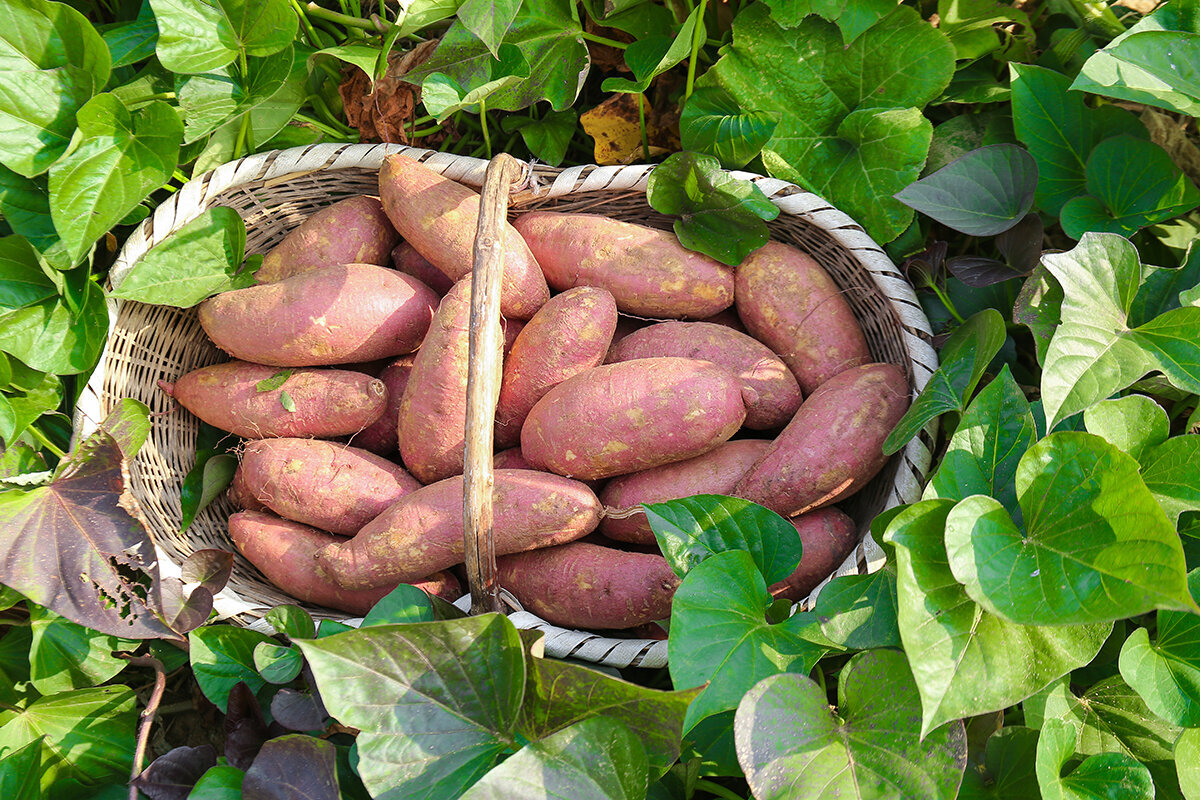
A harvest of stored summer: root slips, protect the long warm season, then cure the roots carefully after lifting.
A summer harvest from the soil
Put warmth to work for you.
A good sweet potato harvest comes less from one dramatic planting day than from patiently accumulating warm, undisturbed weeks.
In cooler New Zealand districts, sweet potatoes can initially seem better suited to reliably warm summers. Vines may grow outdoors, but abundant foliage alone does not guarantee substantial storage roots. A cool spring, cold nights or an early autumn can slow plants precisely when they should be forming roots and storing reserves. They need a warm start, a long growing season and loose soil that remains active, evenly moist and frost-free until season’s end.
A greenhouse changes those starting conditions elegantly. It allows healthy slips to be raised under cover, warms the bed earlier, softens cold nights and extends the productive late-summer period. An unheated greenhouse does not turn sweet potatoes into a winter crop; it simply makes summer more predictable. That distinction supports realistic planting dates and deliberate ventilation, shading, watering and harvest decisions.
The greenhouse advantage: Use the sheltered space to avoid cold interruptions in growth. On sunny midsummer days, ventilate early and shade if needed – treat it as a bright summer room, not a sealed heat trap.
01 / Plant identity
Sweet potato: a heat-loving vine.
The sweet potato,Ipomoea batatas belongs to the morning glory family. Its edible storage roots form on a sprawling, trailing to climbing plant. Young rooted or unrooted shoots, called slips, provide the planting material. Cutting up an eating tuber and planting it like a seed potato is therefore the wrong approach. Healthy, true-to-type slips are the more dependable start for a greenhouse bed used over time.
This crop is sensitive to cold. Roughly 20 to 29 °C is a favourable growth range; below about 10 °C development slows markedly, and frost ends the crop. Warmth alone is not enough: cold, waterlogged or compacted soil can hinder establishment just as much as sharp swings between drought and overwatering.
02 / Greenhouse potential
Think horizontally, not vertically.
A sweet potato house is not a tomato house with a different plant list. Long vines need a low sideways route along the bed edge, across a clear border area or around a generous container. Below ground, storage roots need deeply loosened, well-structured soil with reliable drainage. The greenhouse’s real task is to give both parts of the plant a warm, orderly and accessible space.
Start planning with dependable airflow. Roof vents, an open door and, where needed, additional air movement protect foliage from heat build-up and stagnant humidity. A quality model such as the Classic aluminium greenhouse creates a bright, durable framework for climate management. It also leaves enough real soil area for a spreading long-season crop without crowding paths and work areas.
Choose by the length of your warm window
Three useful variety directions for a home greenhouse.
Variety choice matters especially where cool autumn nights arrive early. Where possible, buy named, healthy slips from a traceable source. A known variety gives more realistic maturity information and reduces the risk of bringing disease or unsuitable starting material into protected soil.
Early orange varieties
Look for relatively early varieties such as Beauregard. Fast-developing orange-fleshed types are usually more practical in cooler districts and unheated greenhouses than distinctly late specialty varieties.
Classic orange flesh
Established varieties such as Orleans or Evangeline combine familiar flavour with orange flesh. They suit baking, roasting and puréeing, but still require a long warm summer and ample room for vigorous vines.
Purple and pale types
Purple or cream-fleshed varieties add interest in the kitchen. Do not choose by colour alone, though. Check maturity time, vigour and site advice before giving valuable greenhouse space to a late variety.
The slip cascade
Start with shoots, not tuber pieces.
Order slips to suit your local planting window, or raise a small number yourself early. Depending on your intended planting date, home propagation can begin from late July to September. Purchased, healthy, true-to-type young plants remain the lower-risk introduction, particularly where the greenhouse bed will be used again in future years.
1
Set the mother tuber
Warm, healthy and preferably untreated.
2
Strong shoots
Wait for several healthy leaves.
3
Remove cleanly
Twist or cut the slip gently.
4
Root the slip
Leaves above, new roots below.
5
Plant into the bed
Harden off and plant carefully.
To make your own slips, lay an undamaged, preferably untreated mother tuber horizontally, half covered in lightly moist, loose medium. Keep it warm and bright, but never waterlogged. Once vigorous shoots have several healthy leaves, remove them with clean tools or a gentle twisting pull. Take off the lower leaves and place the shoots in water or clean, moist propagation medium. As soon as sturdy white roots appear, move the slips promptly into soil. Pale, badly stretched or cold-stressed shoots make a noticeably weaker start.
Acclimatise rooted slips to strong greenhouse sun and moving air over several days. At planting, the rooted lower section and several leaf nodes go into loose soil; only the healthy upper leaf crown remains above it. Treat the material as a tender warm-season seedling, not as a robust seed potato.
Do not treat slips like potatoes. Even a lush slip stops growing in cold soil. Wait until the greenhouse bed is consistently warm, then plant it into a loose, well-drained root zone.
The warmth band
Temperature is the crop calendar.
Do not plant simply because the statistical frost risk has passed. Sweet potatoes only establish convincingly once the root zone is warm as well. Measure in planting depth with a soil thermometer in the morning. In an unheated greenhouse, this is often possible from late October into November, later in cooler places. Open windows and doors before midday temperatures climb excessively.
Below about 15 °C soil
Keep waiting for warmth.
Consistently warm soil
Planting can begin.
20–29 °C air temperature
A favourable range for strong growth.
Late autumn chill
Finish the crop and harvest.
Sweet potato roots grow slowly in cool soil; when cold combines with persistent wetness, rot risk also rises. More important than a fixed calendar date is soil that stays warm for several days and does not cool sharply overnight. At air temperatures of around 20 to 29 °C, vines gain momentum visibly if water remains evenly available and the greenhouse is ventilated regularly. Below about 10 °C, the entire crop is substantially inhibited.
A thermometer at root-zone level tells you more than outdoor temperature or midday warmth. In New Zealand spring, the greenhouse’s greatest benefit is earlier soil warming and fewer cold interruptions. At the height of summer, the task reverses: early-opened vents, an open door and, if required, shading prevent solar energy from becoming stressful trapped heat.
Bed choreography
Give roots depth and vines a route.
Sweet potatoes thrive in a deeply loosened bed that drains water reliably and is not walked on again after preparation. In heavy soils, a loose mound around 20 cm high is useful: it warms faster, improves drainage and opens more gently at harvest. Large containers also work. Allow at least 35 to 45 litres per plant, preferably more, and choose broad pots with generous drainage holes. Containers warm quickly but dry out much faster than garden soil.
Set slips about 30 to 40 cm apart and allow roughly 80 to 100 cm between rows. Even more important is a clear sideways route for long vines. You need accessible space to water at soil level, inspect leaf undersides, guide wandering vines gently and harvest later without stepping into the root zone.
- Work in mature compost carefully and create loose, structured soil with dependable drainage; avoid fresh manure and excessive nitrogen.
- Keep the area around the crown accessible instead of letting it disappear beneath a dense, confusing carpet of vines.
- Run vines along a defined bed edge or over a low support; do not train sweet potatoes vertically like cucumbers.
Loose root zone
About 20 cm high mound
About 20 cm high mound
Clear working path
Water, inspect and harvest
Water, inspect and harvest
Water, nutrients, air
Keep the root zone even and greenhouse air moving.
While establishing and forming storage roots, sweet potatoes want even water but do not tolerate waterlogging. Good care comes from the interaction of soil, foliage and greenhouse climate – not from an unchanging weekly schedule.
Water the bed, not the room
Water thoroughly after planting and keep the soil reliably moist until slips are firmly rooted. Afterwards, the surface may dry slightly between waterings, while deeper layers should not dry out completely. Check at around 8 to 10 cm deep with a finger or narrow probe. Drip lines or a watering wand deliver water at soil level, apply it more calmly and keep foliage drier. Containers need more frequent checks because their limited medium warms and dries faster.
Practical response
Mulch only once the soil has warmed sufficiently. A light, airy layer can slow evaporation. A thick, continuously wet layer, however, holds cold, restricts air exchange and can slow the very warming you have built up.
Feed roots, not foliage
Mature compost, good garden soil and a balanced organic vegetable base fertiliser are sufficient in many home gardens. Too much readily available nitrogen creates impressive leaf growth but can impair the desired storage roots. If foliage is already vigorous and dark green, extra fertiliser is not automatically useful. In containers, cautious supplementary feeding is more likely to be needed because nutrient reserves are limited. Always assess watering, growing medium and plant appearance together.
Practical response
Apply extra fertiliser only to moist soil and water it in. Avoid repeated nitrogen-rich applications simply because the crop remains in the greenhouse for many weeks. A green jungle with few worthwhile roots is not a success.
Ventilation also protects root quality
Greenhouse warmth is valuable until it becomes heat stress. Open roof vents and doors early on sunny days; additional shading can help in high summer. Air movement prevents warm, humid stagnant pockets in dense foliage and helps leaf surfaces dry quickly after watering or a damp night. Checks become easier too: spider mites, whiteflies and aphids are spotted sooner when vines are guided neatly and accessible from all sides.
Practical response
Plan airflow, beds and paths before summer. The Classic aluminium greenhouse provides a stable, bright framework with practical ground area and scope for an organised working routine.
Read the vines early
Three issues that matter before harvest.
Lots of foliage, few roots
Likely cause: Too much nitrogen, overcrowding, a late cool start or repeated water stress can delay root formation. Do not cut the plant back frantically to force tubers. Where possible, correct water management and climate, then give the crop enough warm time.
Pale speckling or curled leaves
Likely cause: Spider mites, whiteflies or aphids can multiply rapidly in warm, dry, stagnant greenhouse air. Check leaf undersides and fresh shoot tips weekly while watering. Remove heavily affected leaves early, improve airflow and respond specifically rather than over-treating the whole crop as a precaution.
Cracked or unusually shaped roots
Likely cause: Uneven watering, compacted soil layers, stones or hard clods can distort growth. Prepare the bed deeply, keep moisture as even as possible and avoid later disturbance of the root zone.
Start hygienically: use healthy planting material, clean tools, suitable medium and, where possible, crop rotation in beds. Remove fallen leaves and residues from other crops. If leaf spotting increases sharply or the cause remains unclear, do not use affected tubers as mother material next year. Prevention is far easier in protected soil used repeatedly than later remediation.
The harvest sequence
Harvest as if the skin were paper.
Freshly lifted sweet potatoes have exceptionally delicate skin. Every scratch creates a wound that must heal during curing. The aim is therefore calm, planned lifting – not hurriedly working through the bed with a garden fork.
01
Choose the time
Harvest before frost and cold nights.
02
Remove vines
Make every plant crown visible.
03
Loosen widely
Start outside the expected root zone.
04
Handle once
Lay roots down gently.
After around 90 to 120 warm growing days, harvest may approach depending on variety and starting time. If vines and leaves are still healthy, the greenhouse can gain valuable extra weeks. Do not risk a sudden cold spell, though. First cut back the foliage and mark the crown. Insert a fork or hand spade well outside it and work slowly inwards. Storage roots often lie farther from the plant centre than the above-ground crown suggests.
Brush away loose, dry soil carefully rather than washing roots for storage. Protect the harvest from direct sun and do not throw tubers into a bucket. Lay sound examples individually or in shallow layers in airy crates. Cut, badly bruised or otherwise damaged roots should be sorted out and used promptly in the kitchen; flawless tubers go directly into controlled curing.
The warm interval
Curing develops the harvest’s quality.
Curing is more than casual drying. It is a controlled warm, humid phase in which small harvest injuries heal, skin becomes tougher and later keeping and eating quality improve. A greenhouse is suitable only if conditions can remain stable without direct sun, extreme day-night swings or condensation. A small clean room or controlled chamber is often more reliable than open greenhouse space.
On harvest day
Shade the roots
Allow no direct sun.
On the first day
Dry gently
Brush off loose soil carefully only.
About 5–10 days
Warm and humid
About 29–32 °C; 85–90% relative humidity.
After curing
Store moderately cool
About 12–16 °C; dark and airy.
Protect roots from sun immediately after lifting and do not wash them. Let surface moisture and clinging soil dry enough to brush off gently. Do not dry the harvest with harsh, hot air. Sound roots then cure for roughly five to ten days at about 29 to 32 °C and high relative humidity of around 85 to 90%. Gentle air exchange remains important: there must be neither dripping moisture nor a musty smell. Check daily for soft spots.
After curing, move roots to a dark, well-ventilated room at approximately 12 to 16 °C. Do not shock the harvest in a cold cellar and never refrigerate it; low temperatures can cause chilling injury, watery patches and later quality loss. If using the greenhouse for curing, shade the crates and monitor temperature and humidity closely with a thermometer and hygrometer.
A quiet storage finish
Store only the best roots.
After curing, select only firm, uninjured, healthy-looking roots for longer storage. Place them loosely in shallow airy crates, slatted boxes or open baskets, cushioning with paper if needed. Do not stack too high and avoid cold draughts. Check the supply at least monthly and remove any tuber that softens, leaks or shows rot before neighbouring roots are affected.
In New Zealand, a frost-free pantry, temperature-stable utility room or suitable storage space is usually better than a garage, refrigerator or unheated shed. Seek a consistently moderately cool, not cold, place. Proper curing can substantially increase storage life; specialist guidance cites six to twelve months in good conditions. In home storage, however, the quality of every individual root remains decisive.
Sweet potato growing FAQ
Answers for the warm side of the garden.
Use local weather information, a soil thermometer and your variety’s maturity guidance to adjust every timing decision. A greenhouse improves the chance of a good harvest, but does not replace the required long, warm growing season.
Can I grow sweet potatoes year-round in an unheated greenhouse?
Not reliably across New Zealand. An unheated greenhouse can warm soil earlier in spring, buffer cool nights and extend the season. Sweet potatoes remain cold-sensitive, however. Winter conditions vary by region, but cool soil, low night temperatures and shorter days commonly limit productive root formation and vigorous growth.
How many sweet potato plants fit in a small greenhouse?
Fewer than the initially compact slips suggest. In a small greenhouse, two well-positioned plants are often more productive and easier to manage than six crowded plants. Allow 30 to 40 cm per plant, generous root room and a fixed sideways route for long vines.
Should I cut vines back to keep things tidy?
Only lightly if a vine permanently blocks a path or restricts air movement. Repeated hard cutting reduces photosynthetically active leaf area and therefore energy for storage roots. It is better to guide long vines gently along the bed edge, around a container or over a low removable support.
Can I make my own slips from a bought sweet potato?
In principle, yes, but the result is less reliable than with true-to-type, healthy starting material. Shop tubers may have been treated to inhibit sprouting; variety, storage history and health status are often unknown. For a greenhouse bed used over years, slips from a traceable supplier are the safer investment.
Why do my sweet potatoes taste barely sweet straight after harvest?
They probably need curing. Fresh roots often remain starchy. Give undamaged examples a controlled warm, humid curing phase followed by some storage time at a moderate temperature. Do not keep the harvest in the refrigerator. Texture and flavour usually become noticeably rounder with time.
Sources and further reading
Keep growing with sound specialist information.
More from Bloomcabin: Setting up a greenhouse · Smart greenhouses for home gardeners · Greenhouses and conservatories from Bloomcabin
- German Federal Information Centre for Agriculture – sweet potato growing in Germany
- Bavarian Garden Academy – sweet potatoes and suitable varieties
- University of Göttingen – growing sweet potatoes
- Washington State University Extension – sweet potato slip production
- UC Davis – postharvest handling and storage of sweet potatoes
- Penn State Extension – identifying scurf on sweet potatoes
- Landwirtschaft.de – are sweet potatoes grown in Germany?
Preserve the season
A greenhouse turns summer warmth into a storable harvest.
Sweet potatoes reward patient gardeners twice: first through warm months full of vines, then after curing, when stored roots become firmer, sweeter and ready for winter cooking. Give the crop a bright greenhouse space with manageable warmth, good airflow, loose soil and generous ground area.
Classic aluminium greenhouse