
Hot Tub Covers: What to Look for Before Buying
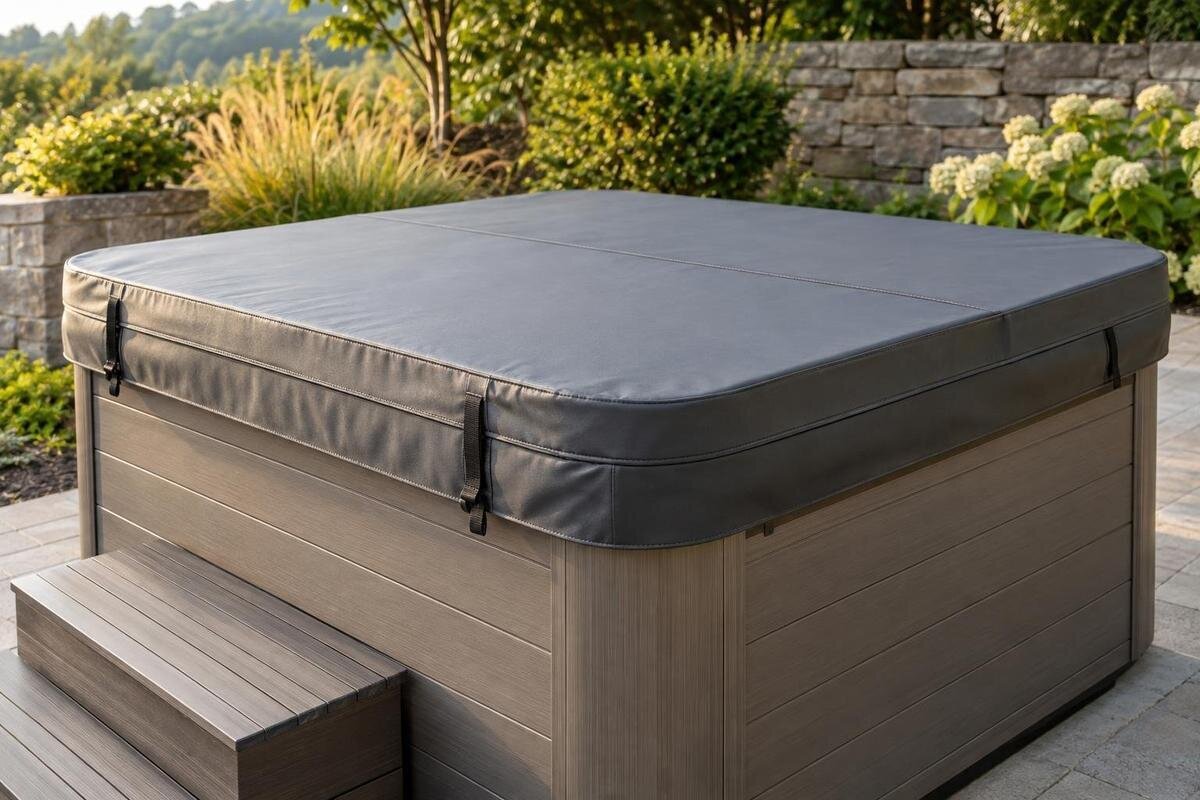
Hot tub cover buying guide
A hot tub’s nominal size is not enough to choose a well-fitting cover. The cover must suit the exact tub model and outline, while its fastenings, opening method and any lifter must work in the available space. Before comparing quotes, get the supplier’s measuring instructions and ask which cover details are confirmed for your spa. This guide focuses on fit, construction, published insulation information, everyday handling and the terms to check before ordering.
Before ordering 1
Identify the exact hot tub model
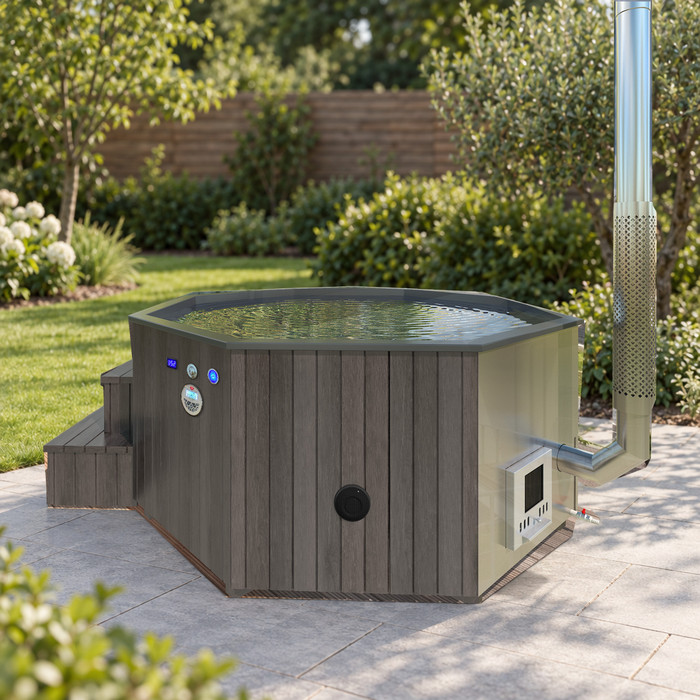
Find the identification plate on the spa, then compare it with the original invoice, order confirmation, owner’s manual or retailer record. Copy the complete make and model name, plus any version, year or serial detail displayed. A capacity figure, range name or similar-sounding model may not provide enough detail for a cover order, particularly if the supplier’s records distinguish variants. If the label is hard to read, photograph it and ask the retailer or manufacturer to identify the unit. If you bought the spa second-hand, request the previous paperwork rather than assuming an existing cover belongs to it. Keep the exact wording in your notes; a guessed model can send sizing in the wrong direction.
In your enquiry, say whether you need a replacement cover and give the details you can verify. Ask the supplier to confirm which exact tub variant the quoted cover is matched to, and whether the cover is a separate purchase rather than an assumed inclusion. A catalogue page such as Bloomcabin Hot Tub Cove 2 identifies a spa model; it does not by itself establish a cover match. If the supplier proposes using another model’s dimensions, ask what document confirms the match. Save the answer with the order and compare the final description with your own records before paying. If more than one spa is being quoted, send a separate set of details for each.
Follow the cover supplier’s measuring instructions
Use the measurement sheet, diagram or instructions supplied by the cover maker for the specific cover you are considering. Sellers may ask for dimensions at different edges or points, so do not substitute a generic online chart or measure only the bathing area. Check which sides, corners and edge details matter, what units to use, and whether a sketch or photographs are required. Ask whether figures should be exact, rounded or within a stated tolerance; do not invent your own allowance. If any instruction is unclear, ask where the tape should begin and end. A precise measurement from the wrong reference line is still the wrong measurement.
Measure the tub at the locations shown, using a straight tape and a second person if that helps keep it aligned. Record each figure, note the units, label the sides and repeat the measurements to catch errors. If opposite sides differ or an edge is angled, report it rather than making the outline look more regular on paper. For a Haven 6 hot tub cover enquiry, include the model name alongside the measurements taken using the supplier’s method. An old cover can be a useful reference, but do not treat its edge as definitive unless the supplier asks for that measurement. Send a labelled sketch or photos in the requested format, and keep a copy to check against the order confirmation.
Before ordering 2
Check the cover’s shape and edge details
Dimensions alone do not describe every cover shape. Confirm the supplier’s terms for a square, rectangular, round or other outline, then check the corner radius, any angled or stepped edge, and the hinge position. If the tub has an offset, raised rim detail or projection close to the edge, ask whether it affects the cover profile or closure. Do not assume that a cover described as square fits every square spa: the edge shape and the way the cover meets the rim are part of the specification. Ask which boundary the stated dimensions represent, rather than guessing from a top-down photograph.
Request a drawing of the proposed cover, with its orientation marked, and compare it against your measurement form before approval. Clarify which side folds and where the hinge sits, especially if one edge is near a wall, path or access route. If the cover has a shaped edge or separate panels, request an explanation of how that construction corresponds to your tub rather than inferring it from a photograph. When requesting a cover for Bloomcabin Hot Tub Fjord 8, include the exact model name on the drawing enquiry. For a replacement, ask whether the hinge position and edge profile will stay the same or change. Use clear labels for each side rather than relying on descriptions such as left or right.
Compare cover materials and construction
Look beyond broad descriptions such as weather-resistant or premium. Ask for the cover’s stated outer-surface material, core construction and any inner lining or moisture-related layer the maker specifies, then check how seams and the hinge area are finished. Not every seller publishes the same details, so compare like with like and note what remains unspecified. For an outdoor site, describe its exposure to sun, rain, wind or salt air and ask which claims are supported for the exact cover. Do not assume a finish is UV-resistant, waterproof or suitable for every condition unless the supplier states that clearly.
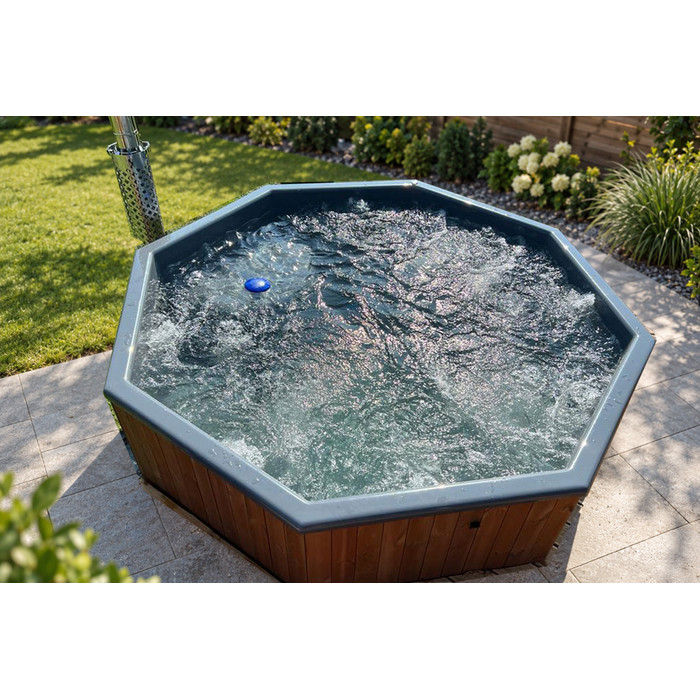
Construction is easier to compare when you have a description of the full cover rather than a single material label. Ask whether the named material applies to the whole cover or only its outer skin, and whether the seams and hinge area need different care. If options are offered, request the written differences in construction, maintenance and supply terms instead of relying on a tier name. If you are choosing a cover for the Aurora 10 model, request the specification for the exact cover being quoted, including its material and finish. Keep that information with your quote so you can distinguish the options and check what was actually offered.
Before ordering 3
Check fastenings and insulation claims
Check every point that holds a cover in place, not merely the number of straps in a description. Confirm strap positions, buckle or clip type, how each part attaches to the tub, and whether the quote includes all required fastening components. If attachment points from an old cover remain, photograph them and ask whether they suit the proposed replacement; do not assume the same layout is used. Check whether replacement straps or clips can be ordered separately if one is damaged or lost. A supplier matching a cover to the Cove 2 catalogue listing should confirm the fastening arrangement for that tub, not only the cover’s nominal dimensions.
Read insulation claims as product information, not as a promise about household power bills. If a listing says insulated, energy-saving or multi-layer, ask which construction details or measurements apply to that exact cover and whether a defined test basis is provided. A numeric figure is useful only when its meaning and measurement method are clear; unexplained numbers and broad adjectives cannot be compared fairly. Ask whether the stated performance describes the whole cover or only one material or core component. Keep the answer alongside the specification so you are comparing the same type of claim across quotes, rather than assuming similar wording means equivalent construction.
Assess handling and storage
Ask for the finished cover’s stated weight and dimensions when folded or positioned for storage, if those figures are available. A product photo, tub capacity or foam thickness will not tell you how heavy a finished cover is or how manageable it feels. Think through who will open it in ordinary use, where the folded section will go, and whether that space stays clear of a doorway, path or garden furniture. Ask whether the maker gives handling and storage instructions. Do not assume a cover can be folded in a different way, rested on an edge or left on the ground without consequence; follow the supplier’s guidance for that construction.
If you expect to move the cover without a lifter, ask the supplier to describe the opening method and the space the folded cover occupies instead of relying on a general claim that it is easy to handle. If it will be stored away from the tub, find out the recommended position and whether a separate support is needed or included. For a cover quote for Bloomcabin Hot Tub Haven 6, ask the supplier to state the finished cover’s weight rather than estimating it from the spa listing. If possible, ask to see the handling method demonstrated before you choose, especially where access space is limited. Make sure the place where the cover rests will not block the route you use around the spa.
Before ordering 4
Confirm cover-lifter compatibility
Treat a cover lifter as a separate compatibility check. It must suit the cover design and the spa’s available space; products with similar descriptions are not necessarily interchangeable. Give the lifter supplier the exact tub model, the proposed cover drawing and details of any lifter already owned, including its model label. Ask for confirmation of compatibility, the required mounting position and clearance as the cover opens or rests. If those details are not published, request a diagram or have the supplier confirm the combination against your layout before purchase. Do not assume a lifter is included with a cover unless the quote says so.
Check whether the lifter is intended for the cover’s hinge direction, overall dimensions and stated weight, and whether brackets or other parts are included or sold separately. If a wall, fence or walkway sits nearby, measure the available space in the way the lifter maker specifies; the tub footprint alone does not show the opening clearance. Ask who confirms the combination if the cover and lifter come from different suppliers. When enquiring about a lifter for the Fjord 8 hot tub, identify the proposed replacement cover as well as the spa. Keep any compatibility response with the cover drawing and check that the quoted parts match the models you have specified.
Match the cover to site exposure and routine
Match the cover specification to actual exposure. Note whether the spa sits in full sun, under dripping branches, near leaf litter or in a spot that catches wind and rain; describe these conditions to the cover supplier instead of choosing by the phrase all-weather. Ask for any published exposure limits or related care instructions, and check whether nearby walls or screens change the space needed to open the cover. A cover needs room to be lifted and set aside as intended, so map that clearance before choosing a lifting arrangement. Where the site is unusually exposed, request a specific answer about the proposed cover rather than assuming a general outdoor description covers it.
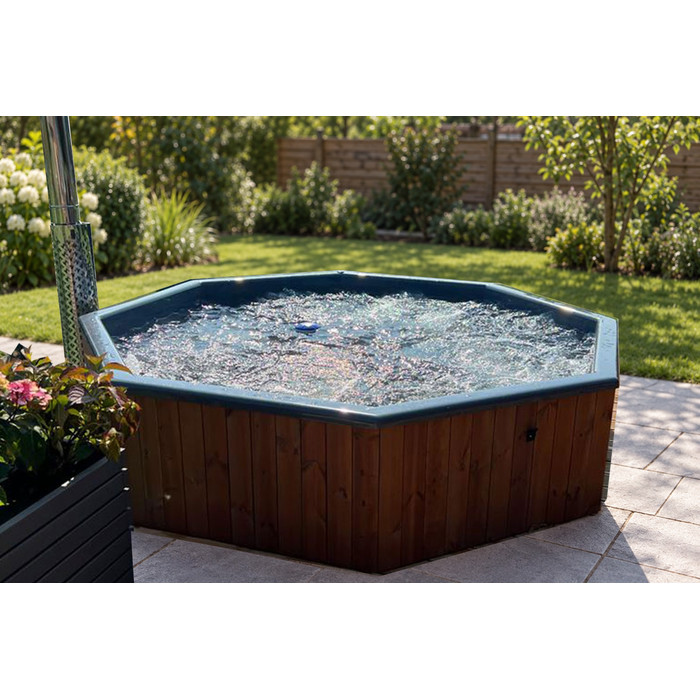
Routine matters too: estimate how often the cover will be opened, who will handle it and whether it needs to be moved fully out of the way for access. Choose among confirmed options by balancing fit, exposure, handling and total cost, not one headline claim. When comparing quotes, ask for the same dimensions, fastening set and stated construction so the comparison is fair; include any lifter or delivery charge. For a cover enquiry for Bloomcabin Hot Tub Aurora 10, describe the site conditions alongside your handling needs. Ask the supplier to explain which quoted option suits those conditions and why, rather than choosing on the strength of an all-weather description alone.
Before ordering 5
Ask about care and after-sales support
Before ordering, request the care instructions for the cover material and fastenings. Ask which cleaning products and methods are appropriate, whether there are limits on how the cover can be dried or stored, and what the supplier recommends if a strap, seam or surface is damaged. Do not apply a treatment simply because it suits another cover; materials and finishes can have different instructions. If guidance is missing, ask the manufacturer or seller for a document rather than relying on general spa-care advice. Keep those instructions with the order details so they are available when the cover needs attention.
Find out what after-sales support is available: replacement straps, buckles or other parts, and whether the cover can be repaired if a seam or hinge is damaged. Request any warranty or guarantee terms in writing, including the period, what parts are covered and any exclusions related to fit, weather or care. Terms vary by supplier and product, so do not assume one cover has the same support as another. If an expected service life is quoted, ask what conditions that estimate assumes; treat it as a supplier statement, not a promise for your site. Also check whom to contact if you need advice after delivery.
Confirm delivery, returns and the final quote
Before paying, read the order confirmation against your measurement sheet and any drawing the supplier approved. It should identify the exact cover, outline, orientation, fastenings and options, along with the tub model used for the match. Ask how the cover will be packaged, what delivery method and timeframe are currently expected, and whether the service includes moving it to the spa area. Check the route from the drop-off point to the tub: gates, steps, turns and narrow paths can affect how an item is handled. Confirm these practical arrangements with the seller rather than assuming a standard delivery service.
Ask for the complete quote in New Zealand dollars and check whether it includes freight, any custom-shape charge, fastenings, lifter parts and GST; compare the same items across sellers rather than treating a lower headline figure as like-for-like. Before ordering a made-to-measure cover, read the supplier’s cancellation, return and remedy terms and ask what happens if it arrives damaged or differs from the approved drawing. Find out how the delivery should be checked and whether packaging must be kept if a problem is found. Get the final dimensions and compatibility confirmation in writing, so you are not relying on memory if a mismatch needs to be resolved.
Frequently asked questions
Can I order a cover using the hot tub’s model name alone?
Use the model name to identify the spa, but not as the only sizing check. Ask the cover supplier to confirm the exact variant and follow its measuring instructions. A name or capacity label does not establish the cover’s outline or fastening layout.
What if I can’t find the spa’s model label?
Check the original paperwork, owner’s manual or retailer records. If those are unavailable, send clear photos of the spa and any readable identification details to the retailer or manufacturer and ask them to identify it before you request a cover.
Are covers described as insulated directly comparable?
Not necessarily. Ask what construction or measurement the claim refers to and whether it has a defined test basis. Broad descriptions and unexplained figures may refer to different things, so compare published information on the same basis.
Will a cover lifter fit any replacement cover?
No. Confirm compatibility for the exact tub, cover dimensions, hinge direction and available space. If you already own a lifter, give its supplier the model details and ask whether it suits the proposed cover.
Is an insulated hot tub cover automatically safety-rated?
No. An insulation description or fastening feature is not, on its own, evidence of a safety function. If that matters for your purchase, ask for the manufacturer’s explicit intended-use statement and supporting documents for the exact cover.
Choosing a cover is a matching exercise, not a guess from a nominal tub size. Identify the spa, measure exactly as the cover supplier directs, and confirm the outline, construction, fastenings and any lifter combination. Then weigh site exposure, handling, care, delivery and the complete quote together. Resolve any unclear detail before the order is made; a confirmed match is more useful than a product name or an undefined claim.
