
Hot Tub Maintenance Costs: A Realistic Annual Budget in New Zealand
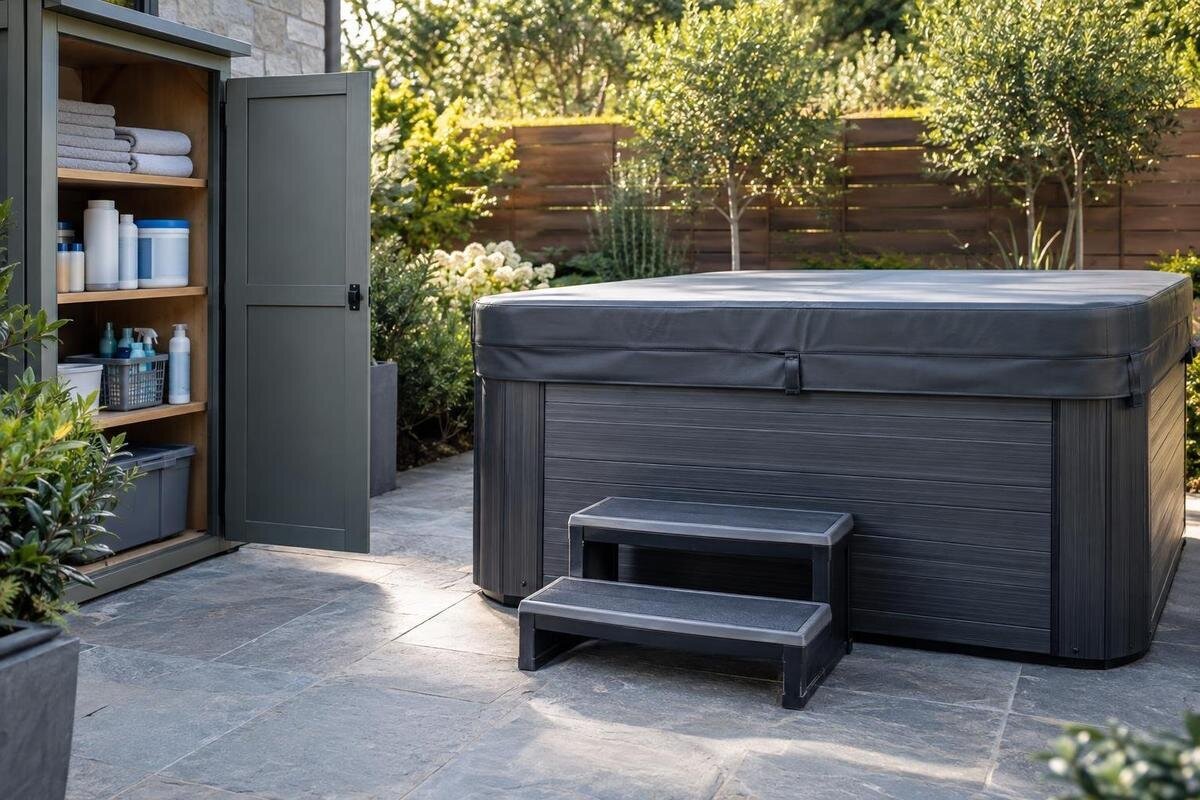
Hot tub maintenance in New Zealand
Once the tub is bought, annual upkeep is not a single flat fee. A realistic maintenance budget separates water-care and cleaning supplies, filter care or replacement, refill water charges where applicable, and an explicitly chosen reserve for occasional parts or repairs. The amount depends on the selected model’s documented requirements, household use, local billing and current supplier prices. This guide keeps heating, installation and purchase costs outside the calculation. Use the framework with dated New Zealand quotes rather than treating an unsupported figure as a nationwide average.
What counts as annual hot tub maintenance?
Treat annual hot tub maintenance as the recurring and occasional cost of caring for the water and the tub’s serviceable components, not the full cost of ownership. Routine lines may include water-treatment and testing consumables, cleaning products, filter care or replacement where required, and water added for refills if it creates an incremental bill. Keep unplanned parts or paid repair work separate as a reserve. Which lines apply, and in what quantities, depends on the exact product and its manufacturer’s guidance. A list of possible categories is not an annual price, and a reserve is not a prediction that a repair will occur.
Keep heating energy or fuel, installation, the tub’s purchase cost and optional equipment outside this maintenance subtotal. They may belong in a wider ownership budget, but combining them with filter and water-care spending obscures which costs recur. Distinguish a one-off tool or starter purchase from repeat consumables, and do not assume anything is included with a tub unless the seller confirms it. State whether you are budgeting a full 12 months or a partial first year, and whether the total means cash paid or supplies consumed. That scope note makes estimates easier to compare.
Budgeting for water-care and cleaning products
Water care can involve several cost lines: the treatment products allowed by the manufacturer, materials for checking the water, and any products the care instructions identify for maintaining its condition. Cleaning supplies are separate; a surface cleaner or filter cleaner must suit the exact materials and system. Use current guidance for the model rather than a dose, product list or schedule copied from another spa. Do not add every product advertised for hot tubs to the budget. Record each required item, its pack size, expected quantity and role, so optional extras or duplicate products do not inflate your estimate.
Estimate each item by multiplying the number of packs needed for your planned year by the current price per pack, allowing for the actual amount in each pack. Base the quantity on the manufacturer’s instructions and your intended use, not a generic amount per tub. If one pack will last beyond a year, show separately what you pay at checkout and what you expect to consume in the budget period. For Bloomcabin Hot Tub Cove 2, request the exact maintenance guidance before estimating: the catalogue name alone does not establish treatment products, dosage or cost. Date the quote and revisit it if you consider a compatible alternative.
Filter upkeep and replacement costs
A filter’s maintenance cost depends on the documentation for the exact product. Confirm whether the model uses a removable or replaceable element, identify its precise part number, and follow the stated cleaning and replacement criteria. Do not assume every filter is a disposable cartridge or set a replacement interval based on another brand. Cleaning products, a replacement element and any paid service needed to access or replace a part are different costs; price each only if the manufacturer calls for it. Without model-specific care information, mark the quantity and timing as unknown instead of inventing them.
Build the annual line from the cost of required filter-care supplies and any replacement elements that the documented instructions indicate fall within your chosen 12-month period. Add delivery or labour only if it is part of the likely purchase or service. For Bloomcabin Hot Tub Haven 6, ask the seller or manufacturer for the compatible element, current part price, care instructions and availability; a similar name or photograph is not proof of fit. Keep the part number with the quote so your next price check covers the same item. If replacement timing depends on inspection, show that uncertainty in your budget range.
When refill water adds to the budget
Include refill water only to the extent that extra consumption changes your household bill. Check your own water account or provider tariff rather than applying a nationwide average. Separate variable usage charges from fixed charges that would be paid whether or not the tub were filled. If another water-related charge varies with use, confirm whether it applies to your account and how it is calculated; do not infer that from a neighbouring area. If extra water does not change what you pay, record a confirmed zero for this line rather than inventing a cost per refill.
Where the tariff is priced per cubic metre, calculate annual water cost as the litres added in a year divided by 1,000, multiplied by the applicable marginal price per cubic metre. Use a confirmed fill amount and a refill assumption based on the model’s guidance or your own records; neither litres per fill nor a maintenance interval is available for the named models here. Do not assume a refill exactly matches nominal capacity. Put any treatment products used after a refill under water care, not under the water charge, to avoid counting the same expense twice.
Allowing for occasional repairs and replacement parts
An occasional repair is not a predictable annual consumable. Put parts and paid service in a clearly named contingency line; do not describe it as an average failure cost without reliable information for the exact model and circumstances. Ask for prices for identified replacement parts, diagnostic or call-out charges, labour and delivery, and check that a quote covers the compatible part. If a supplier cannot price something until it has been diagnosed, label that uncertainty instead of using a guessed amount. A written warranty may affect what you pay, but check its coverage and exclusions before assuming a repair is covered.
Set the reserve according to the repair costs you could comfortably cover and the quotes you can obtain, rather than an invented percentage of the purchase price. You could show a routine budget with no repair expenditure alongside a higher planning case that includes one clearly identified, quoted repair. The higher figure tests whether your budget could absorb that expense; it does not predict a breakdown. When considering Bloomcabin Hot Tub Fjord 8, use compatible-part and service prices rather than an allowance inferred from the model name. For electrical or other technical work, budget for a qualified professional rather than an unverified do-it-yourself fix.
Build a total from dated New Zealand prices
Put the calculation in one place: water-care products (W) plus cleaning supplies (C), filter care or replacements (F), incremental refill water (U) and your stated parts-and-repairs reserve (R) equals the annual maintenance budget. For each item within W, C and F, multiply its price per pack or part by the number needed during the 12-month period, then add the results within each category. Calculate U from added water and the applicable local tariff. Choose R separately as a contingency, not a forecast. Explain any zero entries and leave unknown costs clearly marked, so an incomplete estimate cannot be mistaken for a complete annual total.
Record each New Zealand quote in NZD with the supplier, item or part number, pack size and date. Mark whether the price includes GST; compare household costs on the same basis, and ask for the total payable if a quote is marked ex GST or is unclear. Record delivery separately and include it at the expected order frequency. If several items ship together, allocate the delivery charge once rather than adding the same fee to every line. No dated local retail prices, applicable water tariffs or model-specific maintenance documents are available here, so a current dollar total would not be properly supported. For Bloomcabin Hot Tub Aurora 10, as for any model, obtain actual care and parts prices instead of inferring them.
Cash spending and the cost of supplies used
An annual budget can mean the amount paid during the year or the cost of the supplies used during it. Those figures differ if you buy a bulk pack, purchase a tool that lasts beyond a year, or begin with unopened stock. For a recurring-cost comparison, estimate the portion consumed and show any initial stock-up separately. For household cash planning, record the full checkout amount and when a restock is likely to be needed. Choose one convention and use it consistently across models; if both views matter, show both rather than presenting a first cupboard-fill as the normal annual rate.
Once the tub is in use, keep dated receipts and note pack sizes, amounts remaining and how long each supply lasted. At year-end, compare purchases with use rather than treating everything bought as consumed. When considering the Haven 6, ask which supplies, if any, are included and which need separate replenishment; do not assume a filter or starter kit is included. Record any included supplies separately from later purchases so they do not disappear from your estimate of ongoing needs. This helps distinguish a high first-year stock-up bill from recurring spending and gives you a clearer basis for the next forecast without prescribing a care routine.
Make your use assumptions explicit
The quantity behind a cost estimate depends on how the tub is expected to be used, but there is no single annual pattern that suits every household. Before requesting prices, describe your intended use in practical terms and check how the manufacturer’s care guidance applies to it. Use that information to estimate consumables and refill water; do not choose a generic number of refills or copy another owner’s schedule. If the manufacturer provides a range, record the source and the planning point you choose, then test how a different supported assumption would change the total.
For the Cove 2, confirm the relevant volume and care requirements before using them in a calculation; the numeral in its name is not a substitute for either. Keep a short note beside each quantity explaining whether it comes from model guidance, your expected use or an existing ownership record. If a quantity remains uncertain, identify which budget line it affects rather than applying a blanket increase to the whole total. This lets you see whether uncertainty concerns a relatively small cleaning purchase or a larger combination of water-care supplies and refills, and makes later revisions easier to explain.
Check model-specific maintenance before you buy
Compare shortlisted models using the same maintenance categories and the same 12-month period. Give each model a column for water care, cleaning, filters, refill water and the repair reserve, with the relevant item or part identified beside its cost. Keep included starter supplies distinct from items you will need to buy again. A low first-year checkout total and a low recurring maintenance estimate are not necessarily the same comparison. Where one model’s information is incomplete, leave the affected entry visibly unresolved rather than treating it as zero. That keeps an apparently cheaper total from gaining an advantage simply because fewer costs have been identified.
When adding Bloomcabin’s Fjord 8 to that comparison, use the same household-use assumptions, price dates and treatment of GST and delivery as for the other models. Note any difference that comes from the maintenance requirements separately from one caused by a supplier’s pack size or order charge. Ask where compatible consumables and parts can be obtained, and include applicable service charges in the relevant line. The useful buying question is what explains the difference between totals, not merely which total is lowest. Clear documentation helps you interpret that difference; it does not by itself establish lower maintenance costs.
Use a range and review the budget each year
A range is more honest than one exact figure when usage, prices or repair costs are uncertain. A lower-use case should still include the maintenance supported by the manufacturer’s guidance; it is not a reason to omit required care. A working case can reflect your planned use and current quotes, while a higher case can test heavier plausible use, higher verified prices or a larger reserve. State what changes between cases. They are planning scenarios, not probabilities or promises, and no unsupported replacement interval should be hidden inside them.
Divide your chosen annual total by 12 if you want a monthly amount to set aside, while recognising that bills arrive irregularly. At the annual review, compare each category with actual spending and supplies consumed before changing the next estimate. Separate changes in quantity from changes in price so you can see why the total moved. If you are still comparing models, keep the worksheet for the Aurora 10 on the same basis as the others rather than updating only one candidate’s prices. Carry any unused repair reserve separately from routine spending, and state how it affects the amount you plan to set aside next year.
Frequently asked questions
What is a realistic annual hot tub maintenance cost in New Zealand?
There is no single reliable total without the exact model’s care requirements, your intended use, current local prices and any water charges. Add the relevant costs from those sources, then state your quantities and assumptions. A figure without dated prices is not a dependable NZ-wide estimate.
Should I include heating in the maintenance budget?
No. Keep electricity or fuel for heating separate from maintenance so you can see what water care, cleaning, filters, refill water and repairs may add. Installation and the tub’s purchase price are separate as well.
How do I estimate the cost of refill water?
Check whether extra water changes your household bill. If the provider charges by volume, multiply the litres added by the applicable marginal tariff, converting litres to cubic metres where needed. Use your own account and confirmed refill assumptions rather than a national average.
How often will I need to replace a hot tub filter?
Follow the instructions for the exact model and filter element. Replacement criteria and timing are not established by a product name alone, so avoid using another model’s interval. Ask for the compatible part number and price before putting a replacement cost in your budget.
How much should I allow for repairs?
There is no supported universal amount or repair likelihood. Ask for prices for compatible parts and any service, labour or call-out charges, then choose a clearly labelled reserve that suits your budget. Treat it as a planning allowance, not a prediction.
A useful annual maintenance budget is a calculation with clear assumptions, not a guessed national average. Use the exact model’s care guidance, your expected use, local water billing and dated supplier quotes; keep routine purchases separate from the repair reserve. Once you have a year of receipts and usage notes, you can replace estimates with your own experience and make the next budget more specific.
