
How to Clean a Hot Tub Without Damaging Its Surfaces
Hot tub care
Cleaning a hot tub safely is less about finding the strongest cleaner than matching a method to the surface. A shell, fittings, control area, cover and detachable parts may not share the same material or finish, so a product that seems suitable for one area is not automatically right for another. Identify the exact surfaces, check the care instructions for the model, and use only compatible products and tools. This guide covers surface cleaning, not water treatment or wooden-exterior care.
01
Identify the surfaces you need to clean
A hot tub is not necessarily one cleaning surface. The shell at and below the waterline, control surround, jet fittings, headrests, cover and steps can have different materials or finishes. Adjacent parts may also have seals or coatings that need separate instructions. Begin by listing the part with dirt or residue, whether it touches the water, and the neighbouring surfaces that a cleaner or wiping tool might reach. Include removable components separately rather than assuming they follow the shell’s care routine. Describe the location precisely: a mark on the shell beside a fitting is a different cleaning question from a mark on the fitting itself. Note any edges, joins or recesses around the area so you can check whether the instructions cover them. This simple surface list helps you define the job before selecting a product, rather than discovering halfway through that your method does not cover an adjoining part.
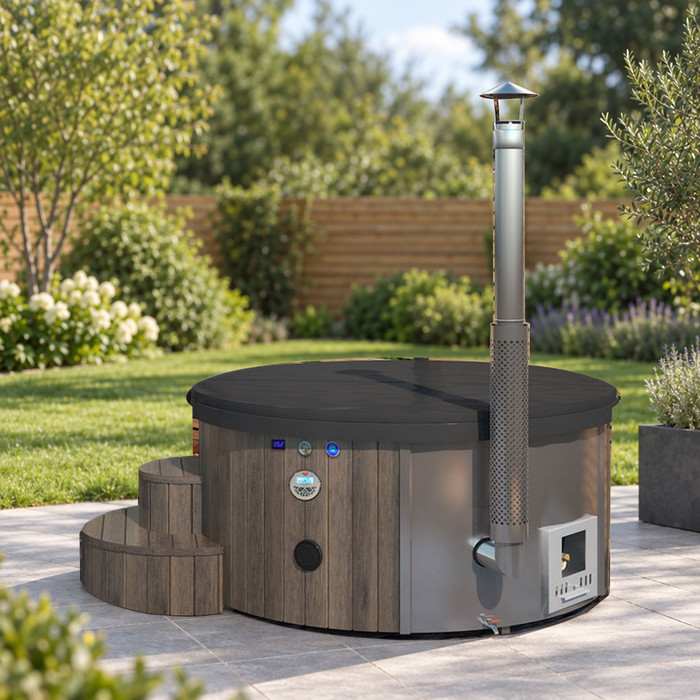
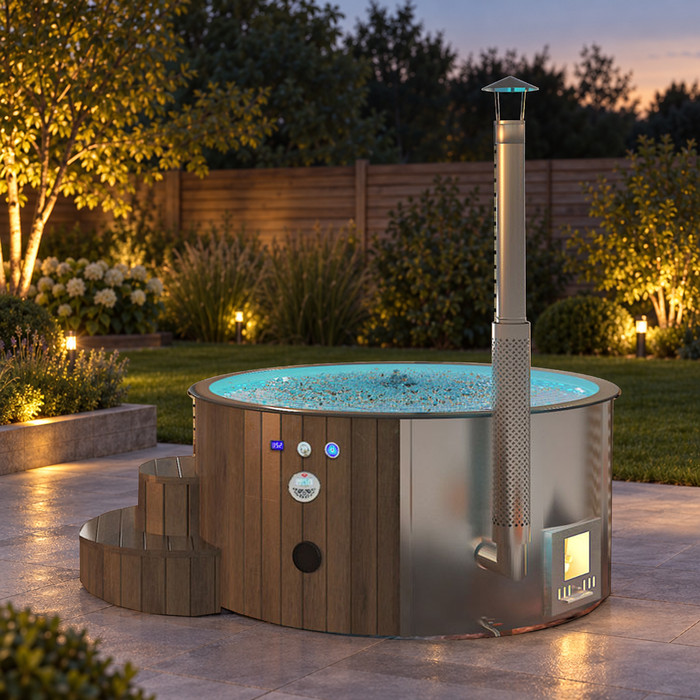
A photograph and a note describing the mark can help you explain what you want to clean, but neither identifies the surface or proves which product will work. Avoid scraping or solvent testing to discover what a finish is. A listing such as Bloomcabin Hot Tub Cove 2 can identify the model you are asking about, but its name and image do not state the materials or approved cleaning method. Keep your surface map separate from any guess about composition, and use the exact product identifier when requesting care guidance.
Find the instructions for the exact hot tub
Look for cleaning instructions supplied for the exact model, rather than relying on a generic spa pool cleaning article or a water-care section. Check the handbook, any model-specific care sheet and the manufacturer’s support material. If you have purchase paperwork, record the model name and any version, serial or other identifying details shown there or on the unit. Instructions may differ by component or revision, so note the document title and date where available. Read the scope of each section as well as its heading: directions for cleaning a removable component may not describe how to clean the surrounding shell. Keep general water-treatment instructions separate from directions for applying a cleaner directly to a surface. If a guide only says to use a suitable cleaner without explaining what qualifies, ask the manufacturer or supplier to clarify that point. The aim is to find the passage that covers your particular cleaning task, not simply a document that mentions cleaning.
For Bloomcabin Hot Tub Haven 6, confirm which manual or care sheet applies to the exact product you are considering. Ask whether it covers the shell, controls, fittings and any removable parts you intend to clean, or whether those components have separate instructions. Keep the relevant component instructions with the main guide so that an important qualification is not separated from the method it modifies. If the handbook refers you to another care sheet, locate that sheet before treating the instructions as complete. Where two passages appear to disagree, identify both when asking for clarification rather than choosing whichever method seems easier.
02
Confirm each surface’s material and finish
Ask what each area is made of and whether its surface has a finish or coating that affects cleaning. A broad description such as plastic or composite may still leave important questions unanswered: it might refer only to the shell, not the controls, fittings or cover. Colour, gloss and texture are not dependable material tests, and the same-looking surfaces can have different care requirements. Record the exact wording in the product documentation rather than translating it into a cleaner choice yourself. Do not scratch, sand or apply a test chemical to identify an unknown finish; those tests may create the damage you are trying to avoid.
When checking a particular listing, such as Bloomcabin Hot Tub Fjord 8, ask for confirmed surface materials and the care guidance that goes with each one. Keep the material description tied to the component it describes. If the seller supplies a description for the shell, do not extend it to the surrounding fittings or other parts. Record a coating or finish separately where one is specified, rather than shortening the description to the underlying material alone. This makes your enquiry about cleaner compatibility more precise, particularly where a product could reach more than the area you are targeting. Leave any unidentified part marked as unknown until its description is clarified.
Choose a cleaner approved for that surface
Match the cleaner to the named material and the exact area, using the manufacturer’s instructions for the hot tub and the cleaner. Words such as spa, bathroom, natural or non-abrasive do not by themselves confirm compatibility with every shell, coating or adjoining part. A product described for waterline cleaning is not automatically suitable for the whole shell, cover or control surround. Nor is a household cleaner a safe substitute simply because it removes a similar mark elsewhere. If the instructions name a product or product type, use that guidance rather than choosing by appearance, scent or general marketing claims.
Before buying a cleaner, check whether it is approved for the particular surface and ask about any conditions that matter to its use, such as dilution, application or contact time. Keep the cleaner’s own label and the hot tub’s care instructions together so you can compare them. Read what each says about the intended surface and task; a direction on the cleaner’s label does not fill a gap in the tub’s compatibility guidance. If you are considering Bloomcabin Hot Tub Aurora 10, ask which cleaning products the manufacturer specifies and whether the guidance identifies an exact product or a broader permitted type. Record that distinction when shopping so you do not mistake a similarly described alternative for a confirmed choice. If the named cleaner is unavailable, ask about an alternative rather than selecting one solely because its packaging makes similar claims. Resolve any difference between the two sets of directions before use.
03
Use only tools permitted by the care guide
The tool can affect a finish as much as the cleaning product. Scouring pads, stiff brushes, blades and other rigid or high-friction tools can scratch or alter some surfaces; a general non-scratch claim does not guarantee that a tool suits your particular tub. Even a cloth described as soft may pick up grit or have edges that rub against the finish. Avoid choosing a tool by feel alone. Look for instructions that name an allowed cloth, pad or brush for the surface in question, and check whether the guide sets limits on pressure or scrubbing.
When asking about Cove 2 from Bloomcabin, include the tool as well as the cleaner in your question. Ask whether the manufacturer permits a cloth, brush or pad, and whether the same choice applies to the shell and neighbouring parts. If debris or residue is present, check whether the guide says how to handle it before wiping; do not improvise by scraping or scrubbing harder. If a preferred tool is not mentioned, pause and ask for confirmation rather than treating a familiar household item as universally safe.
Follow the stated cleaning sequence
Once the surface, cleaner and tool are confirmed, follow the full sequence in the relevant care instructions. Check what they say about the surface’s condition before cleaning, how the product should be applied, whether a contact time is specified, what kind of wiping or agitation is allowed, and how the area is finished. These details are product- and surface-specific; a routine copied from another tub may use a different order or method. Do not increase a product’s strength, extend its contact time or scrub more vigorously to make the job quicker unless the instructions explicitly say to do so.
Work from the directions rather than inventing a universal step-by-step method. If the guide recommends a small test area, follow its advice about where and how to do that; if testing is not addressed, ask before trying it. For Haven 6 hot tub, use only the sequence confirmed for that product and the surface being cleaned. Keeping to one clearly identified area at a time, where the manufacturer’s method allows, can also make it easier to notice whether the finish changes and to avoid spreading cleaner onto a part with different instructions.
04
Check how residue should be removed
Residue removal is part of the cleaning method, not an afterthought. Check how the manufacturer wants cleaner removed from each surface, what rinsing or wiping method is permitted, and how to prevent it reaching adjacent components or water-contact areas unless the product instructions allow that use. Read the removal directions before applying the cleaner so you know what the complete task involves. Look for any distinction between removing loosened dirt, removing the cleaning product and leaving the area in its required final condition. Do not assume that a quick wipe, a particular amount of water or leaving the surface to dry completes all three. Pay attention to the scope of any rinse instruction: directions for one component should not be extended to nearby controls or fittings without confirmation. Follow any stated guidance on the area’s condition after cleaning, and do not leave a product on longer than its instructions specify.
Before cleaning Fjord 8 from Bloomcabin, establish what the instructions say about removing residue from the exact area you intend to treat. Appearance alone may not tell you whether cleaner remains, so do not substitute smell or a quick visual check for the stated procedure. If the care guide and cleaner label do not explain how they work together, contact the manufacturer or supplier. That is especially important when the surface is close to the water or to a part made from another material.
Watch for changes in the finish
Before starting, note the surface’s existing colour, sheen and texture, and photograph any mark or area of concern. This gives you a record to refer to if the appearance changes; it does not diagnose the cause. After cleaning, look for differences such as a new dull or cloudy patch, tackiness, discolouration, cracking or another unexpected change. A visible difference could have more than one explanation, including residue or wear, so do not assume that it is harmless or that a stronger cleaner will fix it.
If the finish seems different during the process, stop using that product and tool. Do not try to correct the area with an abrasive pad, solvent or another cleaner unless the manufacturer advises it. Note the product name, the surface treated, the tool used and the steps followed, then ask the supplier or manufacturer what to do next. Include when you first noticed the change: before applying the cleaner, during wiping or after the stated removal procedure. Distinguish what you observed from what you think caused it. For example, describe a change in sheen rather than labelling it as permanent damage without advice. A clear account is more useful than a series of improvised attempts, which can obscure whether the original mark or the cleaning method caused the change.
05
Compare cleaning requirements before you buy
Ask for the material and finish of the surfaces you expect to clean, together with the care instructions for each. Find out whether the manufacturer names compatible cleaners and tools, explains the cleaning sequence and residue-removal method, and provides separate directions for covers, controls or removable components. Also ask whether the instructions are available before purchase and where approved care products can be obtained in New Zealand. These are practical comparisons: they show whether the upkeep is clearly documented and whether you can source the required items, without assuming that different models share the same surfaces.
For Aurora 10 from Bloomcabin, compare the documented cleaning tasks with the upkeep you are prepared to manage. Note which surfaces share a method, which require separate products or tools, and whether the directions are clear enough to follow without further explanation. Compare those same points across any other models on your shortlist, leaving unanswered items visible rather than treating them as advantages. If cleaning costs matter, base an estimate on the products and tools the manufacturer actually recommends, any stated replacement requirements, and current local availability and prices. Separate an initial purchase of reusable tools from products you would need to buy again, without inventing how long either will last. Do not assign a cost based on an assumed cleaner or assume one product will cover every surface. A useful comparison shows both the practical work involved and the information still needed; it does not rank a tub as easy to clean simply because its listing says little about maintenance.
Pause when the instructions are incomplete
When guidance is incomplete, make your enquiry specific to the unresolved point. Identify the model and component, quote the relevant passage and explain what it leaves unclear. That might be an unnamed cleaner type, an unspecified tool or a removal step that does not explain how it applies to your surface. Give the full name of any product you are considering rather than asking whether a general category such as household cleaner is acceptable. A photograph may help locate the area, but ask the supplier to confirm its material and finish if those remain unknown. Ask for an answer that covers the missing detail and any effect it has on the rest of the cleaning sequence. This is more useful than requesting a whole new routine when only one part of the existing instructions needs clarification.
Until the unresolved point is clear, do not experiment with a household product, an unlisted pad or a method intended for a different tub. Keep any written clarification with the relevant care instructions and note which component and cleaning task it covers. That helps you avoid extending a narrow answer to other surfaces later. If a mark remains after following the confirmed method, report what remains and which steps you completed; do not assume that repeating the process or applying more force is the intended response. Keep the model details, product label and a brief record of the attempt together so the supplier can address that specific result without having to reconstruct what you used.
Frequently asked questions
Can I use dishwashing liquid or another household cleaner?
Only if the manufacturer’s instructions approve that cleaner for the exact surface and use. A product described as mild or suitable for bathrooms is not automatically compatible with a hot tub finish or nearby components.
Is a soft cloth safe on every hot tub surface?
Not necessarily. A cloth can hold grit, and materials or finishes can differ across the tub. Check which cloth or tool the care guide permits, and ask before testing an unlisted option.
How can I identify the shell material?
Check the documentation for your exact model and ask the manufacturer or supplier to confirm the shell material and finish. Colour, shine and texture are not reliable ways to identify them.
Should I rinse after cleaning?
Follow the manufacturer’s instructions for the cleaner and surface. Check how residue must be removed, especially on water-contact areas; do not assume that a quick wipe or rinse is sufficient.
Can I use one cleaner on the shell, controls and cover?
Do not assume so. Those areas may use different materials or finishes. Check the instructions for each surface and use a product across them only if the manufacturer confirms it is suitable.
Protecting a hot tub’s finish comes down to matching the cleaner, tool, sequence and residue-removal method to the exact surface. Identify each part, confirm its material and follow the manufacturer’s instructions rather than relying on colour, marketing claims or advice for a different tub. If the documentation leaves a gap, pause and ask for clarification. That is more reliable than testing an unknown product on a finish you want to preserve.
