
How to Reduce Hot Tub Heat Loss and Running Costs
OUTDOOR HOT TUBS
An outdoor hot tub that holds heat more effectively may need less energy or fuel to stay warm, but the result depends on the cover, site, operating routine, heater and price paid for energy. Start with everyday heat-retention habits and a reliable baseline. Use model-specific instructions for any setting or equipment change, then compare like-for-like consumption before deciding whether a purchase or replacement is worthwhile.
How heat loss affects running costs
An outdoor hot tub loses heat from the water surface and through its shell to the surrounding air. When the water is uncovered, evaporation adds to that loss; moving air carries warmth away, while cooler weather widens the temperature difference between the water and its surroundings. These effects interact, so a mild, calm afternoon is a poor guide to what a tub may use during a cold, windy spell. Heat also escapes while the surface is open during bathing, so a fair comparison needs to account for how often you use the tub and how long the cover stays off. A fitted cover and a less exposed site can reduce some losses, but cannot remove them.
Running cost follows the energy or fuel used and the rate paid for it, not simply the tub’s name or advertised feature list. Heater type and controls, insulation, cover fit, how long the lid is off, bathing frequency and the chosen routine all affect consumption. Separate energy used for an initial warm-up from what is needed to maintain warmth; otherwise, one heat-up can distort a comparison of day-to-day use. Keep a dated note of conditions and the exact model, such as Bloomcabin Hot Tub Cove 2. That name helps identify the product, but does not by itself tell you its insulation, heater demand or running costs. A thermometer shows water temperature, not the energy needed to hold it, so compare consumption data where available.
Cover fit, condition and daily use
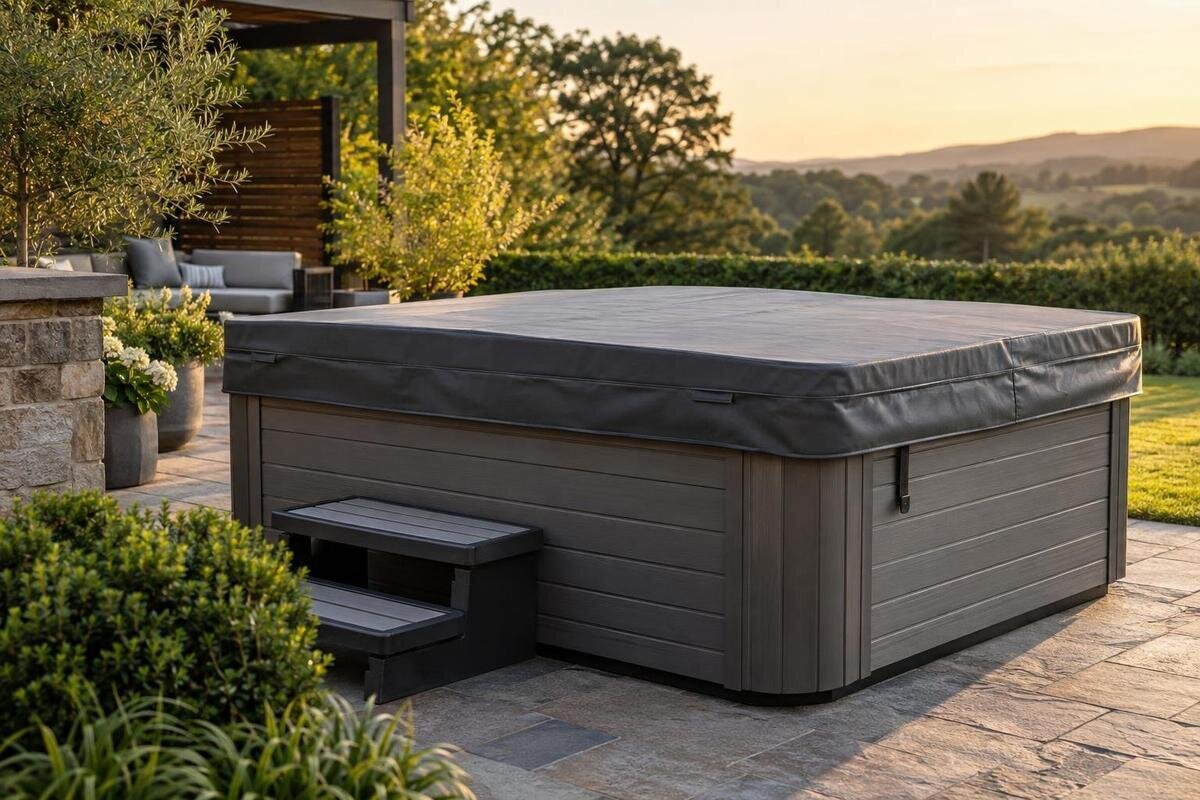
When a tub has a supplied or manufacturer-approved cover, fitting it whenever the tub is not in use is often the simplest heat-retention habit. It limits the water’s direct exposure to air and helps reduce evaporation; the effect depends on the cover being compatible and closed as intended. Follow the model’s instructions for securing it and for any situation when it should not be in place. Check that it sits in the position intended by the manufacturer, closes without forcing and has intact edges, seams and fastenings. A lid left ajar or not secured as directed leaves more surface exposed. Do not assume every hot tub includes a cover or that a universal cover will seal in the same way. If it shifts after fitting or leaves a persistent gap, check compatibility rather than assuming it is retaining heat effectively.
Look for signs that may interfere with closure, such as splits, sagging, a warped edge, loose straps or water collecting in the cover. Visible wear can affect fit and handling, but may not show the condition of any internal material; ask the maker or supplier whether repair or replacement is appropriate. Before adding a thermal layer or a cover lifter, confirm it is compatible with the exact model, because it may change how the cover fits or is handled. After bathing, restore the cover as the manual directs. For Bloomcabin Hot Tub Haven 6, ask which cover is supplied or compatible and how it should sit when correctly closed, rather than relying on the product name to establish fit.
Wind exposure and site constraints
Moving air can carry heat away from the water and tub surfaces, so note which side faces the strongest gusts and when the site is most exposed. An existing wall, hedge or screen may reduce direct airflow, but placement matters; a tight, enclosed corner is not automatically a better location. Keep the clearances, access to controls and servicing, ventilation around equipment, drainage and safe movement required by the manufacturer. A barrier that shields one direction can still leave other sides exposed, so judge the site by airflow at the tub rather than appearance alone. Do not move the tub, attach anything to it or build a windbreak just to retain heat without checking the site instructions first.
For a permanent screen, enclosure or other site alteration, ask a qualified installer or relevant professional to assess the proposed arrangement against the manufacturer’s siting guidance. A change that blocks servicing or airflow can create issues beyond heat loss. If you are considering Bloomcabin Hot Tub Fjord 8, discuss the proposed location and wind protection alongside its installation requirements; a catalogue photograph cannot establish whether your arrangement is suitable. While the proposal is being assessed, record whether greater wind exposure coincides with higher energy use. A temporary screen also needs consideration: do not place or attach one where it interferes with access or operation.
Cooler weather and heat loss
Cooler outdoor air widens the gap between the hot tub water and its surroundings, so the heating system has more heat to replace while maintaining the same temperature. Wind can add to the effect, which is why a bill may rise between seasons even when your routine seems unchanged. Record outdoor conditions, cover use and bathing alongside each energy reading. Comparing a mild, calm period with a cold, windy one cannot isolate the effect of a new cover or setting. If bathing frequency or time with the lid off has changed too, note that rather than attributing the whole difference to weather. When weather and use change together, one bill cannot separate their effects.
If you use the tub less often in cooler weather, check the model’s instructions for any permitted standby mode, schedule or lower-temperature routine, including how to return to normal operation. Weigh those options against the time and energy needed to prepare the water for your next use. Keep a seasonal change in routine separate from a heat-retention improvement when interpreting your records: fewer bathing sessions do not show that insulation or a cover has become more effective. For Bloomcabin Hot Tub Aurora 10, use the instructions for the actual model rather than assuming its name identifies the heater, controls or recommended settings.
Heating routines need model-specific guidance
Hot tub heating systems and control logic vary, so there is no universal temperature, timer or on/off routine that can be recommended for every model. Use the manufacturer’s manual to find what its normal, standby or economy modes do, whether scheduling is supported, and how heating interacts with any programmed functions. Mode labels can be ambiguous; ask what a setting actually changes rather than assuming that ‘sleep’ or ‘eco’ means the same thing across products. If the instructions are unclear, contact the maker or supplier about the exact unit. Make changes only through controls and options the manufacturer describes; do not alter thermostats, wiring, sensors or other equipment.
Match the routine to how often the tub is used instead of assuming the lowest visible setting is always cheapest. A lower temperature may reduce heat loss, but reheating and the way the heater operates matter; a standby mode may be intended for a different pattern of use. A time-of-use electricity plan can change what each unit costs at different times, but shifting use to a cheaper period does not automatically reduce the quantity consumed. Check what a timer actually controls and which tariff applies when energy is used. Then compare like-for-like readings before treating a schedule as a saving.
What insulation claims tell you
Insulation descriptions need more detail before they can support a buying decision. Ask which parts are insulated, such as the cabinet, base or pipework, and whether the claim refers to the cover, the tub body or more than one part. Ask whether a cover is included or optional, and use the manufacturer’s exact wording rather than treating ‘insulated’ or ‘thermal’ as a complete measure of heat retention. Keep cover and cabinet information as separate entries in your notes; evidence about one does not describe the other. Confirm any proposed accessory’s compatibility in writing for the exact model and configuration. If a supplier names a material but gives no performance basis, ask how it relates to the complete assembled tub.
If a supplier gives energy-use or heat-loss figures, ask how they were obtained and what conditions applied: outdoor temperature, water temperature, cover position, use pattern, operating schedule and heating system. Ask whether the figure was measured, estimated or inferred from a feature description, and what unit and period it covers. Only comparable evidence supports a useful comparison; different test conditions can make two numbers appear more different than the tubs really are. When reviewing the Cove 2 product listing, tie any supporting information to the exact model and configuration. Keep a feature description separate from evidence of how much energy the complete tub uses.
Measure a baseline before making a change
Before paying for a change, establish how much energy or fuel the current routine uses. Use tub-specific data if the equipment or an existing approved monitor provides it; otherwise, a whole-house bill may not separate the hot tub from cooking, space heating and other appliances. Record dates, heating routine, cover status, bathing frequency and outdoor conditions, and note any initial warm-up, refill or unusual weather. Choose a period that reflects normal operation rather than a quiet week, and record the tariff or account period used. If a separate electrical measurement would require new equipment, ask a qualified electrician; do not open or alter the tub’s electrical system.
Then change one low-risk habit at a time, such as restoring a compatible cover promptly, and repeat the record over a comparable period. Avoid changing the cover, schedule and site together: a different total would not show which change mattered. Note weather, use, water replacement and tariff changes rather than relying on memory. If you ask a supplier to interpret results for the Haven 6 hot tub, include the model details, the instructions you followed and your readings from both periods. This gives the discussion a clearer basis than a bill total alone. Treat small differences cautiously when measurement is imprecise.
Calculating possible savings from your power bill
For an electrically heated tub, estimate the energy part of the cost by multiplying measured kilowatt-hours (kWh) by the applicable variable price per kWh for the times that energy was used. If your plan has time bands, calculate each band at its own rate and add the results; take current figures from your retailer account or latest bill and note the date and plan. Daily fixed charges do not fall because the tub uses fewer kWh on the same connection, so exclude them when estimating heat-related savings. If a reading covers the whole home, account for other use instead of assigning the whole change to the tub.
For a fuel-heated system, multiply the measured quantity used over a comparable period by the current price for that same unit, keeping one-off delivery charges separate from a recurring unit cost. Compare baseline variable energy cost with the cost after the change. If the tariff changed, calculate both periods at the same current rate to isolate the effect of lower consumption, then show any actual bill difference separately. A generic New Zealand rate cannot stand in for your plan, and a bill total alone is not a tub-specific result. Before applying this calculation to the Fjord 8 hot tub, confirm its heating system and use consumption figures for that model and your routine.
When does a paid change make sense?
Routine changes are usually easier to test than a purchase: using an existing compatible cover correctly costs nothing, while a replacement or site alteration needs a compatibility check and a clear reason to expect improvement. Use your baseline to decide whether a quote is worthwhile, and ask which specific heat-loss issue the proposed item is meant to address. Compare its full one-off cost, including any necessary delivery or fitting charges, with a reduction supported by a fair before-and-after measurement or comparable test. If an item mainly makes handling more convenient, record that separately from an energy saving.
A rough payback calculation divides the purchase cost by the estimated annual energy-cost reduction, but it is only as reliable as the saving estimate. If the reduction is uncertain, show that uncertainty or say a saving has not been demonstrated; do not promise a payback date or extend a projection beyond evidence about service life. A short test from one season is not, by itself, evidence for a full-year reduction. When considering Aurora 10 as a replacement, request comparable heat-retention data and confirm the exact configuration. Replacing a tub is a different purchase decision from improving the one you own, so compare the proposed replacement with your current tub’s measured performance rather than assuming a new model will cost less to run.
What to verify before choosing a different model
Before selecting a replacement to reduce running costs, request the model-specific operating instructions and written details of the heating system, insulation, supplied cover and compatible heat-retention accessories. Ask whether any published energy-use figure applies under conditions comparable with your current tub, and whether it includes warm-up, standby use or only a defined test period. Confirm which model version and configuration the information describes; included equipment and optional items must not be assumed. If a detail is absent, ask the supplier or manufacturer to clarify it rather than filling the gap from a model number, image or broad marketing phrase.
Compare candidates on a like-for-like basis: operating routine, cover, weather assumptions, reported consumption and your energy or fuel rate. Also confirm that the maker’s site and service guidance can be followed at your property; a heat-retention claim does not establish installation suitability. Keep a record of the source, date and test conditions for each figure so an old estimate is not mistaken for a current comparison. Written details tied to the exact model version are more useful than general statements about a range. If comparable evidence is unavailable, treat expected savings as unknown and decide using confirmed features, purchase costs and your pattern of use instead.
Frequently asked questions
Does keeping a cover on really help?
A compatible cover fitted as the manufacturer directs reduces the water’s exposure to air when the tub is idle, helping limit evaporation. Its effect depends on the fit and condition, and it does not guarantee a particular bill saving. Check the operating instructions and confirm whether a suitable cover is supplied or approved for your model.
Is it always cheaper to switch a hot tub off between uses?
No single routine suits every heating system. Switching off or lowering the temperature may reduce heat loss, but warming the water again and the way the controls operate also affect energy use. Check the instructions for your exact model, then compare consumption over similar periods before deciding whether a change helps.
Can a windbreak reduce running costs?
It may reduce direct wind exposure, but the result depends on the site and the arrangement. Follow the manufacturer’s clearance and servicing guidance, and don’t block access or equipment ventilation. Ask a qualified professional about a permanent screen or enclosure rather than assuming any sheltered corner is suitable.
How can I estimate savings from my New Zealand power bill?
For an electrically heated tub, compare its measured kWh over similar periods and multiply by the applicable variable rate for those times. If rates vary by time of day, calculate each band separately. Use your current retailer account or bill, and avoid treating a whole-house bill change as a hot tub saving unless other electricity use is accounted for.
Can a model name or insulation label show which tub is most efficient?
No. A model name identifies a product, while an insulation label alone doesn’t establish how much energy the complete tub uses. Ask for model-specific operating instructions and performance information, including the conditions and test period behind any figures. Compare claims only when they are based on similar conditions.
Heat retention is not a single feature: cover condition, wind exposure, outdoor temperature and the way you use the tub all shape the energy or fuel needed to keep it warm. A measured baseline, an accurate current rate and a manufacturer-approved routine give you a better basis than a headline claim. Try reversible habits first; pay for equipment only when its compatibility and likely effect are clear. Treat unsubstantiated model savings as unknown, not assured.
