
Pergola noise in rain and wind: what matters
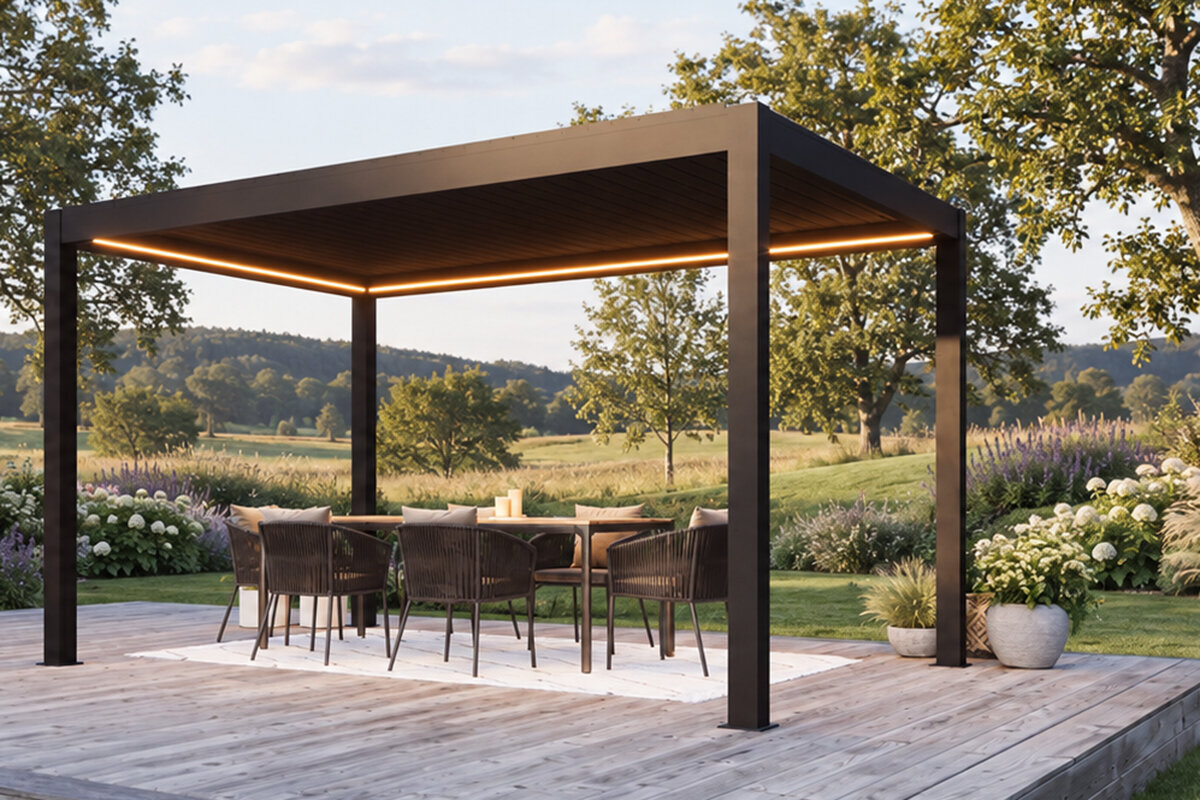
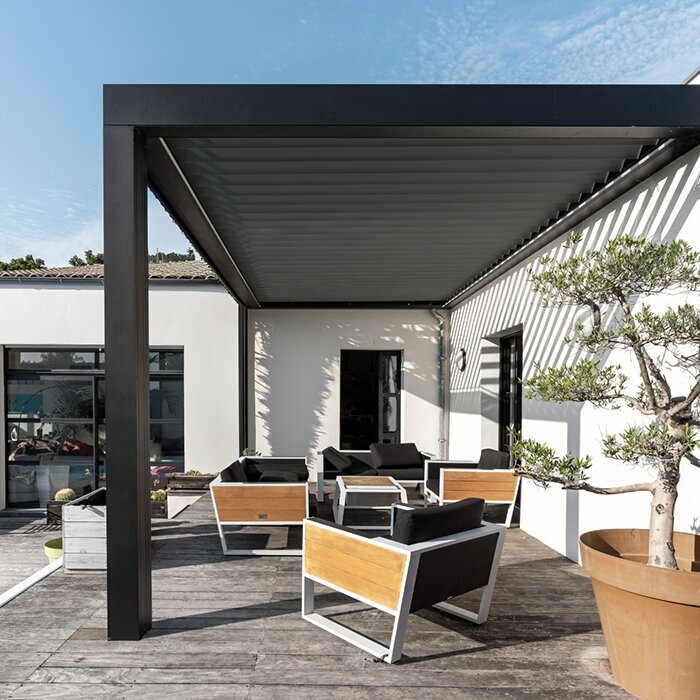
Rain on the roof, wind at the edges or slight movement in individual components: an aluminium pergola can produce sounds for several reasons. What matters is not a blanket promise of quiet, but the combined effect of location, roof type, construction and correct installation.
Anyone planning a pergola as a sheltered place to spend time usually considers shade, design and how long it can be used. Its acoustic side also deserves attention. Rain and wind meet surfaces, profiles and junctions; weather, surroundings and use all affect how these impressions are experienced. What barely registers on an open terrace may be more noticeable beside the house or in a quiet garden.
In rain, the familiar sound mainly comes from drops striking roof surfaces. In wind, airflow around louvres, side elements, gutters or connections may become audible. A structure moving slightly under weather exposure can also transmit sound. That alone is not a judgement on quality, but a reason to look closely at planning, installation and operation.
This guide helps you set realistic expectations and prepare focused questions for a consultation. It explains which sound sources can matter with an aluminium pergola, why the site is important, and how installation and later checks can form part of your decision.
Basics · 01
Why rain can be heard on a pergola roof
Rain creates sound when drops strike a solid surface. How clearly it is heard changes with rainfall intensity, drop pattern and the area beneath the roof. A pergola is generally positioned where people sit, eat or talk. Roof noise can therefore stand out more in quiet moments than on a lively day in the garden.
With a bioclimatic design, the individual roof louvres deserve particular attention. Gaps, overlaps and the chosen opening position affect how water and sound meet the roof structure. Ask not only about the material, but also how the roof can be operated in different weather and what sounds are realistic in heavy rain.
- Use your intended activity as a guide: reading, dining and conversation have different sensitivities to rain noise.
- Consider hard neighbouring surfaces such as façades or walls, as they may reflect sound and alter the impression.
For adjustable roof surfaces, explore our bioclimatic aluminium pergolas and their planning options.
Roof systems · 02
Fixed roof surfaces and their sound character
A standard pergola can also be audible in rain, because every roof build-up receives drop impacts and transfers them through its components. The shape of the roof surface, substructure and connections are all relevant. An open setting does not automatically soften this perception; it may instead expose the structure directly to wind and rain.
For a sound decision, do not consider the pergola separately from the house. If it sits directly outside bedrooms, living rooms or workspaces, its proximity to the façade matters more. Discuss whether adjoining glazing, canopies or smooth paving could reflect sound. An accurate site sketch makes a consultation much more specific.
- Ask which roof details direct water intentionally and where drip sounds may be noticeable in your planned orientation.
- Compare more than images: a quiet seating area needs different priorities from an exposed space for entertaining.
If you prefer a clear, classic structure, discover our standard aluminium pergolas for different terrace settings.
Wind · 03
How airflow can create sounds
Wind is rarely uniform. It meets posts, frames and roof edges, is redirected by house walls and can accelerate along open sides. This can create airflow sounds that vary with direction and gusts. A pergola on an exposed roof terrace experiences different conditions from one between a house wall, hedge and neighbouring building.
For adjustable louvres, roof position is especially important. Depending on how the elements are set, the surface presents different geometry to the wind. The operating manual and advice for windy conditions are therefore part of acoustic planning. Use your consultation to discuss typical wind directions on the property and when you expect to use the space.
- Before planning, observe which direction gusts actually reach your terrace from and where they noticeably strengthen.
- Mention high walls, corners and neighbouring buildings, as these can influence airflow at the site.
For terraces with adjustable shade, Bloomcabin offers bioclimatic louvred pergolas as a suitable category.
Construction · 04
Movement, connections and component noise
An outdoor structure responds to temperature, moisture and wind loads. Minor material movement can become audible at joints, covers or transitions. It is important to distinguish isolated weather-related sounds from recurring issues. Rattling, rubbing or pronounced knocking should not be ignored; record the timing and weather conditions as precisely as possible.
Not every cause is visible in the roof itself. Ground fixings, post alignment and carefully installed finishes all contribute to the result. Installation in line with product-specific requirements provides the basis for components to work together as intended. Ask in advance what the ground must provide and how handover will be checked.
- For noticeable sounds, record wind direction, rainfall and roof position; these details greatly assist an objective assessment.
- After installation, have operation, visible connections and moving parts explained together rather than looking for details later.
For a clean-lined outdoor area, our classic pergolas with a fixed structure can be a useful starting point.
Planning · 05
Why location shapes perception
Two identical pergolas can sound completely different when one stands sheltered in a courtyard and the other on an exposed building corner. Façades, window surfaces, garden walls and paving shape the space around the structure. Distance from the seating area also matters: rain and wind are naturally experienced differently directly under the roof than several metres away.
Plan not only the footprint and appearance, but also your preferred outdoor zones. Where will the dining table, lounge or outdoor kitchen be? Which rooms sit behind the façade? At what times do you want to use the pergola? With this information, a specialist discussion can assess acoustic expectations far better than a general product description.
- Mark seating, doors, windows and fixed garden areas on a simple site plan before finalising dimensions and equipment.
- Check the terrace consciously in rain and wind: existing reflections or draughts offer valuable planning clues.
For sites with changing sun and ventilation needs, our bioclimatic pergola solutions offer interesting design flexibility.
Installation · 06
Why installation quality matters
Even the best plan depends on precise execution. The ground must suit the intended fixing method, posts and frames need correct alignment, and every connecting element requires careful installation. If components are assembled under stress or finishes do not sit properly, weather exposure can make sounds more noticeable.
Clarify in advance who is responsible for each task and which documents are relevant to installation. For building questions on your property, it can be sensible to involve a suitable professional or, where appropriate, your local council early. General statements cannot replace an assessment of your actual foundation, wall construction or local requirements.
- Before work begins, discuss the ground condition, existing services and every connection point that may affect installation.
- Ask for a clear functional check so operation and visible components are reviewed together at handover.
If you are planning a straightforward, uncluttered roof design, view our traditional aluminium pergolas for outdoor spaces.
Use · 07
Including roof position and care
Acoustic comfort does not end with installation. On a pergola with moving roof elements, the selected position affects how rain and wind meet the surface. Always follow the product-specific operating guidance, especially when weather changes quickly. A roof should not be set only for the light you want when wind or rain requires particular attention.
Regular visual inspections help identify changes early. Remove loose debris only within the stated care guidance, and watch for visible damage or unusual sounds. If you have questions about operation or noticeable components, professional advice is more appropriate than independently adjusting structural or moving parts.
- Note recurring sounds with the exact circumstances instead of reporting only a general impression such as “loud in wind”.
- After severe weather, inspect visible elements and follow the relevant product guidance for care work.
Anyone wanting flexible control of light and air can add our bioclimatic terrace pergolas to their shortlist.
Buying advice · 08
The right questions before deciding
A good purchase decision combines design with the practical requirements of the site. Ask for a clear explanation of the roof system, drainage and installation conditions. Frame your expectation not as a demand for complete silence, but as a wish for a coherent, carefully planned outdoor area. This turns an abstract question about noise into a useful consultation topic.
Include future use scenarios too: will the terrace mainly be used quietly, will meals often take place there, or is a home office close by? Ask about the current offer and its detailed configuration rather than equating features across different versions. This creates transparency without promising performance that the specific site may not deliver.
- Have differences between roof types, side solutions and fixing methods explained clearly for your actual terrace layout.
- Keep important commitments and product details in the current quote and order documentation so planning and execution align.
To compare different basic concepts, see our standard pergolas for garden and terrace for guidance.
Comparison
Compare sound sources systematically
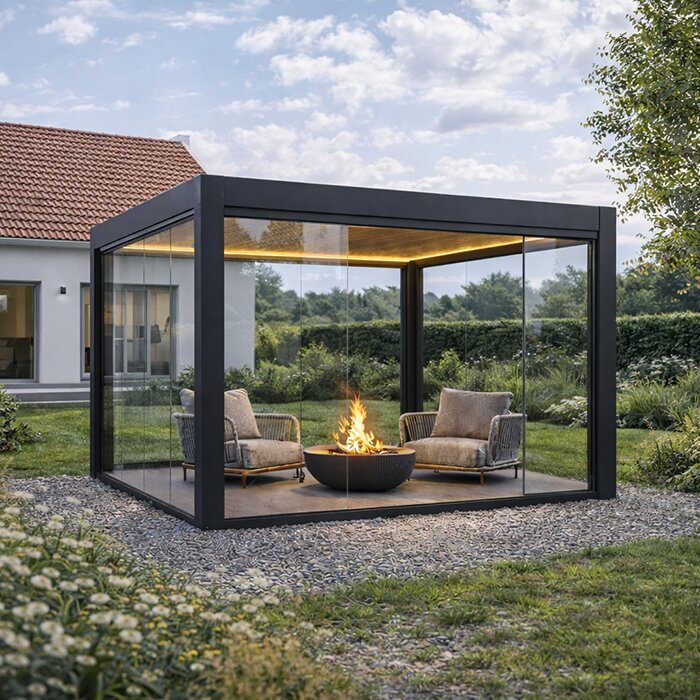
A single detail does not determine how a pergola sounds. This overview shows useful questions about rain, wind and use. It does not replace a site assessment, but helps focus a consultation on the components and situations that matter.
| Topic | Possible perception | Key planning question |
|---|---|---|
| Rain on the roof | Drops strike solid roof surfaces audibly. | How close is the seating area to the roof? |
| Wind at edges | Gusts can create airflow sounds. | Which wind directions shape the terrace? |
| Moving louvres | Roof position changes surface area and airflow. | What operation is intended as weather changes? |
| Connections and covers | Loose or ill-fitting parts can become noticeable. | How are installation and handover checked? |
| Façade and ground | Hard surfaces can reflect sound. | Which surfaces surround the planned site? |
Rain
Drop size, rainfall intensity and roof surface shape the sound. A heavy shower is naturally experienced differently from steady light rain.
Wind
Wind direction, building openings and adjoining surfaces can channel airflow. At exposed corners, sounds are therefore more dependent on the site than many expect.
Installation
Secure connections, well-fitting components and checking moving elements are essential. Unusual sounds should be described specifically and assessed professionally.
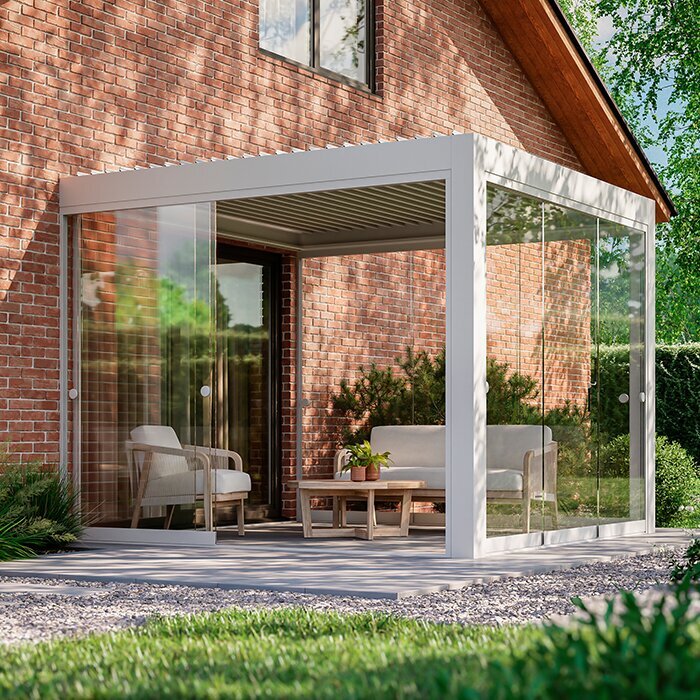
Five steps to an acoustically considered pergola
Include sound early in your planning. A few focused observations and questions provide a better basis for selection, quoting and installation discussions.
01
Observe the terrace
Experience the area in light rain and wind. Note draughts, echo from the façade and zones where conversation is particularly important.
02
Define the use
Decide whether dining, relaxing, working or entertaining is the priority. Each creates different requirements for the roof, seating and proximity to the house.
03
Understand the roof system
Have the function, water management and operation of the desired version clearly explained. Ask specifically about rain, gusts and changing weather.
04
Clarify the installation base
Check the ground, fixing zone and possible connections early. Involve a suitable professional if building conditions are unclear.
05
Prepare for handover
Arrange a shared functional check. Have operating guidance explained and note who to contact if concerns arise later.
Checklist for your consultation
These points help you discuss acoustic comfort specifically. Take photos, measurements and a short description of weather conditions on your terrace to the appointment.
01. Sketch the site with house wall, walls, windows and adjoining hard surfaces.
02. Identify typical wind directions and especially draughty terrace corners.
03. Set the distance between the roof and planned dining or lounge area.
04. Have roof type, water management and intended rain operation clearly explained.
05. Clarify ground requirements and every planned fixing point.
06. Discuss the installation process and shared functional check before handover.
07. Keep operating and care guidance for moving or visible components.
08. Record unusual sounds with weather conditions and roof position if they occur.
Frequently asked questions about pergola noise
Are rain sounds normal with an aluminium pergola?
It is generally expected that rain will be audible on a roof surface. How strong it feels depends on rainfall, roof construction, seating position and surroundings. A quiet setting beneath trees may feel different from a terrace between smooth house walls. Ask about the exact configuration and plan the seating area carefully.
Why can I hear my pergola in wind?
Wind can pass along edges, frames and open areas, creating sound. Gusts may be intensified by building corners, walls or passageways. With adjustable roofs, the current roof position also matters. Recurring rattling or rubbing should be documented with the weather conditions and professionally checked.
Can installation affect noise?
Yes. Alignment, fixings, connections and correctly seated covers affect how components work together. This is why suitable ground conditions and installation to the relevant instructions are important. If building conditions are unclear, discuss your specific project with a qualified professional rather than relying on general examples.
Are louvres louder in rain than a fixed roof?
A blanket answer would not be reliable. With louvres, position, overlaps and rain intensity influence perception; with fixed roofs, other construction and connection details shape the sound. The surroundings remain important too. Have the differences between the models you actually want explained and include your site in the comparison.
What should I do about unusual sounds?
Record when the sound occurs: the wind direction, rainfall intensity and roof position. Check visible parts only within the care guidance. Avoid making your own changes to fixings or moving components. With a precise description, the responsible professional can assess the cause much more effectively.
Do I need to clarify anything legally before installation?
Building consent and resource consent are separate checks in New Zealand, and requirements vary with the design, site and intended use. A product called a pergola is not automatically exempt, particularly if it is roofed or enclosed. Ask your local council about the structure, foundations, services, boundary fire separation and stormwater, and obtain any required approvals before committing to the project.
Compare pergola configurations
Comfort starts with realistic expectations
An aluminium pergola can give an outdoor area clear structure and provide a pleasant place to spend time. Rain and wind sounds remain part of genuine outdoor weather conditions. The key is not to treat them as an afterthought, but to consider roof system, location, installation and use together.
The more accurately you describe your terrace and ask about water management, airflow and operation, the more informed your choice will be. Bloomcabin can help you compare pergola concepts around your spatial priorities.
Discover suitable concepts for your terrace and garden, and prepare for your consultation with purpose.
