
Planning Gutters and Rainwater Collection for a Garden Shed
Garden shed planning
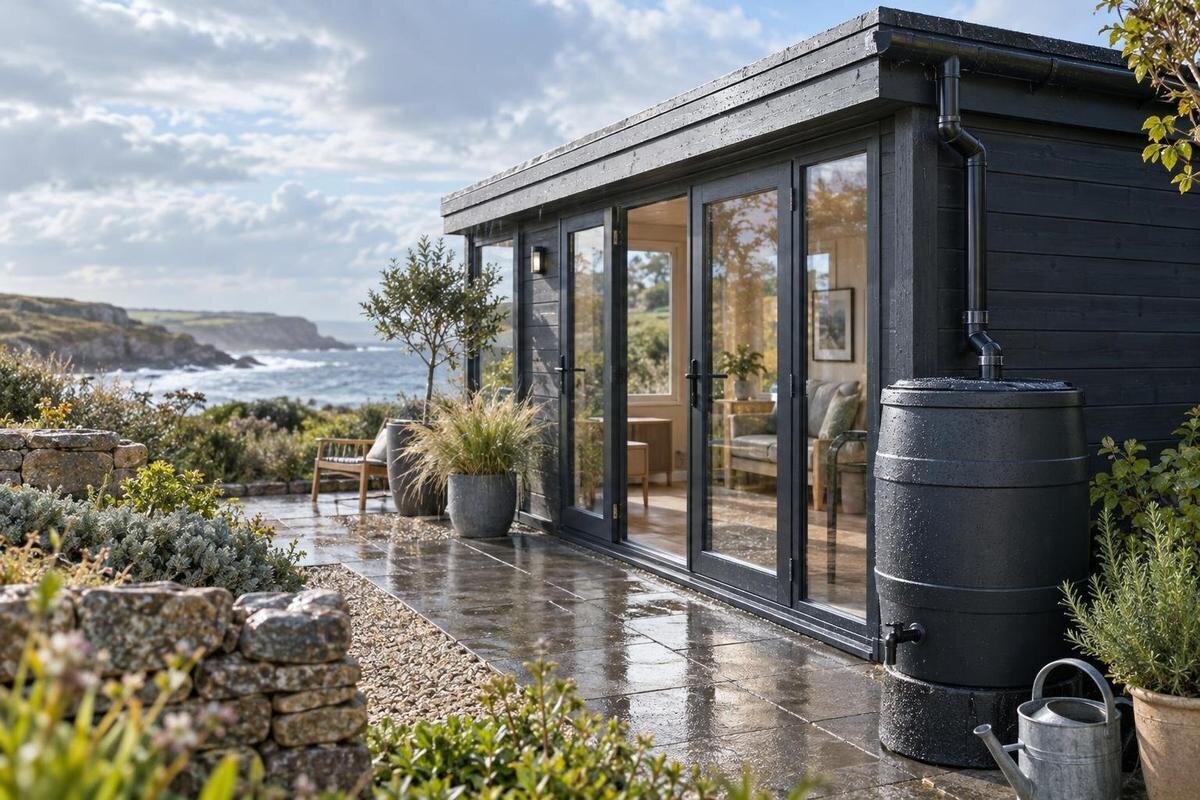
Planning garden shed gutters and rainwater collection means treating roof runoff, downpipes and storage as one system. Decide first whether you mainly want to keep water away from a path or shed base, save it for garden use, or do both. Then check what the chosen shed roof can accommodate and where water can go once it leaves the gutter. A tank is only part of the plan: the outlet, overflow route, access for maintenance and scope of supply all matter. This guide covers the practical buying questions without assuming that guttering or a collection kit comes with a shed.
Before you buy 1
Define the garden’s water needs
Begin by separating two aims: keeping roof runoff away from the shed and surrounding paths, and saving water for later use. The first may matter where rain falls across a route people use or a planting area you want to keep drier. The second is useful only if there is room for storage and a reason to draw on it. Note which parts of the garden you intend to water, how often, and how far you would carry a watering can. That simple brief makes it easier to decide whether you need guttering alone, a collection tank as well, or a different outlet plan.
Rainfall and garden demand do not necessarily line up, so collected water is a variable supply rather than a guaranteed replacement for another source. Think about dry periods, heavy rain and what should happen once storage is full. If your main concern is water pooling near the shed, prioritise a controlled discharge route even if you do not add a tank. For instance, the Verdana 1 garden shed is a listing you can check against your brief; its name alone does not confirm guttering, roof details or water-collection accessories. Keep runoff control and water storage as linked, but separate, buying decisions.
Check the roof edge before choosing guttering
Check the whole roof edge before choosing a gutter or spouting system. The roof covering, edge detail, overhang and any suitable fixing surface affect what can be attached, and the arrangement can differ between shed designs. A roof shown in a product photo is not enough to confirm those details. Look for a drawing or specification for the exact model and ask the supplier or installer what components are compatible. If the roof edge is not designed for the gutter you have in mind, the attachment and water route may need to change; do not assume a standard kit fits every garden shed.
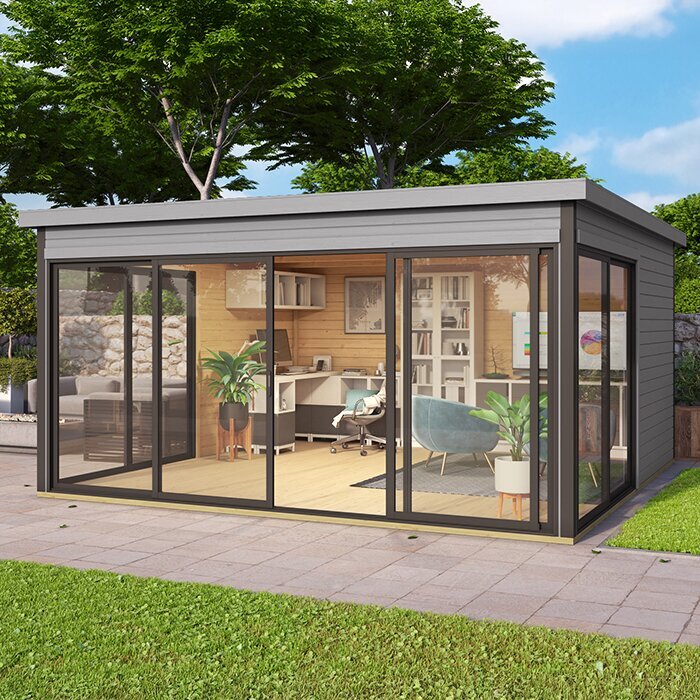
Before ordering, ask whether gutters, corners, outlets, brackets and downpipes are included, optional or sourced separately. Confirm how the proposed system attaches without conflicting with the roof covering, and whether the seller recommends a particular accessory or installer. These are separate questions from the shed’s appearance or floor area. Use the Verdana 2 garden shed as a model to check against its actual product information: neither the listing name nor an image establishes its roof-edge profile or included fittings. Written answers are helpful if you are comparing a shed-only purchase with a complete supply-and-fit quote.
Before you buy 2
Estimate what the roof could collect
Estimate potential collection from the actual roof, not from the shed’s floor area or a generic example. The roof plan, catchment area, local rainfall patterns and efficiency of the proposed gutter route all affect how much reaches storage. A supplier or drainage professional can help use local rainfall information and the correct roof dimensions to form a realistic estimate. Avoid choosing a tank just because it looks proportionate beside the shed; that says little about how quickly it could fill or how often water will be available. Seasonal patterns matter too: a yearly total can hide long dry spells.
Think about when you would use the water as well as how much might arrive. A tank that fills during a wet period may overflow if demand is low, while garden use during a dry spell can empty it. That is why storage should be matched to both catchment and habits, not treated as a single calculation. If you are assessing the Durano garden shed, check its documented roof dimensions and configuration before asking for an estimate; the model name and product imagery are not a substitute for those measurements. If dimensions are unclear, ask rather than estimating from a screen image, and include the expected overflow route in the conversation.
Place downpipes around access and the roof layout
Place each downpipe where the gutter system can collect runoff and where the pipe can continue to a suitable destination. The exact number and position depend on the roof layout and compatible guttering, so use the shed plan and a supplier or installer’s advice rather than choosing a corner by appearance alone. Mark the doors, windows, paths and working areas on the site sketch. A pipe should not interfere with access, shed use, or the room needed to connect and maintain storage. Also consider whether an outlet can be reached for inspection without moving stored items. If a proposed position conflicts with these needs, compare another route before ordering.
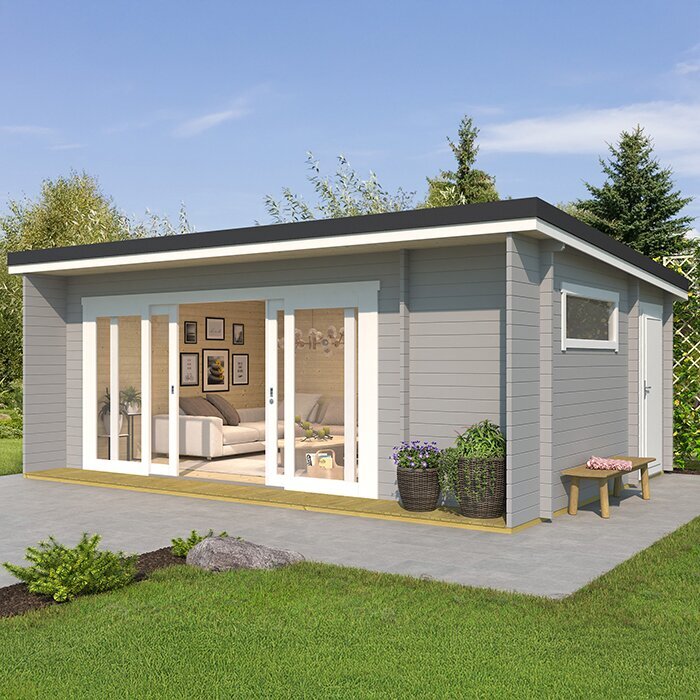
Judge downpipe placement as part of the full route: from roof edge to pipe, then to a tank or discharge point. A short, tidy route may be convenient, but it still needs a suitable outlet and overflow plan; hiding a pipe behind a shed or fence can make later inspection awkward. If you are considering the Veltor 1 garden shed, check its confirmed layout and openings before marking pipe positions. Use the actual site plan, including any changes in ground level, rather than inferring dimensions, roof outlets or door locations from a model name. Have an installer verify the practical routing against the site.
Before you buy 3
Choose a suitable destination for runoff
A downpipe still needs a destination if you are not storing the water. Directing an outlet towards the shed’s base, across a path or into a spot that already stays wet can create avoidable pooling and inconvenience. Observe where water naturally moves around the proposed location, including low points and nearby surfaces, and decide whether the outlet will connect to storage, a planned garden area or another suitable drainage route. Do not assume existing drains can accept extra roof runoff without checking. A small diversion can shift the problem elsewhere rather than resolve it, so consider the whole route, not just the pipe at the wall.
Ground slope, soil, nearby buildings, planting and property boundaries all affect what works. Where water could run towards a neighbouring area, shared space or an existing stormwater connection, get site-specific advice from a drainage professional or your local council before settling on a route. There is no universal outlet position that suits every garden. Pair the Orello 1 garden shed listing with a plan of the actual plot when assessing a purchase; the listing name does not establish how roof runoff should leave your site. Ask the installer to explain where overflow will go, not just where the downpipe begins.
Choose storage to suit the space and intended use
Choose storage by balancing the amount you expect to use, available space and estimated catchment. A small container may suit occasional watering; a larger tank may hold more when rainfall arrives, but occupies more of the site and still needs a planned overflow. Check access to the lid, inlet and any outlet, as well as room to clean around it. Consider whether the tank will sit close enough to the downpipe for a practical connection without blocking a walkway or making shed doors harder to use. A full tank has substantial weight, so ask the tank supplier or installer what support the chosen location requires rather than guessing.
Look beyond the tank footprint. You may need space to reach a tap or fill watering cans, and a clear route for overflow when the container is full. Decide what happens during a long wet spell and whether you can reach the tank for routine cleaning. If you are assessing the Modano 1 garden shed, compare its confirmed roof and site details with the tank position you have in mind; the model label does not show whether storage will fit beside it. Where a base or ground support is needed, have its suitability confirmed rather than relying on appearance alone.
Before you buy 4
Match collected water to its intended use
Decide what the collected water is for before adding filters or other water-treatment equipment. Water running from a roof and through a gutter can pick up dust, leaves, animal droppings or residues, and storage can introduce further debris. A system intended for watering ornamental plants is not automatically suitable for every other use. In particular, do not assume roof-collected water is safe to drink. If you want a potable supply, get advice from a qualified water-treatment professional and follow current local guidance on treatment and testing before using it that way. Make the intended use clear when asking for a system design.
For garden use, the roof covering, condition of the guttering and storage arrangement are worth discussing, especially if water will be used on edible plants. Ask whether debris screening or a first-flush component is appropriate for the setup, and what each option can and cannot address; no single accessory answers every quality question. When reviewing the Timber Garden Shed M listing, seek documented roof details before deciding on water use. The model label itself provides no information about the roof surface or the quality of water it might collect, so keep any water-quality decision tied to the actual system.
Plan for cleaning and routine inspection
Plan for blockages before they happen. Leaves, seeds and other debris can collect in guttering, while material that reaches a tank may affect its outlet or make cleaning harder. Nearby trees, roof condition and the shed’s position influence how much attention a system needs, so choose an arrangement you can inspect. A screen may help keep larger debris out, but it should not be treated as a maintenance-free solution. Ask the installer how the proposed gutters, downpipes and storage can be checked and cleaned, and whether access is needed around corners or outlets.
Work maintenance into the layout: avoid placing a tank where it prevents access to an outlet or where stored garden equipment has to be shifted each time it is inspected. Decide who will check the system and how they can do so safely. If routine inspection would require working at height, use an appropriately qualified person rather than taking an unsafe shortcut. Also ask how to spot a blockage or overflow problem and where cleaning debris should be handled. A collection system is more useful when routine care is realistic for the people who own the shed, and a location that is easy to monitor is more practical than one chosen only to hide pipework.
Before you buy 5
Coordinate a new shed purchase or a retrofit
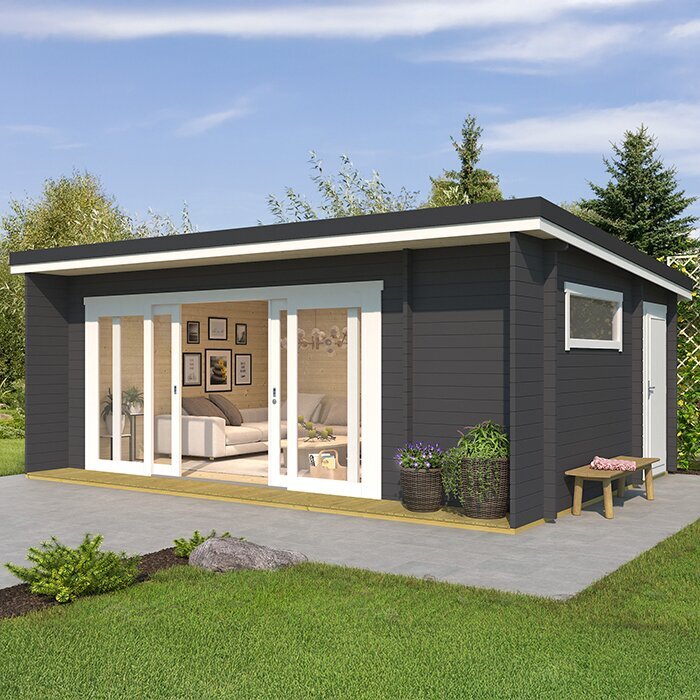
With a new shed, settle the runoff plan while comparing models and before the site arrangement is fixed. Ask the seller which roof details are confirmed, whether compatible gutters are an option, what fittings are supplied, and who is responsible for installation. If one installer is handling both the shed and rainwater components, get the work scope separated clearly so you know what is included and what remains for you to arrange. The Wooden Garden Shed S listing is a model page to assess alongside its documented details; the name alone does not confirm accessories, roof compatibility or installation arrangements. A planned extra should not be treated as an automatic part of the purchase.
For an existing shed, record the roof dimensions, edge detail, condition and intended outlet locations before asking for a retrofit quote. Share photographs and a simple site plan, but have measurements and attachment points confirmed on site. Ask the gutter installer to assess the attachment method, drainage fall and connection to the tank or outlet; these are installation details, not choices to guess from a product image. Check the shed maker’s instructions and any stated terms before modifying the roof or adding fixings. If the proposed kit is third-party, confirm who is responsible for its fit and maintenance.
Put the decisions on one site plan
A one-page site plan can bring the decisions together. Mark the shed footprint and roof edges, the doors and paths, each proposed downpipe, the tank or other outlet, the overflow route, nearby drains, planting areas and property boundaries. Add where people will need to walk and where you will store garden equipment. The plan need not be an engineering drawing; it should make the route visible from the roof edge to its final destination. Share it with the shed supplier and gutter installer so they can flag a conflict before you commit to a layout.
Use that same plan when comparing written quotes. Ask each provider to state separately whether the price covers gutters, brackets, outlets, downpipes, storage, overflow parts and installation, and to note any work excluded from the proposal. Confirm what information they need before ordering and whether the chosen arrangement relies on another trade or a site-specific drainage decision. Keeping the intended use, maintenance access and discharge route in the same document makes offers easier to compare without assuming a shed purchase includes a complete rainwater system. It also records agreed downpipe positions if site conditions later need to be reconsidered.
Frequently asked questions
Do garden sheds always need gutters?
No. Gutters can help direct roof runoff away from a path or collect water for later use, but whether they suit a particular shed depends on its roof and the site. Check what the shed can accommodate and whether guttering is included; neither should be assumed.
Can a downpipe run straight into a rainwater tank?
It may be possible, but the gutter outlet, pipe route, tank position and overflow all need to work together. Check the proposed arrangement with the supplier or installer, including where excess water will go when the tank is full.
How do I estimate how much water a shed roof can collect?
Use the actual roof dimensions and rainfall information for your location, then ask a rainwater or drainage professional to help estimate a realistic yield. The amount varies with rainfall and the collection setup, so a generic figure or product image is not a sound basis for choosing storage.
Can I drink water collected from a shed roof?
Do not assume it is suitable for drinking. Roof surfaces, gutters and storage can affect water quality. If you want a potable supply, get advice from a qualified water-treatment professional and follow current local guidance on treatment and testing.
What should I ask before ordering guttering with a shed?
Confirm whether gutters, fittings, downpipes and storage are included or separate, and ask which components suit the shed’s roof. Discuss pipe positions, overflow, installation responsibility and any site-specific drainage concerns before committing to the arrangement.
A useful rainwater plan connects the shed’s roof, each downpipe, the final discharge point and any storage to the way you intend to use the water. Confirm roof compatibility and site-specific routing before choosing a tank, and leave room to inspect and maintain the system. When runoff has a clear destination and overflow is accounted for, collection becomes part of the shed’s site plan rather than an accessory added as an afterthought.
