
Positioning a Garden Shed Near Trees: Roots, Branches and Debris
Garden shed site planning
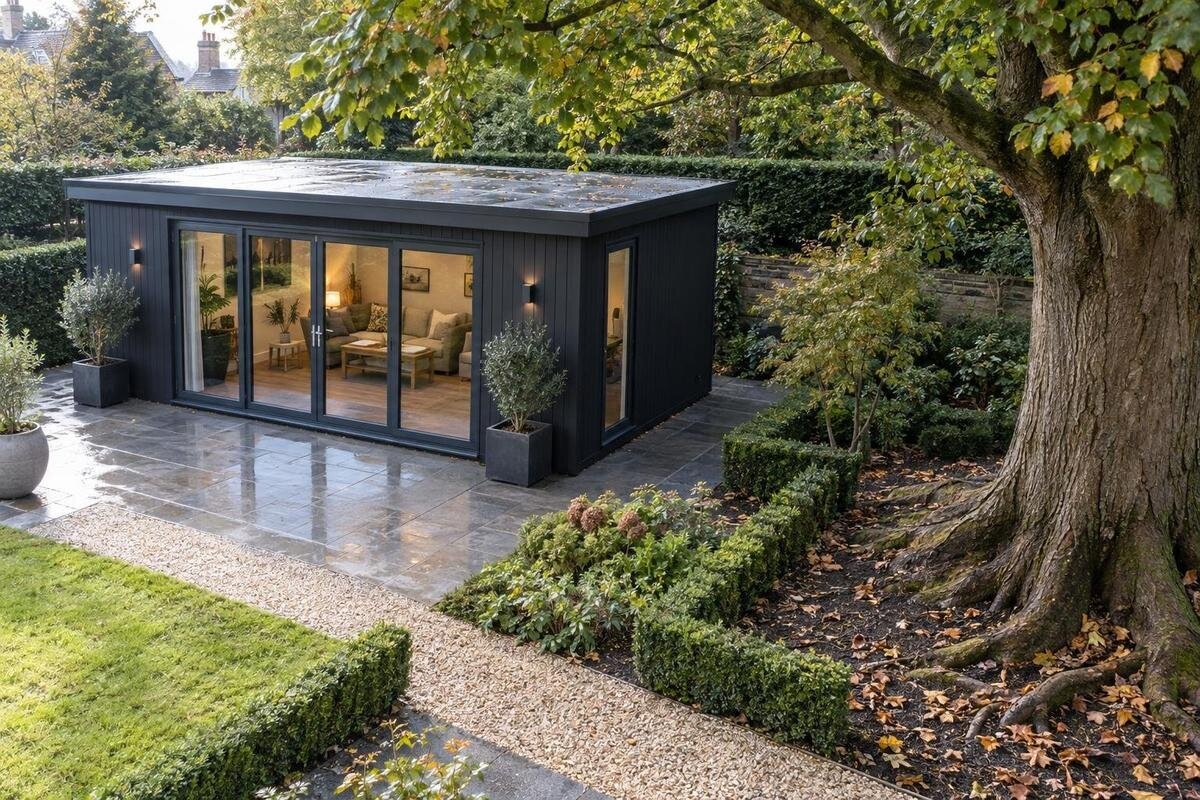
Positioning a garden shed near trees means assessing more than the gap between a trunk and a wall. Roots may extend beyond the canopy, overhanging branches can move or shed debris, and leaves, seeds or fruit may collect on the roof or around the base. Those conditions affect the ground preparation you can carry out, the access you will have and the maintenance you can realistically manage. Assess the trees alongside the actual shed dimensions and installation requirements before ordering. If roots, branches or ground conditions are uncertain, ask an arborist or builder to assess the site rather than guessing.
Assess the trees as well as the open ground
A tree-side site is not defined by the visible gap between trunk and wall. Note each tree’s species if known, approximate maturity, canopy spread, trunk condition, visible roots and where debris gathers. Include trees just beyond the proposed shed area: their roots and overhanging branches can still affect the site. Visit in more than one season if possible, because a tidy, leaf-free view may not show the usual volume of litter or where fruit and seeds fall. Take dated photos from consistent viewpoints and record what changes. Existing paving that has lifted or cracked is worth noting for professional review, though it does not map the roots.
Then set priorities for the shed itself. A store used occasionally may need a different access pattern from a room you expect to enter every day, but both need a workable route and manageable upkeep. List the tree-related constraints—roots in the likely base area, a low limb above the roof, recurring debris or space needed for inspection—and decide which might be manageable and which would rule out a location. If you will store bulky equipment, consider how easily it can be carried through the doorway. This is more useful than choosing the most convenient-looking patch first. If you cannot identify a tree or judge its condition, note the uncertainty and seek advice rather than treating the open space as automatically suitable.
Check roots before planning ground work
Tree roots near a garden shed are not reliably confined to the canopy line, and their pattern varies with the tree and site conditions. Surface roots show that roots are present, but their absence does not prove that excavation is clear. Digging a base, installing services or changing ground levels may disturb roots; existing roots can also complicate preparation of the proposed surface. Do not use trunk distance or the canopy edge alone as a safe digging guide, and avoid exploratory digging to find out where roots lie. If ground work may be close to a mature tree, ask an arborist and builder to assess the footprint and proposed method before committing.
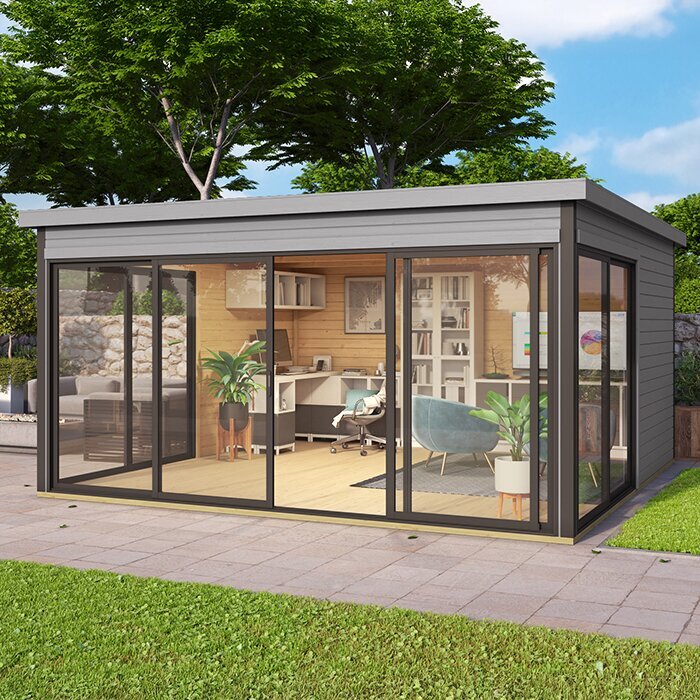
For a candidate such as the garden shed Verdana 1 listing, check the current product information for the base dimensions and any stated foundation or anchoring requirements. Confirm what work those requirements involve; a photograph and model name do not show whether the site can accommodate them. Ask whether the stated measurement refers to the building alone or includes a required base area, and clarify whether a floor or other component is included or separate. Share the confirmed details with whoever is assessing nearby roots. If preparation conflicts with significant roots, explore moving the outline or choosing another site before considering any root cutting.
Assess overhanging branches and falling limbs
Look up from all proposed shed corners, not just from the doorway. Note branches above the roof line, limbs over the access side and any visibly dead, cracked or damaged wood. Branches can move in wind and damaged wood may fall, so clearance on a calm day should not be treated as permanent. Do not site a shed below an obviously damaged limb and assume routine pruning will solve the problem. If a branch’s condition is uncertain, ask an arborist to inspect it and advise on pruning before arranging construction or delivery. Consider the position of the roof itself, not only the line of the walls.
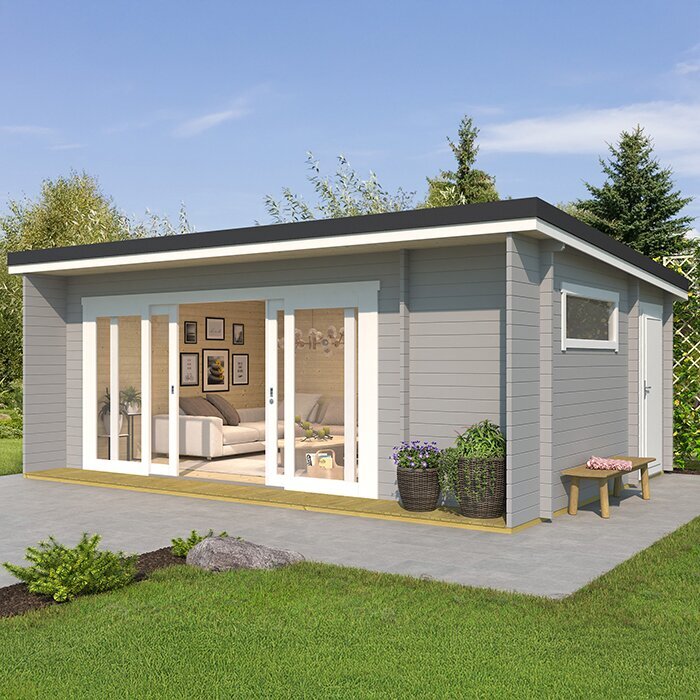
Before comparing a model such as the garden shed Verdana 2 listing, verify its actual overall height, roof or eaves projection and the position of any openings that need access. Use dimensions for the precise configuration; a product image is not a scale drawing. Allow for likely tree growth and for safe professional access if the tree needs inspection or pruning later. If the only way to fit the shed is frequent or difficult branch work, include the feasibility and ongoing cost of arborist care in your site decision. Do not assume a tree can simply be trimmed back to match a chosen shed.
Plan for leaves, fruit and roof debris
Trees drop more than leaves. Depending on the species and season, debris around a garden shed may include needles, flowers, seed pods, small twigs, fruit, sap or bark. It can collect on a roof, against a wall, in doorways or on the ground around the base. Persistently wet litter may hold moisture against surfaces, conceal early wear or block drainage channels if present. Notice where material tends to gather, particularly beside the entrance or in a corner, and whether it can be cleared safely. A tree that looks tidy during one visit may shed heavily at another time, so account for patterns across the year rather than judging from a single clear day.
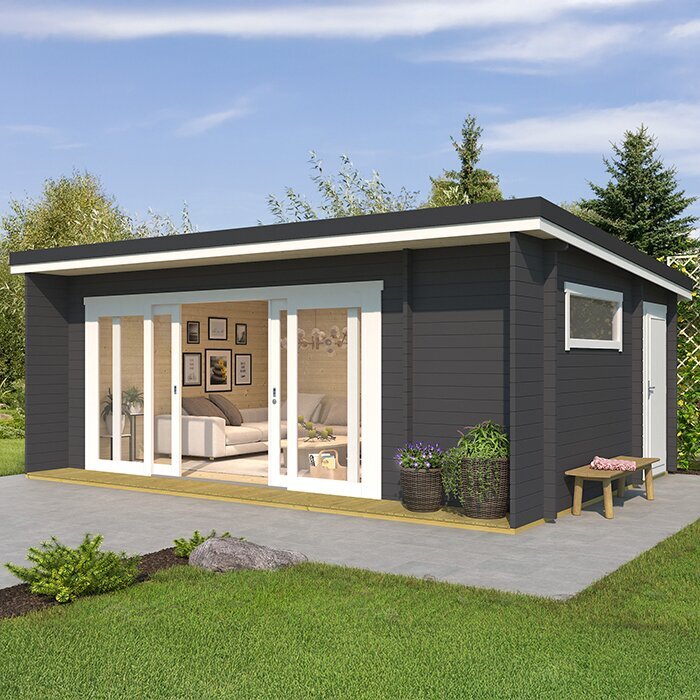
For the Durano garden shed listing, and any other shortlisted shed, check whether roof drainage features are included and what care they need; do not assume gutters, guards or a particular roof finish from a photograph. Consider whether the entrance and any roof-edge channels can be kept clear during leaf or fruit fall. Ask how any drainage features should be maintained and what safe access that work requires. If routine clearing would mean reaching under branches or accessing the roof unsafely, a less exposed position or different footprint may reduce the workload. The aim is not necessarily to remove trees, but to choose a product and location whose upkeep you can manage or arrange professionally.
Allow for trees to change over time
A young tree can change a site substantially during a shed’s service life. Branch tips and canopy spread may increase, seasonal shedding can change as the tree grows, and roots may occupy ground beyond the trunk area. The speed and form of change depend on species, age, soil and management, so there is no universal setback based on one visual measurement. If mature size is uncertain, ask an arborist or consult a reliable tree-identification source before fixing the position; published size information is still an estimate, not a site assessment. Consider planned planting too: a small shrub or tree may eventually obstruct a roof edge, doorway or maintenance route.
When reviewing a candidate such as the Veltor 1 listing, use the published outline for the exact model and mark it in the garden before ordering. Compare today’s clearance with likely future canopy growth and the space needed to inspect or maintain the roof and walls. A smaller footprint may open up more possible positions, but do not assume a model will suit until its actual dimensions and installation requirements are confirmed. If the only workable arrangement depends on keeping a tree permanently cut back, include the feasibility and cost of ongoing arborist care in your decision. Check whether your longer-term garden plans include new planting or changes to existing trees.
Measure the shed’s full external dimensions
A catalogue footprint may describe the base or wall dimensions rather than the outer edge of the roof. Check the terms and confirm the full external width, length and height, plus any eaves, roof overhang or other projection that matters near branches. Door position and operating space matter too: a trunk or low limb might not touch the wall but could obstruct entry or the movement of stored items. If a product has layout or opening options, confirm the configuration you intend to order instead of relying on a general diagram. Measure from the relevant outer edges and include any clearance needed to open doors, inspect the walls or clear debris.
On the Orello 1 product listing, verify dimensions for the precise configuration and note which measurements refer to the base, roof and overall height. Mark the intended outline and door-operating area with removable markers or string, then compare them with trunks, visible roots, branches and the route to the entrance. Repeat the exercise for every shortlisted model: a name, image or stated capacity does not show whether the exterior shape fits below a canopy. If a dimension or opening direction is unclear, ask the supplier to identify it before finalising the site plan. This check can reveal an access conflict before delivery.
Match the base requirements to the ground
Even after choosing a footprint, the ground and support method need checking. A shed may require a prepared, level base or a particular anchoring approach; follow the requirements for the actual product rather than selecting a solution by guesswork. Tree roots can make excavation or level changes sensitive, and modifying the ground may affect both the tree and the proposed installation. The right response depends on the tree, ground and product details. A builder can assess the proposed base while an arborist advises on nearby roots. A generic base illustration or approximate trunk distance cannot settle that site-specific question.
Before ordering the Modano 1 listing, obtain its stated base and anchoring requirements and ask what preparation they involve. Give that information to the builder or other qualified installer, along with the location of significant roots and any proposed service trenches. If the plan would require cutting roots, changing ground levels close to a tree or placing the base over an uncertain root zone, pause and ask for a professional assessment. Do not trim roots or alter soil levels as a trial to see whether the shed can be fitted. Resolve the ground-work question before irreversible preparation begins.
Check the delivery and assembly route
Trees can constrain the route as much as the final position. Check how the shed and its components would travel from the delivery point to the site, including gates, turns, narrow passages, low limbs and ground that may be soft or root-sensitive. If assembly takes place in the garden, consider where components can be handled without pushing into trunks or repeatedly crossing sensitive ground. Measure access points separately from the shed footprint: a product that fits the final patch may still be difficult to deliver or assemble there. Do not assume the structure will arrive assembled or in small packages; confirm the delivery method and access needs for the order.
Before booking the garden shed M listing, ask for delivery and assembly information for the exact order, including package sizes if available, whether assembly is included and what access the installer needs. Walk the intended route with the person responsible for delivery or assembly and identify any branch pruning or root disturbance that could be involved. Agree on an acceptable approach before confirming the booking; do not assume branch work or site changes are part of delivery. If the route depends on removing a substantial branch or altering ground near a tree, treat that as a separate professional decision.
Plan for ongoing maintenance near trees
A garden shed beneath or beside trees comes with recurring checks. Decide who will clear leaf build-up, keep the entrance and any installed drainage channels open, and inspect visible surfaces after heavy debris has fallen. Include checks for new branch growth, changes to surface roots or ground levels, and places where wet litter repeatedly collects. Plan more frequent attention during periods when the trees shed heavily, rather than waiting for debris to become difficult to remove. If roof cleaning or pruning would involve working at height, do not make upkeep depend on an improvised ladder arrangement; arrange suitably qualified help where needed.
For the garden shed S listing, ask for care instructions for the exact product and any finish or components specified in its product information; do not infer maintenance needs from the listing name. Compare that guidance with the work created by surrounding trees, including roof-edge clearing and checks around the base. Repeated seed or fruit fall, hard-to-reach debris or roots that need monitoring can add obligations beyond routine shed care. Include the time and professional help you may need in the buying decision, especially if safe access for cleaning would be difficult at different times of year.
Compare sites and shed requirements before ordering
Before settling on a position, make a simple site record showing the shed outline and roof projection, door-operating area, tree trunks and visible roots, lowest branches, debris paths, proposed base work and delivery route. Note what you observed and what remains uncertain. Take the plan and photos to a supplier, builder or arborist so you can ask specific questions: are the dimensions complete, could the base work conflict with roots, and would the tree need pruning? Keep the exact model and configuration with your notes. If an important point cannot be answered, hold off on ordering or compare another site rather than assuming the issue will be minor.
Compare shortlisted sheds and positions using verified dimensions, product-specific base requirements, overhead clearance, delivery access and a realistic maintenance plan. Get answers for the chosen model, not a similar-looking item, and record any advice about tree work before agreeing to it. A sensible purchase is one that fits without unplanned root cutting, difficult branch work or an upkeep routine you cannot sustain. The better option may be to move the shed, choose a different footprint or use a clearer location. Make that decision before installation begins, while the site and product are still flexible.
Frequently asked questions
How close can a garden shed be to a tree?
There is no single distance that suits every tree and shed. Root spread, the tree’s condition and mature canopy, proposed ground work, roof height and debris all matter. If any of these are uncertain, ask an arborist to assess the tree and a builder to compare the site with the exact shed requirements.
Do tree roots stop at the edge of the canopy?
No. Roots may extend beyond the canopy, and their spread varies with the tree and site conditions. The canopy edge is not a dependable marker for a clear excavation zone. Visible roots show that roots are present, but seeing none does not prove the ground is root-free.
Can I cut roots to make room for a shed?
Do not cut roots to fit the shed without an arborist’s assessment. Cutting roots can affect a tree’s health or stability, and the effects depend on the tree and the roots involved. Ask about shifting the shed or choosing another site before any ground work is planned.
How can I reduce leaf debris around a garden shed?
Where practical, avoid the heaviest debris path and plan safe, regular clearing around the roof edge and base. Check the selected shed’s product information for any drainage details and care guidance; do not assume gutters or guards are included. Arrange professional help if clearing would involve unsafe roof access.
What should I measure before ordering a shed near trees?
Check the exact base footprint, overall roof dimensions and height, door position, base or anchoring requirements, and the delivery route. Mark the full outline and access area against roots, trunks and branches. Ask the supplier to clarify any measurement or requirement that is not defined in the product information.
Where trees are part of the garden you want to keep, the right position is one that can coexist with them over time—not merely a patch that fits the shed today. Confirm root-sensitive ground, branch clearance and debris upkeep alongside the exact product footprint and base requirements. If the plan depends on cutting roots, changing ground near a tree or working among uncertain limbs, get the site assessed before ordering. A careful choice can prevent avoidable conflict between the shed, the trees and future maintenance.
