
Black Friday: Buying a Small Wooden Garden Shed with a Practical Layout
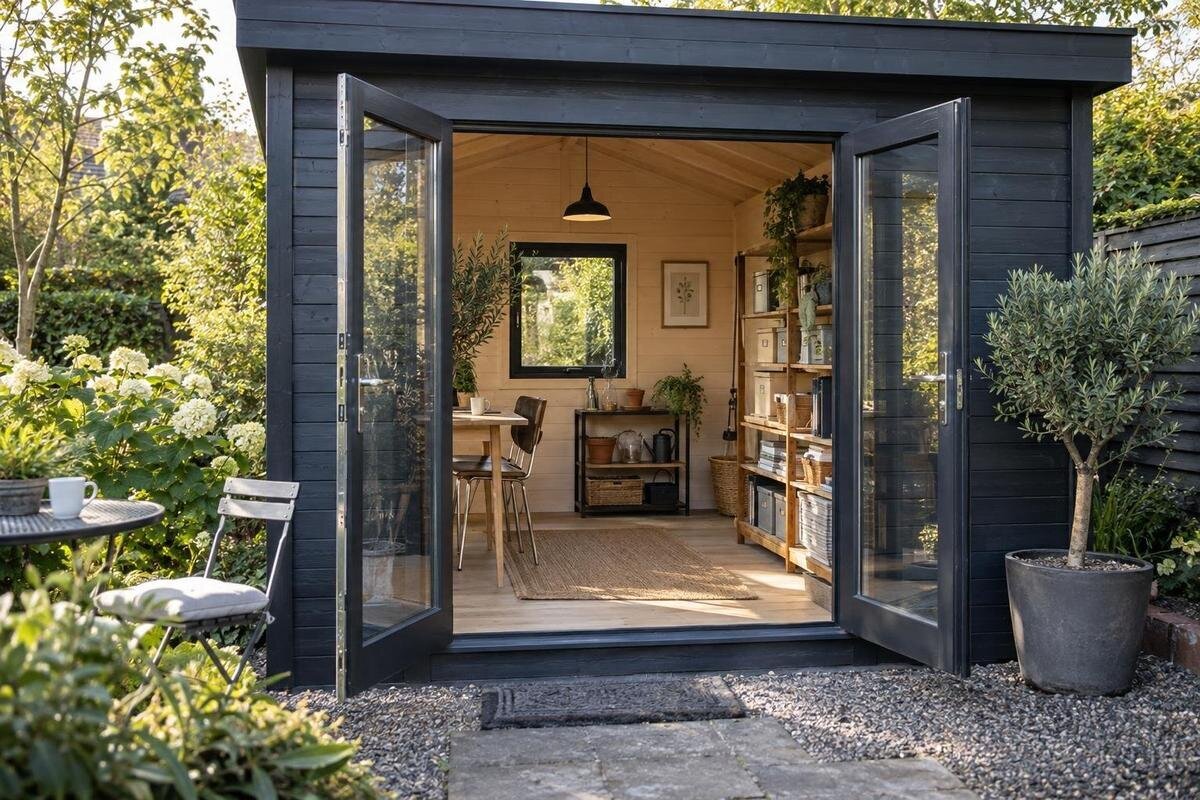
Black Friday garden shed guide
If you’re planning to buy a small wooden garden shed on Black Friday, decide what it needs to hold before comparing listings. A compact footprint may suit a tight spot, but everyday usefulness also depends on the doorway, the route through the shed and how easily you can reach stored items. Measure the proposed site and check the written product details; a photograph or model name cannot confirm capacity or inclusions. No promotion details are supplied here, so treat Black Friday as a time to compare, not as proof of a discount.
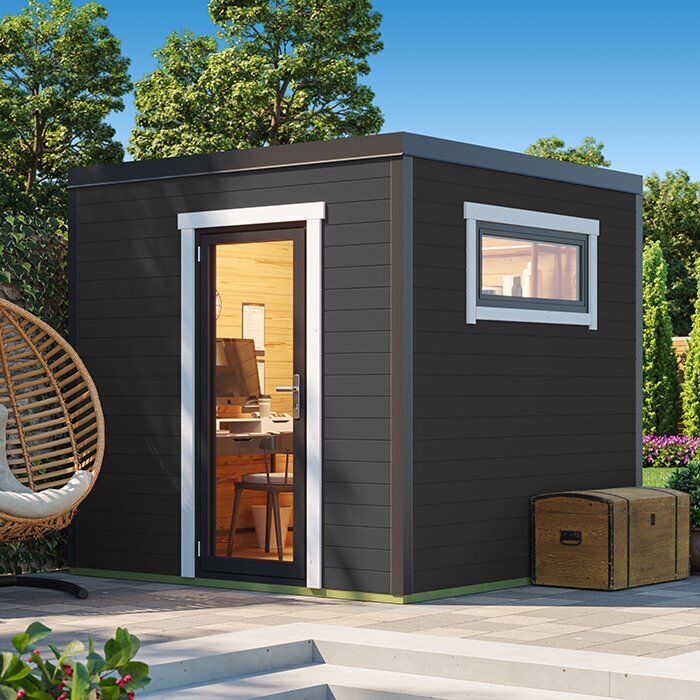
Start with the items you need to store
Before browsing layouts, make a storage inventory instead of starting with a product photo or advertised footprint. List the items the shed genuinely needs to hold, then measure each at its widest, longest and tallest points, including handles, wheels or parts that stick out. Measure equipment in the condition you intend to store it, including any attachments that will stay in place. Note what comes out every week and what stays put for a season; everyday tools should be reachable without shifting stacked boxes. A mower, wheelbarrow or folded outdoor furniture also needs turning room at the entrance. This turns the vague aim of finding a small shed into a useful test: can you store the planned items without blocking access?
Group the inventory by storage method: floor-standing items, things you might place on a shelf, and long pieces that need to lie or stand somewhere. A quick top-down sketch can show whether a clear route runs from the door to the back and whether one part of the floor is being counted twice. Leave working room around items handled often rather than drawing everything edge to edge. Write each item’s dimensions beside its planned space so you can check the layout consistently against different listings. Use the Verdana 1 garden shed listing as one entry in the comparison, not as evidence of a particular capacity. Record only dimensions and inclusions the page states, and ask about anything missing; a model name or photograph is not a measurement.
Measure the site and the access around it
Measure the proposed position, then mark the shed outline on the ground with string, chalk or removable markers. Include the approach to the entrance and the space needed to operate the door, not just the wall footprint. Check the route from the gate or driveway as well: a position can fit on a plan yet be difficult to reach with a long item. Mark fixed obstacles such as fences, trees, taps, outdoor furniture and overhanging branches. If the surface is sloping, soft or prone to holding water, note that and check the supplier’s site-preparation guidance rather than assuming every small shed uses the same base. Take measurements in metres and note which side faces the path.
Compare the marked area with the stated overall dimensions, and check whether projections such as roof overhangs are included in that figure. Do not guess at access clearances: ask the seller or installer what space the particular design and its assembly instructions require around it. For a candidate such as the Veltor 1 garden shed listing, look for written measurements or a dimensioned drawing that confirms the footprint and entrance position. Neither a model name nor a perspective image establishes those details. If no plan is available, request one before deciding whether the proposed orientation will work, especially where a fence or path limits the options.
Compare usable space with the outer dimensions
An external measurement tells you how much garden the shed occupies, not how much clear room remains inside. Walls, framing and any internal features reduce usable area, so do not calculate an exact interior from an outer footprint unless the manufacturer provides the relevant dimensions. Look for internal and external width and depth, and check how each measurement is taken. If only an outside size is stated, ask for clear floor dimensions before deciding that a box, bike or tool will fit. Height is a separate check: note clear height at the doorway and where you plan to store tall items, rather than relying on peak height alone. Where the roof slopes, usable height may vary across the floor, so ask for the height at the point your item needs.
Turn the figures into a practical plan by drawing the interior to scale, placing the largest objects first, then marking the doorway and the space needed to move items in or out. Check whether you can reach the back and retrieve a box without shifting other contents. A longer, narrower footprint may suit long-handled tools; a squarer one can be easier to arrange for mixed boxes, but your inventory and the stated internal dimensions decide. Include space for a person to turn, not just the stored objects. Note the position of any internal supports or features shown on the plan, and verify their measurements with the seller. When considering the Timber Garden Shed M listing, use this same plan as for every candidate and confirm unclear dimensions rather than estimating from an image.
Check the doorway against your largest items
Door width and placement often decide whether a compact garden shed is practical. Check the clear opening, not just a nominal door measurement, and compare it with the widest item you plan to carry through. Allow for wheels, handles and the angle at which a bulky object must turn. A tall object needs enough clear height as well as width, and a raised threshold may affect wheeled gear; ask for exact details rather than judging a photograph. A door that swings out needs space in front, while sliding or folding arrangements have different clearance needs and are not automatically easier in every garden. Confirm which opening type and dimensions apply to the precise model and configuration.
Stand at the marked entrance and rehearse the movement: can you approach without stepping over a garden bed, open the doors fully, bring an item in and turn it towards its storage place? If the doorway sits to one side, a narrow passage beside the shed may constrain the route even when the interior looks generous. Review a plan and the supplier’s stated opening dimensions; do not assume the door can be repositioned or that an illustration is to scale. A page such as the Durano garden shed listing can be assessed against those written details, without reading features into its name. If the details are absent, ask before buying.
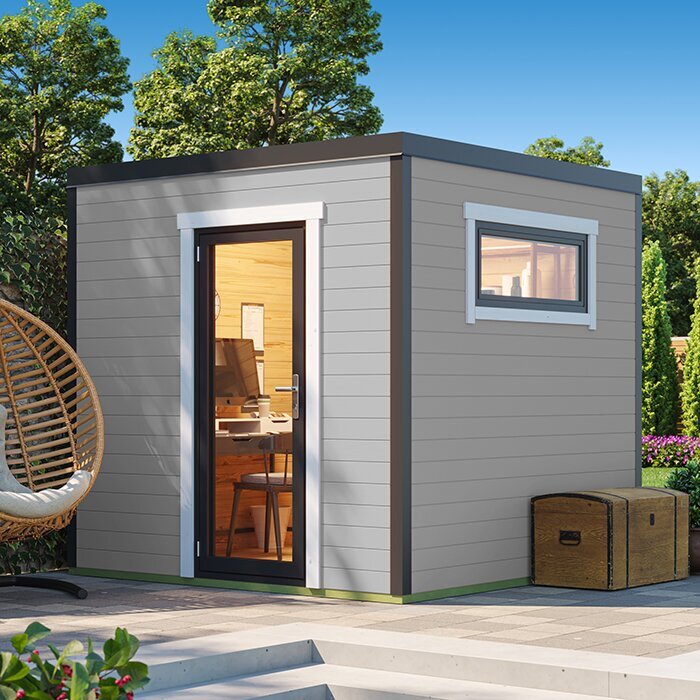
Keep a clear route through the shed
Make the interior work by deciding where each group belongs, rather than trying to fill every gap. Put frequently used items near the entrance, reserve a clear route to less-used storage and avoid placing boxes where the door has to open. If you store a long-handled rake or garden hose, identify a position that does not obstruct the route or reduce door clearance. For a mower or other bulky item, leave room to manoeuvre it in and out; floor area occupied by a stack of containers cannot also serve as parking space. Think through the order in which you would take items out, not just whether they fit on the day you pack the shed.
Consider how the arrangement changes through the year. A compact shed that works only when contents are stacked high or removed in a set order can become frustrating during routine garden work. Mark likely shelving zones on your sketch, including the floor area they take up, then check whether shelves are included or simply pictured for illustration. If you plan to add hooks or wall storage, confirm what the supplied guidance permits; do not assume every wall or fixing point can take the same load. The Wooden Garden Shed S listing belongs on your shortlist only after its stated internal dimensions and included items fit this everyday-use plan.
Check height, shelving and included fittings
Vertical space helps only when the contents can be placed securely and reached. Compare the clear height where a shelf would sit, its depth and whether it would leave room for tall tools or door movement. A pitched roof may reduce headroom at the sides, so peak height alone cannot show whether a shelf or upright item will fit. Measure boxes and equipment you already own, then compare them with stated internal dimensions. If the listing gives only an overall height, ask for the usable height at the point where you intend to store the item. Also check whether any pictured storage arrangement is part of the package or just a display example.
Write down every fitting your layout depends on: a floor, shelves, hooks, a partition or supplied hardware may be optional, excluded or shown for illustration. Confirm the exact package contents and whether a proposed accessory is compatible, along with the relevant fixing guidance. That prevents you from planning around ready-made storage when the delivered configuration may not include it, or choosing options that do not help your layout. The Orello 1 garden shed listing can be checked against this list like any other candidate; its product name does not establish its wall construction or what comes in the box. Get confirmation in writing where the contents are unclear.
Consider timber care and the shed’s position
Because this guide is about wooden sheds, check the timber description rather than treating wooden as a complete specification. Ask which parts are timber, whether treatment or a finish is supplied, and what ongoing care the manufacturer recommends. Species, construction and finish can vary between products, and the listing should state the relevant details; a colour photograph does not establish treatment or weather performance. If the shed will sit close to a fence or under trees, consider whether you can reach its outside surfaces for the care described by the supplier. Also check whether nearby plants or garden equipment could obstruct the doors as they grow or move.
Positioning affects everyday access as well as appearance. Face the entrance towards a route you can keep clear, consider vegetation that may grow across it, and make sure you can inspect and care for the shed as directed. Note nearby trees, runoff or damp patches, then compare those conditions with the manufacturer’s siting and base guidance. Do not infer a site requirement from a general garden-shed photograph. For the Verdana 2 garden shed listing, use its own written dimensions and care information; if installation requirements are unclear, ask the supplier or a suitably qualified installer. This avoids treating general timber advice as a substitute for the specific product instructions.
Read the Black Friday offer details
Black Friday is a prompt to read an offer, not evidence that a particular garden shed is discounted or suited to your layout. Check the current product and configuration, the stated price and any promotion conditions at the point of purchase; no active offer details are supplied in this guide. Compare like with like, since a price for one size or option does not establish the price for another. Read any stated exclusions, expiry, delivery terms and returns information rather than relying on a banner or search snippet. Keep the key terms with your notes so you can match the checkout to the shed you assessed.
Use a side-by-side record for each shortlisted layout: outer footprint, internal floor dimensions, entrance width and height, door arrangement, included floor or fittings, timber and finish information, and unanswered questions. Mark each item as stated, not stated or confirmed by the seller. The Modano 1 garden shed listing can be compared on the same criteria; its name or image does not confirm a door type, material detail or measurement. If a missing fact affects whether your gear fits, resolve it before deciding that the Black Friday price is comparable. Keep the model and any chosen options clear when checking the order.
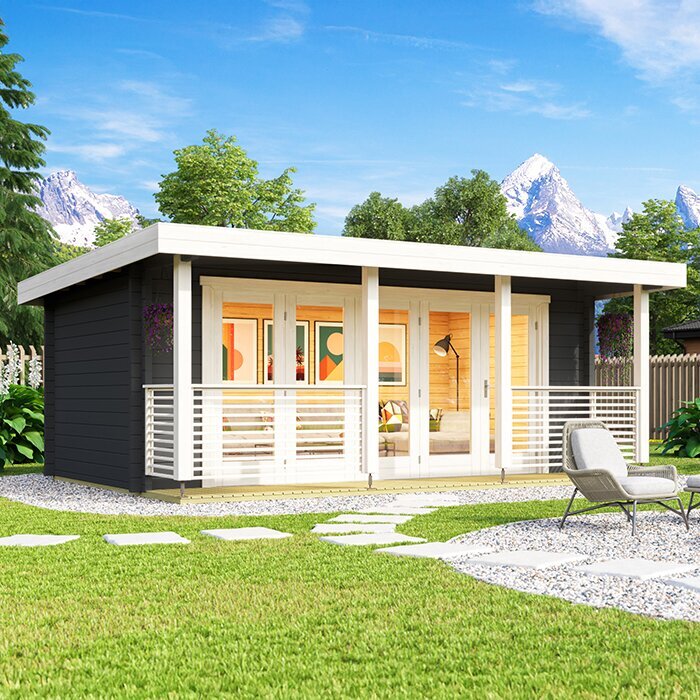
Confirm delivery and assembly requirements
Before ordering, check how a delivered shed will get from the drop-off point to its chosen site. Ask what delivery access and unloading arrangements are required, whether package dimensions are available, and whether the route passes through a gate, turns or narrow side passage. An outline that fits the garden does not guarantee the package can be moved there. Do not assume a promotion specifies a delivery date or includes every handling step; rely on the terms shown at checkout and written confirmation from the seller. This matters particularly if the site is behind a house or access is shared. Note any practical access limit before confirming the order.
Check the assembly information before paying as well. Find out what the instructions expect you to prepare, whether a floor or base is included, what tools or assistance are needed, and whether the manufacturer specifies site conditions. Requirements depend on the selected shed and its instructions, so avoid applying a generic foundation plan to every model. If ground, anchoring or assembly raises a technical question, ask the supplier and use a suitably qualified installer rather than improvising. Keep the confirmed configuration, delivery terms and assembly guidance with your order record; they may also help you check that the delivered package matches what you chose.
Compare a shortlist against the same checks
Once you have two or three candidates, compare them against the same non-negotiables instead of relying on a vague sense of spaciousness. An option should fit the measured site, allow its entrance to operate, clear the longest or bulkiest item and leave a route to the contents you use most. Check that each point is supported by written dimensions or confirmed details. Then compare timber and finish information, package inclusions and purchase terms. A compact layout that meets the essentials may suit your garden better than a bigger footprint that blocks a path or leaves corners you cannot use. Keep the inventory and sketch beside the listings as you decide.
If none passes the checks, revisit the storage list instead of letting a Black Friday promotion push you towards a poor fit. Decide whether some seasonal items can be stored elsewhere, whether the proposed position can change, or whether you need a different footprint; then repeat the measurements and confirm the revised layout. Before placing the order, make sure the selected listing, options, delivery details and offer terms match the notes you compared. Buying well is not about finding the smallest shed at any cost. It is about choosing a wooden garden shed whose stated dimensions and doorway make everyday storage straightforward.
Frequently asked questions
How do I check whether a small garden shed will fit my garden?
Measure the proposed position and mark the footprint on the ground, including space to reach and open the entrance. Compare it with the listing’s external dimensions, then check the route for moving the package and stored items. If a measurement or clearance is missing, ask the seller rather than estimating from a photograph.
Should I choose a shed by its internal or external dimensions?
Use both for different checks: external dimensions show how much garden the shed occupies, while stated internal dimensions show the available floor space and height. Walls and internal features reduce clear space, so do not calculate exact interior measurements from an outside size. Ask for both if the listing gives only one.
What door measurements matter most in a compact garden shed?
Check the clear width and height of the opening, its position, and the space needed to open the door. Compare those details with the bulkiest item you will carry inside and rehearse the route from the gate to its storage spot. A nominal measurement or product image may not show the clearances you need.
Does a Black Friday garden shed listing guarantee a discount?
No. A seasonal label alone does not establish the current price, any discount or its conditions. Compare the exact model and configuration at checkout, and read any stated exclusions, dates, delivery and returns terms. No specific promotion is supplied in this guide, so do not assume an offer is active.
Are shelving and flooring included with a wooden garden shed?
Inclusions vary by product and configuration. Read the package details and distinguish supplied fittings from items shown in promotional photographs. If your layout depends on a floor, shelf or hook, ask the seller to confirm whether it is included and whether the supplied guidance permits the intended arrangement.
Treat a small shed as a storage layout, not just a rectangle on a product page. Your measurements of the site, doorway and contents show whether the plan will work; the written listing and the seller’s answers fill the gaps photographs cannot. Once those points are clear, compare the Black Friday offer for the exact configuration you need, without letting the season substitute for a fit check.
