
Using an Outdoor Hot Tub in Winter: What to Prepare
WINTER USE
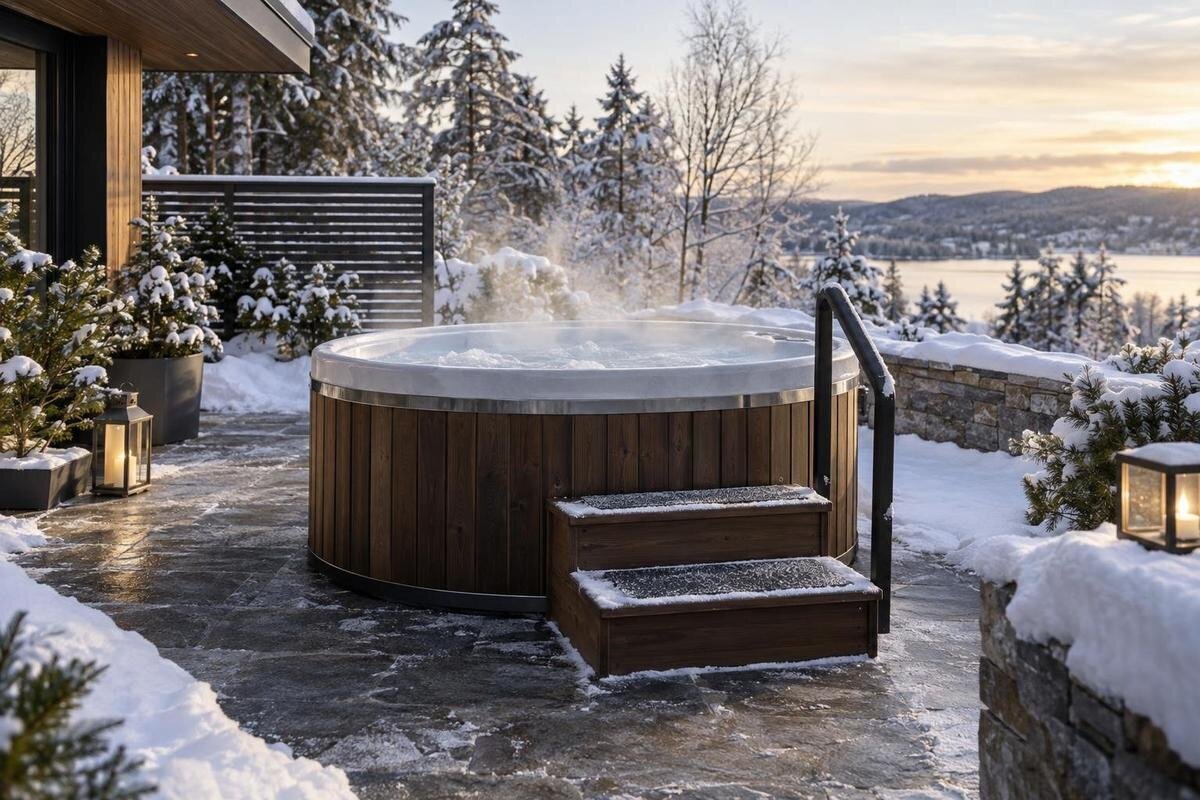
Using an outdoor hot tub in winter is as much about the trip to and from it as the time in the water. Before a session, plan for the weather at your property, a clear route, somewhere sheltered to change, dry towels and clothes, and a cover you know how to handle. New Zealand conditions vary by location and day; frost matters where it occurs, not as a nationwide assumption. For technical operation and water care, rely on current instructions for your exact model rather than general advice.
Before you buy 1
Check the weather where you are
Winter conditions are not uniform across New Zealand, and frost does not occur at every property. Check the local forecast for the time you expect to go outside, not only the daytime high or overnight low. Pay attention to rain, wind and when daylight ends, because these affect the walk, changing and cover handling as well as time in the water. Then relate the forecast to your actual spot: an exposed corner can feel different from a sheltered one at the same address. If you know your property is prone to frost, factor that local experience in rather than treating it as a country-wide rule.
Conditions can shift over a single afternoon, so check again shortly before you begin if the forecast is unsettled. Include the time you expect to come back inside: you need to reach the tub and return without rushing, keep your things dry, and handle the cover as its instructions require. Rain beginning after clothes are set out, gusts that make a cover awkward, or darkness on a poorly lit path may change your plan. Leave room to postpone rather than feeling committed because the water is ready. If frost is forecast or common at your property, consult the manufacturer's cold-weather directions for the exact model before deciding how to operate it; do not assume advice for another model applies.
Prepare the route to and from the hot tub
Walk the route you will actually use, from the door to the hot tub and back, at the time you are likely to bathe. Look for wet leaves, puddles, hoses, toys, low steps, loose items and gates or doors that may need both hands. Clear the path before carrying towels and clothes outside, and decide where shoes or slippers will sit so they do not become an obstacle. Think about where you might pause to open a door, put down a robe or turn with a towel; a route that is clear when empty can feel different when your hands are occupied. The return trip matters just as much as the walk out.
Check the route's lighting and whether you can see changes in surface level after dark. Notice where rain collects and whether the ground becomes slick; if you cannot move confidently, choose another time instead of hurrying. Keep the path clear of belongings and consider how you will carry items in both directions. If Bloomcabin Hot Tub Cove 2 is on your shortlist, request its confirmed dimensions and access requirements. Use those details to assess the space around the tub as well as the route to it, including where you would leave footwear and put down a towel without blocking the way.
Before you buy 2
Choose a sheltered place to change
Decide where you will change before stepping outside. That might be a nearby bathroom, bedroom or sheltered changing area, depending on privacy and the layout of your property. Keep dry clothing and an outer layer there, and make sure there is clear, dry space to remove damp swimwear and get dressed without piling items on a wet floor. If you will return through a door, put the key where you can reach it easily and decide how you will carry your things. Planning the transition helps avoid searching for clothes while you are wet.
Think through the whole sequence: coming inside, drying off, changing and putting wet items somewhere they will not drip across the route. If more than one person is using the tub, decide how the changing space will be shared so that robes and clothes stay accessible. Before buying, sketch the outdoor layout and the route to your preferred changing area. If you are considering Bloomcabin Hot Tub Haven 6, request confirmed dimensions and access details to use with that sketch. Consider whether someone returning indoors could reach their clothes while another person is getting ready to go outside.
Set out dry towels and clothing
Set out a clean towel, robe or other outer layer, and the clothes you plan to put on afterwards before going outside. Choose items that suit the forecast and time of day. Keep everything in a dry place within easy reach, ideally inside the changing area rather than on open ground where rain or splashes can reach it. A basket or bag can keep items together, but will not keep them dry if left exposed. Decide whether you want a second towel for drying or handling wet swimwear; the useful number depends on your routine, so there is no universal kit.
Plan what will happen to wet swimwear and used towels before the session. A designated laundry bag or container indoors means they will not be left on the outdoor route or mixed with dry clothes. Put suitable footwear at the point where you change, and place a robe where you can reach it easily. When comparing what is supplied with Bloomcabin Hot Tub Fjord 8, ask for an itemised list rather than assuming textiles or changing equipment are included. Keep your personal preparations separate from the equipment supplied with the tub, so you know what you need to have ready for a winter session.
Before you buy 3
Plan for wind and rain
Wind and rain affect the whole outing: carrying dry items, walking to the tub, handling the cover and getting back indoors. Check which parts of the route are exposed instead of relying on a general forecast alone. If the outdoor area catches the wind, keep towels and clothes in a sheltered place and choose a time when you can manage the transitions comfortably. An existing sheltered changing spot may be useful, but do not assume an umbrella, screen or added structure will suit a hot tub or its site. Keep the plan simple enough to carry out in poor weather.
Rain can wet a surface or storage spot that seemed dry earlier, so bring textiles indoors or use a protected changing area rather than leaving them on the ground. Think about where loose belongings can stay without blocking the route or being blown around. If you are considering Bloomcabin Hot Tub Aurora 10 for an exposed location, describe that setting when asking about winter operation. Ask what conditions the manufacturer's guidance covers, whether seasonal equipment is required, and how wind affects the prescribed cover-handling procedure. These questions help you assess your intended use without assuming that a general all-season description answers them.
Plan how you will handle the cover
Cover handling deserves a plan before the first cold or wet session. Read the instructions for your exact model to learn how its cover is removed, where it may be placed while bathing and how it must be returned to position. Do not assume covers share the same handles, opening method or supports, and do not force one that catches or moves unexpectedly. Identify a clear place for it that does not obstruct the route; follow the maker's guidance for placement. If the instructions call for an accessory or another person's help, arrange that before you begin rather than improvising mid-session.
Plan closing as well as opening. Consider whether you can put the cover back as directed without crossing a cluttered path or carrying other items at the same time. Keep the relevant instructions accessible and decide where things will go before removing the cover. Before choosing the Cove 2 model, ask whether a cover is included and request its handling instructions. Establish whether you would need a separate accessory or another person's help, and where the cover may be placed during use. That gives you a specific routine to assess against the space available, including the return trip in wet weather.
Before you buy 4
Confirm the model's cold-weather operating guidance
Using a tub through winter is different from preparing it to sit unused. Find the current operating instructions for your exact model and look for guidance on cold conditions, any stated outdoor operating limits, frost protection, required equipment and what to do during cold weather. Use the model's documented directions rather than a temperature or procedure copied from another tub; requirements may differ. If instructions are unclear or unavailable, ask the manufacturer or seller for guidance before relying on a general online answer. This matters particularly when frost is possible at your property, not because every part of New Zealand gets frost.
Keep active-use advice distinct from directions for draining, shutdown or winter storage: one set may not answer the other. When enquiring about the Haven 6 model, make clear that you intend to keep using the tub through winter rather than put it away for the season. Check that the reply applies to the exact version under consideration. Note any required seasonal equipment and ask whether it is supplied or purchased separately. Keep the relevant cold-weather guidance with your preparation notes, including any points you have asked the maker to clarify, so the person preparing the session can refer to the same information.
Follow the model's water-care instructions
Water-care steps remain specific to the model and its instructions. Before planning a session, find the maker's directions for what to check before bathing, how to test or treat the water, and whether any cold-season condition changes that routine. Follow the stated method and product guidance; do not invent a different dose, test interval or preparation step because the air feels colder. If the manual separates normal use from periods when the tub is unused, use the section that matches an active winter session. General advice for another spa pool may not fit your system.
If a direction is unclear, ask the manufacturer or a suitably qualified spa pool professional and confirm the answer applies to the exact model and water-care system. Identify the particular step you need explained rather than asking only for general winter-care advice. For the Fjord 8 model, for example, ask which instructions cover the checks required before a winter session and whether any seasonal changes are specified. Keep that answer alongside the relevant water-care directions. This keeps your preparation focused on the prescribed checks rather than adding an assumed treatment or changing the routine simply because the weather has turned cold.
Before you buy 5
Questions to ask before buying for winter use
If regular winter use is a priority, ask direct questions before choosing. What conditions is the exact model documented for during active operation? What does the manufacturer specify if frost can occur at your location? Does any seasonal equipment or operating condition apply, and is that equipment included or separate? Request guidance for your intended place and pattern of use, rather than relying on a broad statement that a tub is suitable all year. Do not infer cold-weather suitability from a product name, photographs or catalogue category.
Ask for the current manual and any model-specific advice covering cover handling and water care. For the Aurora 10 model, use the reply to distinguish supplied accessories from optional extras and any equipment required for your intended winter use. Confirm which version the advice concerns and which situations require contacting the manufacturer. If several people will prepare the tub, make sure they can all refer to the same operating and water-care instructions. Compare models using answers to the same questions, so a general assurance about one is not mistaken for the detailed guidance provided for another.
Use a simple pre-session checklist
Before each session, run through the decisions that matter that day: check the forecast for your property and the return time; look at the path, steps and lighting; put dry towels, outer clothing and footwear in a sheltered place; and make sure the changing space is ready. Decide where wet items will go, and clear the area where the cover will be handled. Check that you know the model's cold-weather instructions and have completed the water-care checks required before bathing. A routine should be easy to repeat, not a long list of extra tasks.
Then decide whether the conditions let you follow that plan. If wind, rain, darkness or a wet surface makes the route or cover difficult to manage, wait for a better time instead of improvising. If frost is forecast at your property, follow the exact maker's guidance; if it does not answer your model-specific question, seek clarification before use. Revisit the plan when the weather, layout or equipment changes; last week's routine may not suit today's conditions. A preparation check is a prompt to adapt, not a guarantee that every winter day will be suitable.
Frequently asked questions
Does winter mean frost is likely everywhere in New Zealand?
No. Conditions depend on your location and property, so check the local forecast and take account of what you know about your site. If frost is forecast or commonly occurs there, follow the cold-weather instructions for your exact model rather than assuming every hot tub uses the same procedure.
Should I change the hot tub's settings when frost is forecast?
Do not guess: advice for active operation and frost protection is model-specific. Check the manufacturer's instructions for your exact model, and ask for clarification if they do not cover the conditions forecast at your property. Guidance for winter storage may not apply to a tub you plan to use.
How should I prepare to handle the cover in wet or windy weather?
Read the exact model's instructions for removing, placing and replacing its cover. Before opening it, clear the route and decide where the cover will go. If the instructions mention a particular accessory or assistance, arrange that in advance; do not force the cover or improvise a support.
What should I have ready before going outside?
Set out a dry towel, a robe or other outer layer, and the clothes and footwear you plan to use afterwards. Keep them in a sheltered changing space, and decide where wet swimwear and towels will go. Adjust the plan to the forecast and your property's layout.
What should I ask before buying a hot tub for regular winter use?
Ask what conditions the exact model is documented for during active operation, what to do if frost is possible, and whether seasonal equipment is required or included. Request the current manufacturer instructions for cover handling and water care, and confirm that each answer applies to the model you are considering.
A workable winter routine is specific to your property and the tub you use: check the weather at the time of the session, prepare a clear route and sheltered changing space, and have dry items ready before going outside. Add the manufacturer's directions for cover handling, cold-weather operation and water care. If those instructions do not answer a question about frost or the conditions at your site, get model-specific clarification rather than guessing. That leaves you with a plan you can adjust when the forecast or outdoor conditions change.
