
What Does It Cost to Heat a Wood-Fired Hot Tub in New Zealand?
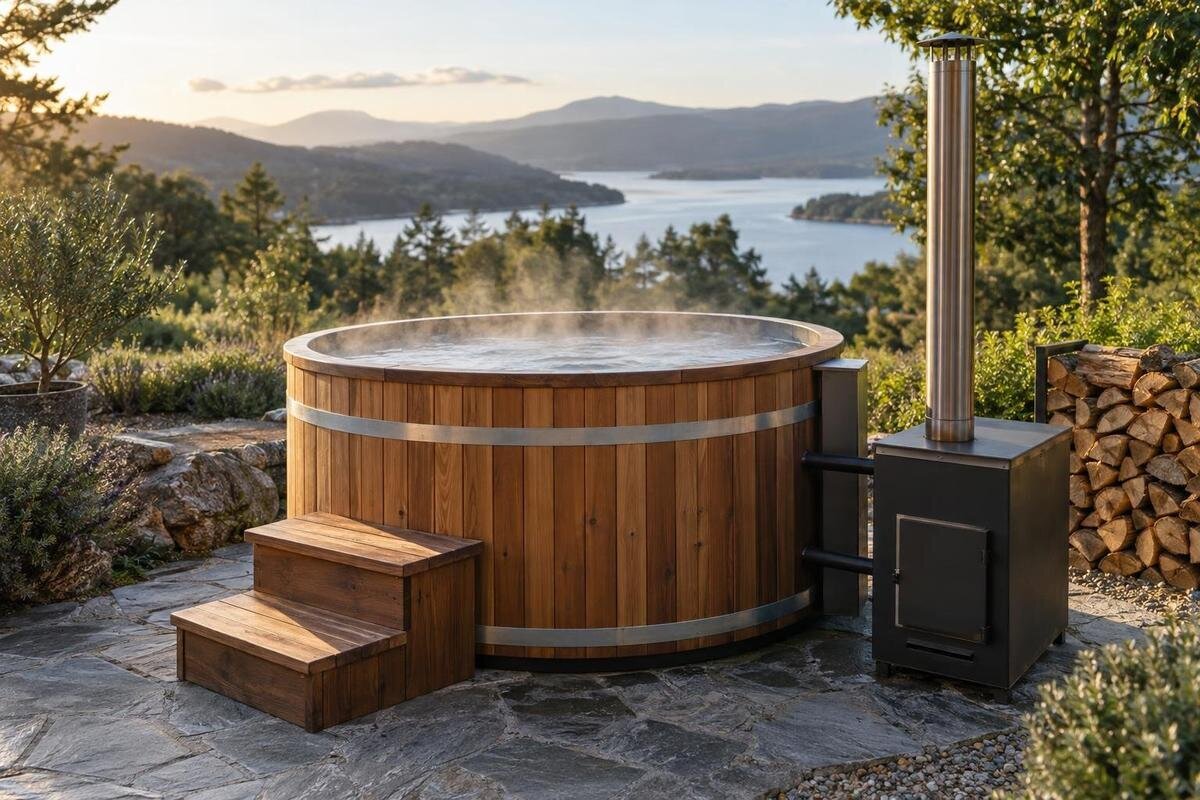
Heating costs
Wood-fired hot tub heating costs are most useful when stated per defined heat-up, not as one universal New Zealand price. A reliable estimate needs a current firewood quote for the area where the wood will be delivered and a defensible quantity of wood used to raise a stated volume of water from a stated starting temperature to a chosen target. The quote must identify its sale unit and delivery terms; the consumption figure must say how it was obtained and under what conditions. Without both inputs, a dollar total can look exact while resting on guesses. This guide shows how to assemble a local estimate and update it when either your supplier’s price or your use changes.
Define a heat-up before pricing it
Count one heat-up from the point when a filled tub starts at a measured water temperature until the water reaches your chosen target. Record the volume being heated, the starting and target temperatures, and the wood used during that interval. State whether it is the first warm-up after filling or a later rise from water that is already warm; those are different jobs, even if both are called heating the tub. Use the tub’s operating instructions when choosing a target, and write temperatures in °C. If the starting temperature is estimated rather than measured, mark it as an estimate.
Keep the figure to wood burned for that one rise. It excludes the tub’s purchase price, site preparation, water, repairs and other ownership costs; those belong in separate budgets. It also excludes fuel used later to hold or restore warmth. One initial heat-up is not automatically one session’s fuel cost: several visits may share the same warm-up, with additional wood used between them. State whether your figure is per filled-tub heat-up or per top-up, so you do not compare one with the other or count the same wood twice.
Use a current, local firewood quote
Obtain a current written quote or supplier listing that serves the delivery area. Record the supplier or listing, the date checked, the region or postcode, the price in NZD and the exact sale unit. Note whether GST and delivery are included, any separate delivery charge, and any minimum order or delivery conditions that affect what you can buy. A collection price is not your delivered cost if you must pay to bring the wood home. Save the quote so you can check its terms later, and refresh the figure when it expires or your intended order changes.
Firewood may be quoted by bag, crate, bulk load, volume or weight; even a cubic-metre figure may mean loose or stacked wood. Ask what the unit contains and how it is measured rather than assuming that two loads are equal. A bag price only compares cleanly with wood-use data measured in the same bag size. Do not convert volume to weight, or one volume definition to another, using a guessed conversion: packing, species and moisture affect the relationship. This guide gives a calculation rather than a current NZD example, because a dated local price must be paired with source-backed wood use for the same heat-up scenario.
Set the water-heating assumptions
Write down the volume of water being heated, using a manufacturer-confirmed fill figure or a measured amount rather than guessing from the tub’s outer size. Record the starting and target temperatures in °C and use the actual fill if it is partial. Full-fill consumption should not be applied to a smaller amount of water without evidence that the figures are comparable. Keep the volume and temperatures beside the cost calculation, and say which values were measured and which came from product information or an estimate. That gives the wood-use figure a clear scenario to describe.
Also record conditions that may affect the amount of wood used, such as outdoor weather, wind exposure, whether a cover was used during heating, and the heater configuration. If Bloomcabin Hot Tub Cove 2 is on your shortlist, label the worksheet with the model and configuration you are considering. The name identifies the product; it does not establish its water volume, heating method or fuel requirement. Keep the planned heating scenario separate from the conditions attached to any consumption figure you obtain. For example, record your intended starting temperature in one field and the test’s starting temperature in another, rather than silently treating them as identical. This makes a mismatch visible before you calculate a price and helps you see which assumptions still need resolving.
Multiply the wood quantity by a matching unit price
Let P be the delivered price in NZD for one defined sale unit, and Q the number of those units used in one defined heat-up. Firewood cost per heat-up = P × Q. If the fuel costs F and delivery adds D for an order containing N matching units, calculate P = (F + D) ÷ N. If delivery is already included, do not add it again. If a delivery fee covers other goods or more than one order, allocate only the relevant share to the firewood. Spread the delivery charge across the units delivered once, rather than adding the full fee to every heat-up.
Keep Q in the same unit as P. If the supplier charges per bundle and the consumption record counts that identical bundle, multiply directly; if only part of a bundle was used, measure the fraction consistently. If wood use is recorded by weight but the supplier quotes volume, use a documented conversion rather than an assumed density. Keep the original quantities and conversion basis beside the calculation so you can trace the result back to the quote. Check that tax treatment is consistent when comparing prices, too. A cost worksheet for Bloomcabin Hot Tub Haven 6 should show P and Q separately, with their units, rather than only a final dollar amount. Leave Q blank if a matching consumption figure is unavailable: a known unit price alone cannot produce a cost per heat-up.
Find a credible wood-use figure
Look for manufacturer test information or a repeatable measured-use record tied to the specific tub and heater. The useful figure identifies how much wood was used and whether the quantity means kilograms, a defined bag or another unit. It should also state the water volume, starting-to-target temperature rise, fuel basis and test conditions. Check whether it reports wood loaded or wood actually burned; those amounts can differ if some fuel remains unused. A statement such as one load heats a tub is not enough unless the load and the heating scenario are defined.
When assessing Bloomcabin Hot Tub Fjord 8, look for a wood-use figure tied to that model and its heater configuration rather than borrowing one from another product. A photograph or heating-time estimate cannot establish fuel consumption. If wood-fired heating is confirmed and you are measuring use yourself, define the event before recording fuel, follow the manufacturer’s operating directions and use the same quantity unit throughout. State whether your record measures wood loaded or wood burned, and account for unused fuel consistently rather than switching between the two measures. Keep observations from separate runs separate at first, with their temperatures and conditions attached. Repeating comparable runs can help you see whether one result is representative, but combining unlike runs into a single average hides the differences you need to understand. If the quantity cannot be measured reliably, leave it unknown.
Account for conditions that change fuel use
The amount of heat required changes with the job. More water, or a larger rise between starting and target temperatures, requires more heat input; outdoor conditions and heat loss from the tub also affect the wood needed. A test carried out with one set of weather and cover conditions may not represent another. Record those details instead of adding an unsupported percentage for winter, wind or a cover. That makes clear why one owner’s figure can describe a particular heat-up without serving as a general New Zealand consumption rate.
Fuel also varies. Species, moisture, cut size and the way a particular heater is operated can affect the useful heat obtained from a purchased unit, so a test on one batch may not represent another. When considering Bloomcabin Hot Tub Aurora 10, keep the fuel description alongside any consumption evidence for its confirmed heating configuration. A cheaper sale unit is not enough to establish a cheaper heat-up if the quantity needed is different or unknown. If your supplier sells wood on a different basis from the test, ask for a documented relationship rather than translating units by eye. Keep fuel-price changes separate from changes in measured consumption so you can see which input has altered the estimate.
Separate initial heating, reheating and maintaining warmth
A first heat-up from a fresh fill is different from maintaining warmth over a period or raising water that has cooled. The first is a defined temperature rise; maintenance or restoration includes heat lost over time and depends on when the measurement starts and ends. Do not multiply the initial heating quantity by every planned visit. Instead, separate the initial event from each top-up or holding period, then record the wood and water temperatures for each. This keeps a per-heat-up answer distinct from a broader estimate of ongoing fuel use.
For a confirmed wood-fired configuration, use the Cove 2 product details to identify the setup being assessed, then give each type of heating its own entry. Describe a heat top-up as reheating existing water, so it cannot be confused with adding water to the tub. For a holding period, record when it begins and ends, the water temperatures at those points and the fuel used during that interval. Do not include the same fuel in both the initial heat-up and the holding record. If your observations cover the whole evening without a clear boundary between activities, label the result as fuel for that combined period rather than claiming it is the cost of the initial heat-up alone. Follow the operating guidance for whichever heating method is supported.
Compare models only with matching evidence
Model comparisons are useful only when the relevant heating facts have been confirmed. Check whether the specific configuration can be wood-fired, which heater is included or compatible, its stated water volume, and whether the wood-use figure covers conditions you expect. Use the Haven 6 product information to identify the configuration you want to compare, then put each model’s own consumption evidence in a separate column. Give both columns the same headings: water volume, temperature rise, fuel unit, conditions and cost. Apply the same firewood price basis and delivery treatment to both. If one result includes delivery and the other uses a collection price, the difference is not a meaningful comparison of the models’ heating costs. Resolve that mismatch before drawing a conclusion.
If water volumes differ, be clear about what you are comparing. You might compare the cost of heating each model’s intended fill for a chosen temperature rise, or a normalised measurement if reliable data allow it; those answer different questions. Do not attribute a lower total to better efficiency without matched test conditions and confirmed volumes. Numbers in catalogue names identify products, not capacity, seating, heating power or fuel consumption. Where sellers cannot supply comparable evidence, mark the result as not comparable instead of ranking models by guesswork.
Budget for your expected heating routine
Once P and Q are supported, adapt the result to your likely routine without changing the definition. If you expect several separate full-fill heat-ups, multiply the cost for that same start-to-target scenario by the number of those events in the period you are planning for. Keep reheating or maintenance fuel in a separate line based on its own measured quantity. Your Fjord 8 heating-cost worksheet can distinguish planned visits from planned heating events: several visits sharing one initial warm-up should not be counted as several fresh-fill heat-ups. Write down how you have grouped them so the total remains understandable later. Where your routine includes different starting temperatures, retain separate estimates rather than applying one heat-up figure to every occasion.
Keep the supplier quote, delivery allocation, unit, source of Q and water assumptions beside the result. When the firewood price changes, update P; when your use changes, update Q or the number of defined events. If the quote or consumption evidence supports a range rather than one value, show that range and state what creates it. This is a fuel budget for the stated heat-up pattern, not a complete annual ownership figure; other running and maintenance costs are outside this calculation.
Budgeting with incomplete fuel-use figures
Treat missing inputs separately when making a buying decision. You may have a firm local fuel price but no usable consumption figure, or a relevant consumption record but no delivered quote for your area. On your shortlist, the Aurora 10 product page identifies the model to ask about; it does not fill either gap. Mark each input as known, estimated or unknown and state what is missing beside it. If the heating configuration or usable fill volume is unconfirmed, resolve that before applying a wood-use figure. If only the local price is missing, obtain a quote in the required unit. This keeps the enquiry focused on the actual gap instead of treating every part of the estimate as equally uncertain.
Set a per-heat-up spending limit that suits your household, then compare it with the result for the water volume and temperature rise you realistically expect. If the supported estimate is a range, consider whether its upper end still fits that limit rather than budgeting only for the lowest result. Occasional and frequent use can make the same fuel cost feel different, but the calculation remains per defined event; do not disguise missing evidence with an annual total. If a reliable wood-use quantity remains unavailable, leave the heating cost unresolved while considering other confirmed product information. You can then distinguish a model that appears affordable on usable figures from one whose fuel cost is simply not yet known.
Frequently asked questions
What does it cost to heat a wood-fired hot tub in New Zealand?
There is no reliable single figure without a current local firewood price and a credible amount of wood used for a defined heat-up. Multiply the delivered price per unit by the wood quantity used in that same unit, then state the water volume, temperatures and conditions.
Can I use a firewood price quoted per cubic metre?
Yes, if the wood-use figure is also in cubic metres under the same definition. Check whether the supplier means loose or stacked wood. If consumption is measured by weight or in bags, use a documented conversion or obtain a price in a matching unit; do not guess.
Does a hot tub’s model name tell me its fuel use?
No. A catalogue name does not confirm the heating method, water volume or wood consumption. Ask for specifications and a fuel-use figure tied to the particular model and a stated test scenario.
Does reheating cost the same as the first heat-up?
Not necessarily. A first heat-up starts with a filled tub at a measured temperature. Reheating raises the temperature of water that has cooled since an earlier heat-up, while maintaining warmth covers a stated period of heat loss. Record and price these as separate activities rather than assuming they use the same amount of wood.
Should I include delivery in the cost per heat-up?
For a delivered firewood cost, include the delivery charge once in the price per unit, spread across the units delivered. Then multiply by the quantity used for one heat-up. If delivery is already included in the quote, do not add it again.
A useful New Zealand heating estimate ties a local delivered firewood price to a documented quantity used for one defined rise in water temperature. Record the unit, delivery terms, volume, temperatures and conditions alongside the calculation, then update it when the quote or your usage changes. If either key input is still unknown, keep it visible as unknown rather than filling the gap with a model number or an unsupported average.
