
What Makes a Well-Built Outdoor Hot Tub?
Outdoor hot tub build guide
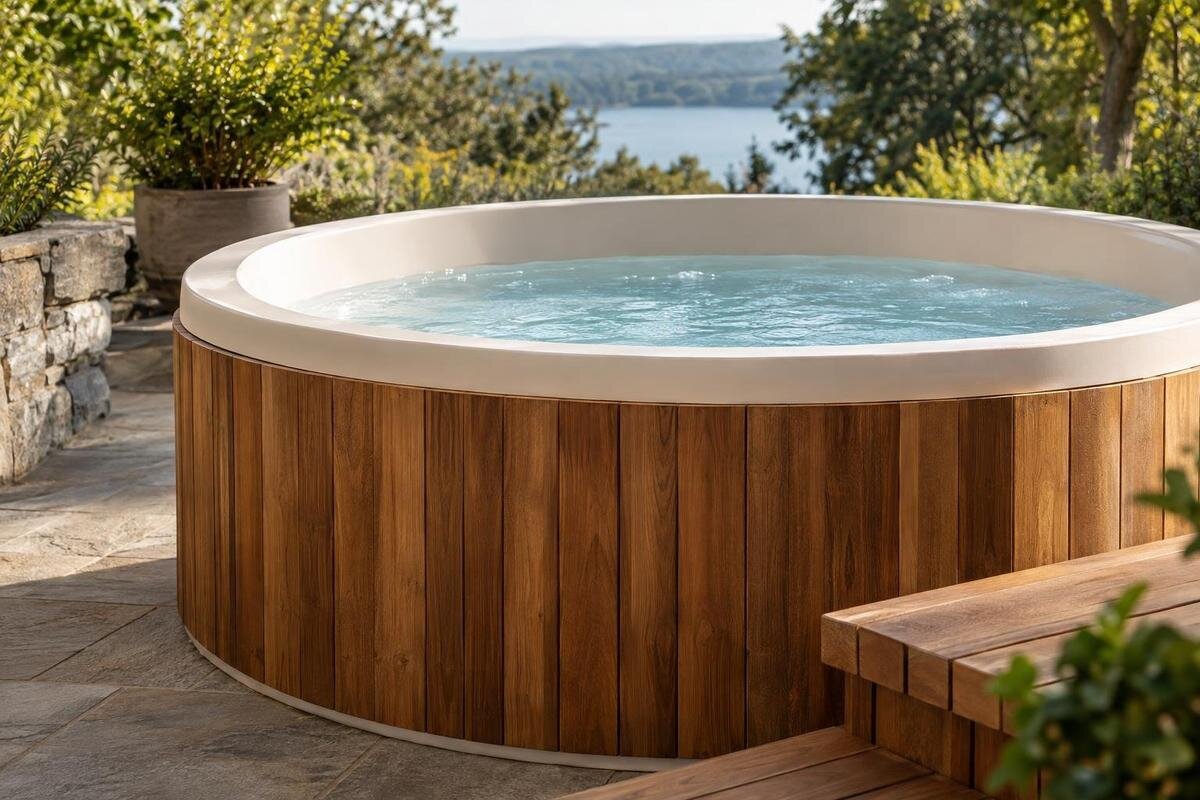
A polished shell can make an outdoor hot tub look substantial, but appearance alone cannot show how its shell is constructed, what supports it, how joints are sealed or whether a technician can reach parts for repair. A useful build-quality check follows the product from its water-contacting surface through its support and outer finish, then considers access for inspection and servicing. The aim is not to favour one material or construction method by default. It is to find clear, model-specific evidence. This guide explains what to ask a New Zealand retailer, how to compare construction details and when an unanswered question is a reason to pause.
What build quality covers in an outdoor hot tub
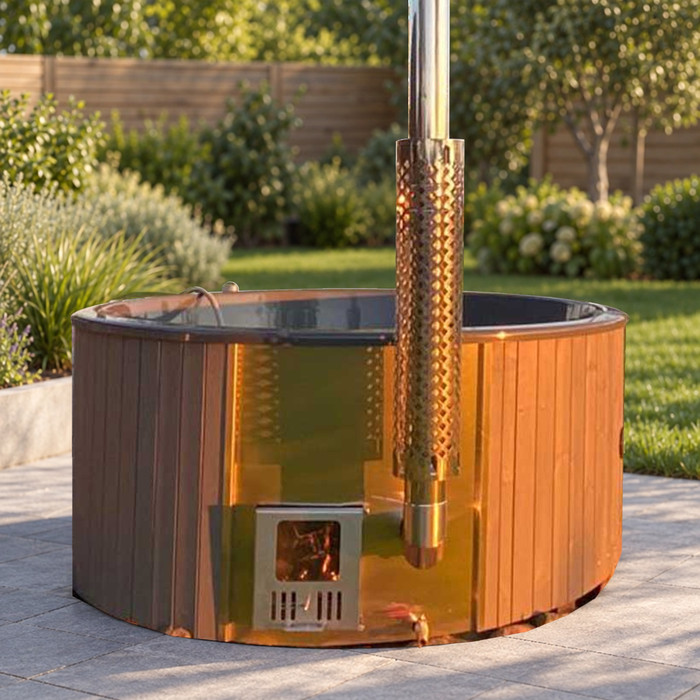
Build quality is the degree to which the parts are selected, joined and finished as a coherent product, not a single material label. For an outdoor tub, judge the shell construction, the supporting structure below it, how panels and joints are assembled, the treatment of exposed surfaces and the planned route to serviceable components. These are distinct questions: a well-finished cabinet does not prove the shell is reinforced, and a strong-looking shell tells you little about the frame or how equipment can be accessed. Keep the assessment focused on what is documented for the exact model and configuration under consideration.
Look for answers that identify a component, describe its material and construction, and explain how it is supported or joined. A product photo can show visible details, but it cannot establish hidden layers or what lies beneath a panel. Likewise, a general brand statement may describe a range rather than the model in front of you. Record details separately from impressions, and mark anything that needs confirmation. The parts list, drawing and written claims should agree; flag unexplained differences between them or between a sample and the model being offered.
Identify the materials in each component
Begin by breaking “materials” into individual components. Ask what forms the water-contacting shell, what lies behind that surface, what the base or supporting frame is made from, and what material is used for the external cabinet and its fasteners. If several layers or materials are involved, request their names and their roles rather than accepting a single broad label. A description such as “acrylic”, “wood” or “composite” can be too general to explain the whole build: it may refer to one visible layer, not every structural part. The exact construction should be stated for the model, not assumed from an image or category.
Where the supplier gives a technical material name, ask whether it describes the full component or only its surface, and whether there is backing, reinforcement, a coating or a treatment. The point is to understand what is present and where, rather than demand a particular material. When assessing Bloomcabin Hot Tub Cove 2, ask for its own materials list; the name alone does not confirm shell, frame or cabinet construction. Compare the answer with the same categories for other candidates. If a grade, thickness or treatment is important to a claim, ask the supplier to define it. A proprietary label is not a full material description.
Check the structure that supports the shell
The supporting structure deserves separate attention because the visible shell and decorative outer panels do not show how the product is held up. Ask what structure sits beneath the shell, how it connects to the base, and which parts transfer the filled tub’s weight to that support. The seller should be able to identify a frame, base assembly or other support arrangement in model-specific documentation, if one is used, rather than relying on a phrase such as “reinforced construction”. You are not asking for an engineering calculation; you are asking what is actually built into the product and what evidence describes it. Ask whether support comes from a continuous base, discrete supports or another arrangement, without assuming which design is preferable; the answer should match a drawing or construction note.
Look for a drawing that labels the frame and the shell-support points, or a written explanation that matches the model’s manual. Confirm whether the cabinet panels are structural or simply cover the assembly; their appearance cannot answer that. Ask how the support elements are protected where they meet exposed areas, and what the manufacturer says about inspection or repair if a part is damaged. For Bloomcabin Hot Tub Haven 6, as for any model, a photograph cannot verify hidden support. Use the product’s exact documentation and record what remains unstated rather than treating a number in its name as a construction specification.
Ask how the main parts are joined
Even suitable materials can be poorly put together, so ask how the main parts are joined. Which seams are bonded, screwed, clipped or otherwise connected? How are joins between panels, shell, base and trim finished? Which fixings are exposed, and what is specified about their material or protection? These questions do not imply that one joining method is always best; different components may require different approaches. A model-specific assembly description is more useful than a sales phrase such as “hand finished” because it says what method applies to which part. Find out whether a named method applies to every seam or only particular locations; one broad phrase can cover just a single interface.
Ask how the assembly deals with water and moisture around joints, edges and penetrations, and what the documentation says if a seal or fixing needs attention later. A smooth outer seam does not prove that the layers beneath it are well sealed or secured. Where a joint is hidden, request a close-up or construction drawing. If the retailer describes a technique, ask which joints it applies to and whether it covers the exact configuration. Your comparison notes for Bloomcabin Hot Tub Fjord 8 should distinguish documented joining methods from visual impressions of its finish.
Inspect the finish at edges and joints
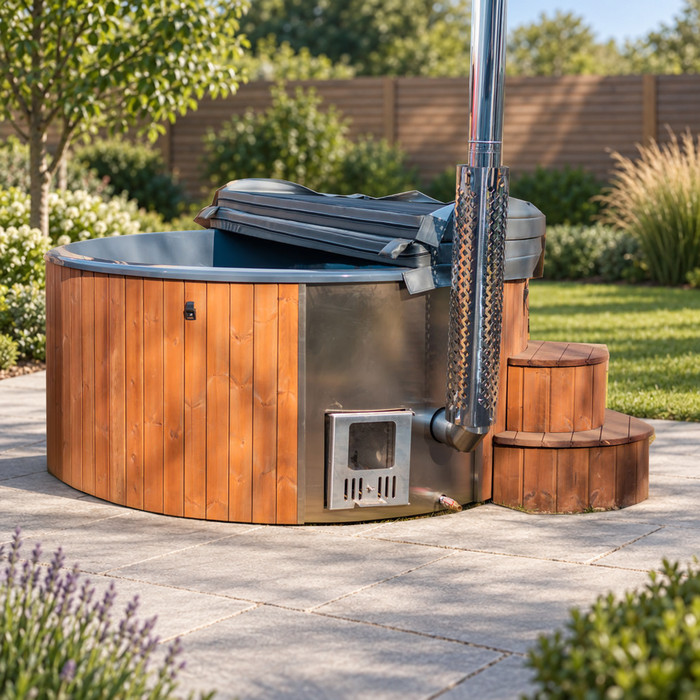
The finish matters, but it is not a substitute for sound underlying construction. Look at cabinet surfaces, edges, corners, trim, cut-outs and transitions between parts. Are gaps consistent and edges protected? Do panels sit evenly? Note chips, lifted coverings, exposed fasteners or uneven sealant on the sample or supplied photographs. These observations can flag questions; they cannot establish how hidden layers are made or how the finish will behave over time. Check descriptions for less visible edges behind trim and near the base too. Report any defect on a sample without assuming it represents every unit.
Ask what the outer surface is made from, how it is finished, and how edges or joints that are less visible are treated. If a coating, stain or protective layer is claimed, ask which surfaces receive it and whether the supplier provides care or repair guidance for that particular finish. Do not assume that a visually similar cabinet uses the same substrate or finishing process. For Bloomcabin Hot Tub Aurora 10, request written information about the finish and where it is applied; any image supplied can show visible details only. The useful comparison is between stated build-up, finish coverage and repair information, not the gloss level in a photograph.
Check how serviceable parts can be reached
Service access is part of construction quality because a component that cannot be reached or removed without unnecessary disruption may be harder to inspect and repair. Ask where the access panels are, what they allow a technician to reach, how they are secured and whether they can be removed and refitted. A parts diagram or service manual should make the route clearer than a general assurance that the unit is “easy to maintain”. Ask whether access requires removing just a panel, several joined parts or a larger section of the enclosure, and get the answer for the exact model. There is no need to open or dismantle a showroom unit; request the manufacturer’s drawing or service instructions instead.
Check what happens after access: are the relevant components individually replaceable, and does the supplier identify part numbers, instructions or a service contact? These details help you assess repairability, rather than predict whether repairs will be needed. Ask what panel sealing, fasteners or trim must be restored after service, and whether a technician has documented guidance. When reviewing the Cove 2 listing, request a model-specific service diagram or written explanation; the product name says nothing about internal access. Clarify whether the described work is intended for a trained technician rather than the owner.
Ask for evidence behind durability claims
Claims such as “built for the outdoors”, “reinforced”, “premium quality” or “long lasting” are starting points for questions, not proof. Ask which part of the product the claim concerns, what construction detail supports it and whether evidence is available for this model. A useful answer may identify a material, thickness or layer, explain an assembly process, or point to a test report, technical sheet or manual. The record should state what was examined and what the result does—and does not—cover. A test on a material sample, for instance, cannot by itself establish the durability of every joint in a finished tub.
Be cautious with figures that lack context. A claim about years of life, weather resistance or strength is difficult to assess without the test method, conditions, component and scope; do not compare headline numbers if one seller describes a whole product and another a single part. Ask whether the evidence applies to the exact model or merely to a material family, and whether there are limitations or care conditions in the documentation. When checking the Haven 6 model details, use exactly the same questions as for competing products: a short claim is not a construction record, and a missing document is not proof of poor manufacture either. Ask who prepared the evidence and whether the test is independent or manufacturer-supplied; either way, its role and limits should be clear.
Compare construction documents on equal terms
Make a simple comparison sheet with one row for each component and the same columns for every model: material and layer description; support structure; joining and sealing method; finish and edge treatment; service access; and the document that backs each answer. Mark a detail “specified” only when you can tie it to a product-specific source. Use “not stated” when the information is absent, and “unclear” when the language is too broad to interpret. This prevents a product with a longer sales description from seeming better built merely because its page contains more adjectives.
Compare like with like, and record the source of each detail. A labelled drawing, materials list or manual can answer different questions from a showroom photo; they are not interchangeable. If a service-access drawing is missing, request it rather than assuming the design is less serviceable. If a shell is described as reinforced, ask what is reinforced and where. Compare the Fjord 8 product information with other options using these same categories. Note each document’s date or version so range-wide or outdated information is not mistaken for a current model-specific description. Keep unresolved details visible rather than ranking models on incomplete evidence.
Questions to put to the retailer
Keep retailer questions short, specific and tied to a named model. Ask: “What are the shell’s layers and the material used for each?” “What supports the shell, and can I see a labelled drawing?” “Which joints are sealed, and how are exposed edges finished?” “What are the cabinet panels made from, and are they structural?” “Where are service panels, what can be reached through them, and is there a service diagram?” These questions turn broad claims into checkable details. If the answer covers only one part, follow up on the others rather than treating it as a complete description of construction.
Then ask for the relevant documents and note who prepared them, which model they describe, and whether they refer to the version you are considering. “Can you send the material specification or section drawing?” and “Where do the service and repair instructions explain removal and replacement?” are more useful than asking only whether it is durable. For the Aurora 10 listing, or any product page, request written answers that name the component and method rather than a reassurance that the range uses quality materials. Save the responses with the quote or order details so later clarifications do not depend on remembering a phone conversation. If a reply is verbal, send a short summary back and ask the retailer to confirm or correct it.
What to do when details are missing
A missing specification is a gap in the evidence, not an automatic verdict on the product. Decide whether the unanswered point is central to judging construction—such as what supports the shell, how a joint is sealed or how service access works—and ask for a direct reply before committing. If the retailer cannot answer, ask whether the manufacturer can provide a manual, parts drawing or product-specific construction note. A generic brochure for a range may help explain terminology, but it does not settle a question about a particular build unless it clearly includes that model. A clear “not available” answer is more useful than an invented explanation, though it still leaves a question open.
Be wary if a response shifts to appearance, brand reputation or a general promise of longevity without addressing the component you asked about. Record the unanswered question rather than filling the gap from a similar-looking product or photograph. A lack of construction information limits your assessment, but is not itself evidence of a defect. Postpone the decision if an important detail remains unresolved. Nor should two products be treated as equivalent simply because the same information is missing from both: without those details, you cannot compare that aspect of their construction.
Frequently asked questions
Is a heavier hot tub necessarily better made?
No. Total weight can reflect many different components and does not by itself reveal the shell layers, support design, joint quality or service access. Ask for the construction details behind any weight or strength claim; do not use mass as a stand-in for documented build quality.
Which material lasts longest outdoors?
There is no reliable universal answer based only on a material name. Performance depends on the exact construction, how it is finished and joined, its exposure, and the manufacturer’s stated care requirements and limitations. Compare product-specific documentation rather than assuming a material label predicts lifespan.
Is a good-looking finish enough to judge construction?
No. Photos and showroom models can help you assess visible finish and alignment, but they cannot show hidden support, backing layers, sealed joints or service routes. Use visual inspection to form questions, then seek written, model-specific answers.
What documents should I ask the retailer for?
Request a construction specification or materials list, a labelled drawing or cross-section, details of key joints, and a service or parts diagram. Ask which model and version each document covers. A range brochure is useful only if it clearly applies to the exact model.
What if the retailer cannot provide construction documents?
Treat that as an evidence gap, not automatic proof of poor quality. Ask for a direct written answer or whether the manufacturer has model-specific records. If a detail central to your assessment remains unclear, include that uncertainty in your comparison and decide whether to wait for clarification.
To judge an outdoor hot tub’s build quality, establish what its main parts are made from, how the shell is supported, how joints and exposed surfaces are finished, and how components can be reached for servicing. Compare the same details across models and keep unresolved questions visible. A polished finish may be appealing, but it is the construction beneath it—and the evidence explaining that construction—that makes a meaningful comparison possible.
