
When should you order a pergola? Planning for the outdoor season
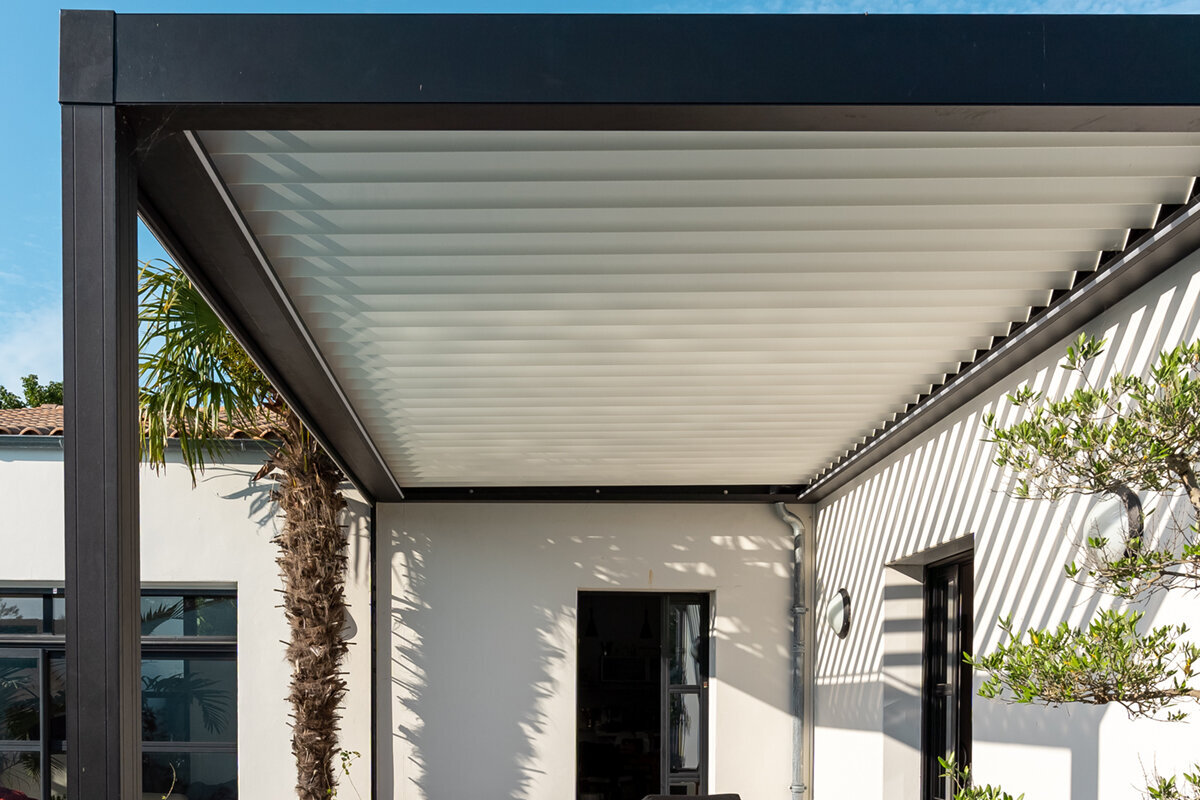
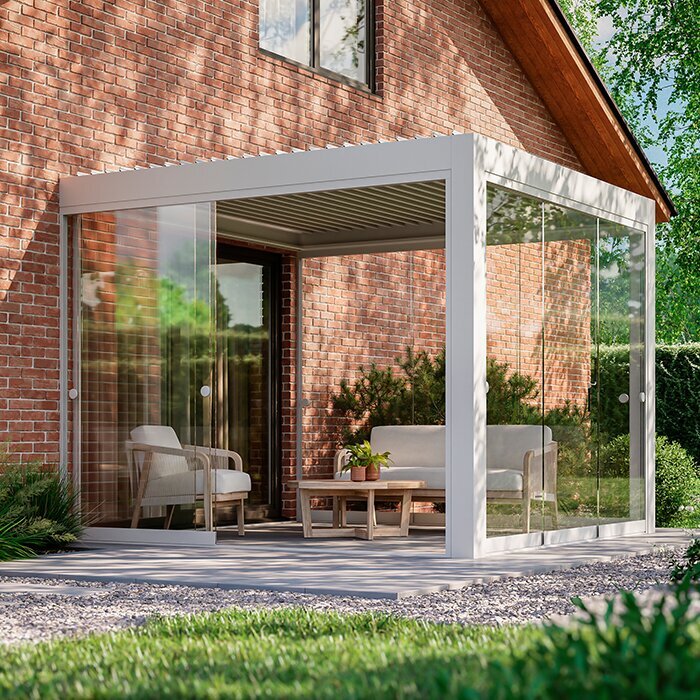
Plan ahead for outdoor living
The short answer on ordering time
Start choosing a pergola well before the period when you expect to use your terrace most. The order itself does not determine the schedule; decisions, site preparation, any approvals and installation planning all play a part. Planning these stages in sequence helps avoid seasonal pressure.
The time is right once measurements, intended use and the base are clearly established. Allow extra time for questions, specialist work and unsettled weather. Do not assume a fixed date before the specific order, design and local requirements have been checked.
01
Start early
Use quieter months to observe the terrace area, sun path and furnishings. This creates a sound basis for choosing the right size and orientation.
02
Assess the site first
Check the base, fall, drainage and access before deciding on details. Any preparatory work can then be properly included in the overall plan.
03
Plan for installation
Allow room for delivery, tools and safe working routes. Coordinate nearby work such as paving, electrical installation or planting.
When should you order a pergola? Start with the site and decide without pressure.
A terrace is often examined closely only once the first warm days arrive. For a pergola, that can be late if measurements still need checking, paving needs assessing or connections need discussion with tradespeople. Treat planning as its own project before the outdoor season. That leaves time to compare options rather than making decisions under seasonal pressure.
Begin with how you will use the space: will it mainly be for dining, lounging, afternoons with family or as a flexible outdoor room? That leads to questions about size, walkways, furniture and how open the space should feel. The existing terrace also matters: falls, edges, drainage and the load-bearing capacity of the base may affect the preparation required.
Place an order only once the key conditions are clear. These include reliable measurements, the chosen design, any options and a realistic installation sequence. For construction or local questions, ask your council and appropriate professionals early what needs checking for your property. This helps prevent later alterations.
01 · Timing
Why early planning creates more choice
Looking at an aluminium pergola early gives you time to make calm decisions. You can watch how the day moves across the terrace, position seating as a trial and decide which sides should remain open. On a larger area, a few centimetres in a pathway or furniture position can make a noticeable difference. Careful advance planning is more valuable than a quick order after the first sunny weekend.
Work backwards from when you hope to start using the area, without assuming a guaranteed delivery or installation date. List every dependency first: does a foundation need renewing, is an electrician needed, or is garden work planned? Once the sequence is clear, you can focus on product selection. An early consultation can identify unresolved measurements and preferred features in time.
Observe shade, wind and walking routes over several days; one sunny afternoon rarely gives a complete picture.
Set aside time in the project plan for questions and decisions instead of starting preparatory work only after choosing the product.
For a flexible covered outdoor space, consider bioclimatic aluminium pergolas if you want to include the design early in your terrace plans.
02 · Intended use
Read the terrace before ordering
The best pergola size does not come from free floor area alone. Table dimensions, chairs when pulled out, routes to the house and the garden view all matter. Mark the proposed outline with string or tape and test everyday use: where will food be served, where will children play, where will the barbecue stand? This simple exercise often shows whether an initially suitable area feels too tight or unnecessarily large.
Think about the seasons as well. In spring the terrace may be used differently in the morning than on long summer evenings, while in autumn a more sheltered seating area can become important. Set priorities first, whether dining, relaxing or entertaining. A classic design may suit you if you want a clearly defined cover and a straightforward look for your outdoor area.
Measure furniture with its circulation space, not only the tabletop or footprint of a single chair.
Record doors, windows, downpipes and garden paths in the survey so later details do not clash with the structure.
For a clean-lined terrace solution, discover classic aluminium pergolas whose design can be guided by your established use profile.
03 · Measuring
Prepare measurements and orientation accurately
A careful site measure is central to ordering with confidence. Record the width and depth of the intended area, along with level changes, edges and adjoining building elements. Measure at several points, as terraces and house walls are not always perfectly square. Photos from different perspectives are useful alongside a sketch. Also note where services, exterior lights, awnings or drainage components may be located.
Orientation has a major effect on how the space will feel. Notice when direct sun reaches the seating area and which direction rain or wind commonly comes from. Observation is not a technical assessment, but it helps with product advice and choosing options. Consider sightlines too: a pergola should frame the garden, not block important routes. If unsure, have the specific measurements professionally checked.
Draw in fixed obstacles and their distance from the proposed structure, including walls, steps, garden beds and side privacy screens.
Note heights at the house side and terrace edge; falls and unevenness belong on every clear site sketch.
When orientation and comfort requirements come together, compare bioclimatic louvred-roof pergolas before confirming dimensions and options.
04 · Base
Check the foundation and terrace in good time
A pergola needs a base suited to the structure, fixing method and local conditions. Visible pavers or decking alone do not reveal the build-up, load capacity or frost resistance underneath. Check what lies below the surface and whether existing areas have damage, voids or major unevenness. If in doubt, seek advice from a suitable professional before planning installation.
Water management also belongs at this stage. Rain should not remain at doors or run into garden beds because a new structure changes drainage. Consider falls, gutters, drains and the transitions between house and garden together. If foundation work or paving alterations are needed, complete them before later landscaping steps. This keeps the terrace accessible and avoids reopening the finished surface.
Establish the construction layers of your terrace rather than judging suitability only by an intact-looking surface.
Plan drainage and connection areas together with the base so water routes do not develop by chance.
For projects with a clear, fixed terrace layout, standard aluminium pergolas can be a suitable category for further planning.
05 · Options
Coordinate options before building work
Many choices may initially seem decorative, yet affect site preparation. Lighting, side elements or electrical components can influence cable routes and which work should be completed first. Make a three-part wish list: essential, desirable and decisions that can wait. This prevents you from locking in every possibility while the important basics are still unresolved.
Consider how the space will actually be used day to day. Someone who often uses the terrace in the evening will value lighting differently from someone who mainly eats outdoors at midday. Privacy, views of the garden and proximity to the kitchen also shape priorities. Discuss technical questions only using the specific product documents and installation instructions. General assumptions about connections or functions cannot replace project-specific clarification.
Discuss electrical requirements early with a licensed electrician, and do not leave cable routes until after the finished surface is in place.
Prioritise equipment by how often it will be used; this keeps the project clear and decisions easy to follow.
For flexible light and shading planning, bioclimatic terrace pergolas offer a useful starting point for comparing options.
06 · Organisation
Coordinate installation without bottlenecks
Good installation planning starts with a clear, safe work area. Check vehicle access, passageways, steps, garden gates and possible storage space. Sensitive plants, garden furniture and decorations should be moved from the work area or protected in good time. Where access is shared or sites are tight, advise everyone involved early. This helps coordinate daily life, trade appointments and installation.
Arrange work in a logical order: first the base and connections, then the structure, followed by paving details, furniture and planting. Avoid putting unnecessary stress on new planting areas or freshly laid surfaces. Where several trades are involved, responsibilities and handover points should be clear. A short written schedule prevents important questions from first arising on installation day.
Keep routes clear from access point to terrace and check pinch points that could affect material handling or safe work.
Nominate an on-site contact who can promptly answer questions about access, power, water or property boundaries.
If you prefer a simple, clearly planned cover, explore traditional aluminium pergolas in relation to your installation plan.
07 · Conditions
Include neighbours, council and insurance
Depending on the site, size, construction and proximity to boundaries, building or neighbour matters may be relevant. Do not rely on experiences from other streets or districts, as local assessment can differ. Ask your council early which documents or checks may be needed for your project. Easements, design requirements or body corporate rules may also need consideration.
It can be worthwhile to ask your insurer how a new structure may be treated under an existing policy. Only the insurer can explain the specific cover definitively. Keep records of measurements, location and the selected design for these discussions. Early clarification is not about expecting a particular outcome, but about keeping your planning realistic and complete.
Ask the relevant council about requirements for your specific property, rather than relying on general assumptions from acquaintances.
Keep sketches, product information and discussion notes organised; they make planning questions much easier to address.
To compare an adaptable design, explore bioclimatic pergola models as clearly distinct product options.
08 · Ready to order
Complete the purchase with clear decisions
Your project is ready to order when the key points are no longer estimates: the site and measurements are checked, the base has been assessed, the desired design is set and necessary preparation has a place in the sequence. Check the details against your sketch once more before completing the order. Pay particular attention to orientation, passageways and the position of adjacent elements that may be movable or fixed in everyday use.
Then detailed coordination begins. Record which work is complete and what still needs doing before installation. Read the order documents carefully and ask if anything is unclear. Plan the outdoor season with contingency rather than a rigid promise. The new space can then take shape step by step, without placing unnecessary pressure on garden life or daily routines.
Compare the final configuration with your measurements and furniture sketch before completing the order process.
Leave planting and decoration until after construction steps, so new areas are not damaged or blocked.
If you decide on a fixed design style, choose from classic pergola designs the option that suits your space and use.
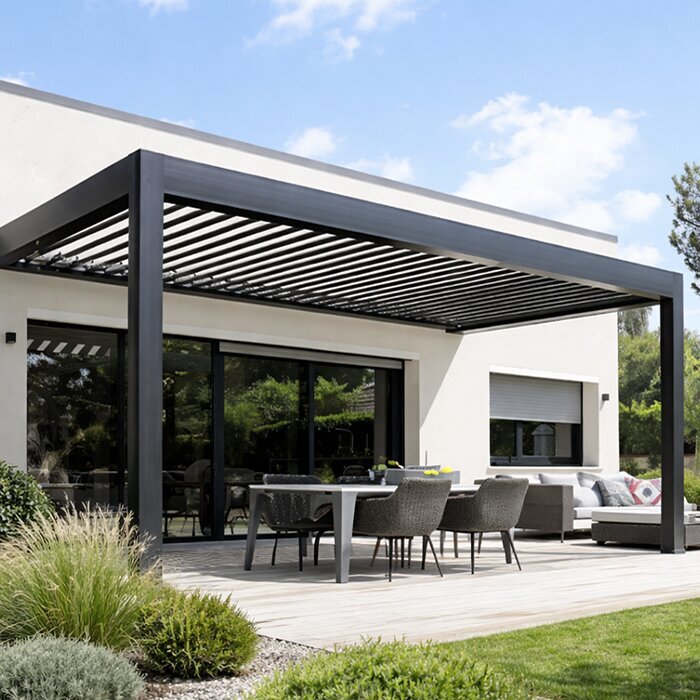
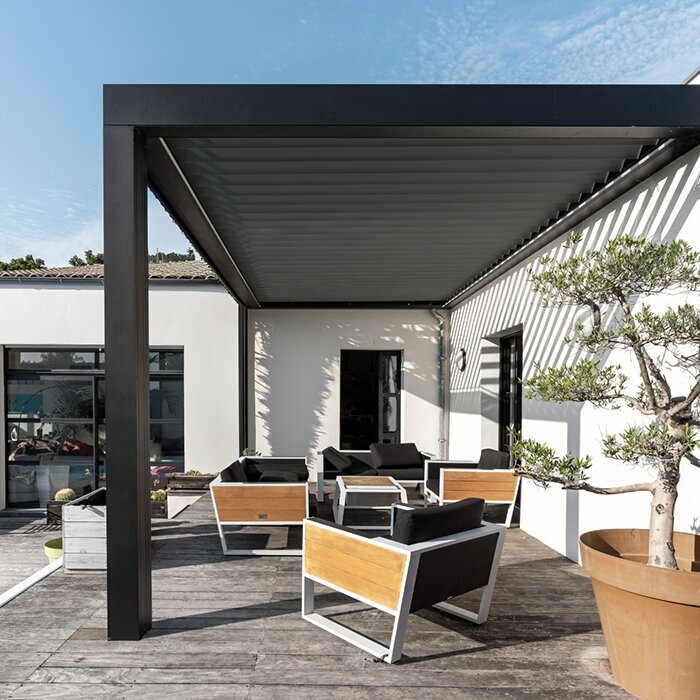
Which planning approach suits your project?
Choosing between a bioclimatic and a classic pergola is not a judgement of quality; it starts with how you want to use the space. This overview helps you gather questions for advice, measurement and site preparation in a structured way.
Use
Think early about flexible atmosphere and shading.
Define a clear cover and fixed use.
Measuring
Include operating areas and adjoining elements.
Mark the footprint, routes and furniture carefully.
Preparation
Coordinate equipment wishes before cable and foundation work.
Check the base and fixings especially early.
Advice
Discuss configuration around everyday situations.
Compare design, measurements and site conditions specifically.
Ready to order
Options, dimensions and connections clearly determined.
Design, site and preparatory work resolved.
Your route to outdoor season
A simple schedule keeps dependencies in view. The order may vary by property, but it should consider the base and local conditions before the final order.
01
Observe the terrace
Record sun, shade, views and daily routes. Trial furniture positions so the intended use is not planned only in theory.
02
Measure the site
Create a sketch with width, depth, heights, doors, steps and fixed obstacles. Add photos that clearly show the situation.
03
Assess the base
Clarify build-up, condition, drainage and possible fixing with suitable professionals. Schedule any required preparation before the structure.
04
Choose the design
Compare options against your priorities and decide on relevant equipment. Check which connections or preparations follow from those choices.
05
Coordinate completion
Clarify local questions, installation access and responsibilities. The order is sensibly prepared only when the details align.
Pergola buying checklist
Work through these points before ordering. Not every point requires action, but each can prevent important conditions becoming apparent too late.
01. Use established: dining, lounge, family space or several zones with clear priorities.
02. Terrace area measured several times and sketched with doors, steps, beds and fixed features.
03. Furniture, chair movement, walkways and garden access realistically included.
04. Sun path, wind direction and desired sightlines observed and noted on different days.
05. Base, fall and drainage checked; professional assessment planned if uncertain.
06. Desired features prioritised and possible electrical work discussed early with a licensed electrician.
07. Local, neighbour or shared-property conditions clarified with the relevant authorities or parties.
08. Installation area, access and sequence of preparatory work confirmed with everyone involved.
Frequently asked questions about ordering
When should I begin planning a pergola?
Begin once you know how you would like to use the terrace in the coming season. Ideally, assess the site before the first intensive weeks outdoors. This lets you coordinate measurements, the base, design and any specialist work without short-notice decision pressure.
Can I order a pergola before checking the base?
That is usually not the best sequence. The suitability of the base and planned fixing can affect preparatory work and the schedule. Establish first what surface you have and what may need changing. If uncertain, seek an assessment from a suitable professional.
What measurements do I need for initial advice?
Width, depth and height measurements for the intended area, plus photos and a simple sketch, are helpful. Note doors, windows, steps, downpipes, boundaries and fixed features. For the final design, carefully check all measurements again against the relevant requirements.
Should I clarify building requirements before ordering?
That depends on the specific property and project. Size, location, construction and local rules can all matter. Ask your council early what assessment may be sensible or required in your case. Building-consent exemptions do not necessarily resolve resource-consent or district-plan requirements, and a roofed pergola should not be assumed to qualify as an unroofed-pergola exemption.
When should electrical connections be planned?
As soon as lighting or other electrical components matter to you. Cable routes and connection points are often easier to prepare before paving is finished or areas are planted. Have electrical work planned and completed by a licensed electrician, and coordinate the details with the selected design.
How can I avoid stress before outdoor season?
Divide the project into clear stages: define use, measure the site, check the base, clarify conditions, choose the design and prepare installation. Expect some coordination rather than a rigid sequence. Allowing time for questions and preparatory work makes the plan far more resilient.
Discover pergola options
Prepare calmly for outdoor living
When to order a pergola depends on how far your planning has progressed: once use, measurements, base and sequence align, a good idea becomes a well-prepared terrace project. Starting early creates room for considered choices and helps avoid important work falling in the period when you want to use the space.
Take time for a sketch, site assessment and discussions with relevant authorities or professionals. You can then select the right aluminium pergola purposefully and develop your terrace in a clear sequence. Bloomcabin helps you view product options as part of well-considered outdoor-space planning.
Compare designs against your terrace measurements, intended use and prepared site questions.
