
Where Should You Put a Hot Tub in Your Garden?
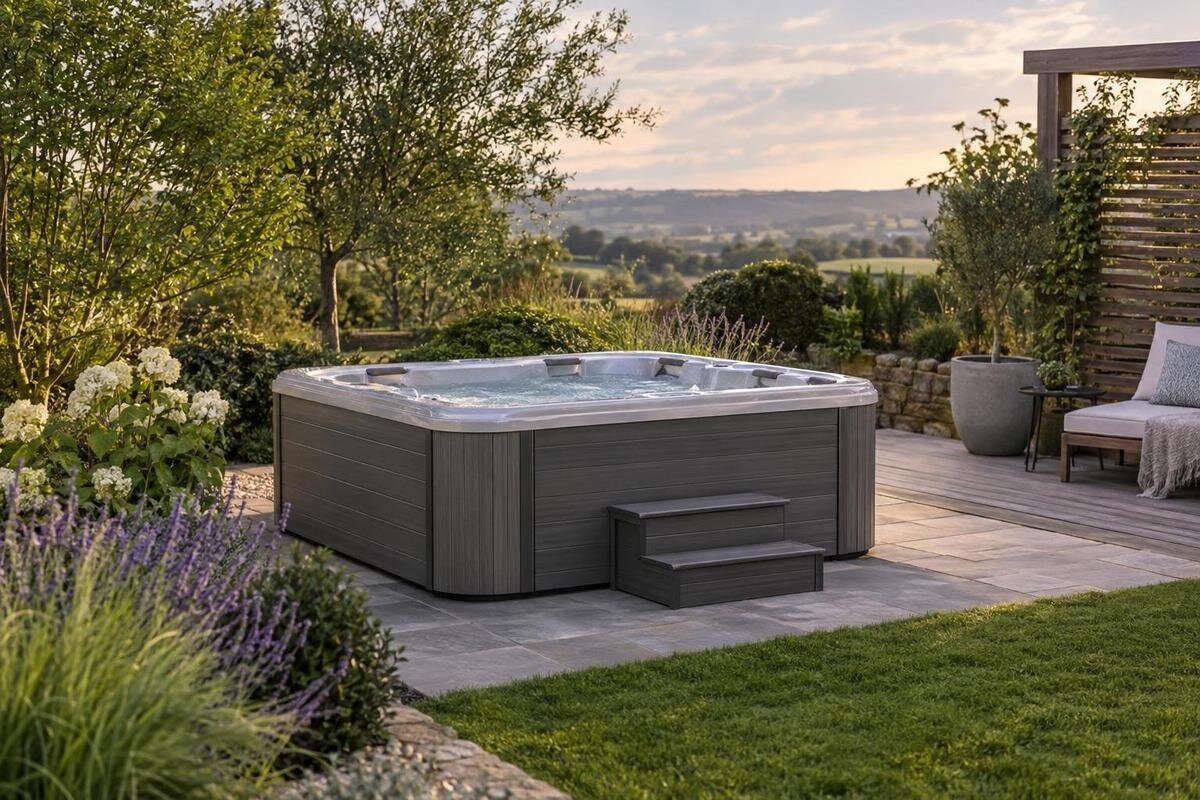
Garden hot tub guide
Choosing a place for an outdoor hot tub is a trade-off, not a search for one perfect corner. A sunny outlook may come with less privacy; a sheltered spot may feel enclosed or sit further from the house. Record how you expect to use the tub, then compare a few realistic garden positions in different weather and at different times of day. Once you have a location shortlist, check each model’s current New Zealand dimensions and manufacturer siting guidance against those conditions before committing to a purchase.
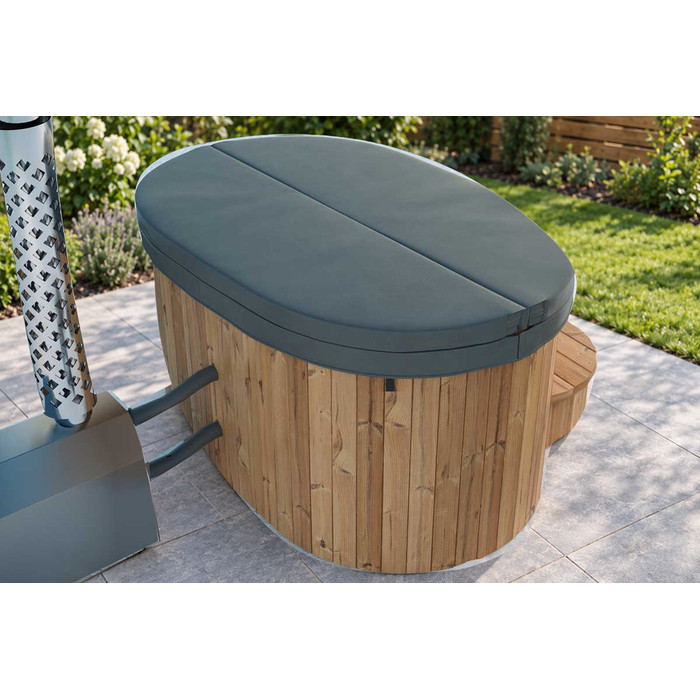
Begin with how you expect to use the hot tub
Picture an ordinary visit rather than an ideal afternoon. Will you use the hot tub mainly after work, at weekends, in daylight or late in the evening? Will people usually step outside from a back door, or approach across the garden? Those details change how much weight to give to shelter, privacy, a view and the length of the walk. A bright corner may look appealing at midday but be awkward for a short evening visit; a sheltered position may matter more if you expect to use it in breezier weather. The useful question is which spot fits your household’s regular routine.
Write down your three most important qualities and any clear deal-breakers before comparing places. A short, straightforward route and some privacy might matter more to you than full sun, while blocking a main doorway could rule out a spot. Separate what you need for every visit from what would simply be pleasant occasionally. If several people will use the tub, ask each person which inconvenience would put them off using it regularly. Keep those priorities visible as you walk around, so an attractive outlook does not distract from a daily inconvenience. If you are considering Bloomcabin Hot Tub Cove 2, record what you want from the location before assessing that model against it. This gives you a consistent basis for comparing spots, even when each has a different attraction.
Select two or three realistic garden spots
Walk through the garden and mark two or three areas worth considering, rather than trying to redesign the whole space. They do not all need to look equally appealing: one might be nearer the house, another more private, and a third more open to the outlook. Note fixed features such as doors, paths, fences, trees and existing seating, as well as the parts of the garden people use every day. This first pass is about finding meaningful alternatives. It does not establish that any location is technically suitable for a hot tub.
Use a rough sketch or take notes on your phone, giving each possible position a short description. Record what seems promising and what you still need to check: for example, whether the area feels exposed, how visible it is from nearby windows, or whether it interrupts a regular route. Mark a reference point, such as a path junction or fence corner, so you can return to the same position on later visits. Take photographs from that point towards the house and the garden, rather than relying on a single flattering view. These notes will help you explain the options when asking about Bloomcabin Hot Tub Haven 6. Keep the locations provisional until you can compare them with the model’s actual dimensions and siting guidance. A clear record of two workable possibilities is more useful than a detailed plan built around an unconfirmed fit.
Observe sunlight at different times of day
Visit each possible spot in the morning, around the middle of the day and later in the afternoon or evening, if you can. Note the time, date and general weather, and look at what is casting shade: the house, a fence, a tree or another feature. One observation can be misleading, particularly if clouds or seasonal foliage change the amount of sun reaching the garden. A simple record of when each area is sunny or shaded is more useful than a general impression that it is a bright corner.
There is no universal rule that a hot tub needs the sunniest position. You may prefer some shade, or value a sunnier outlook at the times you expect to use it; either way, compare the site with your routine. Distinguish sunlight reaching the proposed tub position from sunlight on the garden beyond it. You might enjoy looking towards a bright part of the garden while sitting in shade, so record both rather than giving the whole area one label. If your likely visiting time falls between two observations, return then instead of assuming the conditions will be similar. Once you have actual product dimensions, use them when judging how the tub could sit within a sunlit area. Check the current specifications for Bloomcabin Hot Tub Fjord 8 before marking out its footprint.
Check wind exposure and existing shelter
Look at each spot on both calm and breezier days, and pay attention to how the wind moves around the house and garden boundaries. Leaves, branches or other familiar signs can help you notice whether one area is regularly more exposed, or whether wind seems to funnel around a corner. A fence, wall or hedge may offer shelter from one direction while leaving another side open. Record what you observe rather than assuming that a position feels protected because it is close to a building or boundary.
Think about the trade-off between shelter and openness. An existing barrier may make a spot feel more private, but it can also narrow the outlook or make the area feel enclosed. Consider the conditions at the times you are most likely to use the tub, and note any seasonal uncertainty rather than planning a new screen or garden structure at this stage. For any option, including Bloomcabin Hot Tub Aurora 10, verify the manufacturer’s siting guidance before assuming a sheltered or exposed position is acceptable.
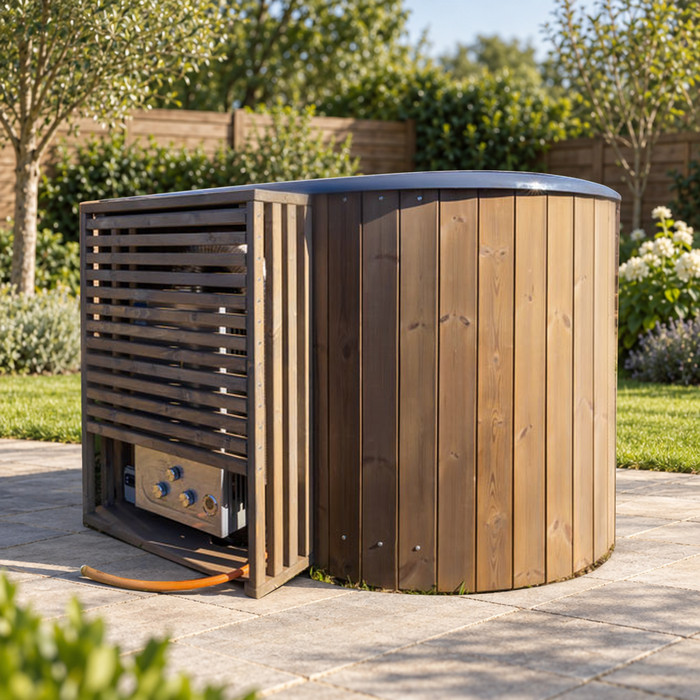
Balance privacy with the outlook
Check sightlines from the position where you expect to sit, not only from the path beside it. A garden chair can give you a rough idea of the view and your sense of privacy, although it will not reproduce the exact position in a particular hot tub. Look towards neighbouring windows, shared or visible paths, gaps in fences and your own house. Consider the view in both directions: whether you feel overlooked, and whether the outlook is one you would enjoy during a typical visit.
Privacy does not have to mean blocking every view. A spot with some screening may feel comfortable while still looking out across the garden; another may offer a wide outlook but feel exposed. Describe the particular sightline that concerns you rather than labelling the whole location private or overlooked. Is it a nearby window, a gap beside a hedge or people passing along a path? Then consider whether another position within the same area would change that view without losing the outlook you like. Existing foliage can change with the seasons, so note whether screening depends on leaves that are not present all year. Use these notes when comparing possible positions for the Cove 2 hot tub: describe both what you want to see and which sightlines you want to avoid. This makes privacy a specific location criterion rather than a reason to enclose the entire area.
Consider the everyday route from the house
Walk the route you would actually take from the door, rather than judging a spot by how close it looks on a plan. Notice gates, steps, changes in surface, doors that need to open and places where the path feels narrow or awkward. Try the walk at the time you expect to use the hot tub and consider what you would carry, such as towels or a robe. If practical, look again after rain: a route that is easy in dry weather may feel different when the ground is wet or muddy.
A very direct route is not automatically the most convenient if it crosses a busy part of the garden or passes through a space that others use. Consider whether household members would find the walk straightforward, and whether it remains easy to follow when it is getting dark. Walk back towards the house as well as out to the proposed spot: the return journey may make an awkward gate or detour more noticeable. Compare the routes as they are now, then note any change that would be necessary rather than assuming it will be simple to arrange. When considering the Haven 6 hot tub, record the preferred approach to each candidate site as well as the position itself. Keep this everyday walk separate from delivery access and servicing requirements; a pleasant route from the back door does not settle those checks.
Keep the location compatible with garden life
Think about how each position would affect the garden you already use. Would it interrupt a regular path, make the lawn harder to reach, take over existing seating space or sit directly in the view from a room where you spend time? A location can score well for sun and privacy yet still be inconvenient if it conflicts with the way people move through the garden. Consider routine tasks such as opening doors, using the patio or tending nearby plants, without turning the choice into a full redesign.
Once you have confirmed a model’s actual dimensions, a temporary outline can help you judge its visual effect in the garden. Look at it from the house, existing seating and the paths you use most, rather than only standing beside it. Ask anyone who shares the garden to look too, especially if the proposed position would change a view or a frequently used area. Compare the outline with the fixed features on your sketch and note any conflict you had not noticed when the location was just a point on a plan. Treat this as a way to picture the footprint, not proof that the base, surrounding clearances or installation arrangements are suitable. Before dimensions are known, a rough point on a sketch is useful for comparing views, but not for deciding whether the tub fits.
Allow for seasonal changes
The garden may feel different from one season to another. Tree canopies and hedges can change the amount of shade and screening; bare branches may open a view that foliage normally obscures. Sunlight and wind exposure can also vary as the year changes. Think about whether your hot tub routine is likely to shift between summer and winter, rather than basing the decision only on the weather when you first inspect the spots. A position that suits a summer afternoon may not be the one you prefer for a darker or breezier evening.
If you cannot observe a location in every season, label the missing information as unknown instead of treating today’s conditions as permanent. Note what you have seen, what you are inferring and what you would need to check again. Existing garden photographs may help you recall where foliage or shade differed, but distinguish those clues from observations made at the proposed position. Ask yourself whether a seasonal change would merely alter the view or undermine one of your main priorities, such as privacy during your usual visiting time. If you are comparing locations for the Fjord 8 hot tub, use the same seasonal questions for each one rather than judging one spot on a summer visit and another on a winter evening. Keep any important uncertainty visible in the final comparison so it does not disappear behind a favourable first impression.
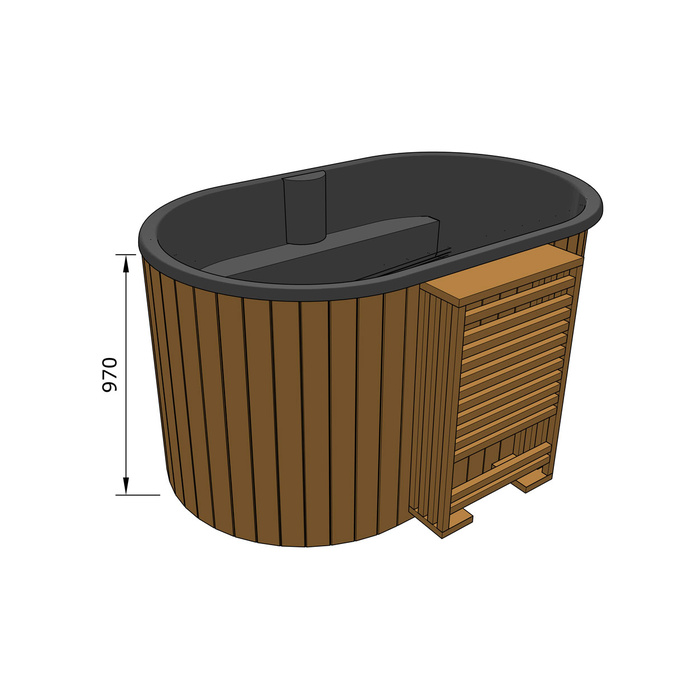
Check the requirements of the specific model
Once you have a location shortlist, compare it with the current New Zealand specifications and manufacturer siting guidance for each model under consideration. Check the actual overall dimensions and any stated servicing access, heating or utility constraints; do not assume these details are the same across models. A catalogue name alone does not establish dimensions, seating, capacity or heater power. For Aurora 10 product details, use only information confirmed for that product, and ask the supplier or manufacturer to clarify anything that is not stated.
Then ask how each confirmed requirement affects your preferred garden spots. A location that looks ideal may need to be reconsidered if it conflicts with a documented model requirement. Keep the other site checks brief here: the base, surrounding clearances, deck suitability, delivery route, utility connections, drainage and any consent questions need their own current guidance and, where appropriate, qualified local advice. Those topics are not settled by a general placement article. Do not fill gaps in the information by borrowing another model’s requirements or guessing from a product name.
Compare the options before choosing a location
Put each possible spot in a simple comparison table, with space for privacy, outlook, sunlight, wind and shelter, the route from the house, and any effect on everyday garden use. Mark whether each note is something you observed or something still to check. Use a clear status such as suitable, compromise or unknown rather than relying only on a total score. Beside each compromise, write what it would mean in practice: a longer walk on every visit, for example, or less privacy at a particular time. That makes the comparison more useful than a row of unexplained ticks. A high overall rating can hide a deal-breaker, so identify the conditions you must have before ranking preferences such as a particular view or more sun. Keep technical suitability separate from comfort preferences; an appealing outlook cannot offset a conflict with a confirmed model requirement.
Remove any option that conflicts with a confirmed requirement, then compare the remaining trade-offs against the routine you described at the outset. It can help to keep one preferred location and one backup while you assess which model fits their constraints. If none remains workable once actual specifications and siting guidance are considered, revisit the location shortlist instead of forcing a decision based on an assumed footprint. That order—shortlist the site, then check the model—keeps the choice grounded in both the garden and the product.
Frequently asked questions
Is the sunniest part of the garden the best place for a hot tub?
Not necessarily. Sun is one comfort preference, but shade, wind shelter, privacy and the route from your house can matter more, depending on when you plan to use it. Record the conditions first, then choose the balance that suits your routine.
Should a hot tub be as close to the house as possible?
A short route can be convenient, especially if you expect to use the tub often. However, the nearest spot may block a doorway, sit in a busy part of the garden or have little privacy. Consider the route and the surroundings together rather than aiming for a particular distance.
Will a fence or hedge provide enough privacy and shelter?
It may screen some sightlines or reduce exposure from one direction, but neither effect should be assumed for every view or weather condition. Inspect from the intended position and note seasonal changes in foliage. Keep the outlook and any sense of enclosure in the balance.
Should I choose a hot tub model before settling on a garden location?
Shortlist plausible locations first, then check each model’s current dimensions and manufacturer siting guidance against them. You may need to revisit the shortlist once access or servicing requirements are clear. Don’t assume a model name or product image proves that it will fit.
How many possible locations should I compare?
Two or three realistic options are often enough to reveal the main trade-offs, but there is no required number. If only one area seems possible, observe it at different times, assess its route and sightlines, and verify model requirements before treating it as the final choice.
A suitable garden location balances the things that matter most to your household without relying on a single sunny-day impression. Look at each option for privacy, outlook, wind, shelter and the route from the house; note what changes across the seasons and what remains uncertain. Then use the shortlisted locations to assess actual model requirements. The best choice may involve a deliberate compromise, such as favouring an easier route over a wider view. What matters is that the trade-off is clear and the final location has been checked against the model’s confirmed information.
