
Why Timber Garden Sheds Need Space for Natural Movement
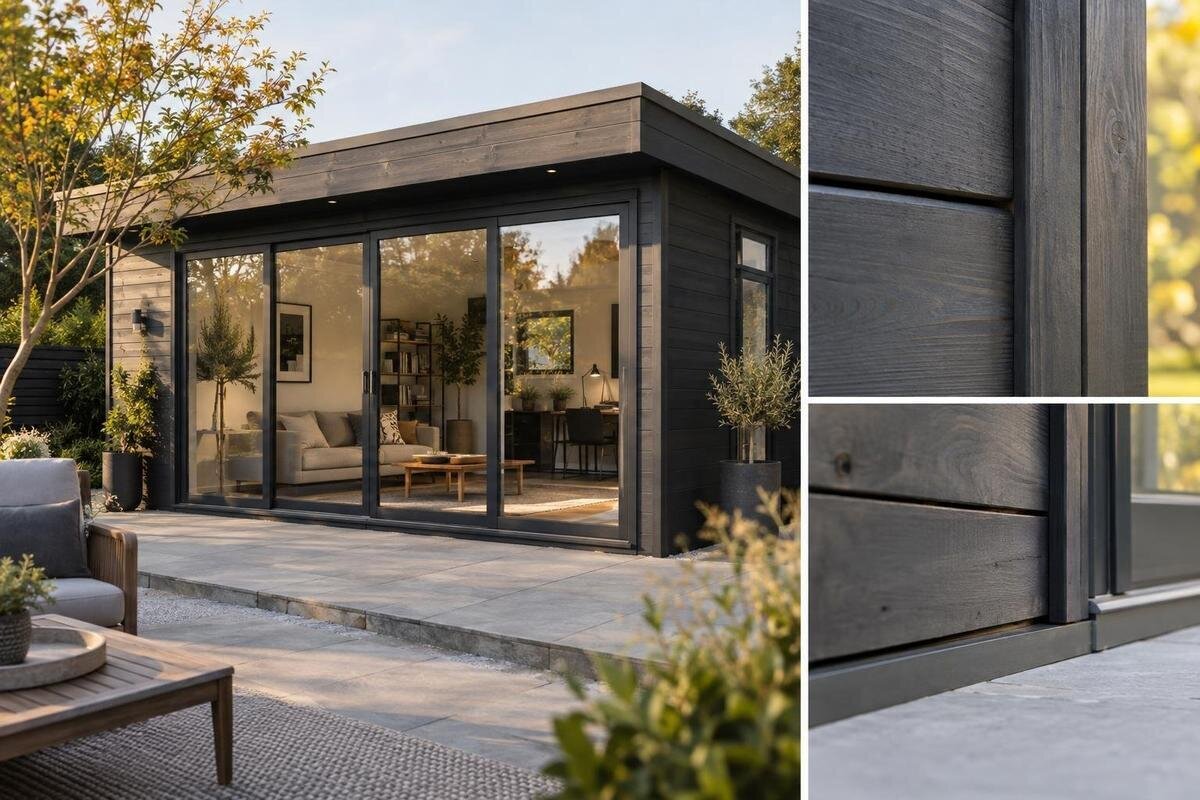
Garden shed planning
Timber does not keep exactly the same dimensions in every weather. As it takes up or releases moisture, it can swell or shrink, with the change varying by board, grain direction and exposure. A timber garden shed therefore needs movement anticipated in its joints, fixings and fitted parts; that is different from leaving a large, arbitrary gap around the whole structure. For a buyer, the practical task is to understand what the model’s instructions provide for, where the shed will sit, and how its doors, finishes and upkeep are meant to be handled. The guidance below helps you ask useful questions before ordering and recognise ordinary movement without mistaking every change for a defect.
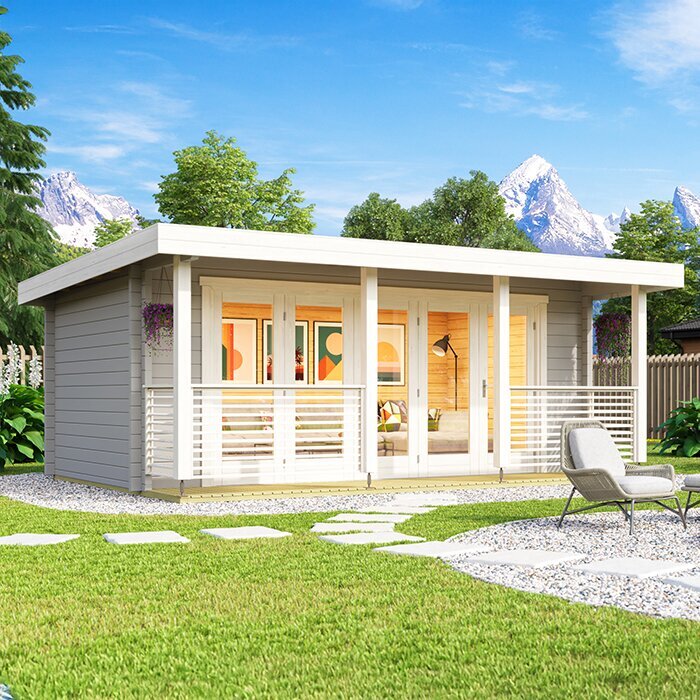
How timber changes with moisture
Timber is hygroscopic: it exchanges moisture with the surrounding air and can also get wet from rain or splash. As its moisture content rises, wood generally swells; as it falls, wood shrinks. Temperature matters too, partly because warmth, sun and airflow can change how quickly a surface dries. Outdoor conditions rarely affect every side of a shed in exactly the same way, so movement is not necessarily uniform from board to board. These changes are part of timber’s response to its environment, not on their own proof that a shed is poorly made. It is useful to distinguish dimensional change from decay, physical damage or movement of the base, which need separate assessment.
The amount and direction of movement depend on factors such as timber species, grain direction, board dimensions, starting moisture and how firmly pieces are restrained. Timber generally moves more across the grain than along its length, so board width and joined edges matter to the design. A whole shed does not simply swell as one solid block: individual boards, frames, trim and panels can respond differently. Some pieces may move visibly while others change little, so one gap does not show that the whole building has expanded evenly. Treat a model name as identification only; use stated construction information on the Verdana 1 garden shed page and ask about any movement allowance the listing does not explain.
Where movement affects joints and fittings
Movement tends to matter most where parts meet or must stay aligned: wall boards, corners, panel joints, door or window frames, and fixed trims. As timber changes size, a gap can become slightly wider or narrower, or a joint can look different across seasons. Some changes are hard to see; others may be disguised by overlapping pieces. A visible change alone does not tell you whether it falls within the model’s intended range. Some joint profiles deliberately overlap or leave a specified clearance, so appearance cannot establish the tolerance. Check the construction guide rather than judging a timber shed against a perfectly static material.
Pay particular attention to parts with a job to do: a door must clear its frame and operate as designed; a window needs the clearances described for its operation; wall junctions must remain assembled as specified. Timber movement is only one possible reason for a fitting to bind or a joint to open; assembly, damage or movement in the supporting surface can also be involved. When comparing listings such as the Verdana 2 garden shed page, rely on written details and any supplied drawings. Do not infer joint design or tolerance from a photograph, and compare like-for-like information across candidates rather than assuming every timber shed uses the same construction.
The difference between movement and site clearance
Natural movement does not usually mean leaving a wide empty strip around the shed or leaving it unattached at its base. The frame and base need to be assembled and restrained in the way specified for that model. Do not loosen, omit or alter fixings in an attempt to let timber move; that can create a different problem and may undermine the intended assembly. Movement allowance belongs in suitable detailing and clearances within the construction, not in an improvised gap at ground level. This distinction avoids oversizing a site plan while preserving the space needed to use and maintain the shed.
Site clearance is still important for separate reasons: room to assemble the shed, open its doors, reach surfaces for inspection and maintenance, and keep it clear of obstacles that could rub or trap debris. The amount depends on the exact model, its access points, the instructions and your site, not on a universal timber-movement figure. Draw the shed footprint and working space separately. If a listing distinguishes building dimensions from overall dimensions, use the measurement identified in the manufacturer’s siting information. For the Durano garden shed listing, use only external dimensions and clearance information actually provided; ask before choosing a position if anything is missing.
Check assembly and care instructions before ordering
Before ordering, find out how the maker expects the timber components to be assembled and supported. Instructions may explain joints, fixings, base preparation, handling, finishing and maintenance; these details form part of the allowance for movement. Follow the model-specific method rather than adding screws, enlarging holes, gluing joints or trimming pieces on a general assumption that timber needs more freedom. Altering a connection can affect fit or weather protection in ways that are not obvious. If a design includes a stated expansion gap or an overlapping detail, preserve it as directed; closing or filling it may defeat its purpose.
Check that the documents apply to the exact model and option you intend to buy. Look for measured dimensions, assembly drawings, maintenance guidance and any note about gaps or seasonal adjustment. Confirm what is supplied and what preparation is expected from you; those points affect whether you can follow the intended construction. For a candidate such as the Veltor 1 garden shed, check where model-specific assembly and care information is available. If movement allowances are not stated, ask a specific question before purchase and keep the answer with the instructions. A question about a joint shown in a drawing is more useful than asking for a broad guarantee that timber will never move.

Allow for doors and other moving parts
Doors and windows are where movement can become an everyday nuisance because their frames and leaves have to stay in working alignment. A slight change in the surrounding timber can affect clearance, especially if a frame is already out of square or a moving part has very little room. That does not mean seasonal change will always cause a sticking door, or that all sticking is caused by timber. Assembly alignment also matters: movement allowance and a correctly assembled frame work together. During selection, look for the product’s stated opening arrangement and any installation or adjustment notes; a photo cannot confirm the clearance a particular component needs.
Make room on the site plan for the door or window travel shown in the chosen model’s information, and avoid placing permanent items where they would block it. Check its full opening path rather than only the space needed when it is shut. After assembly, operate fittings gently and compare any problem with the instructions before adjusting them. Planing timber, shifting hinges or forcing a latch can hide the cause or worsen the fit; contact the seller if the directions do not explain an adjustment. For the Orello garden shed listing, use stated drawings or options, if supplied, rather than guessing component clearances from its name or a product image.
How finishes and moisture exposure affect upkeep
Finishes affect exposure but do not make timber dimensionally fixed. A coating recommended for the product can limit direct wetting and may slow how quickly moisture moves in or out, yet it cannot remove all expansion and contraction. The right coating and maintenance interval depend on the supplied guidance and chosen finish; do not assume every paint, stain or sealant is compatible. Ask whether the shed arrives treated, what additional work is required, and whether there is special guidance for cut edges or touch-ups. If finishing must happen before or after assembly, confirm the timing and the surfaces to treat from the instructions. Those are product-care questions, not a reason to add an unapproved layer over a joint.
Keep the location and routine care in view too. Repeated splashing, water collecting around the base or vegetation blocking access can make inspection and drying harder; the maker’s site guidance should determine what to avoid. Once installed, look over the finish and exposed joints as part of ordinary upkeep, and use the specified repair approach if attention is needed. Do not seal a joint that is intended to drain or move unless the instructions call for it. If a listing does not say how its finish should be maintained, request the information rather than assuming it needs no care. Check any written finish and maintenance details for the Modano garden shed listing without inferring them from its name.
Check the conditions at the proposed site
Conditions can differ between two spots in the same garden. A wall in direct sun may heat and dry differently from one in shade; a side exposed to driving rain, or close to plants and a fence, may stay damp longer or be harder to inspect. Wind and shelter can affect drying as well. These are influences to consider, not a formula for predicting an exact amount of movement. Visit the proposed position at different times and after wet weather, noting where water runs, where the sun reaches and whether access will stay clear. A simple note of these patterns is more useful than assuming the whole site has uniform conditions.
Do not assume that one compass direction, a fully sheltered position or a sunny corner is best for every timber garden shed. The construction, finish and upkeep all matter, and conditions can change as nearby plants grow or fences are added. If a spot stays unusually wet, is highly exposed or is difficult to maintain, ask whether the chosen model’s guidance covers it; if the concern relates to the base or site, seek suitable local professional advice. A different position, model or care routine may be appropriate, but do not settle on one by applying a universal formula. Treat the timber garden shed M listing as a candidate to compare, not evidence that a particular site condition suits it.
Compare published details before choosing
Product-page comparisons are most useful when you separate confirmed facts from assumptions. Record each model’s published external dimensions, the material and construction details actually stated, confirmed door and window layout, supplied finish, assembly documents and care requirements. Check whether figures describe the building, base or another measurement; an internal floor area does not tell you the outside space the shed occupies. Words such as solid, premium or spacious, or a size-like letter in a model name, do not by themselves specify board layout, movement allowance or exact dimensions. Ask for missing details in writing, especially when listings use different terms for similar components.
Keep a short comparison record of what the seller confirms, what remains unclear and what matters to your site. Useful movement questions include how joints are designed, how the product should be fixed and maintained, and whether seasonal checks or adjustments are specified. Also verify the exact version, because options can affect dimensions or components. Assess the wooden garden shed S listing from its published measurements and construction details; do not assume that S means a particular footprint. Keep a copy of the exact listing and any answer you receive, so you are not relying later on a generic description that may refer to another model.
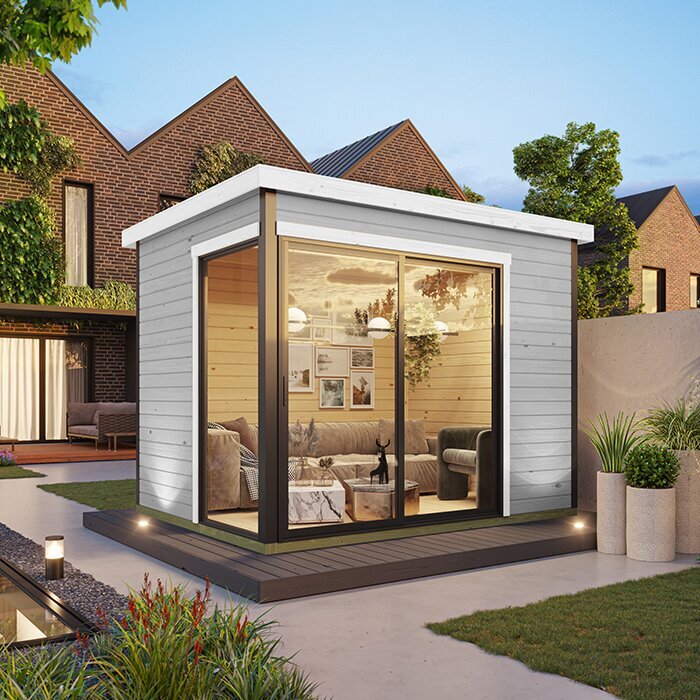
Plan for delivery and storage
Ordering also means planning the time between delivery and assembly. If the shed arrives as timber components or assembly cannot happen straight away, ask the seller how those parts should be stored and whether an acclimatisation period is specified. Follow advice for the exact product rather than a blanket rule: handling can depend on how the timber is supplied and the conditions on site. If wet weather or limited sheltered space could affect timing, raise it before ordering so you know what arrangements will be needed. Check the delivery format and any package dimensions if access through a gate or along a narrow path could be difficult; do not assume how many packages will arrive.
When the order arrives, check the parts and documents against the supplied packing information, and record damage or missing items through the seller’s stated process before making changes. Natural variation in timber does not mean every defect is acceptable, while an unexpected gap or warped piece should not automatically be dismissed as movement. Keep the instructions, purchase reference and any agreed storage advice together. Photograph concerns clearly and contact the supplier before trimming, replacing or modifying a component. That gives both sides a model-specific basis for discussing whether the issue is expected variation, damage or a mismatch with the instructions.
Monitor changes during ownership
After the shed is in use, expect timber’s appearance and the way small joints look to respond to conditions. A useful routine is to observe before adjusting: note changes in door operation, gaps, finish or exposed connections, then compare them with the care instructions. A seasonal note can help show whether a variation is temporary or persists, but there is no universal inspection calendar or adjustment procedure for every model. Follow any interval the supplier gives, and do not tighten or alter fittings simply because a part looks different. If a change spreads or alignment continues to worsen, check the assembly information rather than guessing at a cause.
Ask the supplier when a part will not fit as described, a door or window will not operate despite correct assembly, a gap exceeds a stated tolerance, or water enters at a place the instructions identify as weather-protected. Provide the model, purchase details, photographs and a concise account of what changed; avoid dismantling or forcing the affected area until you have guidance. If the concern appears related to the base or site rather than a timber component, a suitable building professional can assess that separate issue. A prompt question preserves a clearer picture of the original condition. The distinction is between ordinary material movement and a problem needing model-specific attention.
Frequently asked questions
Does timber movement mean my garden shed is faulty?
No. Small dimensional changes as timber gains or loses moisture are expected. Whether a particular gap, split or change in fit is acceptable depends on the model, its construction and the instructions. Compare the issue with the supplied guidance and ask the seller about changes beyond any stated limits; do not assume every defect is natural movement.
Do I need to leave an extra gap all around a timber shed?
There is no universal movement gap to add around the whole building. Allow for the clearances needed for assembly, opening doors, access and maintenance, and follow the model’s siting instructions. Timber movement is generally accommodated through the construction and its joints, not by omitting fixings or leaving the shed unattached. Confirm requirements for the exact model.
Will paint or stain stop timber from moving?
No finish makes timber completely dimensionally stable. A product-approved coating may help limit direct wetting or slow moisture exchange, but timber still responds to conditions. Follow the finish and maintenance advice for the model rather than applying an unapproved product or assuming extra coats remove the need for movement allowance.
Should I let the timber acclimatise before assembly?
Only if the supplier’s instructions specify it, and then follow the stated method and timing. Requirements can differ depending on how the product is supplied and the conditions on site. Ask before ordering if delivery timing or storage could delay assembly; do not leave components exposed based on a general rule.
What should I do if a door sticks or a joint opens?
Check the assembly and care instructions before assuming timber movement is the cause. Avoid forcing the fitting, planing timber or moving hinges until you have model-specific guidance. Take clear photos and contact the seller if the instructions do not explain the issue or it persists.
Natural movement is a normal feature of timber, not something a buyer can eliminate by leaving extra space around the shed. The useful allowance is the one built into the model’s joints and fit, paired with correct assembly and care. Compare dimensions, construction, instructions, openings and finish information, and separate those details from the practical space needed on your site. Once the shed is in use, judge changes against the guidance for its exact model rather than improvising repairs. That makes it easier to plan confidently and recognise when a question needs a specific answer.
