
Can You Add Screens or Lighting to a Pergola Later?
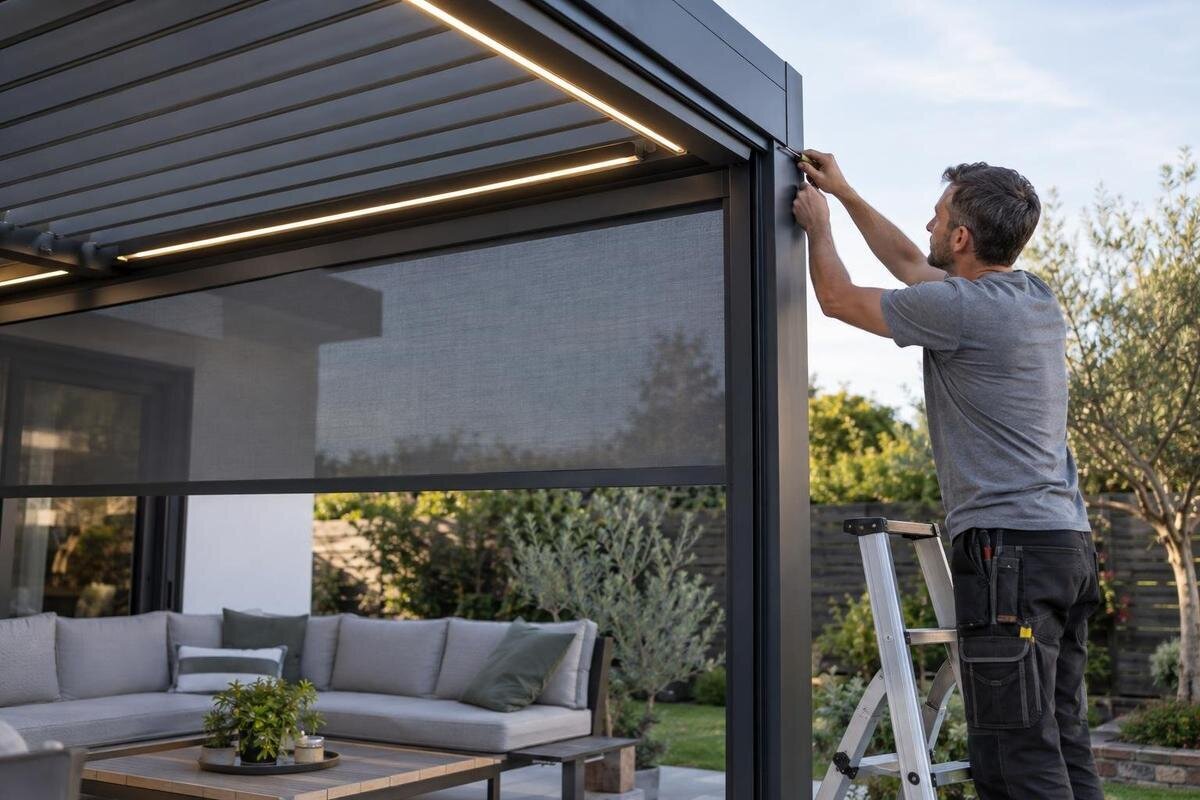
Pergola upgrades
Yes, sometimes, but screens and lighting are not automatically compatible with an existing pergola. The answer depends on the exact model and revision, how the frame was installed, available attachment points, component availability, operating clearances, and, for lighting, a suitable power and control plan. A visual match or a generic accessory description is not enough. Before buying parts or modifying the structure, identify your unit, gather its documentation, and request a model-specific assessment. This checklist covers what to collect and what to settle for each type of upgrade.

A retrofit depends on the exact pergola version
An existing pergola can sometimes accept screens, lighting, or both, but compatibility depends on its exact model and revision, not simply on how sturdy it looks. A screen needs suitable attachment points and an unobstructed path as it opens or retracts; lighting needs an approved mounting location, a workable power route, compatible controls, and access for service. The requirements may meet at the frame, but they are not interchangeable: approval for one accessory does not establish approval for the other. A catalog photo, a neighbor’s installation, or a generic kit label is not a fit specification.
Define what you want the upgrade to do before requesting a recommendation. Note which sides need a screen, whether you are considering manual or powered operation, and where you want light; those choices affect which components and controls must be checked. Ask for a complete, model-specific accessory combination, including its mounting hardware and instructions. Do not assume that a screen kit sold for a similar opening will fit your pergola: dimensions alone do not confirm the attachment, corner details, or operating clearance. Ask separately whether the proposed screen and lights can coexist without obstructing one another or any moving parts.
Identify the model and collect its documentation
Write down the manufacturer, exact model name, serial or product ID if present, order number, purchase date, installation date, and any changes made after assembly. Keep the invoice, installer’s handoff documents, packing label, and correspondence that mentions options; photograph an identification label only if it is already safely accessible. A broad family name may not identify a production revision or accessory package. If your paperwork says Bloomcabin Pergola, compare it with the Bloomcabin Pergola model listing to confirm the catalog name, then use the serial number and original records for the actual retrofit inquiry.
Find the manual and drawings supplied for that exact version, along with any accessory list or parts schedule. Check the installed configuration against them: note whether the pergola is freestanding or attached to a building, its orientation, the sides that are open, and any posts, beams, roof elements, or controls that have been changed or moved. Do not assume that a manual for a similarly named model applies. If documents are missing, ask support for the version that matches your order record and send enough information to distinguish it from later revisions. Generic assembly videos rarely answer a retrofit question.
Confirm the frame and attachment points
Ask which exact rail, bracket, adapter, or mounting point is specified for the proposed screen or light, and how it attaches to this model. A matching color or a screw that appears to fit does not confirm that the profile, fastener, or support is approved. Request the relevant assembly drawing, parts references, and written confirmation of permitted attachment locations for your model revision. Do not drill exploratory holes, clamp on an improvised bracket, or hang a test screen to judge the fit; these actions can alter the frame and complicate an approved assessment. Guidance may call for a professional to inspect a connection that is not visible from outside.
A qualified pergola installer or the manufacturer should determine whether the frame and its existing supports are suitable for the exact accessory, not just whether it can be fastened there. Disclose any movement, previous modification, or visible damage before compatibility is decided. For a unit identified as the Bloomcabin Bioclimatic Aluminum Pergola, include that full name in the assessment request, together with the opening you want to modify and the proposed accessory. Ask whether the review covers the existing installation as well as the frame connections. If structural review is needed, have a qualified professional establish the requirements rather than calculating capacity yourself.
Check screen dimensions, travel, and access
For screens, map each opening you want covered. Note the clear span and height, post and beam positions, corner conditions, nearby doors, existing hardware, and anything that projects into the opening. Treat your site measurements as preliminary information; the supplier’s specified method and a qualified installer’s final measurements should determine the order size. Tracks, cassettes, end stops, and operating hardware can use space beyond the fabric itself, so a screen that matches the visible opening may still be too large or obstruct normal access. Include whether screens need to meet at a corner or stop short of a wall; do not select a size from one post-to-post measurement.
Check the entire operating path, not just the closed position. A retracted screen may gather along an edge, while a deployed one can interfere with a door swing, walking route, lights, controls, furniture, or movable roof parts. For an installation identified as the Bloomcabin Lean-To Pergola, include photos showing the opening in relation to the building and any adjacent doors. Ask how much space the proposed system occupies when fully open and fully closed. Also confirm whether the sides you want covered can operate at the same time, whether corner hardware overlaps, and which opening will remain available for everyday access.
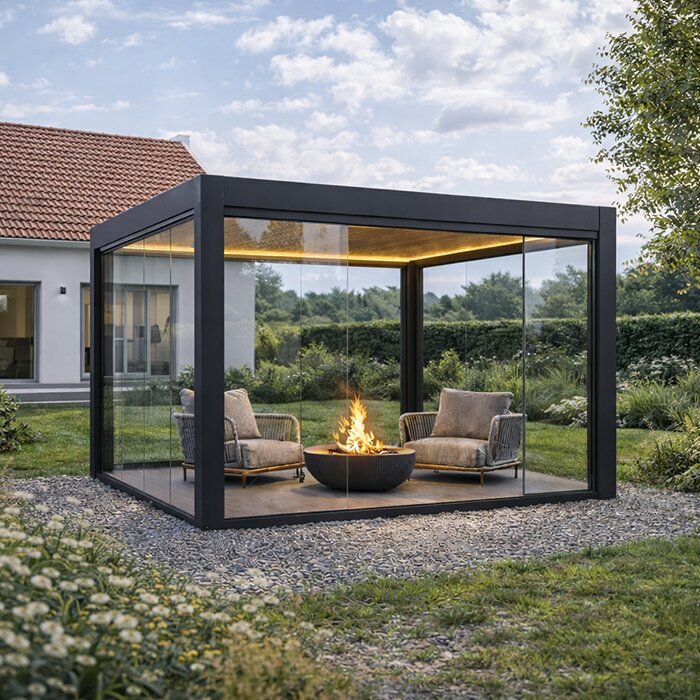
Plan a lighting route before choosing fixtures
Plan the route before choosing the lights. Mark the intended light locations, where power and controls will be available, and the path proposed by the accessory manufacturer. Ask whether the exact pergola has an approved wiring route; do not assume that an apparently hollow post or beam is a cable channel. Drilling into a post or beam, adding exposed cabling, or placing a power component without approved guidance can create service and safety problems. If you are considering a new Bloomcabin Pergola with lighting to be added later, request the relevant wiring documentation before purchase so the initial installation can account for a confirmed future option.
Review the proposed route against the pergola’s full movement and maintenance needs. If roof elements, screens, or other parts move, the installer must confirm that wiring stays clear throughout permitted operation. It must not obstruct drainage paths, access covers, joints, or adjustments. Confirm where any power supply, driver, switch, or connection point can be located and still reached later, rather than hiding it behind trim that must be removed for service. Keep the plan tied to the actual site and exact documentation instead of copying a photograph from another installation; photos rarely reveal concealed routing or future access.
Match the power supply and controls
A fixture may be physically mountable but electrically incompatible. Before selecting lights, have a qualified electrician or the system supplier verify the required supply, driver or transformer, connectors, controls, and operating method for the exact accessory. Check whether you expect a wall switch, dimming, a remote, or integration with an existing control; availability of one feature does not mean the pergola’s current controls support it. Do not mix components just because plugs fit, labels look alike, or details seem similar. Ask for model-specific part numbers and instructions covering the lights and the components needed to operate them as a set.
If the upgrade uses a motorized screen or a proprietary light system, ask which receiver, remote, switch, or control module pairs with that generation and whether existing controls remain supported. Get compatibility confirmed for the whole system, rather than buying a fixture in isolation. For a Bloomcabin Bioclimatic Aluminum Pergola lighting inquiry, identify any controls already installed and describe how you want to operate the new lights. The product name alone does not establish which electrical components are fitted. Save the approved component list with the installation record so a future service request can identify the system, including any separate controls added during the retrofit.
Preserve drainage, movement, and service access
Screens affect how an open-sided structure is used, so establish the screen’s own operating limits. Ask the supplier what wind conditions, stowage, cleaning, and seasonal care apply, and whether the screen should be retracted or secured in specified conditions. Do not assume that a privacy, insect, shade, or weather screen behaves like another material, or that it makes the pergola an enclosure. The screen maker’s instructions, not its appearance, should determine where and when it is used. For lighting, confirm with the supplier and electrician that the chosen components suit the actual outdoor exposure and installation location.
Keep inspection and service points reachable after both additions. Tracks, cassettes, fasteners, lights, drivers, and control modules, where the approved system uses them, may need cleaning, adjustment, or replacement. New accessories must also leave moving parts unobstructed. Ask the installer to identify which access panels must remain reachable and whether servicing a light or screen would require removal of another component. When planning an upgrade to a Bloomcabin Lean-To Pergola, include access near the building in that review. Avoid covering drainage routes or connections with tracks, cables, or trim. Establish how you will reach the screen controls and carry out the routine care specified for the finished installation.
Check whether compatible parts are still available
Older units may use parts from a generation that is no longer offered. Screen fabric, guide tracks, end pieces, brackets, motor or control components, and lighting modules can look similar while differing in dimensions, connectors, or revision. Ask support to identify exact part numbers and whether a documented successor is approved for your pergola; do not assume a newer item is backward-compatible or that an off-the-shelf substitute will fit. The question is not simply whether one component is still sold, but whether the complete matched system remains compatible and supportable for your unit.
Make the request easy to diagnose: include model and serial information, purchase and installation records, a wide view of the structure, and clear photos of labels, existing attachment points, openings, and visible accessory components. Add close-ups of control or cable markings only if they are already accessible; do not open electrical enclosures or dismantle structural trim for a photo. If you reference the current Bloomcabin Pergola catalog entry, explain whether it matches your original paperwork or is only the closest name you found. Support needs identifiers from the installed unit to investigate discontinued parts. Label each photo by location and distinguish existing components from the additions you want.
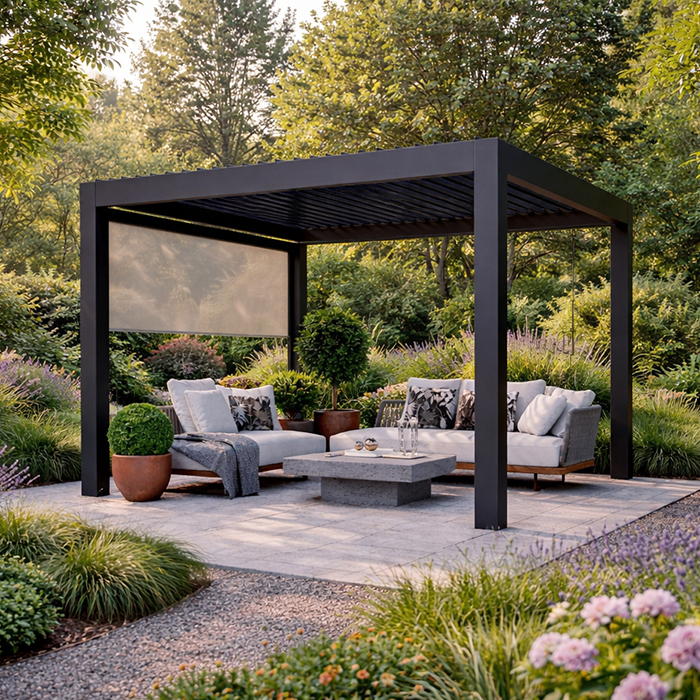
Get a written compatibility decision before work
Before buying, ask for a written answer tied to the identifiers and photos you sent. It should name the approved screen or lighting components, the matching revision, any required brackets or controls, the professional assessment needed, and any limits on location or use. Ask whether the parts are available and what happens if a listed component is obsolete. Review the pergola’s warranty and service terms, and request an explanation of how the proposed modification may affect support; terms vary, so do not rely on a verbal promise or assume all changes have the same effect. Keep the response with your manual and installation records.
Divide the work by expertise: have a qualified pergola installer assess physical fit and attachment against the supplied instructions, and use a qualified electrician for electrical planning and wiring, following applicable requirements. If either professional cannot verify a concealed feature or supporting detail, ask the manufacturer or its service channel what further assessment is needed. When comparing a retrofit with a new Bloomcabin Bioclimatic Aluminum Pergola, request a separate, documented accessory plan for each option; compatibility with one unit does not transfer to another. Make sure the written scope identifies who supplies the components, who installs them, and who verifies operation. Do not authorize cutting, drilling, or rewiring while a key question remains open.
Compare retrofit, replacement, and no-change options
Decide whether screens, lighting, or both solve the problem you actually have. Request separate scopes for each so you can compare approved parts, installation work, access requirements, and ongoing care without assuming the additions form one package. If both are proposed, ask the provider to confirm that they can be installed together and operated without collision or control conflicts. A phased approach may be practical, but have the first installation preserve a documented route and service access for the second. Compare the whole plan, including any repeated work or loss of access, rather than choosing on the accessory price alone.
If matched components are unavailable or the frame cannot be approved for the proposed addition, pause rather than forcing a generic accessory to fit. Ask whether a documented substitute, a different approved arrangement, or replacement of the pergola is the supported route. Compare scope, appearance, maintenance, disruption, and future access to parts. Choosing not to modify the unit is also reasonable while evidence is incomplete; it avoids committing to work that cannot be confirmed or serviced. Proceed only when the parts, fit, electrical or structural review, and installation responsibilities are clear.
Frequently asked questions
Can I use a universal screen kit on my pergola?
The word universal does not confirm that a kit fits your frame. Check the opening dimensions, attachment method, operating clearance, and permitted use against the exact pergola model and revision. Ask the manufacturer or a qualified installer to confirm compatibility before ordering; do not assume that a clamp-on or similarly sized kit is suitable.
Does an existing outdoor outlet mean lighting will be easy to add?
No. An outlet does not confirm that the pergola has an approved cable route, suitable mounting points, or compatible fixtures and controls. Have a qualified electrician assess the electrical plan and the chosen components for the actual installation.
Will adding a screen or lights affect my warranty?
The effect depends on the warranty and service terms for your product and the proposed work. Review those documents and ask for a written explanation before modifying the frame, adding wiring, or installing third-party parts. Do not assume that all accessories or changes receive the same treatment.
What information should I send when asking about compatibility?
Provide the full model name, serial or product ID if available, order and installation records, and the manual or drawings you have. Add clear photos of the identification label, planned openings, existing attachment points, and visible controls or components. Do not dismantle the structure or open electrical enclosures to take photos.
What if the original screen or lighting parts are discontinued?
Ask support whether a documented successor or another approved configuration is available for your exact pergola version. Request part references and written confirmation rather than choosing a replacement by appearance alone. If no supported retrofit is available, compare deferring the work with a documented replacement option.
A successful later addition starts with treating the pergola as a specific system, not as a frame with spare space. Confirm the model and version, check attachment points and operating clearances, verify the lighting plan with a qualified professional, and establish that matched components are available before authorizing work. If an important detail remains uncertain, pause rather than adapting a fitting or route on site. A confirmed plan should leave the pergola usable, maintainable, and supported as intended.
