
Black Friday Offers for Wall-Mounted Pergolas: What to Check Before Buying

Pergola buying guide
Black Friday messaging can make a pergola purchase feel time-sensitive, but a wall-mounted model has a special dependency: the attachment has to work with the actual home, not just fit a patio sketch. An offer is worth comparing only after you know which configuration it covers, what the mounting documents require, and how the terms handle installation and returns. Use this guide to review the offer and the product together. No sale, discount, or availability is assumed here; check the seller’s current written terms for any offer you encounter.
Before you buy 1
What a Black Friday offer actually covers
Start by identifying the exact offer rather than relying on the headline. A promotion may apply to a particular model, selected size or finish, bundle, or code with conditions; the wording does not automatically tell you which configuration qualifies. Read the offer terms and note the eligible item, options, any minimum purchase or code requirement, and the stated dates. If the amount changes after you select a finish or accessory, find out which selection affects eligibility. Treat a countdown graphic or crossed-out figure as context, not a substitute for written terms. This guide does not verify any live promotion, so the seller’s current offer details are what matter.
Compare offers only when they apply to the same product and configuration. A basic frame and a package with additional parts are not equivalent comparisons, and you should not assume a coupon covers every pergola. Review the exclusions and check that the amount shown in the cart reflects the options you selected. Bloomcabin’s pergola product page can serve as one candidate page to inspect, but its images or product name do not establish what a Black Friday offer includes. Confirm the item and configuration in the order summary, then check that the written offer terms apply to them before deciding.
A wall-mounted design needs clear attachment details
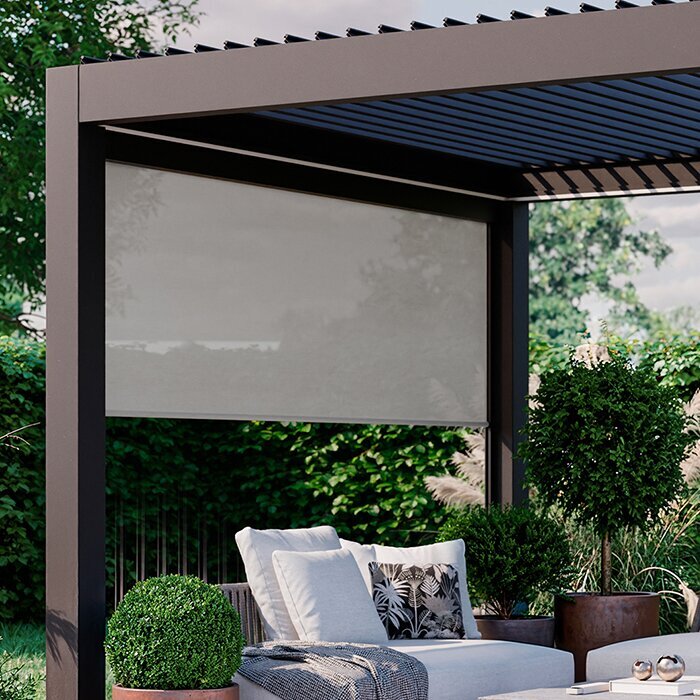
“Wall-mounted” should describe a designed connection to the home, not simply a pergola placed close to siding. Look for an installation manual or dimensioned drawing that identifies which edge meets the house, the specified connection parts, any supports away from the wall, and the wall conditions the manufacturer allows. Make sure the documents apply to the exact model and configuration covered by the offer. A marketing photo may not show the connection points or the arrangement required for installation. If you find only a generic illustration, ask the seller for product-specific information rather than treating the pictured setup as confirmation that the design suits your project.
A name such as “lean-to” can help distinguish a listing, but it does not explain the mounting plate, support arrangement, or approved wall construction. Read the Bloomcabin lean-to pergola listing alongside its installation documents and check what they actually say about the wall connection and required conditions. Do not assume that the name means the product can attach to your house as it stands. A qualified installer or structural professional should review the specific system and the actual building before you plan around a particular connection. If written details are missing, treat that as an unanswered question—not an implicit approval.
Before you buy 2
The home’s wall construction matters
The visible exterior finish alone may not tell you what is behind it. Siding, stucco, exterior insulation, brick veneer, masonry, and framed construction can raise different attachment questions, and similar-looking homes may have different underlying structures. Establish what the proposed connection is intended to attach to and whether the product instructions allow your wall construction. Do not choose fasteners or improvise a mounting solution from a photo or general online advice. Ask the person assessing the installation to identify the wall construction and compare it with the product-specific documents. If needed, have a qualified contractor or structural professional evaluate the conditions at your home.
Ask how the proposed connection interacts with the exterior finish and weather sealing. A wall attachment can involve penetrations, so the question is not only whether the frame fits, but also who specifies how the building exterior is protected and what maintenance may be needed. Clarify which hardware is included and whether separate parts or a professional assessment are required for your construction. When reviewing the Bloomcabin bioclimatic aluminum pergola page, use product-specific documents rather than the name or a close-up image to answer those questions. A listing is a place to look for details, not evidence that a particular wall or home connection has been approved.
Clearances around doors, windows, and drainage
Map the proposed location against features on the house. Check the available wall length and height around exterior doors and windows; an outward-swinging window, door trim, shutters, exterior light, vent, hose connection, or awning may occupy the same space. Review eaves, gutters, downspouts, soffits, and access points for services or maintenance as well. The purpose is to see whether the planned connection and clearances are practical, not to force a design around every obstruction with an improvised workaround. Use measurements or a dimensioned elevation rather than relying on an image, and note anything an installer would need to preserve or reach later.
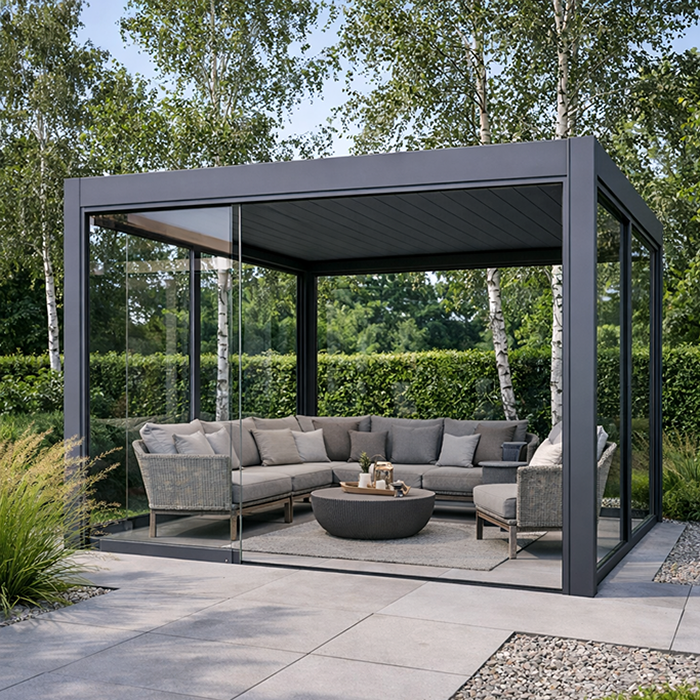
If a particular design includes a cover or a defined runoff path, ask where water is intended to go and whether existing gutters or downspouts affect the proposed location. Do not assume every pergola includes drainage features, or that its title explains how water behaves. Consider whether the arrangement could direct water onto an entry or another area that needs to remain clear, and ask the installer to review the actual layout. A page such as that Bloomcabin pergola page is worth checking for drawings or written guidance, but a pictured setup does not prove that the same layout will suit your wall. Include access for future maintenance in your review.
Before you buy 3
How to compare dimensions accurately
For a wall-mounted structure, record the available wall run, the projection out from the wall, mounting height, and clear height at the lowest point. Compare those measurements with the product’s listed dimensions and drawings. Check how the advertised width is defined: it may refer to outside edges, connection points, or another stated reference. Likewise, confirm what the projection includes if an overhang would affect the fit. If the design drawing shows supports away from the wall, note their positions. Do not estimate those locations from a product photo. Using the same reference points matters because two measurements that look comparable may describe different parts of a structure.
Look for a plan and elevation drawing, not just a headline size or lifestyle image. Confirm that the measurements refer to the exact configuration in the offer, and request any missing dimensions before checkout. If comparing different pergola styles, equal headline dimensions do not necessarily mean equal attachment layouts or clear areas. For a page such as this bioclimatic pergola product page, use only the dimensions stated for that specific item; its name or image cannot supply missing measurements. Have the installer review the drawing against your home and identify any space needed for the connection or ongoing access. That keeps the comparison tied to a configuration that can be planned.
What to verify in the material description
Read material information by component instead of relying on one label. The listing or technical sheet should identify the main frame, roof or shade elements, brackets, fasteners, trim, and finish where those parts apply. A word such as “aluminum” in a product title may refer to the main structure without describing every component, so confirm the distinction in the written specifications. Check whether a finish is identified and what care instructions are provided. A photograph cannot establish the material, coating, or suitability of every part for your conditions. Do not infer technical properties from a generic pergola category or from the product’s appearance.
Ask about maintenance and materials that may be exposed to your site’s conditions, especially if the location has salty air, persistent moisture, or debris that affects cleaning. Look for manufacturer information that applies to the exact configuration rather than relying on broad words such as “weatherproof” without knowing what they cover. Review cleaning guidance, any routine checks described, and whether replacement parts are identified. On the listing titled Bloomcabin bioclimatic aluminum pergola, verify which components the title refers to and whether the accompanying documents answer these questions. Material choice is one comparison point; it is not, by itself, a guarantee of longevity or low maintenance.
Before you buy 4
Warranty terms and installation conditions
Read the warranty before an offer makes a deadline feel more important than the terms. Check which parts are covered and whether coverage differs among the frame, finish, roof, or other components. Note the stated period for each, the remedy offered, whether parts, labor, shipping, or service visits are included, and any exclusions. The written terms may distinguish product defects from damage, normal wear, installation issues, or maintenance, but only those terms can tell you what applies. Do not assume that a general phrase such as “limited warranty” means every part or problem is handled in the same way. Keep the current written terms for the exact product you are considering.
Installation conditions deserve particular attention when the pergola depends on a connection to the home. Check whether the warranty specifies who may install it, which instructions must be followed, or whether modifications affect coverage; do not infer requirements from a sales page. Ask the seller to identify the warranty and manual for the model, and get any answer that affects your decision in writing. the Bloomcabin pergola listing can help identify the product page, but its name says nothing about warranty coverage. If installer workmanship is covered separately, read those terms apart from the manufacturer’s product warranty and establish who handles each type of claim.
Package contents and delivery details
Review what the order actually contains. The product listing, selected options, package list, and cart should agree on the model and configuration. Check whether wall plates, supports, fasteners, finishing pieces, a cover, or other accessories are included, sold separately, or not specified. Treat only explicitly listed items as part of the purchase. Verify the wording for any selected size or finish, and make sure a separate item is not mistaken for part of a bundle. For a candidate such as the lean-to pergola product page, compare the product name and configuration in the order summary with the documents you reviewed. A photograph cannot fill gaps in a package-contents list.
Read the fulfillment details before paying, too: the stated delivery area and method, estimated timing, any appointment or receiving arrangements, and the seller’s process for incomplete or damaged shipments. Ask whether delivery includes only a drop-off or also handling or assembly, and whether a multi-part order may arrive in separate shipments; rely on the terms for that order. Consider who can receive and store the item while the wall assessment or installation is arranged. A Black Friday label does not answer these logistical questions. The order summary and delivery terms are more useful than assumptions based on other online purchases.

Before you buy 5
Returns and cancellations after an order
Understand the cancellation and return rules before choosing a promotion. Find out whether the product can be returned after it is opened, assembled, or installed, whether advance authorization is required, and whether the seller states exclusions for selected or specially ordered configurations. Read the conditions for the return window, original packaging, return shipping, inspection, and any restocking terms. Do not assume that a standard online return process applies to an outdoor structure or an assembled product, and do not treat an informal message as a substitute for the written policy. If you may need time to resolve wall compatibility, understand the cancellation terms before placing the order.
Identify how to report a missing part, delivery damage, or a product question. The seller’s terms may set a notification period or ask for order details or photos, so follow the instructions supplied with the purchase rather than guessing. Keep the confirmation and a copy of the offer language to match any later exchange with the exact configuration ordered. If the seller cannot explain how an unresolved product question will be handled, weigh that uncertainty alongside the stated return conditions. This matters when installation depends on a site assessment: a promotion is less useful if the purchase terms leave you without a clear way to address a mismatch.
A final review before checkout
Before placing the order, make sure you can answer five practical questions: Which exact configuration qualifies for the offer? How does the manufacturer expect it to attach to this kind of wall? Which measurements and clearances apply? What are the main components made from? What do the warranty and return terms cover? Record the listing and options you reviewed, and confirm that the cart reflects them. If a key document is missing, request it from the seller instead of filling the gap with a similar product’s manual or an image. This helps ensure that the seasonal promotion is not the only reason you choose a particular model.
Separate purchase questions from site questions. The seller can explain the offer, package contents, and order terms; a qualified installer or structural professional can assess the actual house connection and site-specific conditions. Where relevant, confirm local or community requirements with the appropriate source before committing to a mounting plan. If the connection, clearance, warranty conditions, or return rules remain unclear, there is no need to let a Black Friday headline resolve them for you. Choose only when the structure and the offer make sense on their own terms, not because the promotion creates a deadline.
Frequently asked questions
Can a wall-mounted pergola attach to any exterior wall?
No. The product’s attachment requirements must match the construction of the actual wall. Siding or veneer visible on the outside may not be the structure intended to support an attachment. Have a qualified professional review the wall and the product-specific installation documents before relying on it.
Which dimensions should I compare?
Compare the available wall run, the pergola’s projection from the wall, mounting height, and lowest clear height. Include any support positions shown in the drawings. Check how the manufacturer defines each measurement, since width or projection may refer to different points on different products.
Does a Black Friday price confirm that I am getting a discount?
No. The label alone does not confirm the offer’s terms, eligible configuration, or savings. Read the current offer details, compare the same product and options, and confirm that the stated terms apply to the item shown in your cart.
Does “lean-to” mean a pergola is suitable for my wall?
No. A product name does not establish its mounting system, approved wall conditions, or compatibility with your home. Review the exact installation documents and have a qualified professional assess the proposed connection against the actual building.
What should I look for in the warranty?
Check which parts are covered, the stated coverage period, the remedy offered, any installation or maintenance conditions, exclusions, and how to make a claim. Also check whether labor or other service is included. Use the written terms for the exact product rather than relying on a general description.
A Black Friday offer is useful only when the product and the purchase terms both make sense for your project. Clear wall-attachment documentation, matching dimensions, specific material information, and understandable warranty and return terms let you assess the choice without relying on a headline or image. If the home connection still needs professional review, treat that as a real part of the decision rather than assuming a promotion settles it.
