
Buying a Bioclimatic Pergola on Black Friday: Features to Compare
Black Friday buying guide
Black Friday can put seasonal promotions and standard listings side by side, but a label or discount does not show whether a bioclimatic pergola suits your patio. The useful comparison is in the configuration: how the roof louvers adjust, how rainwater is carried away, what the frame is made of, and how the roof is controlled. Those choices affect shade, water handling, day-to-day operation, and the checks needed before ordering. Use this guide to compare stated features across the exact versions you are considering, then confirm any detail that a listing leaves unclear. No offer is assumed to be active; treat any seasonal price or promotion as something to verify on the retailer’s page.

What “bioclimatic” means in a pergola listing
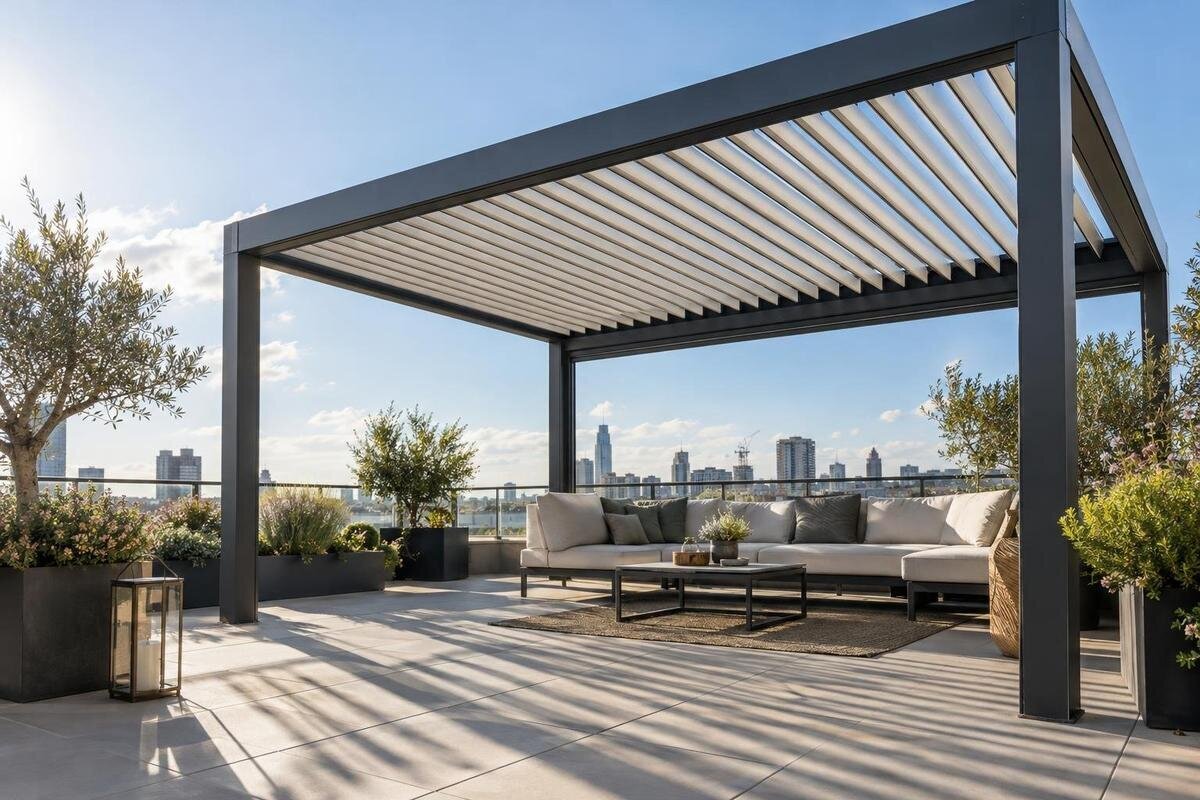
A bioclimatic pergola generally has adjustable roof louvers rather than a permanently fixed, solid cover. Changing their position can alter how much direct sun and open sky reaches the patio. That flexibility is the category’s central idea, but the word itself does not tell you the exact movement, spacing, or weather performance of a specific model. Those facts should come from the product description or manufacturer documentation. On a Black Friday shortlist, translate the label into clear questions: How do the louvers move? Which positions are available? What does the selected version include? What happens when the louvers are fully closed? Also distinguish between a feature mentioned for a product range and a feature confirmed for the configuration in your cart. This prevents a broad category description from being mistaken for a specification of the model you plan to order.
Keep the roof’s role in perspective as well. An adjustable louver roof is not automatically a sealed room, an all-weather enclosure, or a promise of complete shade. Light can still enter from the sides, and rain handling depends on the design and its stated limits. Before comparing prices, separate broad category language from documented features, included accessories, and conditions of use. If a listing uses a general phrase such as “weather-ready” without explaining what it means, treat that as a reason to seek clarification—not as a substitute for the operating details you need.
Compare louver movement and adjustment range
Look beyond the fact that a roof’s louvers are adjustable. Compare how they move, how much of a range is described, and whether the information explains what happens at intermediate positions as well as when the roof is open or closed. A drawing or written specification may also show the louvers’ orientation and the direction they turn. These details help you judge whether the shade and openness you want are possible, rather than relying on a general claim that the roof can be adjusted. Consider how often you expect to change the roof during a typical day. A system that offers the positions you need in the conditions you commonly experience may be more useful than one described only with broad language about flexibility.
Record the adjustment method separately from the range: a manual mechanism and a powered one are different operating choices, but neither tells you by itself how far the louvers move. For a like-for-like check, review the stated details on the bloomcabin pergola listing alongside those for other models. If the page does not explain the range or mechanism, mark it as unconfirmed and ask before ordering. Do not infer how a roof adjusts from a photograph or product name.
Match louver positions to sun and patio use
Consider when and where you use the patio before deciding which adjustment range matters. Note where the sun reaches the seating or dining area in the morning and later in the day, and whether nearby walls, trees, or other buildings change that pattern. Louvers can change the amount of sun coming through the roof, but they cannot block light entering from every side. If your main concern is afternoon glare, for example, the location and direction of the sun may matter as much as the roof’s ability to open. Think about seasonal changes as well: a patio that is comfortable at one time of year can receive sunlight from a different angle at another. This observation helps you ask more precise questions about the roof’s documented adjustment positions.
A simple sketch of the patio and its regular activities can make comparisons more concrete: mark the areas where you want shade, where you want more open sky, and the hours when each matters. Then check whether each listing describes louver direction and adjustment in enough detail to assess those needs. If the product page does not state how the roof is positioned or operated, leave that point open rather than assuming it will work for your layout. Compare only what the documentation confirms.
Read the rainwater drainage description
Do not assume that adjustable louvers automatically provide a rainproof roof. Find out what the manufacturer says about rain when the louvers are closed, whether a particular position is required, and how water leaves the roof. Product documentation may describe channels, gutters, edges, posts, or a separate outlet; the important point is to understand the actual route for the model you are considering. A diagram can be especially useful because a short feature label may not explain where water travels. Read the wording closely enough to separate a description of water management from a promise about conditions the manufacturer has not addressed. This is particularly important if you expect the patio to remain in use soon after a shower.
Also check what the documentation does not promise. It may give conditions for rain protection, describe drainage without guaranteeing a dry space, or leave questions about wind-driven rain unanswered. Do not extend a stated claim beyond its wording or assume that one roof behaves like another. If the rain guidance is missing or unclear, ask for the manufacturer’s instructions before treating the pergola as shelter for furniture, an outdoor kitchen, or other items that should stay dry.

Check the drainage outlet against your patio
A drainage route is useful only if its outlet makes sense for your site. Consider where water would leave the pergola and whether that point is near a doorway, a frequently used path, seating, or a spot where you store outdoor items. Check the patio and surrounding ground for the direction runoff already takes, too. The aim is to identify practical conflicts before ordering, not to calculate a drainage system from a product image. Include nearby downspouts, planters, and low areas in your sketch, since they may affect how the space functions when it is wet. A clear plan also makes it easier to explain the proposed placement when requesting site-specific advice.
Compare the written drainage description with the space you have marked out. If bloomcabin’s pergola listing does not show or explain the outlet location, ask whether a drawing or installation document is available for the exact configuration. Do not assume that an outlet can be moved, that a post can be repositioned, or that water will disappear into the ground. Where site drainage or placement is uncertain, get advice from a qualified installer or other appropriate professional before committing.
Evaluate frame materials and connections
Compare the frame construction from the details the manufacturer actually provides. Look for the named material of each main part, any stated finish, and information about how beams, posts, and roof components connect. A material label alone is not a full assessment: finish, profile, joints, and attachment details also affect what a professional needs to evaluate for a particular site. Do not infer a frame material, coating, or construction method from a product photograph or a name in a URL. Keep notes on what is stated for the roof, posts, and connecting components separately, because an overall product label may not describe every part. This creates a more useful comparison than treating one material word as a complete construction specification.
Exposure matters when you consider maintenance and suitability. Ask what care the manufacturer recommends and whether the documentation addresses conditions relevant to your location, such as persistent moisture or strong winds. For this product page, as for any listing, rely on details explicitly stated there rather than assuming a frame specification. A qualified professional can assess support and attachment needs for your patio. Avoid making a structural decision from a general product description alone.
Plan the pergola footprint and post positions
Before choosing a configuration, compare its listed outside dimensions with the patio—not just with the area you hope to shade. Account for the posts and any roof projection shown in the product drawings, then consider how that footprint relates to doors, windows, steps, walkways, and the furniture you plan to use. A pergola can fit within a space on paper yet leave an awkward route around a post or interfere with a door when the surrounding layout is not considered. Leave room for chairs to move, for people to pass behind them, and for routine tasks such as bringing food outside. These everyday clearances are often more revealing than the overall patio measurement alone.
Mark the proposed footprint on a simple site sketch and show the locations of seating, dining furniture, and regular paths. Use the dimensions and installation drawings for the exact model; do not scale measurements from a photograph. When checking the bloomcabin pergola page, look for stated dimensions and post placement, and note any details that are not provided. Have a qualified installer assess the proposed location and support requirements if those are not clear from the documentation.
Compare manual and powered control options
Control choices affect how you will adjust the louvers in everyday use. A listing may describe manual operation, powered adjustment, or accessories such as a remote or sensor, but those options should never be assumed to come standard. Check which controls are included in the exact version being advertised and whether they operate the roof in the way you expect. If more than one person will use the patio, consider whether each person can understand and access the controls comfortably. For manual controls, consider the stated operating method and the practical access it requires once the pergola is in place. For powered controls, distinguish the controls supplied with the product from optional or separately described features.
For powered options, verify the stated power requirements, any supplied components, and what the manufacturer says about operation if power is unavailable. Do not assume that a sensor, phone control, or connection to a home system is included because it appears in a promotional image. Check the details on the listing for bloomcabin pergola against the configuration you intend to order, and ask a qualified electrician about electrical requirements before purchase. The goal is to compare documented options, not to plan wiring from a sales page.

Check weather limits and ongoing care
Climate affects which questions you should ask, but no general description can establish that a specific pergola is suitable for every location. Look for the manufacturer’s guidance on the conditions in which the roof may be operated and any limits related to wind, snow, or heavy rain. Do not assume that a pergola can remain open, closed, or unattended in all weather. If the documentation does not address the conditions at your site, request clarification and consult a qualified professional where structural suitability is in question. Keep operating guidance separate from structural information: instructions for using the louvers do not, by themselves, establish that a particular installation is appropriate for the site. Both types of information matter before purchase.
Maintenance instructions are another useful comparison point. Check how the manufacturer says to clean the frame and roof, inspect moving parts, and care for any stated finish. This can help you understand the upkeep involved without guessing from a material name. When reviewing the bloomcabin product page, note whether care and weather information is actually provided for the model. Missing details are a question to resolve before ordering, not proof of a particular level of durability or maintenance.
Compare Black Friday listings on equal terms
A Black Friday promotion, if one is displayed, does not tell you whether two pergolas have comparable features. First identify the exact configuration and compare the louver adjustment, drainage description, frame details, and controls. Then check which components are included and whether an advertised option refers to the same version you are considering. Keep a short comparison record so that a change in model, package, or control system does not get mistaken for a like-for-like deal. Add the date you viewed each listing and save the feature wording that informed your comparison, since seasonal pages and selected options can change. This makes it easier to spot whether a lower price reflects a genuinely comparable configuration.
Before checkout, confirm the current listed price and read the retailer’s stated terms for the specific configuration; do not assume an offer, deadline, or saving without seeing it on the page. For the bloomcabin product page, as with any listing, verify that the selected version and stated features match what you intend to buy. If a key detail is absent, seek an answer before placing the order. That keeps the seasonal purchase decision focused on the pergola you actually need, not just the promotion attached to a listing.
Frequently asked questions
Is a bioclimatic pergola waterproof?
Not necessarily. Rain protection depends on the roof design and its stated operating limits. Check the product documentation for what happens when the louvers are closed and how water is drained. The term “bioclimatic” or a closed-roof image alone does not establish that a roof is watertight.
Which louver feature should I compare first?
Compare how the louvers move and which positions the system allows, then consider how those positions suit your patio’s sun exposure and intended use. If a listing does not specify the range or adjustment method, treat that information as unknown rather than guessing from a photo.
Are motorized controls worth considering?
They may be convenient if you expect to adjust the roof often, but convenience depends on the controls included and the requirements for power, operation, and maintenance. Compare the exact configuration and ask a qualified professional about electrical requirements before ordering a powered system.
How do I choose a frame material?
There is no universal best choice without the exact material, finish, construction details, exposure, and installation conditions. Compare what the manufacturer actually specifies, including how the parts connect, and ask a qualified professional to assess structural suitability for your site.
Should I buy a pergola just because it is featured on Black Friday?
A seasonal promotion is only one part of the decision. First confirm that the advertised version has the louver, drainage, frame, and control features you need. Then check the current price, included components, and offer terms for that exact configuration.
The right bioclimatic pergola is the one whose documented features fit your patio and the way you plan to use it. Compare the louver range, drainage route, frame construction, controls, and weather guidance for the exact version—not just the category name or seasonal price. Where a specification or site requirement is unclear, resolve it before ordering. That way, your Black Friday decision rests on the pergola’s stated features and your actual needs.
