
Buying a Freestanding Pergola: Placement, Foundations & Access
Pergola buying guide
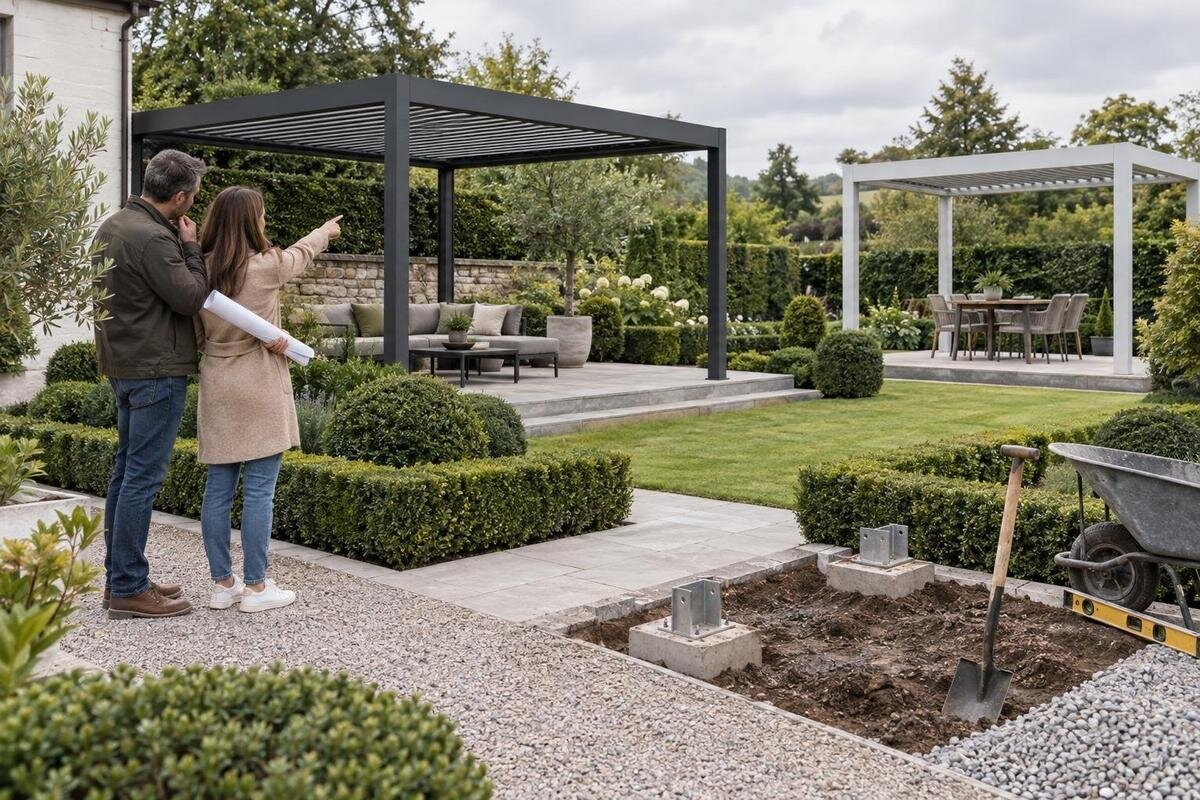
Buying a freestanding pergola is easier when you treat the yard as an installation site, not just a place to set an attractive frame. Before comparing options, identify where the supports can land, what foundation the exact model requires, and how products and people will reach the location. A clear plan can prevent a tempting spot from becoming impractical because of a slope, drainage, a tight gate or a surface that has not been approved for anchoring. The goal is not to design a foundation yourself; it is to identify questions early enough to get reliable answers before ordering.

Map the full footprint before choosing a location
A freestanding pergola needs room for its own support arrangement; it does not rely on a house wall as an attached design does. Start with the manufacturer's drawing for the exact model and mark every support point and the outside dimensions. The roof edge, support locations and projecting components may not define the same footprint, so a photo or headline size is not a reliable substitute. If you are still comparing options, map the usable yard area first. A listing such as the Bloomcabin pergola listing is only a starting point: confirm dimensions and installation requirements for the exact item before judging fit. If the drawing is not available, ask for it rather than scaling a product image.
On a site sketch, mark fixed features that could affect placement: doors, gates, paths, drains, trees, garden beds, utility boxes and outdoor equipment. Measure from fixed points, such as a house corner or fence, so the proposed location can be checked again on site. Note both the outside-to-outside dimensions and the distances between support points; they answer different questions. You can outline the proposed footprint on the ground with removable markers or string, then walk around it and check how nearby routes feel. Repeat the check with furniture in its likely positions if possible, since a clear footprint can still conflict with the way the space is used. If a model's measurements are still uncertain, keep the location provisional instead of treating an estimate as a final fit.
Choose a spot that works for everyday use
Decide what you expect to do under the pergola before settling on a location. Measure the table, chairs or lounge furniture you plan to use, then allow room to sit down, stand up and move around them. A structure can fit on paper but feel cramped once furniture is occupied. Consider the path from the house, garage or garden that you use most often. If people will carry meals, gardening supplies or cushions through the space, make sure the route stays practical rather than being squeezed between supports and other objects. Consider whether the space will be used by children, guests or anyone who needs a wider, more direct route. Planning for ordinary movement now is more useful than trying to rearrange the area after installation.
Think about the conditions at the times you will use the space. Observe where sunlight falls at different points in the day, and consider views, privacy and nearby activity. If shade is a main reason for buying, compare your observations with the selected model's documented coverage rather than relying on a product photo. Keep that same plan beside each candidate listing: this Bloomcabin product page can be assessed against your intended furniture, routes and available area without assuming that a pictured arrangement will suit your yard. Make sure gates and doors can still open fully.
Check overhead and side clearances
Look up as well as across the site. Roof overhangs, gutters, downspouts, exterior lights, tree branches and overhead lines can limit where a pergola can stand or how it can be assembled. Measure the available height from the surface where the supports are proposed, and compare it with the exact model's documented dimensions. Do not estimate height from a photograph. Check the area from more than one viewing point, because a branch or roof feature that seems clear from the yard may interfere at a support location or along an assembly path. If you cannot find the information, ask the seller or manufacturer for the relevant drawing and any required clearance around the structure.
Allow for branches that may grow or move, and consider whether leaves or other debris will affect the chosen location. Also check the space beside each support: installers may need room to assemble the structure, and some designs may have components that need clear space to operate. Ask about those requirements for the precise model rather than assuming all pergolas need the same clearance. A product image or this pergola listing cannot establish how it fits beneath your eaves or trees; use confirmed measurements and seek qualified help where overhead lines or other hazards are involved.
Assess slope and water flow
A spot that looks level at a glance may still have a noticeable slope or low points where water collects. Walk the proposed footprint and note uneven areas, puddles after rain, soft ground and changes in grade. Those observations help you explain the site to a manufacturer or installer, but they do not determine what foundation is appropriate. Take notes after different weather conditions when possible; a dry-day inspection may not reveal where runoff gathers or how saturated ground behaves. Ask what surface tolerances and site conditions the exact installation instructions specify. If the yard would need grading or other preparation, include that work in your comparison before choosing a final location.
Trace where water already travels: from the house, downspouts, higher ground, irrigation and nearby paved areas. If the selected pergola design directs rain from its roof, ask where that water will go and whether it could create a problem at a doorway, path or neighboring area. Use these site notes when reviewing the Bloomcabin page or any other listing, and request the model's installation information if drainage or base requirements are unclear. Do not assume that moving the pergola a few feet will solve an existing drainage issue; have persistent concerns assessed locally.
Confirm foundation requirements for the exact model
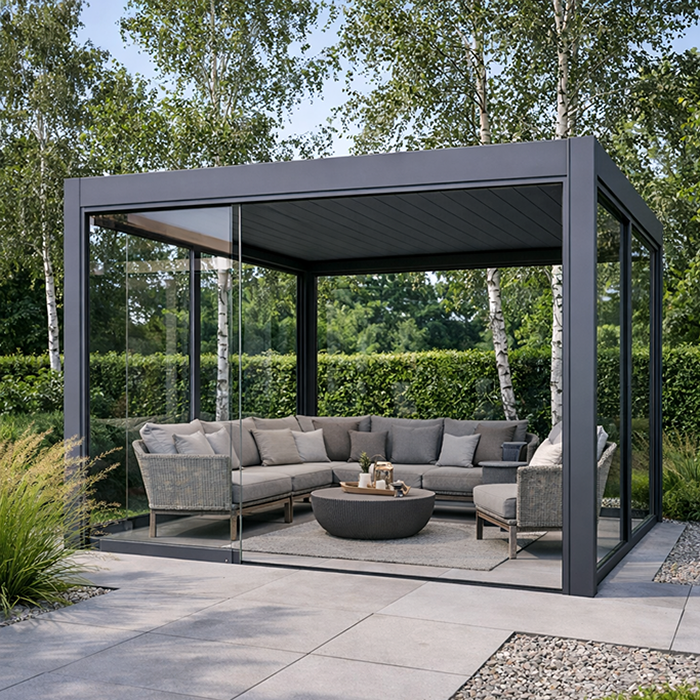
Foundation requirements depend on the product and the site, so get the installation manual or written requirements for the exact model before ordering. Find out which foundation types are accepted, where the supports must land, what anchoring is specified, and whether any surfaces are excluded. Do not assume that a pergola can be placed directly on grass, pavers, a patio or a deck just because that surface looks suitable. If the instructions do not answer these questions, ask the manufacturer or seller rather than relying on general advice about pergolas.
Describe the site to a qualified local installer or other appropriate professional, including its slope, drainage, ground conditions and any existing slab or deck. Ask whether the selected foundation and anchoring method suit both the product and the location, and whether someone needs to inspect the site before giving an answer. Clarify which parts of the foundation work are included with the product and which are separate. Ask when that work must be completed relative to delivery and installation, so a foundation decision does not delay the project after the order is placed. When reviewing another Bloomcabin listing, apply the same check: request that model's specific foundation information, and do not transfer requirements from one product to another.
Evaluate patios, decks and other existing surfaces
An existing patio can make a location look ready, but appearance alone does not establish whether it is suitable for anchoring a pergola. The slab's condition, construction and position of its edges may matter; a deck or paved surface can raise different questions. Do not assume that a level surface is strong enough or that a particular anchor can be used. Before planning to drill or attach anything, ask the manufacturer what surfaces are accepted and have a qualified professional assess the specific site.
Gather any plans, receipts or construction details you already have, and share them with the installer. If those records are missing, describe the surface as unknown rather than treating it as approved. Ask who will confirm compatibility, who will arrange any alternative foundation, and whether site preparation could affect paving, drainage or landscaping. If the surface is part of a larger outdoor project, coordinate that decision with planned repairs, resurfacing or landscaping instead of treating the pergola as an isolated addition. A page such as a separate pergola product page is not proof that your patio or deck will work with that model; get a clear answer for the exact product and the actual surface before proceeding.
Compare dimensions from drawings, not photographs
When comparing models, use drawings or written specifications that identify what each measurement represents. Overall width and depth, distances between supports, height and any projection beyond the supports can all affect fit. Two listings that show similar-looking structures may use different measurement points, so compare like with like. If a dimension is missing or ambiguous, ask for clarification rather than measuring an image on a screen. For the listed Bloomcabin pergola, as with any candidate, rely on information confirmed for that exact item rather than an illustration or a general category description.
Create a simple comparison sheet with the measurements that matter at your site. Record the installed footprint, support locations, available overhead clearance and any space needed around the structure. Use the same reference points on every drawing, rather than comparing one model's overall width with another model's distance between supports. If the design includes components that move or project outward, ask whether the documentation shows the space they need. Keep the model name beside each set of numbers so that dimensions and foundation requirements do not get mixed between candidates. This side-by-side check can rule out a model that looks attractive but does not leave enough room for access, furniture or the site conditions you have identified.
Measure the delivery and installation route
Trace the whole route from the expected unloading point to the pergola site. Measure the narrowest gate or passage and the lowest overhead point, and note sharp turns, steps, slopes, branches and other obstacles. Ask the seller or delivery provider for the dimensions of the packages or largest components and any handling requirements; the assembled structure's footprint does not show whether its parts can pass through a side yard. When checking a Bloomcabin product listing, treat delivery access as a separate question from whether the finished pergola fits in the yard.
The route for delivery may not be the only access to plan. An installation crew may need a place to stage materials and room to work around the supports. Ask the installer what access, tools or equipment the job requires and whether the lawn, paving or nearby landscaping needs protection. Confirm whether gates, temporary obstacles or parked vehicles need to be moved before the scheduled work begins. Clarify what the delivery service includes, where materials will be left, and who is responsible for moving obstacles or carrying items from the drop point. Confirm those details with the providers involved; do not assume that delivery includes transport to the backyard or that the crew can use a route you have not measured.
Clarify local approvals and project responsibilities
Before excavation or other site work, ask which local approvals or reviews may apply to your project. Requirements can depend on the location and the proposed work, so check with the local building department or a qualified local professional rather than relying on a general online rule. If the proposed site is near a property boundary, easement or utility, raise that early as well. Have the contractor or relevant utility confirm the appropriate process for identifying buried services before digging; do not guess where they run.
Get the project scope in writing so you can compare complete plans, not just the pergola itself. Ask whether the estimate includes site preparation, foundation work, anchoring, delivery, assembly, cleanup and repair of any disturbed landscaping. Identify exclusions and who handles each task, including any required approvals or site checks. Record who is expected to communicate changes if the site differs from the original description, since that can affect cost, timing or the selected location. If delivery access is limited or the existing surface needs assessment, describe that before accepting an estimate. Clear responsibilities make it easier to compare options and reduce the chance that an unresolved site issue appears only after the order is placed.
Make the final purchase decision with written answers
Before placing an order, check that the installed footprint and clearances fit your plan, the foundation requirements are known, and the delivery and installation route has been assessed. Confirm that any existing patio or deck has been evaluated rather than assumed suitable. Write down what is still uncertain: an unanswered measurement, unknown surface construction or unconfirmed access detail is not a yes. If an answer depends on a site visit, arrange that before committing when possible, so the model choice reflects the actual yard rather than an idealized version of it.
Keep the drawing, installation requirements, site notes and written answers together for the model you choose. Reconfirm package dimensions and the delivery provider's access needs, then make sure the installer and seller have the same understanding of the location and project scope. If plans change before delivery, revisit the footprint, foundation and route rather than assuming an earlier approval still applies. If a model cannot meet the documented foundation or access requirements, compare another option or reconsider the placement before ordering. Once the key facts agree, you can weigh the pergola's appearance and intended use with greater confidence, knowing that the site plan supports the purchase.
Frequently asked questions
Does “freestanding” mean a pergola can go anywhere in the yard?
No. It describes a structure that does not rely on a house wall for support; it does not mean every surface or location is suitable. Confirm the support layout, foundation requirements, clearances and delivery route for the exact model and site. Local conditions may also call for review by a qualified professional.
How much room should I leave around a freestanding pergola?
There is no single clearance that fits every model and yard. Allow for the full installed footprint, any components that project beyond it, required assembly or operating space, and the paths you need to use. Check the product's installation information and ask the supplier or installer about any model-specific clearances.
Can I install a pergola on pavers or an existing patio?
Do not assume that an attractive or level surface is approved for anchoring. Ask whether the exact model permits that surface and have a qualified professional assess its condition and suitability. If the answer depends on details such as the slab or deck construction, provide those details rather than relying on appearance.
What should I measure for delivery access?
Measure the narrowest and lowest points along the complete route, including gates, turns, steps and overhead obstacles. Also ask the seller or delivery provider for package dimensions and handling requirements. The assembled pergola's dimensions do not tell you whether its packaged components can reach the installation area.
Should I confirm the foundation before ordering?
Yes. Before committing, find out what foundation and anchoring the exact model calls for, whether your site can accommodate them, and who is responsible for the work. If the ground, slab, utilities or drainage are uncertain, resolve those questions with the manufacturer or a qualified local professional first.
A suitable freestanding pergola is one whose support layout fits the planned location, whose foundation requirements have been checked against the site, and whose components and installers can reach it. If one of those points is still uncertain, record it as an open question and resolve it with the manufacturer, seller or a qualified local professional before you buy. That way, the final choice reflects both the pergola you want and the yard where it will stand.
