
Buying a Motorized Pergola: Controls, Wiring & Maintenance
Motorized pergola buying guide
Buying a motorized pergola means comparing more than the roof's appearance. The drive mechanism, control interface, electrical supply, installation responsibilities, and care instructions all affect how the space works day to day. Verify the exact configuration and what is included, then plan how power and controls will reach it. This guide focuses on those purchase decisions so you can compare complete setups, identify work that needs a qualified professional, and avoid assuming that a motor, app, or maintenance plan comes with every pergola.

Confirm what the motor actually moves
Begin with the part that moves. A motorized pergola might use a powered louvered roof, a retractable covering, or another adjustable roof element, and the operating questions depend on the mechanism. A listing that says pergola does not confirm that a motor is included. Ask which component moves, whether it is powered in the exact configuration you are selecting, and whether other adjustable parts remain manual. Request model-specific product details and installation documents; a product-family name, photo, URL, or broad category label is not a specification. Confirm the exact configuration before comparing controls.
Separate the roof drive from other features. Screens or accessories may be specified separately, with their own controls or electrical requirements; do not assume that the roof motor operates them. Ask for an itemized package naming the motor, controller, user controls, power supply, and any optional components. A page such as a Bloomcabin pergola listing is a place to check product information, not proof of motorization. Confirm the selected configuration in writing. This prevents a manual pergola, a frame prepared for a motor, and a complete powered setup from being treated as equivalent. It also gives the installer a clear reference when confirming which parts belong in the delivery and which must be sourced separately.
Choose controls for everyday use
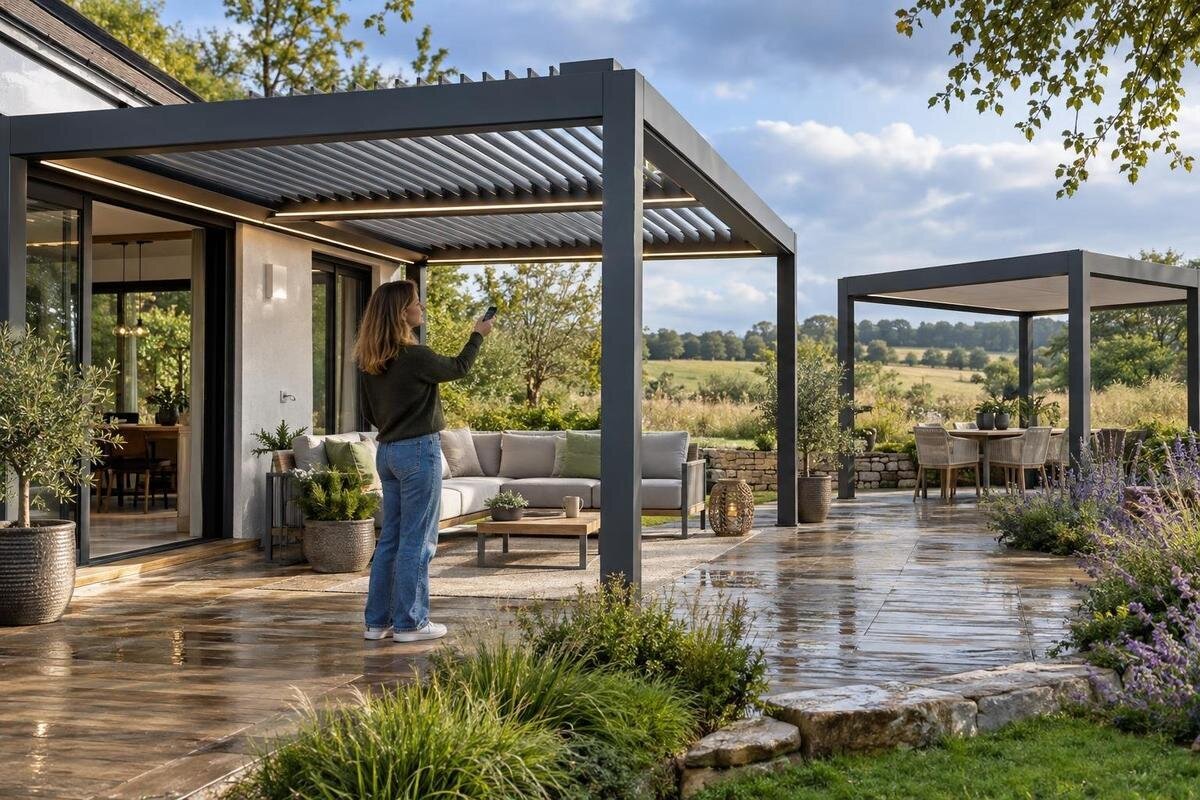
Think about who will use the pergola and where they will be when they operate it. If the available choices include a handheld remote, wall control, app, or more than one method, compare what each one operates and which controls are included. Ask how many remotes come with the package, whether one control can select separate moving sections, and how additional users get access. If a phone app is offered, find out whether internet access or an account is needed for routine movement, or only for optional features. These details vary by system.
Consider the practical differences between the interfaces. A remote needs a convenient place to keep it and a plan for replacement; a wall control should be reachable by the people who use the space; app access may need to be set up for more than one user. Ask for a demonstration or a written guide that shows how movement starts and stops, rather than judging the controls from a product image. Review the stated inclusions on the Bloomcabin pergola page, and request clarification if it does not identify the motor and controls. Choose a method everyone in the household can operate comfortably. Also ask whether control settings can be changed later and who can provide help if a remote is lost or access to an app account changes.
Check how the system behaves during outages
Treat an internet outage and a power outage as separate questions. A remote or wall control may behave differently from an app when Wi-Fi is unavailable, while a loss of electrical power may stop the motor. The result depends on the controller and power arrangement. Ask what remains usable in each case, whether the roof stays where it stopped, and how normal operation is restored. If network features are included, confirm whether the connection is needed for basic movement or only for remote access and other integrations.
Find out whether a user-accessible manual release or backup power method exists, and when it is intended to be used. Do not assume that a moving roof can be pushed by hand or forced through resistance. Get the manufacturer's instructions for stopping movement and responding to an obstruction or unusual operation. Ask whether the system has an obstruction response or safety stop, how it works, and what the user should do if the roof does not stop as expected. A page such as a Bloomcabin product listing can help identify the item, but only model-specific documentation can establish which backup and safety features apply. Ask whether settings are retained after an outage and whether restoring normal operation requires a user action, a service visit, or both.
Get the electrical requirements before ordering
Request the motor's exact electrical input and connection requirements before deciding where it can be installed. Ask whether the package uses a hardwired connection, plug-in supply, transformer, battery, or another arrangement; these are possibilities to verify, not features to assume. Confirm whether a controller or power supply is included, what components must be supplied separately, and which document gives the installer the correct requirements. An image cannot show which cables or electrical parts come with a product. Use the specific documentation for the selected setup, and treat the Bloomcabin product page as a point to check rather than a substitute for missing specifications.
Share the manufacturer's documents with a qualified electrician or installer before ordering, particularly if power needs to be planned near the pergola. That professional can assess the site's existing supply, the proposed location, and applicable local requirements. Ask who supplies and installs each electrical component, how outdoor connections are addressed, and whether that work is included in the pergola quote or handled separately. Do not size a circuit, choose a cable, or plan a connection from generic advice or another model's specifications. Settling responsibilities early helps coordinate electrical work with assembly. It can also prevent completed landscaping, paving, or finished surfaces from being disturbed because the approved power route was considered too late.
Plan wiring routes and installation responsibilities
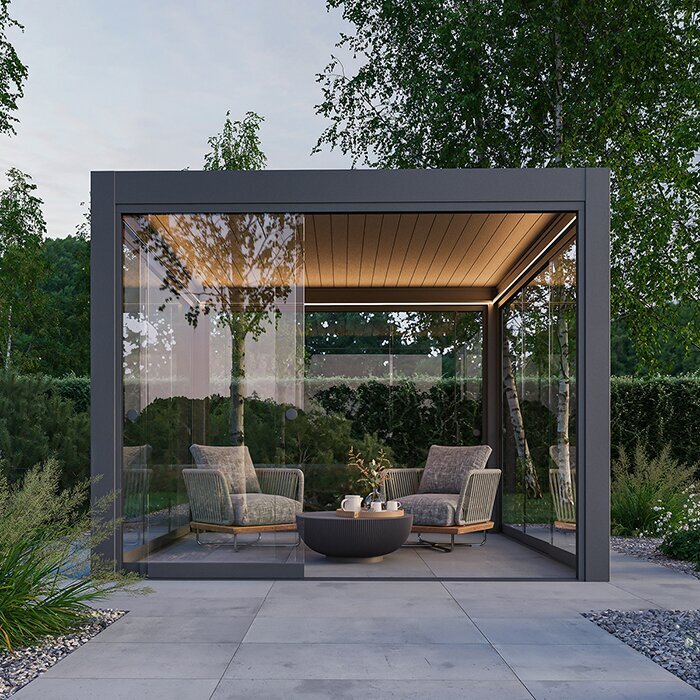
Cable routing is an installation question, not simply a matter of finding the nearest outlet. Ask where the motor and controller are located and how the approved power route reaches them. Confirm whether wiring is intended to be visible or concealed in the selected setup, what access the installer needs during assembly, and whether any preparation must happen beforehand. The actual site layout matters: have the installer assess the proposed route rather than assuming a cable can be hidden inside a post or beam. Also ask how the route will remain accessible for future service.
Write down who is responsible for assembly, electrical connection, control setup, and demonstrating operation; one contractor may not handle every task. Ask whether installers need to coordinate, what the owner must have ready, who checks the system after installation, and whom to contact if it does not work as expected. Keep the wiring plan and manuals with the order documents. A listing such as a Bloomcabin listing does not confirm that wiring or professional installation is included, so compare the stated installation scope with the exact motor and controls you intend to buy. If separate trades are involved, agree on the order of their work and the information each needs before anyone arrives on site.
Understand how the moving roof operates
Ask how the roof is divided and controlled. A system may move one surface or several sections; find out whether each section has its own control or whether they operate together, and whether positions can be adjusted freely or only through set options. If independent movement matters to your plans, look for that detail in the operating instructions rather than inferring it from a drawing. Ask what the normal movement sequence is and whether the manufacturer provides information about operating sound. A page such as the Bloomcabin pergola product page identifies a product to review; it does not establish how its roof moves.
Consider what users need to see and reach while the roof is in motion. Discuss the control location and moving area with the installer, taking furniture, doors, and usual walking routes into account. Ask how travel limits are set and who is authorized to adjust them; do not try to correct alignment or change settings by trial and error. If you want the roof to stop at particular positions or operate in more than one zone, have the seller explain exactly how that works in the selected configuration. A clear explanation is more useful than assuming that every motorized roof offers the same movement. Record any demonstrated operating sequence so that all regular users know what normal movement looks and sounds like.
Ask what routine maintenance involves
Get a written care schedule for the exact model rather than relying on a general description such as low maintenance. The instructions should identify the user's routine tasks, permitted cleaning methods, moving parts that need visual attention, and conditions that call for service. Pergola mechanisms differ: a louver assembly, track, hinge, or other moving component will not necessarily be cared for in the same way. Keep the manual with the order documents. Avoid adding lubricant, forcing a jam, or using a cleaning product unless the manufacturer says it is suitable for that system.
Include the motor and controls in your maintenance questions. Ask whether a remote uses replaceable batteries, whether an app or controller needs periodic setup, and what signs of a fault require professional service. Only perform visual checks if the care guide recommends them; do not open a motor housing or handle electrical connections as routine maintenance. If you notice damaged wiring, unusual noise, or hesitant movement, pause use and contact the service provider rather than attempting a repair. A link such as this Bloomcabin listing can identify the product when requesting care documents, but the schedule should come from its instructions. Ask where service records should be kept, since they can help a technician understand when a change in operation first appeared.
Review support, replacement parts, and warranty terms
Read the written terms for each component rather than relying on a general warranty statement. Ask whether coverage is defined separately for the structure, moving mechanism, motor, controller, remote, and accessories. Check the term and start point as stated, what the owner must do to make a claim, and whether installation method, maintenance, or later modifications affect coverage. Request the document that applies to the exact model and configuration before ordering, and keep it with the invoice and installation records. Do not assume the same terms apply to every part of a pergola system.
Plan for support after installation, too. Find out who can diagnose a motor or control problem, whether service must be performed by a particular type of professional, how replacement controls are identified, and whether components can be obtained later. Ask how support works if the original installer is unavailable and what information to retain, such as model or serial details. Check any stated product information on another Bloomcabin product page against the written service and coverage documents. A page name alone does not establish warranty scope, parts availability, or who can service the system. Keep a copy of the final configuration with those records, because a replacement part may depend on the specific controller, motor, or accessory originally supplied.
Check operating limits and seasonal care
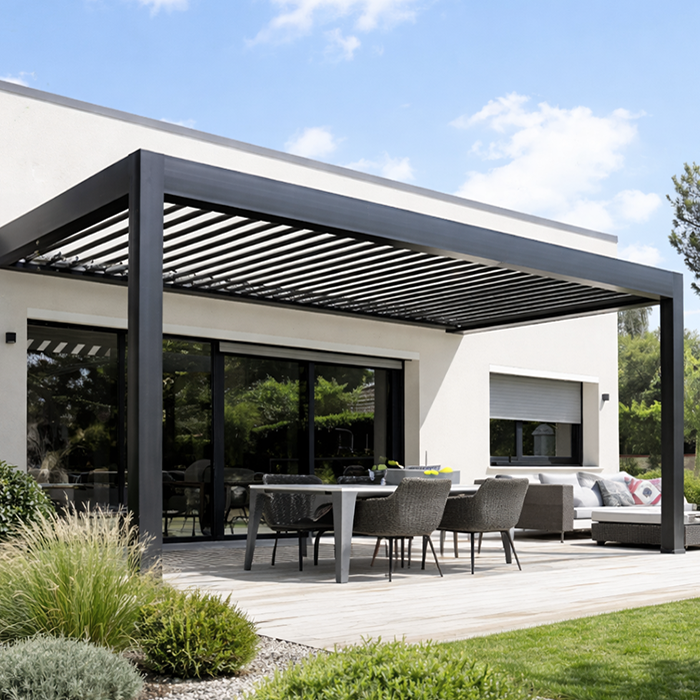
Ask for the operating limits of the exact motor and moving roof. Find out whether temperature, wind, ice, or accumulated debris affects operation, which conditions require the roof to remain stationary, and whether the manufacturer specifies a position for periods when it is not being used. Do not infer limits from a photo, roof material, or the fact that the pergola is outdoors. If weather sensors or automatic controls are offered, confirm what each one detects, what action it triggers, whether it depends on power or a network, and what happens if communication is lost. Automation does not replace the stated operating limits.
Consider how extended inactivity affects care and operation. Check whether the manual calls for specific steps before leaving the system unused, and what checks or restart procedures apply when you use it again. Do not disconnect, cover, park, or restart components based on generic advice; the right approach depends on the motor, controls, and installation. If the outdoor space is used seasonally, keep the operating and care instructions where household members can find them. Note whom to contact if the roof does not respond after a long pause instead of improvising a repair. Before the next period of regular use, inspect only the items the manufacturer identifies as owner checks and arrange service if anything appears abnormal.
Compare complete quotes before ordering
Compare offers as complete operating setups. The written quote should identify the exact pergola configuration, which element is motorized, and the motor, controller, controls, power components, and accessories included. It should also state what wiring, electrical work, assembly, setup, delivery, and service are included or excluded. Ask each seller to describe the same scope so a separate electrician or optional remote is not mistaken for part of the package. A broad product name or attractive image is not enough to compare a manual product with a powered configuration.
Before placing the order, match the paperwork to the setup you selected: exact configuration, control method, power requirements, installation responsibilities, and the care and warranty documents. Confirm any site assessment or delivery-access arrangements that could affect installation, and establish who will show users how the controls work. Keep product documents, electrician or installer notes, and service details together. If an important item is described only as an option or remains unclear, resolve it before purchase rather than assuming it will be supplied. A documented order makes later maintenance and service easier to manage. It also provides a useful handover checklist, so the completed installation can be compared with the controls and components named in the quote.
Frequently asked questions
Does a motorized pergola need Wi-Fi?
Not necessarily. The control setup depends on the exact model: basic operation may use a local control, while app features may require a network or account. Before ordering, confirm whether Wi-Fi is needed for everyday movement and what controls still work if the connection is unavailable.
Can I add a motor to a pergola later?
Only if the manufacturer confirms that a compatible motor kit is designed for the exact pergola configuration. A frame that looks suitable, or a description such as motor-ready, does not establish compatibility. Check the power requirements, approved installation method, and any effect on the product's written coverage.
Should an electrician handle the wiring?
The work depends on the motor's power arrangement and the installation site. Get the manufacturer's electrical documentation and ask a qualified electrician or installer to assess what is needed, including applicable local requirements. Confirm who supplies and connects each component before placing the order.
What maintenance does a motorized pergola need?
Follow the care schedule for the exact model. It should explain permitted cleaning, any routine checks, and when to call for service. Ask separately about the motor and controls, including remote batteries if applicable. Do not lubricate, adjust, or open electrical components unless the manufacturer's instructions say to.
What should I confirm before ordering?
Verify the exact configuration and moving part, motor and controls included, power requirements, wiring and installation responsibilities, and any separate costs or exclusions. Also get the operating and maintenance instructions, written warranty terms, and a clear contact for service or replacement parts.
A suitable motorized pergola is one whose moving mechanism, controls, power arrangement, installation plan, and service requirements fit the way you will use the space. Compare those details as one complete setup, using the exact product documentation rather than assumptions. Planning them before ordering makes both day-to-day operation and ongoing care easier to understand.
