
How to Buy a Pergola for a Hotel or Vacation Rental
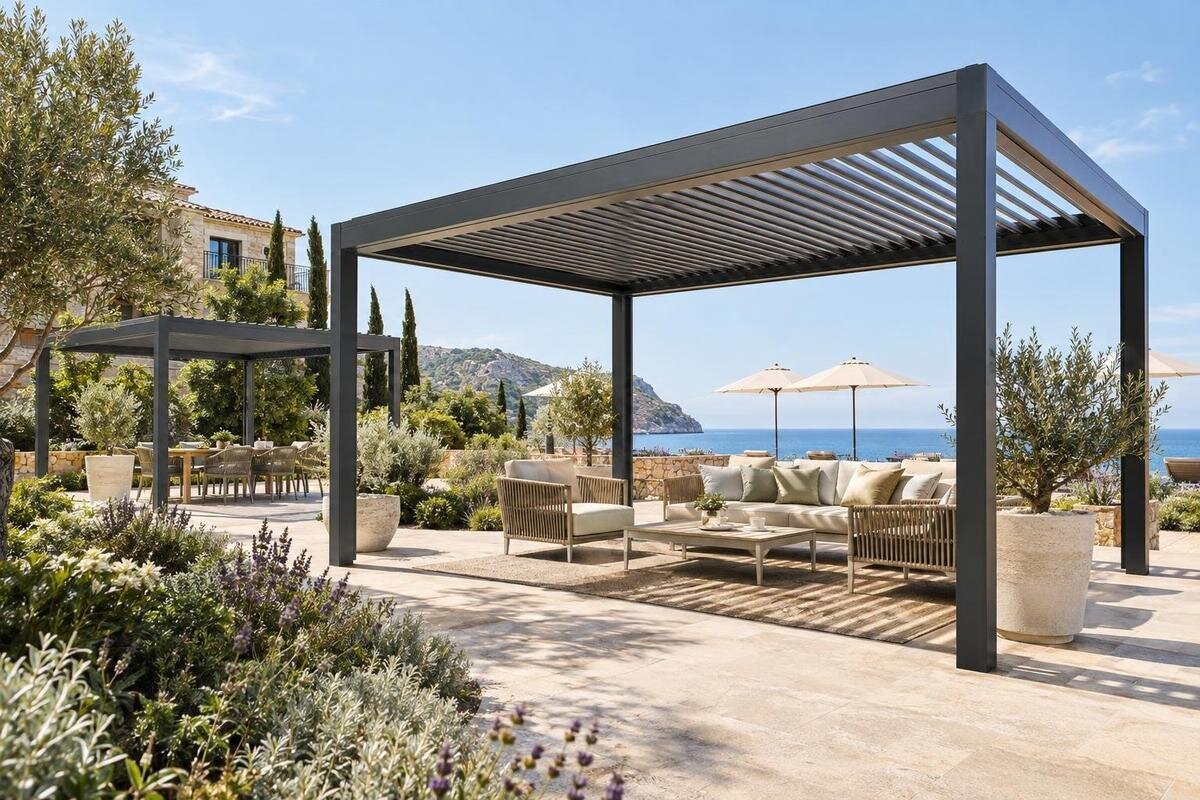
Pergola buying guide for hospitality properties
Buying a pergola for a hotel or vacation rental is a guest-experience decision as much as a design choice. The structure should fit the way visitors use the outdoor area, leave practical room for staff and circulation, and suit the property’s exposure and upkeep capacity. Before comparing appearances, define the intended use, measure the whole site, and identify who will approve and install the project. Then compare written dimensions, materials, weather limits, and installation requirements for each candidate. A product photograph can suggest a style, but it cannot show whether a pergola fits a specific hospitality property.

Define the guest experience before choosing a design
Start with the experience the outdoor area should support. At a hotel, it might be a quiet place near guest rooms, a shared gathering spot, or a setting for outdoor dining; a vacation rental may need one flexible zone used by different groups across the day. Note the activity, typical party size, time of use, and whether the space serves one party at a time or several rooms. Record must-haves separately from optional extras. If event use is occasional, decide whether it should shape the permanent layout or remain secondary. This brief helps you estimate seating, circulation, shade needs, and the relationship to doors and views before style becomes the main consideration.
Separate what guests expect from what the property can actually provide. If a booking page promises an outdoor lounge, decide what that means in practical terms: seats, a table, privacy, a view, or a place to wait between activities. Hotels may have several guest groups at once; a vacation rental may be judged by one household’s shared experience, yet guest turnover still changes how the area is used. Do not choose a size from room count alone: occupancy and outdoor habits differ. If the area is shared, consider whether it supports a brief break, a meal, or a longer stay, because those uses call for different arrangements. A pergola listing can enter the comparison once the brief is clear, but its photo or name does not confirm capacity or suitability.
Measure the usable area, including furniture and routes
Measure the whole area and mark the proposed footprint on a site sketch. Include doors and their swing, windows, steps, planting, drains, outdoor equipment, service access, and overhead obstacles; note where existing shade falls. If boundaries are irregular, take measurements at several points rather than treating one patio width as the full usable space. Record changes in level and surface transitions for the installer to review. Request a drawing for the exact product configuration, showing overall dimensions, support locations, projections, and required clearances. A photo—or the measurements of a different model—cannot fill a gap in that drawing. Keep a record of the measurements and who took them so the installer can review the same plan.
Then map the space guests and staff will occupy, not only the frame. Pull chairs back, leave room to approach a table, carry luggage or trays, clean around furniture, and pass without squeezing through the seating area. Keep routes to entrances and service access legible, and account for moving or storing furniture during cleaning or seasonal changes. Compare the sketch with one listed pergola using its stated dimensions and installation clearances. If a measurement is missing, ask before ordering instead of assuming the product will fit; check whether the drawing includes trim, overhang, or other parts that affect the footprint.
Plan guest circulation, access, and privacy
Hotels often need outdoor paths that work when several parties use the property at once, while a vacation rental needs a straightforward route from the unit to its seating area. Map entry and exit paths, staff access, door swing, steps, and any route guests with mobility needs may use. Avoid placing posts, chairs, planters, or a gate where they narrow a normal passage. If the layout needs to preserve accessible circulation, ask a qualified local professional to review it against requirements that apply to the property; a sales drawing cannot settle that question. Treat emergency access and other required routes as separate items to confirm before fixing the location.
Look at sightlines as well as walking paths. Placement can affect whether guests feel overlooked by neighboring rooms, see a view, or hear activity from a pool, street, or service yard. A pergola can define an outdoor zone, but it does not automatically screen views or reduce sound, so plan privacy measures separately and make sure they do not block access or the intended outlook. Consider how the space appears from guest-room windows and in listing photos, without letting a photograph replace a measured plan. Use a pergola product page as a visual reference only, then confirm the exact configuration and dimensions in documentation before treating it as a fit.
Choose a layout that suits the building and yard
Decide whether the layout should stand independently or connect to a building. A freestanding pergola may offer flexibility in placing the guest zone, but it still needs a suitable support plan and enough clearance around it. An attached design may bring the area closer to a door or room; the building interface, wall condition, drainage, and effect on exterior details then need review. Neither arrangement is automatically easier or appropriate for every property. Have a qualified installer or design professional assess the proposed location and installation method before you commit, especially when the plan affects an existing structure.
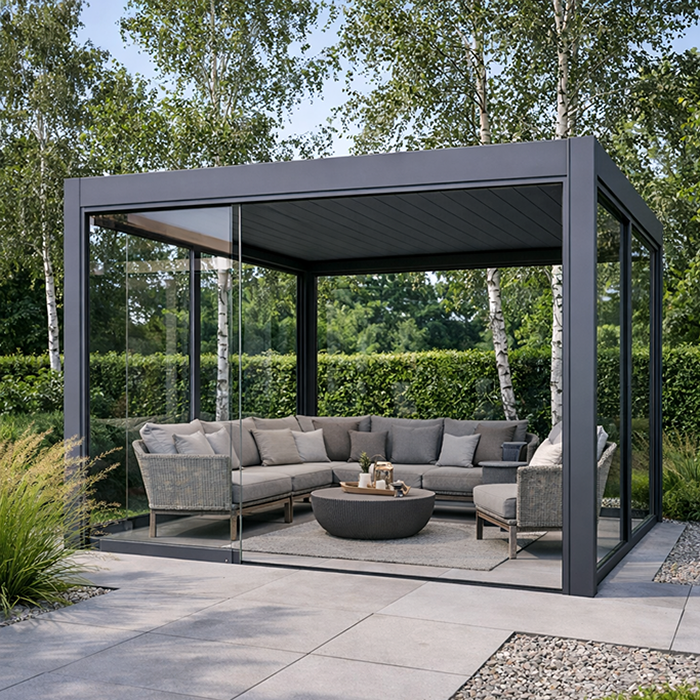
Choose the overhead arrangement with the intended use in mind. Open, fixed-cover, and adjustable-roof concepts can differ in light, ventilation, cleaning, and day-to-day operation, but a category label does not confirm what a particular product does. Consider who would operate moving parts, whether guests can use them intuitively, and what happens when staff clean or reset the space. Compare a candidate pergola against the actual property plan, then verify its exact configuration and installation instructions. Do not treat the word pergola as a promise of an enclosed room or a rainproof shelter.
Compare materials by upkeep, not appearance alone
Material and finish affect appearance, cleaning, and repair options, but broad labels are not enough to predict service life. Wood, aluminum, and steel come in different grades, coatings, joinery, and finishing systems; performance depends on the product and conditions at the site. Consider salt in the air, humidity, dust, tree debris, sun exposure, and the cleaners used by housekeeping. Ask what the frame and visible surfaces are made from, how they are finished, and which care instructions apply. Some wood finishes call for periodic refinishing, while coatings on metal can also have specific cleaning or repair needs. Do not assume a surface will be easy to maintain because it looks smooth in a photo.
A hotel should estimate maintenance labor across a shared outdoor amenity: who will clean surfaces, inspect moving parts, and report damage? A vacation-rental owner may have less frequent on-site supervision, so a clear care routine and assigned responsibility can matter as much as appearance. Request the manufacturer’s cleaning guidance, inspection recommendations, and information about replacement components before purchasing. For one catalog option, verify those details in the exact product documentation; the word aluminum or any other material name by itself does not answer maintenance questions.
Evaluate sun, rain, wind, and seasonal exposure
Observe the site at more than one time of day and, when possible, in different seasons. Note when direct sun reaches the seating zone, whether nearby buildings or trees cast shade, where wind funnels between structures, and where rain splash, roof runoff, falling leaves, or snow may collect. A courtyard and an open patio at the same property can have very different exposure. Keep these observations as site notes, not proof that a particular frame or roof can handle the conditions. Consider when guests are most likely to use the area, whether glare affects the seats, and whether seasonal cleanup will be manageable for the staff or owner.
Match those notes to explicit limits for the exact product and configuration. Ask for written information on wind, precipitation, snow where relevant, and any restrictions on opening, closing, or leaving movable parts in place. Confirm who can interpret the limits for this location; a qualified installer or design professional can identify when the site needs more review. A roof element alone does not prove that a pergola is waterproof, wind-rated, or suitable for local snow. Before treating this pergola listing as a candidate, check that its documentation addresses the actual exposure and intended operation.
Make installation part of the buying decision
Treat delivery and installation as part of procurement. Confirm who has authority to approve exterior changes, whether an owner, management company, landlord, or insurer has a review role, and whether local approvals should be checked. These roles differ by property; do not assume the person who manages guest bookings can authorize building work. Ask a qualified installer to review access to the site, the surface and adjacent building conditions, and the proposed installation plan. If the pergola will connect to a building or sit near utilities, include the relevant professionals early rather than deciding after the structure is ordered.
Get a written scope that separates the pergola itself from site work, delivery, assembly, anchoring or connection details, debris removal, and any finish repairs. Clarify what is included, which parts are supplied by others, who is responsible for measurements, and how changes to site conditions will be handled. The product page for this option can help identify the candidate, but only matching installation documents and a quote can define the actual project. If lighting, heaters, or other powered accessories are planned, have their selection and installation reviewed by qualified professionals; do not treat them as an automatic part of a basic pergola package.
Account for housekeeping and guest turnover
Consider how the pergola area will be reset between guests and during routine operations. A hotel may need a repeatable process for cleaning tables, moving furniture, checking for damage, and keeping staff access clear while other guests use nearby rooms. A vacation rental may have no staff on site between stays, so owners or cleaning teams need to know what must be checked and how to report a problem. Think about where cushions or other movable items will be stored, if they are part of the plan, and whether the layout leaves access for ordinary cleaning. Include these tasks in your operating plan rather than treating maintenance as an occasional extra.
Guest instructions should match the actual product and be simple enough to use during a short stay. If a candidate includes moving components, confirm the intended operating procedure and who is allowed to use them; do not rely on guests to infer how a feature works. Set expectations about shade and weather protection accurately, and decide who will respond if conditions change or something needs attention. For a product listing, look for product-specific care and operating information before you write house instructions. A pergola that fits the floor plan but complicates cleaning, staff movement, or guest use may not suit the property’s daily routine.
Compare the full project cost and quotation
Compare complete project proposals rather than looking at the structure alone. Depending on the project, the total may include the product, delivery, assembly, site preparation, professional review, accessories, and any approvals or fees you confirm apply locally. Ask for an itemized quotation so you can see what is included and which parts remain your responsibility. Check that proposals describe the same configuration and installation scope; a low total with missing work is not directly comparable to a complete quote. If measurements, access, or site conditions are still uncertain, ask how the estimate may change before treating it as a final project cost.
Also consider the cost of operating the amenity. Cleaning time, inspections, replacement components, and any finish care can affect the amount of staff or owner time needed after installation. Set those requirements beside the product and installation costs using the period you expect to manage the property, rather than assuming the purchase price tells the whole story. If you expect the pergola to affect bookings or guest satisfaction, treat that as a business assumption to assess—not a guaranteed return. Request written information about quote validity and delivery estimates, and compare those terms without assuming any particular offer or schedule.
Verify the order details before you commit
Before placing an order, make sure the paperwork identifies the exact configuration and matches the site plan. Confirm the overall dimensions, support positions, material and finish, roof arrangement, stated weather limits, and any included accessories. Check that you have the applicable care information and installation documents, plus a clear written scope for delivery and site work. If a measurement, operating limit, or responsibility is not stated, resolve that question rather than filling it in from a photograph or a similar-looking product. Keep the approved drawing, quotation, and product information together so the owner, installer, and property manager are working from the same version.
A simple comparison table can help distinguish firm requirements from preferences: guest capacity, available footprint, circulation, appearance, maintenance workload, exposure, installation scope, and total project cost. Mark any unmet requirement as a reason to pause, not a detail to assume away. Have the person responsible for property approval and the qualified installer review the same proposed location and documents. Then choose the option that meets the property’s verified needs and can be maintained by the people who will operate it. This keeps a pergola purchase grounded in the guest experience and the practical realities of running a hotel or vacation rental.
Frequently asked questions
Does a hotel need a commercial-grade pergola?
The word commercial is not a substitute for documentation about the exact product, installation, and site. Compare the stated use and weather limits, dimensions, care requirements, replacement-part information, and installation scope. If a supplier uses a commercial designation, ask what written criteria it represents, then have a qualified professional review site-specific concerns.
Can a pergola be attached to a hotel or rental building?
Only if the specific design and building are suitable for that installation. The connection, wall condition, drainage, and any effects on the exterior need review. Ask a qualified installer or design professional to assess the proposed location and method before ordering; do not infer attachment suitability from a product image.
What should I measure before buying?
Record the full proposed footprint and note doors, steps, windows, existing equipment, planting, service access, and changes in level. Add the space needed for furniture, people moving around it, and cleaning. Compare the site sketch with a drawing for the exact product configuration, including its supports and required clearances.
Which pergola material is easiest to maintain?
There is no universal answer: the material, finish, site conditions, cleaning products, and care routine all matter. Ask for the product-specific maintenance instructions and information about replacement components. Then compare those requirements with the time and skills available to your housekeeping team or property manager.
Will a pergola provide all-weather shelter?
Do not assume so. A pergola’s protection depends on its exact configuration and documented limits, as well as the site conditions. Check written information about rain, wind, and snow where relevant, and have a qualified professional review any concerns about the location. Describe the shelter to guests only as accurately as the documentation allows.
For a hospitality property, a suitable pergola is one whose documented configuration matches guest use, site dimensions, weather exposure, staffing capacity, and an approved installation plan. When those decisions are recorded before ordering, style can be compared on equal terms and the outdoor amenity can be described to guests accurately. The result is a purchase that fits both the property and the way it is operated.
