
Buying a Pergola for a Snowy Climate: What to Check
Pergola buying guide
Buying a pergola for a snowy climate is as much a structural decision as a style choice. The key question is not whether a design looks sturdy, but whether written documentation covers the snow conditions at your site and the exact roof and installation configuration you plan to order. Roof form, nearby buildings, frame connections, anchoring, and the supporting surface all affect the decision. Use this guide to compare the evidence, identify questions for the seller, and recognize when a local building professional or structural engineer should review the plan before you buy.
Define the snow conditions at the installation site
“Snowy climate” is too broad a design brief. Snow exposure varies with location, elevation, terrain, and how open or sheltered the yard is; two properties in the same town can have different accumulation patterns. Nearby roofs, taller walls, fences, and trees can affect where snow drifts or drops. Ask the local building department which site design criteria should inform your project, then share that information with the pergola manufacturer and, when needed, a structural engineer. Record the exact address, planned orientation, and unusual exposure before requesting a quote. Note whether prevailing winds cross an open yard, pass between buildings, or meet a change in grade. Annual snowfall totals alone do not describe how snow will collect around one building.
Before comparing styles, note whether the structure will stand alone or meet a house, its approximate footprint, nearby roof edges, and the condition of the surface that will support it. Photos from several angles can help a professional identify possible drift areas, but they do not establish structural capacity. When you review the Bloomcabin pergola listing, look for a separate manual or written confirmation that connects the product’s documented setup to the criteria for your site. Treat a general phrase such as “snow-ready” as a prompt to ask for evidence, not as a substitute for it.
Read the snow-load rating as a complete-system claim
Ask for the snow-load figure in writing and for its definition, not just a number in a chart. Find out whether it refers to a load on the pergola roof, a ground-snow reference, a test result, or another measure; these terms are not interchangeable. Confirm the units and whether the figure is an allowable design value or something else, and ask what assumptions or exclusions apply. Ask whether the stated figure applies across all listed sizes or only to a particular span and post arrangement. You do not need to calculate capacity yourself, but you do need to understand what the stated number covers. If a seller cannot explain its basis, request the manufacturer’s technical documentation.
Confirm that the documentation covers the complete assembly you plan to order: roof type and position, span, posts, beams, braces, connectors, fasteners, anchorage, and foundation conditions. A figure for one configuration should not be carried over to a wider layout or a different roof simply because the catalog designs look similar. If you compare a separate pergola product listing, check whether its documentation identifies the same components and installation conditions. Ask a qualified professional to interpret the information if the terminology or site requirements are unclear.
Compare roof designs by how snow can collect
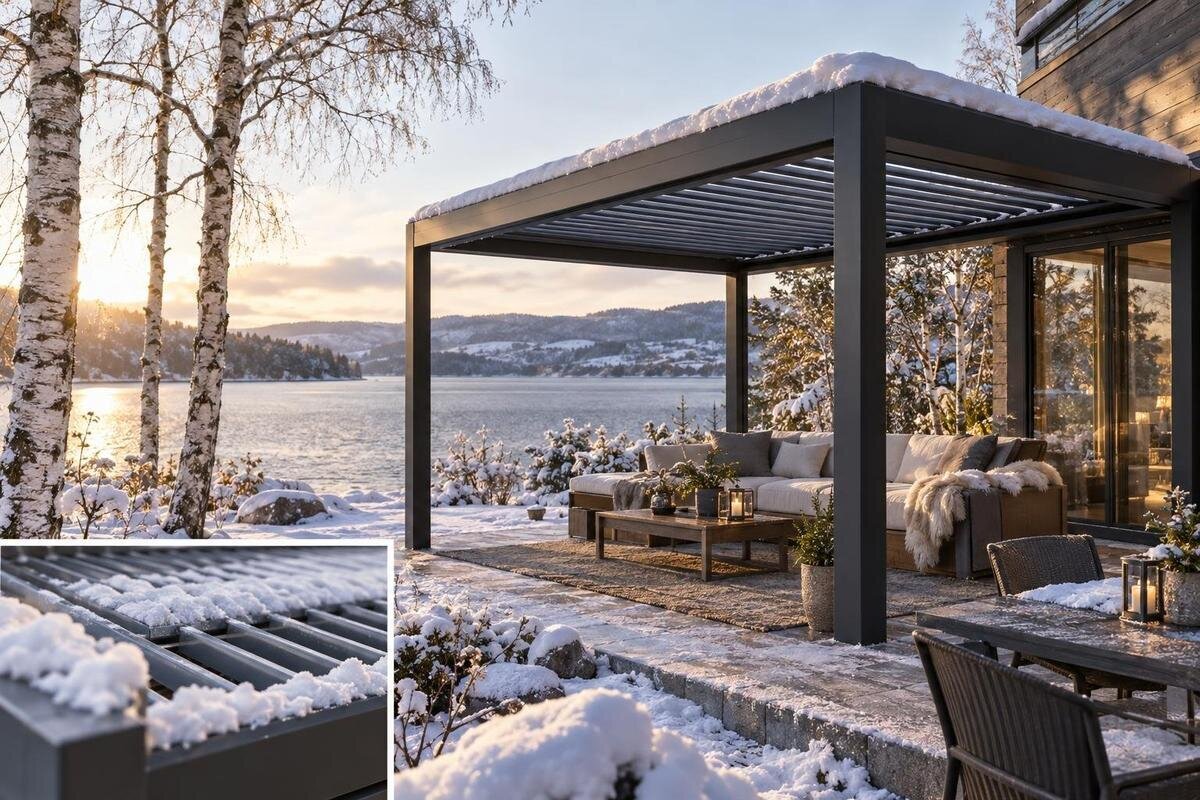
Roof form affects where snow can rest and where it may go. Open beams, adjustable louvers, fixed panels, and fabric or retractable covers are different systems, each requiring its own load information and operating instructions. An open-looking roof is not automatically free of snow accumulation: snow can remain on beams or gather at transitions. A roof that appears easy to adjust may also have a specified winter position. Consider seams, gutters, cross-members, and changes in roof level as places where snow or ice may behave differently than it does on a broad, uninterrupted surface. Do not infer a snow-handling method from product images, a demonstration, or a broad roof-style label.
Ask whether the published rating applies with the roof closed, partly open, open, or in another specified position. Also ask whether the manufacturer gives seasonal instructions for a cover or requires a particular procedure when snow is present. For the listed pergola option, seek explicit information about the exact roof configuration and its winter operation, just as you would for any other choice. If the documentation is silent, do not assume that changing the roof position reduces the load or makes the structure suitable for your site.
Account for drifting and snow from nearby roofs
Snow can accumulate unevenly, not just in a uniform layer across the pergola. Drifting may create heavier deposits near walls, corners, or places where a taller building changes airflow. Snow or ice falling from a house roof can land in a concentrated pile on or beside the structure. A roof edge that seems some distance away may still direct snow toward the planned footprint. Check the site after ordinary winter storms if possible, because existing piles and wind patterns can reveal concerns that are not apparent in summer. A uniform-load figure may not answer these site-specific questions, so show the proposed location and nearby roof edges to a qualified professional and ask whether drift or falling snow needs separate consideration.
Also consider where snow could go if it slides from the pergola roof. It might block a door or walkway, pile against a fence, or land where people or property are exposed. A sloped surface does not make falling snow harmless, and snow shedding is not a replacement for documented capacity or a winter-use plan. Ask the manufacturer how the roof is intended to behave, then consider that guidance alongside the structure’s placement. Record the answer separately from the headline rating when comparing options.
Evaluate the frame and its connections together
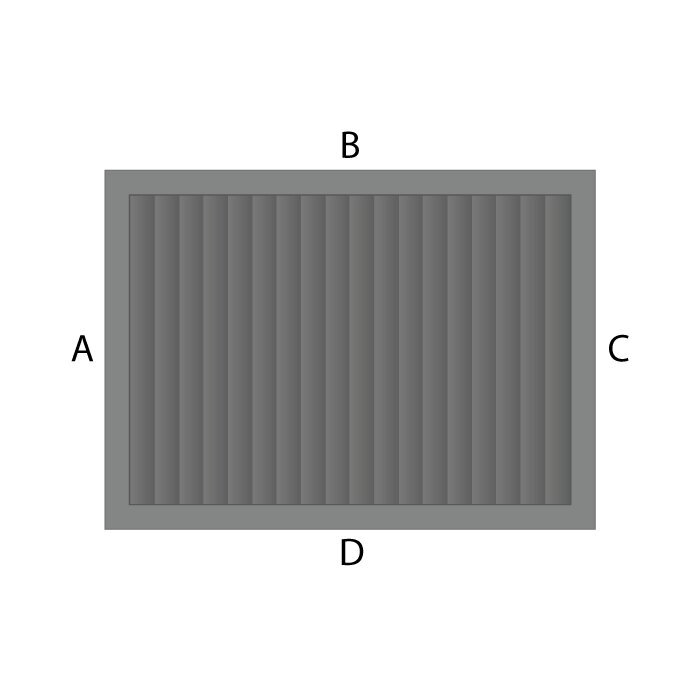
Frame material matters for maintenance and durability, but a material name alone does not show how much snow the complete assembly can support. For wood, ask what grade and treatment are specified and how the members are joined. For metal, ask what material and section details are documented, as well as the specified fasteners and finish. Other frame materials also require model-specific information. Confirm whether optional screens, lighting, covers, or other additions are addressed in the product documentation rather than assuming they have no effect on the approved configuration. Avoid reading strength into a photograph or a broad description such as “heavy duty”; member profiles, connection details, geometry, and support spacing all affect the structure’s performance.
Consider the load path, not just the visible posts: snow presses on roof members, transfers through beams and joints, and reaches the bases and supporting surface. A connection that is poorly documented can be the deciding issue even when a frame member looks substantial. On the pergola product page, look for a specification sheet or installation manual. If the page does not provide the technical details, request them directly and ask whether substituting hardware or changing a connection affects the applicability of the stated rating.
Confirm the anchors and foundation before ordering
The structure transfers its loads to the ground or to the building supporting it, so find out what base and anchoring arrangement the manufacturer specifies. A patio surface, deck, slab, and soil foundation are not automatically interchangeable. The installer or a structural professional may need to assess the substrate and the site’s soil and frost-related conditions. Check whether base plates, anchors, and other required components are included or separately specified, and whether the documentation covers your intended support. Also clarify whether the specified anchor arrangement changes with the foundation type or the selected pergola layout. Do not assume an anchor is suitable just because it can physically attach to a surface.
If the pergola will sit on an existing deck or near an edge, have a qualified professional assess the actual support rather than relying on the deck’s age or appearance. For a ground installation, ask what foundation details are needed for the specific site; do not copy a detail from another product or location. The pergola product details page can help you identify information to request, but the listing alone cannot establish that a foundation or anchor is suitable for your property. Confirm the support arrangement before placing the order.
Review attached installations and the house roof above
An attached pergola adds a connection to the building that needs its own review. Confirm whether the product documentation covers the wall connection you intend, what structural support is required, and who will assess that connection. Siding, trim, or a convenient overhang should not be treated as proof of a suitable attachment point. Establish where the building’s structural support is located before finalizing the pergola position, since a visually convenient wall location may not align with it. If the house roof above could shed snow or ice toward the pergola, include that possibility in the site review rather than focusing only on the pergola’s own roof.
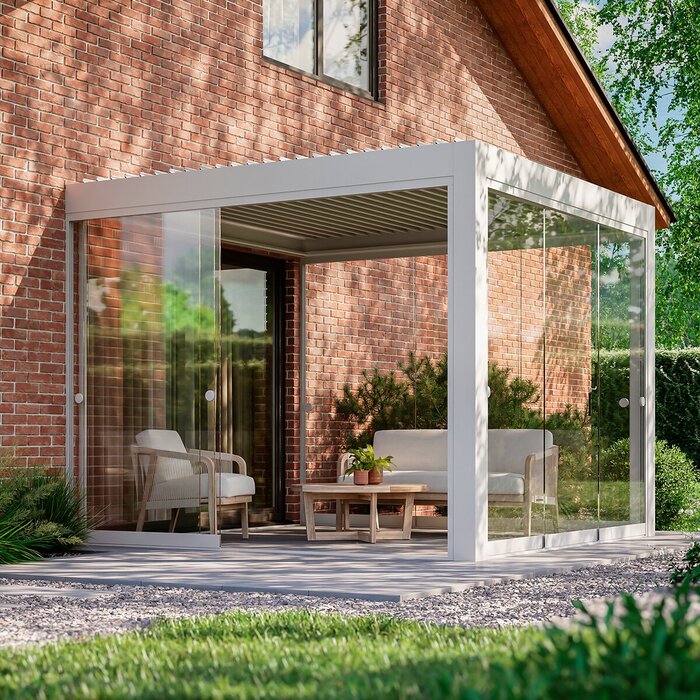
Ask how snow and water may move at the wall: where runoff will drain, whether meltwater could refreeze near an entrance or walkway, and whether falling snow could load the pergola unevenly. These are placement and building-interface questions, not features to infer from a product name. If you are considering a Bloomcabin pergola listing, check whether its documents address your intended attachment arrangement. If they do not, ask the manufacturer and have a qualified professional review the connection. A photo of a wall-adjacent setup is not engineering approval.
Plan installation and winter operation
Installation quality is part of the documented design. Before buying, ask whether the instructions specify an assembly sequence, hardware, bracing, or a particular installer, and whether changes are allowed. Confirm who will assess the site and install the bases, and whether the quoted package includes all required structural parts. Clarify who is responsible for any site preparation, foundation work, attachment review, and final confirmation that the installed configuration matches the documented one. A product’s appearance does not answer these questions. Changes made to accommodate an uneven surface, replace a connector, or alter the roof can mean the finished structure no longer matches the configuration covered by the manufacturer’s information.
Request winter-use guidance too: whether a roof or cover must be moved or removed, what snow-removal procedure is permitted, and what conditions call for keeping clear of the area and contacting a professional. Do not assume that standing on the roof or using improvised tools is safe. Follow the manufacturer’s written procedure, and ask for clarification if none is provided. For another Bloomcabin pergola listing, use its manual rather than its image gallery to confirm operating and seasonal-care directions before ordering.
Compare listings and quotes using the same evidence
Make a record for each candidate that identifies the exact model and roof configuration, the snow-load definition and value, its limitations, the required connectors and anchorage, the foundation conditions, and winter-operation guidance. Note what remains unanswered. Include the date of each document and the person or company that provided any written clarification, so later comparisons do not mix information from different versions. A larger advertised number is not automatically a better fit if it uses a different definition, roof position, span, or support arrangement. Compare like with like, and ask a structural professional to interpret competing documents rather than ranking figures that may describe different things.
Use catalog pages to locate the relevant documents, not to fill gaps with assumptions. If the corresponding Bloomcabin pergola page does not show snow-load details, request the current manual and written confirmation for the configuration being quoted; do the same for every alternative. Ask the seller to identify any separately supplied parts and clarify what the quoted package includes. Keep the model identifier, document version, configuration, and written answers with the quote so you can check that the items ordered match the information reviewed.
Resolve unanswered questions before placing the order
Pause a purchase if the seller cannot connect a written snow-load statement to the exact structure and support conditions, or if the documents conflict. Do not estimate a safe capacity from the roof’s appearance. Request clarification from the manufacturer and site-specific advice from a qualified structural professional. It is useful to list each unresolved point in writing, including which document or drawing needs correction, before approving a quote. The review may show that the planned location, roof form, or foundation needs to change before a suitable option can be selected. Clear answers can rule out one configuration without ruling out every possibility.
Before ordering, make sure the model, roof, accessories, connection method, foundation assumptions, and winter-use instructions are identified consistently in the purchase documents and technical information. Resolve any mismatch between the name or package on a quote and the version described in the manual. Keep the documentation for the installer and future maintenance. The aim is not to find a pergola that merely looks snowproof, but to choose a specific structure and placement that have been assessed for the winter conditions they will face.
Frequently asked questions
What snow-load rating should a pergola have?
There is no single rating that suits every snowy location. The relevant criteria depend on the site and on the pergola’s exact roof, span, supports, and anchoring. Ask a local building professional what criteria apply, then request written manufacturer documentation showing how the complete structure compares with them.
Does an open or adjustable roof make a pergola safe in snow?
Not by itself. Snow may collect on roof members or in transitions, and an adjustable system may have a required winter position. Use the instructions and load information for the exact configuration; do not assume that opening or moving the roof makes it suitable for snow.
Does a metal frame guarantee adequate snow capacity?
No. A material label does not establish the capacity of the complete assembly. Member profiles, connections, roof design, supports, and anchoring also matter. Compare model-specific documentation rather than judging strength by material name or appearance.
Can I install a pergola on an existing deck?
Only after confirming that the deck and its connection points are suitable for the planned structure. A deck’s age or appearance is not proof of capacity. Ask the manufacturer for the required support details and have a qualified professional review the actual deck and anchoring arrangement.
What if the product listing does not show a snow rating?
Ask the seller or manufacturer for the current technical documentation and written confirmation for the exact model and configuration. If the information is unavailable or unclear, pause the purchase rather than estimating capacity from photos or broad marketing claims. A qualified professional can help interpret any documents you receive.
Snow suitability depends on the roof, frame, connections, anchors, and supporting surface working as one documented system under the conditions at the planned site. Compare written evidence rather than product photos or broad material descriptions, and get professional review when the rating or installation conditions do not line up. Once those questions are resolved, style and layout can help distinguish options without obscuring a critical unknown.
