
Buying a Pergola for an Existing Paved Patio

Pergola buying guide
An existing paved patio gives you a defined place to plan around, but the visible surface does not establish either the pergola's usable footprint or its anchoring method. Before comparing styles, map the area you can actually use, locate likely post positions and find out what supports the paving. Then compare the full dimensions, layout and installation requirements of each candidate with those site details. This order helps you identify a fit problem before checkout, when you can still choose a different size or installation approach instead of adapting the patio to an unsuitable order.
Before you buy 1
Measure the usable patio area
Start with the area that must remain usable, not the patio's outside dimensions. Measure the length and width at the proposed location, then note interruptions such as steps, planting strips, fixed benches, drains, door thresholds and existing posts. If the paved outline changes direction or narrows, record those changes on a sketch rather than forcing the space into one rectangle. Include the route from the house to the yard or gate; a pergola should not pinch off the main path. Measurements taken at patio level are more useful than estimates from a photograph. Write down the narrowest usable span as well as the widest; the tightest point can control the layout.
Mark the area you intend to cover and separately mark the parts that need to stay open. This distinction matters on a patio that also serves as a route, dining area or place to move outdoor furniture. A structure can fit within the paving boundary on paper yet leave too little usable floor around chairs, a door or an access panel. For an irregular surface, take several measurements across the planned zone and note the distance from edges to fixed obstacles. Measure from permanent boundaries rather than movable planters, and recheck any reading that determines a post position. A simple sketch with labels, dimensions and a photo gives you a useful basis for comparing product drawings and discussing placement with an installer. It need not be an architectural plan; the point is to record constraints accurately.
Compare the full pergola footprint
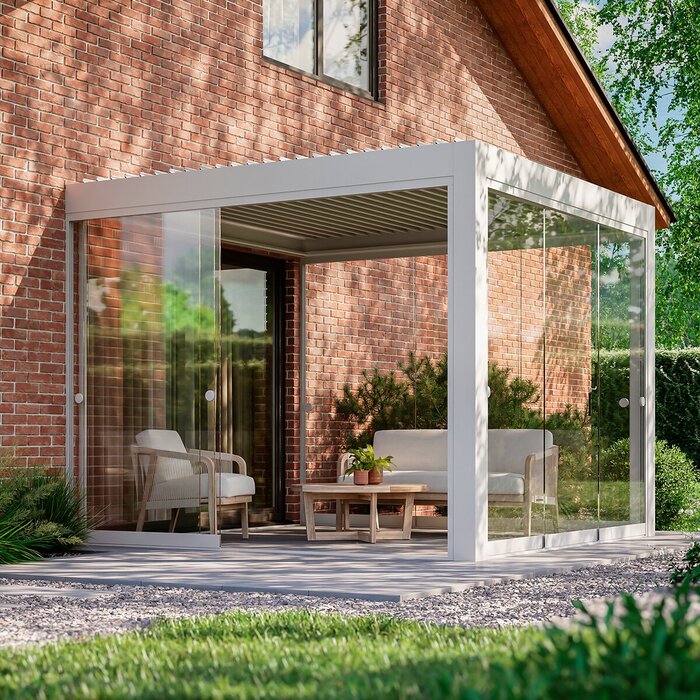
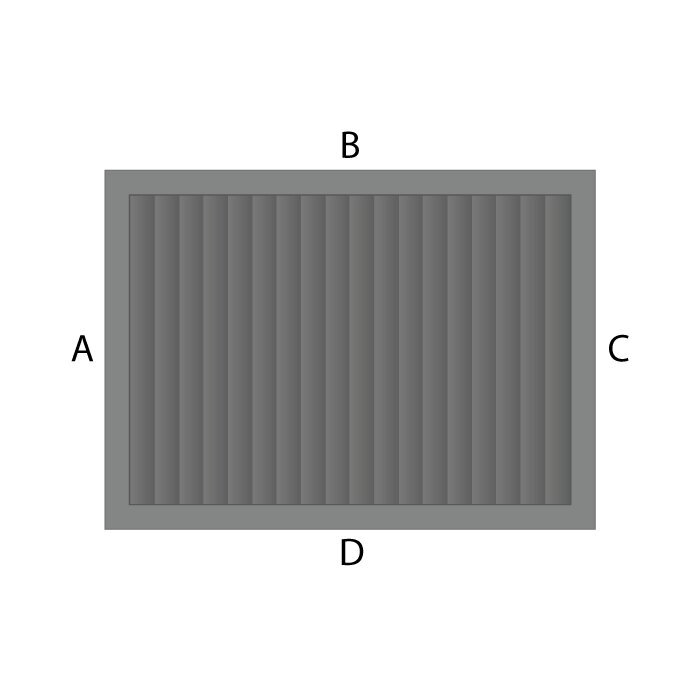
Product dimensions can refer to different points: the space between posts, the roof edges or the overall size. Do not assume a headline dimension is the clear area underneath. Compare a dimensioned drawing with your sketch and note both the post locations and the farthest roof projection. Check which edges the measurements refer to and whether the roof extends beyond the posts. If a diagram or definition is missing, ask before purchasing; guessing from a staged image or model name can put a post in a walkway or a roof edge beyond the usable paving. For this pergola listing, look for a measured plan and installation document rather than relying on the main photograph. Also check the maximum height and overhead clearance if the patio is near eaves or a doorway; horizontal dimensions are only part of the fit.
Compare the interior clearance with the furniture you plan to leave underneath. A table may fit between posts while chairs pulled back for people to sit do not; a lounge arrangement may need room to move pieces for cleaning. Temporarily outline the posts and roof perimeter on the patio with a removable marking method that will not stain the surface, then map the furniture inside it. If the design includes parts that open or move, check the clearance needed in the positions you expect to use; one outline may not show all the space required. Ask for clarification if the drawing and the ordering options use different measurements. Keep the confirmed plan with your order notes so you and the installer are working from the same layout.
Before you buy 2
Find out what supports the paving
A finished patio surface does not show what supports it. Paving may sit over a prepared base, a concrete slab or another construction, and the requirements for a particular pergola determine which details matter. Check any project records, original plans or invoices, and ask a qualified installer to assess the build-up if it is unclear. Do not assume an individual paver can hold an anchor, or that a fixing suitable for one paved surface will work on another. What lies below the finish can affect whether the proposed post positions are usable and which installation method is appropriate.
Before buying, note joints, edges and any areas where the paving is loose, cracked, settled or repeatedly wet. Those observations do not diagnose the base, but they can help an installer decide what needs closer attention. Check whether drains, border stones or paving joints fall at planned post positions; discuss any conflicts before settling on the layout. Ask the manufacturer what substrate and anchoring arrangement the instructions allow for the model you are considering, then have a qualified professional compare that guidance with the actual patio. If fixing through the paving could encounter buried utilities or drainage, resolve that question before work begins. Instructions for a pergola product page may identify installation conditions, but a product photo cannot establish whether your patio meets them.
Plan circulation and furniture clearances
Draw the arrangement around how you use the patio, not around an empty rectangle. Show the path from the house, gate or steps; the opening area of doors; and the space needed to pull chairs back and pass behind them. Existing furniture, a grill, storage bench or planters may be movable, but include them in the plan unless you are prepared to relocate them. Mark windows, vents, outdoor lights, hose connections and other wall-mounted items if a post or roof edge could interfere. Review the layout with furniture in use and when people need to cross the space. A pergola should define an area without blocking normal access to the rest of the patio.
Think through more than one seating arrangement before choosing a footprint. A dining set needs room for people to sit and rise; a conversation area may need an open approach on one side. Measure those zones with chairs pulled out, then compare them with both the inside clearance and the post positions in the plan. Preserve access to drains and service covers, including the space needed to open them fully. If considering another pergola option, compare its documented dimensions with your full-use sketch, not just the part of the patio visible in a product image. When a post conflicts with a route or fixture, moving the structure may solve the problem; shifting furniture may not be practical if it still needs to remain accessible.
Before you buy 3
Choose a freestanding or wall-connected layout
Decide whether the proposed pergola will stand within the patio on its own supports or connect to the house or another wall. A freestanding arrangement gives you more choice about placement, but every support must land where the specified installation can be carried out. A wall-connected arrangement may leave more of the patio clear of posts, yet it raises a separate question: whether the wall, its finish and the connection location are appropriate for the product. Neither format is automatically easier just because the patio is already paved. Choose the layout that fits your plan, then verify its support requirements rather than deciding by appearance alone.
Check the available wall length and height, windows and doors, eaves, gutters and services before considering an attached design. Do not assume a house wall is suitable for a connection; a qualified professional should check the wall and proposed attachment against the manufacturer's instructions. Ask how the roof-to-wall junction and any runoff are addressed in the product's documentation. Likewise, do not assume a freestanding frame can simply be shifted until it fits if that puts a post at a joint or edge. Use this pergola page as a listing to inspect for its stated format and installation information, not as proof that it suits your patio or that an attachment method will work. If needed, have an installer review a marked-up site sketch before you order.
Check slope and drainage conditions
Existing paving is not always level, and many patios slope to move water away from the home. Note the direction water runs, where it collects after rain and where drains or channels sit. A surface that looks level from a doorway may still change across the planned post positions. The pergola's installation instructions determine the acceptable site conditions; do not assume a post can be adjusted to accommodate any slope. If possible, observe the patio after rain as well as on a dry day. Ask a qualified installer to assess the surface and explain whether the specified installation can be achieved without an improvised base.
Consider runoff before finalizing the location. The structure should not block an existing drain or direct water toward an entry, a neighboring area or a place where it already pools. The outcome depends on the design and the site, so ask how roof water is handled if the selected pergola collects or redirects it. Review the installation materials for the product listing and confirm details with a qualified installer; do not infer drainage performance from a picture or the general term pergola. If the patio needs repairs or regrading, coordinate that work before installation, because changing the paved area later may complicate the planned post positions.
Before you buy 4
Confirm anchoring and installation requirements
Read the installation instructions before settling on a model, not after it arrives. Check the approved substrate, anchoring method, post-base arrangement, required clearances and whether hardware is supplied or must be specified separately. Confirm which version or configuration the documents apply to; similar-looking models can have different requirements. If the instructions do not clearly address your type of paved surface, ask the manufacturer instead of assuming that standard masonry anchors are interchangeable. Keep any written clarification with the product details, and ask a qualified installer whether the proposed method is appropriate for the patio beneath your finish.
Find out what the installation work involves in broad terms: site preparation, assembly, access to each post and any surface restoration that may be needed. This is a planning question, not a reason to begin drilling or altering the paving yourself. Ask who is responsible for checking the substrate, sourcing approved hardware and confirming that the finished setup follows the instructions. Use available product-specific installation materials for the listed pergola to check directions; if details are unavailable or unclear, resolve that before checkout. Also confirm which hardware items are supplied and which are separate. A product photograph may not show everything included in the order, so check the written component list.
Plan delivery and assembly access
Access can limit a purchase even when the patio has enough room. Measure the route from the unloading point to the site, including gate openings, turns, narrow passages, overhead obstructions and steps or changes in level. Ask for package dimensions and handling information rather than assuming the parts will fit through the narrowest point because the assembled pergola fits the patio. Confirm whether the delivery location and assembly area are the same, and where packages can be kept out of the way until work begins. If an installer needs to bring equipment to each post position, keep that route clear in your plan.
Review delivery terms and who is expected to unload or move the order; responsibilities can vary by supplier and delivery service. Confirm the access conditions for your order, rather than relying on a general description. Moving bulky parts or equipment across finished paving may cause scuffs or damage, so ask the installer how the route will be managed and do not assume surface protection is included. Compare the practical requirements with one pergola listing and request package and installation details before purchase. Reserve a staging area that does not block a door, walkway or drain. If the route crosses a finished indoor area, decide in advance who will prepare it and how it will be kept clear.
Before you buy 5
Match shade and weather expectations to the design
Decide what you need the pergola to do during the hours you use the patio. Shade changes as the sun moves, so note when the space feels too bright and where you want shade at those times. The roof arrangement can affect how much light passes through, but the word pergola alone does not tell you how much coverage a specific product provides. Look for product-specific descriptions or drawings of the roof and ask how the space behaves in the intended configuration. If shade over a particular table or seating area matters, mark it on your plan and ask about coverage rather than judging from a photograph taken at an unknown time of day.
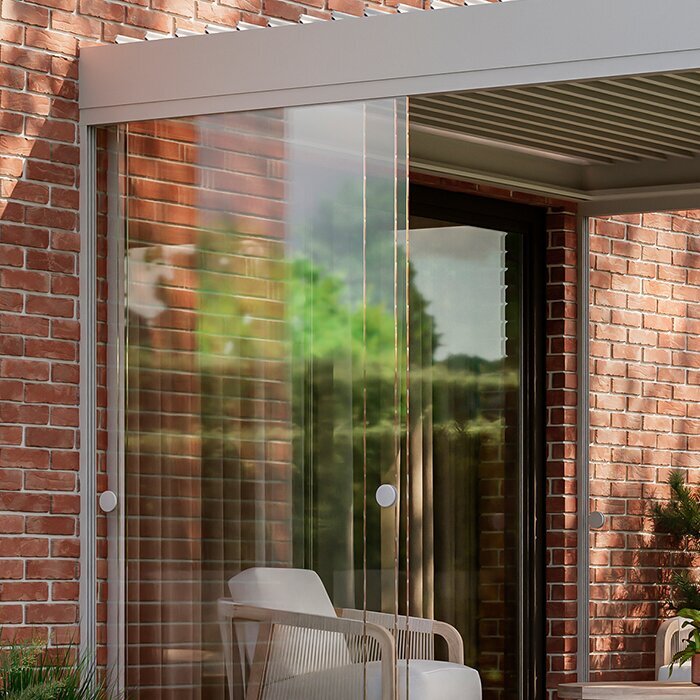
Treat rain coverage as a separate requirement. Some pergola designs leave openings overhead; others may include a cover or adjustable components, but details and weather limits need to be verified for the chosen model. Do not assume that shade means rain protection, or that an image showing a roof means the patio will stay dry in every condition. Ask what the manufacturer says about water handling and where runoff would fall relative to doors, furniture and the paved surface. Compare those details with a pergola listing and decide whether the stated protection matches your plans. If a fully sheltered outdoor space is essential, define that need before comparing styles so appearance does not stand in for a performance claim.
Verify the order before checkout
Before checkout, reconcile the order with your site plan: exact product and configuration, dimensions, orientation, number of supports, selected color or options, included parts and any anchoring components identified in the instructions. Verify that the dimensioned drawing matches the version in your cart, not just a category image or a nearby size option. Keep a record of the chosen location and the anchoring method confirmed for your patio. If installation needs an assessment, settle who will provide it and when; a product page is not a site inspection. This comparison can catch a mismatch in footprint, direction or components before the order is placed.
Ask about the purchase terms that matter to your decision, including delivery, assembly, returns and warranty conditions, and read what applies to the exact item. Do not infer that a service or accessory is included unless the order states so. If your area, community association or wall-attachment plan may involve an approval process, ask the relevant local office or association what applies before ordering; requirements depend on location and project details. The decision is ready when the physical fit, paving support, installation arrangement and order paperwork agree. Then you can compare pergolas by how well they suit the patio, rather than by which photograph looks most appealing.
Frequently asked questions
Can I anchor a pergola directly to patio pavers?
Not automatically. The paving may not be the support specified for the pergola, and the base beneath it is not visible. Check the model's installation instructions and have a qualified installer assess your patio. Use only an anchoring method confirmed as compatible with both the product and the actual surface.
How much patio space should I measure?
Measure the clear area available for the posts and the full outline of the roof, not just the patio's outside boundary. Note doors, paths, drains, fixed objects and furniture movement, then compare those measurements with a drawing that explains what the product dimensions refer to.
Do I need to remove the paving first?
There is no single answer for every patio and pergola. The installation method may require access below the surface or another approved arrangement. Check the instructions for the exact product and ask a qualified installer what your site requires before you buy; do not assume the pavers must stay or be removed.
Will a pergola keep the patio dry?
Not necessarily. Shade and rain protection are separate considerations, and a pergola roof may have openings or specific weather limitations. Check the chosen product's documentation for coverage and water handling, then decide whether those details meet your plans.
When should I check for local approvals?
Before ordering if the proposed work may be subject to local or community review, particularly if it involves connecting to a house wall or changing the patio. Ask the relevant local office or association about your address and plan; requirements depend on the location and project.
A paved patio is a useful starting point for planning, but it does not establish whether a pergola will fit or how it should be anchored. A measured sketch shows whether posts, roof outline, furniture and paths can coexist; product drawings and installation instructions show what the chosen model requires; and a qualified installer can check whether those requirements match the actual paving and support below it. Resolve unclear dimensions, anchoring and access before ordering. That lets you choose a pergola that suits the way you use the patio instead of trying to make a delivered structure fit afterward.
