
Buying a Pergola for an Exposed South-Facing Terrace
Pergola buying guide
Buying a pergola for an exposed south-facing terrace starts with understanding where direct sun falls, not with choosing a frame from a photo. Roof style determines whether shade is fixed, adjustable, or partial; footprint, post placement, and attachment style determine how the structure fits around doors, furniture, and routes through the space. Materials bring different care requirements, while open exposure raises questions about wind, rain, and anchoring. A useful comparison ties these decisions together: map the hours and areas you want shaded, then verify the exact configuration and installation requirements before ordering.

Before you buy 1
How south-facing sun reaches your terrace
On a south-facing terrace, direct sun can reach the space for long stretches, but the compass direction alone doesn't predict when rays hit a particular seat. Latitude, season, nearby buildings and trees, roof overhangs, and the terrace's exact orientation all change the pattern. The sun sits at a different height through the year, and low-angle light can reach beneath a roof edge or through open roof sections. A pergola that shades a table at one hour may leave it exposed later, especially on a terrace with few surrounding obstructions.
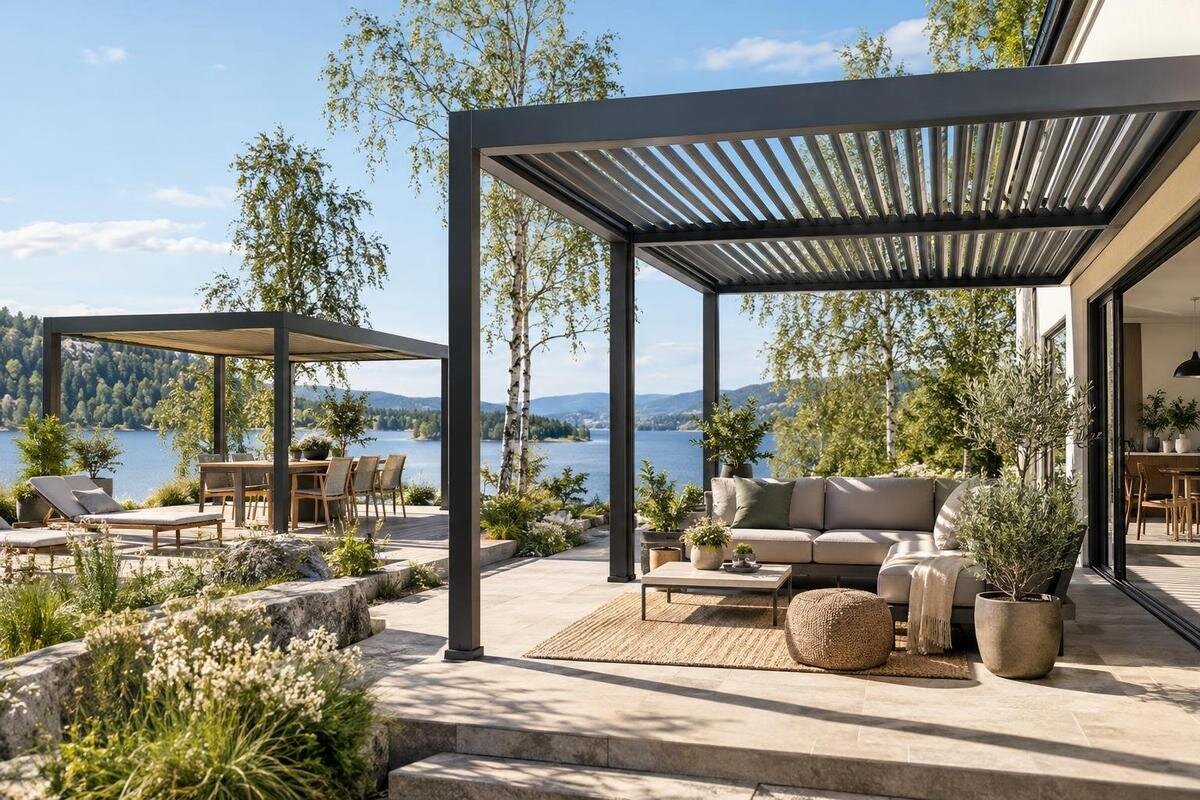
Before browsing, note which areas matter and when: perhaps a dining table at midday, a chair in late afternoon, or a doorway that should remain open and bright. Keep a short, time-stamped record of sun on the terrace during the hours you normally use it, and note seasonal changes that matter to you. Record whether light reaches from overhead or from the side, since roof coverage and side exposure are separate questions. A listing such as a pergola listing can be compared against your notes, but its photo cannot show your terrace's moving shade pattern.
Set a realistic shade target
Decide what enough shade means for your household before picking a design. You might want to cover one table, most of a seating group, or nearly all of the usable terrace. Covering every paved inch can add visual bulk where shade isn't needed; a smaller roof may leave a chair or table edge outside its shadow. Include furniture in the decision, not just the empty floor: a table may need shade through a long meal, while lounge chairs can be repositioned as the sun moves. Prioritize the zone you expect to use most and the hours when direct sun is hardest to work around.
Think separately about how much light you want to filter and how much control you need. A broken pattern of shade may suit a quick lunch but feel inconsistent for a longer stay; a cover that closes more completely may reduce open-sky views. The actual result depends on the roof's coverage and position, not on the word pergola. For a catalog pergola, check whether the product information states the covered area and available roof positions, and ask about compatible add-ons before treating them as part of the purchase. Side screens are a separate choice, not proof that the roof blocks low-angle sun.
Before you buy 2
Fit the footprint to the terrace layout
Separate roof dimensions from the usable space beneath it. Posts, beams, and any overhang affect where a table can sit and whether chairs can pull back without striking a support. On a sketch, mark the terrace edges, doors, and fixed items, then outline a candidate's overall dimensions with tape or chalk if the surface allows. Place the furniture inside that outline and preserve the route from the house to stairs or the rest of the yard. A broad roof measurement can still leave less clear floor than expected once supports and seating are accounted for.
Compare the inside span and under-beam height with real furniture, not just the advertised overall width and length. Consider whether a door can open fully and whether posts would narrow a route you use often. Allow for planters or storage that will stay in place. A page such as one product page to inspect should be checked for a dimension diagram showing measurement points and post layout; if it is missing or unclear, ask before ordering. Record clearances separately from the roof edge, since a beam may extend beyond its supports.
Compare roof styles and shade control
Roof styles offer different compromises. Fixed open rafters or slats preserve a view of the sky but cast a broken pattern; adjustable louvers, where offered, change the opening; and a retractable canopy can expose more sky when drawn back. A more continuous covering can block more overhead light. These are broad categories, not performance promises: spacing, material, dimensions, and sun angle determine the actual shade. Even a continuous roof may not stop low rays from the side, while an open roof does not provide a rain barrier. Compare the assembled configuration rather than relying on category names.
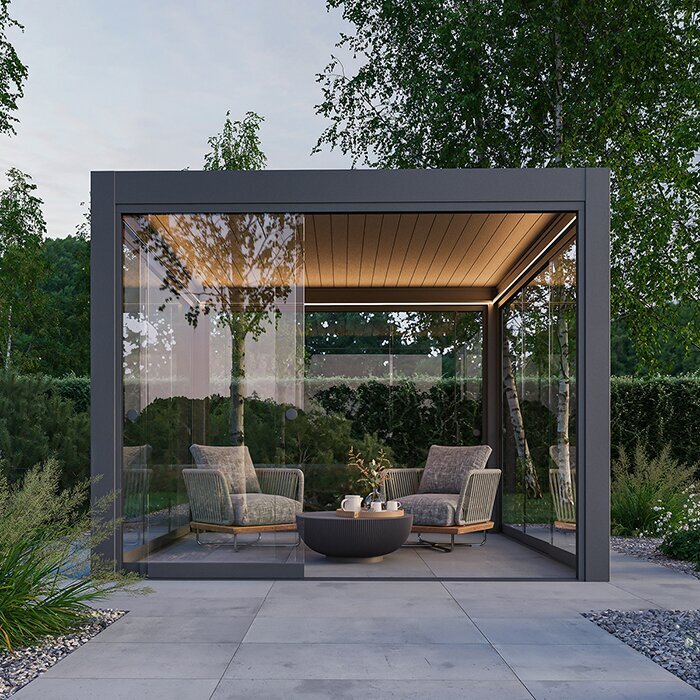
Ask what each roof position does for the area you marked, whether the coverage changes when the roof is opened or retracted, and what care the mechanism requires. Check the instructions for positions allowed in wind or rain; don't assume an adjustable roof should stay in any position in every condition. A page like another pergola product page is useful to compare only through model-specific specifications and drawings. A photo of slats or a canopy can't establish its opening range, rain performance, or the amount of sun it blocks. If controls are overhead, consider whether users can reach them as intended.
Before you buy 3
Choose materials with upkeep in mind
Frame material affects appearance and care, but a material label alone isn't enough to judge suitability. Wood can suit a natural or traditional setting, with upkeep depending on species, treatment, and finish. Metal frames may create a different visual profile, but coatings, fasteners, and care instructions vary. A fabric or textile roof brings different cleaning and replacement considerations from a permanent frame. Compare the material and finish specified for the complete model, including connectors and roof parts. A photo or a broad material name doesn't answer every maintenance question.
On a sunny, exposed terrace, check the maker's care instructions for the exact finish and any shade fabric, along with guidance about cleaning, fading, corrosion, or refinishing where relevant. Consider whether the color, texture, and visual weight work beside the home's exterior; a light background in a product image can affect how a finish appears. If a listed pergola design appeals to you, confirm its materials and finish details rather than inferring them from appearance. Also check how replacement covers or hardware are handled, without assuming those parts are included.
Choose an attachment style that suits the site
Freestanding and wall-attached layouts solve different space problems. A freestanding pergola can sit away from the house if there is room for its supports and the surface can accommodate the specified anchoring. A wall-attached design can place a roof edge alongside the building and may keep posts away from that edge, but only if the model is designed for attachment and the wall is suitable. Neither style is automatically better for an exposed terrace. Let door locations, furniture, the existing surface, and the intended shade area guide the comparison.
For an attached model, have a qualified installer consider the building wall, exterior finish, water management at the junction, and mounting details in the product instructions. For a freestanding model, ask how the support points relate to the terrace surface and what anchoring the exact design requires. A finished deck, tiled slab, or waterproofed surface isn't automatically suitable for drilling or added loads; the construction underneath matters. For this listed pergola option, confirm the intended installation style and required clearances in the model documentation. Have the installer confirm compatibility rather than adapting the product by guesswork.
Before you buy 4
Check wind, rain, and other exposure
Direct sun may be the main reason for shade, but an exposed terrace also faces wind, driving rain, and possibly snow or ice, depending on local conditions. A pergola shouldn't be assumed to be a storm shelter or a waterproof roof. Open, adjustable, fabric, and solid-cover systems handle precipitation differently, and a roof's permitted position can depend on the exact model. Look for written limits for wind and snow where applicable, requirements for roof position, and information about water runoff. Check that the information covers the size, accessories, and installation arrangement you intend to buy.
Consider where rainwater will run off and whether a drip line would land on a doorway, walking route, or furniture. A design that blocks overhead sun but sends water into the busiest part of the terrace may not fit. For a product listing for comparison, treat general copy as a starting point and request model-specific documents when exposure limits or drainage are unclear. A qualified installer can assess the site's shelter, surface, and mounting needs; don't substitute visual sturdiness or frame material for that assessment. If the conditions exceed published limits, compare another configuration rather than planning to use it beyond its stated range.
Match the pergola to the house and setting
Fit is visual as well as measured. Compare the frame's height, beam depth, color, and roof outline with the house, railing, and terrace size. A large-looking roof may dominate a small patio; a low line can compete with windows or views, while a finish close to the exterior may blend in. These are questions of proportion, not rules. Use a scaled sketch and photos taken from the places where you'll see the structure, including inside the adjoining room. Consider whether it frames a seating area or blocks a view you value.
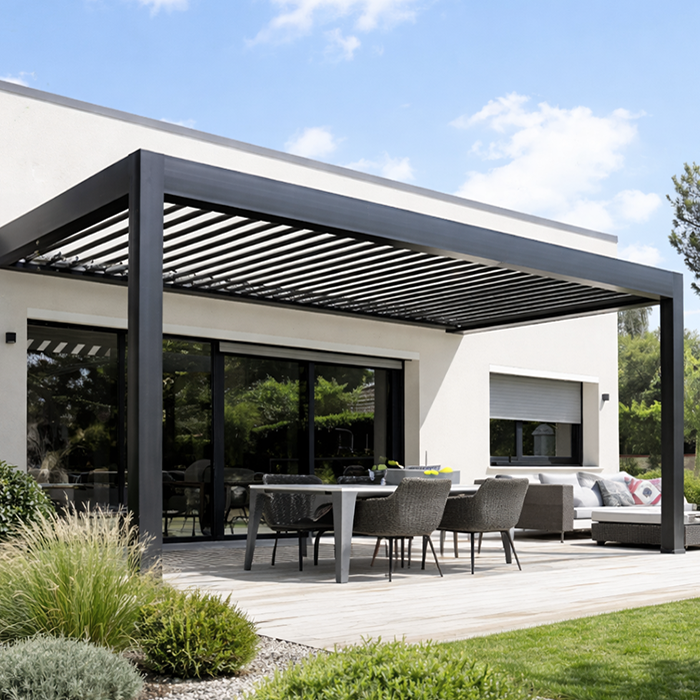
Check sightlines from windows and from the seats where you'll spend time. Posts can interrupt a path, and horizontal beams can change a view from indoors. If privacy matters, treat screens as a separate feature and verify their position and compatibility; don't expect the roof alone to screen neighbors. Use product photos as style references, not scale drawings. On the product page for a pergola, confirm which finish and configuration are pictured, then compare them with the stated dimensions. A simple overlay of the proposed footprint on a terrace photo can help reveal awkward proportions.
Before you buy 5
Confirm the full configuration before ordering
Identify the exact model and configuration, then compare its technical information with your notes. Verify overall width, length, height, clear span, post locations, roof type, and finish; check whether listed dimensions refer to the frame or roof edge. Look for which parts are included, such as a canopy, louvers, side panels, fasteners, or drainage parts, and which options are separate. Don't assume accessories shown in a photo come with the product. If the documents don't state a measurement, material, or weather limit you need, ask the seller or manufacturer for written clarification rather than filling the gap with a guess.
Ordering also has practical constraints beyond the structure itself. Measure the route from the delivery point to the terrace, including gates, stairs, and tight turns, and ask about package dimensions and handling. Review assembly instructions and ask whether professional installation is recommended or required and what site preparation is specified. Check who is responsible for receiving the shipment, and read the store's delivery, damage-reporting, cancellation, and return terms before paying; don't infer dates or included services from a product image. If a contractor will install the pergola, share the exact configuration and documentation before ordering so the quote matches the model.
Compare candidates on the same terms
Compare a few actual candidates in a simple table using the same categories: shade in your priority zone at the hours you care about, overall footprint and clear area, roof control, material and finish care, exposure limits, attachment style, and included parts. Mark nonnegotiables separately from preferences. A larger cover isn't automatically a better buy if it crowds access or can't be installed on the available surface. More adjustable shade isn't an advantage unless you expect to use that control and the model's stated exposure limits suit the site. This keeps one appealing photo or feature from overruling the constraints that shape everyday use.
Before placing an order, match the exact model to the terrace you measured. Confirm that the roof covers the priority seating area at the hours you care about, posts leave a comfortable route, and the intended installation and exposure conditions are supported in the documentation. Keep written answers with the order details, including any options that change the roof or anchoring requirements. If a key dimension or limit remains unclear, pause and compare a better-documented alternative. The best choice balances dependable shade, usable floor area, appearance, upkeep, and an installation that can be properly verified.
Frequently asked questions
Does a south-facing terrace need a solid pergola roof?
Not necessarily. The right amount of cover depends on when direct sun reaches the places you use and how much open sky you want to keep. An open or adjustable roof may provide partial, shifting shade; a more continuous cover can block more overhead light. Check the specific design and its stated coverage rather than choosing by roof label alone.
Will an open pergola shade a table in the afternoon?
It may, but the result depends on the roof's dimensions and spacing, the table's position, and the direction of the sun at that time. Rays can enter from the side or pass through gaps. Map the afternoon sun on your terrace and compare that pattern with the candidate's drawings before buying.
Are pergolas waterproof?
Not by default. Open roofs leave gaps, and adjustable or fabric covers have different rain performance from solid coverings. Even a covered design may have specific limits or drainage requirements. Confirm what the exact model and configuration are designed to handle; don't rely on a product name or photo to establish that it is waterproof.
Should I choose an attached or freestanding pergola?
Choose based on the layout, the available support points, and whether the building wall is suitable for the model's attachment method. Freestanding posts also need a compatible surface and specified anchoring. Have a qualified installer assess the actual terrace and confirm the intended installation before you order.
What should I confirm before ordering?
Check the exact model's overall and clear dimensions, post locations, roof configuration, materials, included parts, and applicable exposure limits. Confirm the installation requirements for your terrace, then review package dimensions, assembly needs, and delivery and return terms. Ask for written clarification if any detail that affects fit or use is missing.
For an exposed south-facing terrace, the right pergola is not necessarily the one with the largest roof or the most features. It is the design that shades the places you use at the hours that matter, fits the measured layout, and has installation and exposure requirements suited to the site. Let those practical limits narrow the choices; then weigh style and maintenance to settle on a configuration you can use with confidence.
