
Buying a Pergola With Side Screens: Privacy and Weather Considerations
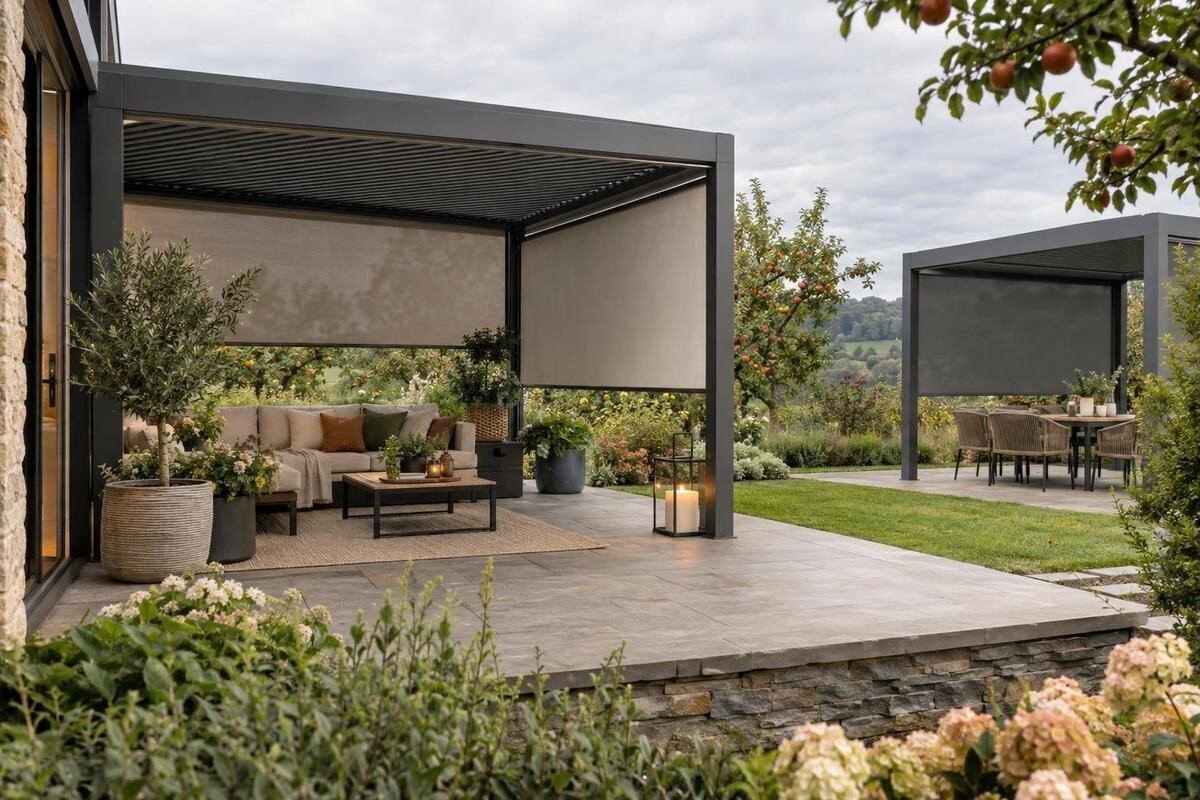
Pergola buying guide
Side screens can make a pergola feel more private, but the right setup depends on where views come from, how much of each side you want covered, and what conditions the screens will face. Before you buy, separate three questions: what coverage you need, what the screen material and operating system actually provide, and what the manufacturer says about wind and seasonal use. A product photo alone cannot answer those questions.
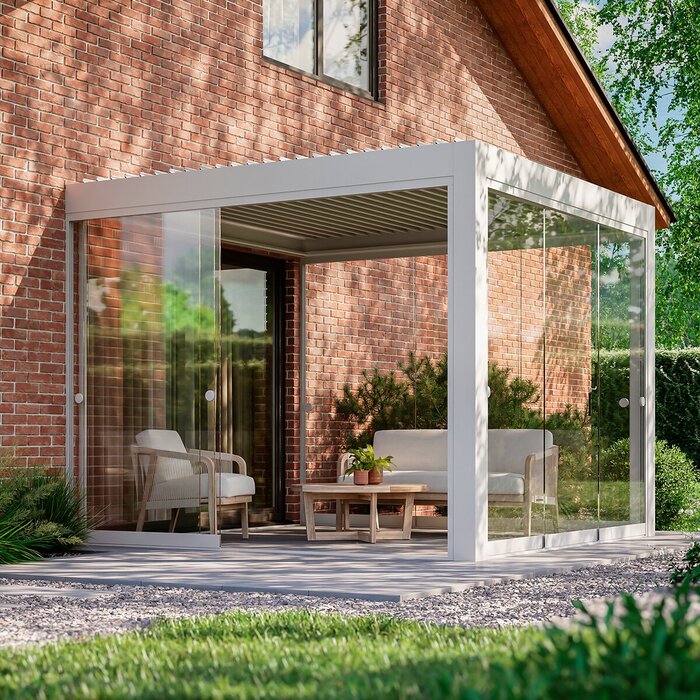
Map the views you want to block
Start with the views you want to interrupt, not with a default number of panels. Stand or sit where you expect to use the pergola, then note direct sightlines from neighboring windows, doors, patios, walkways, or a street. Check more than one position: a screen that blocks a view from a dining chair may still leave someone visible while standing, and a space that feels private from the house may be exposed from a side path. Mark each sightline on a simple yard sketch and note when it is most noticeable.
Consider whether you need privacy all day or only during particular activities. That can help you decide whether to investigate fixed coverage, a partial screen, or an option that can be opened when not needed. Consider the height of seated and standing users as well: coverage that works around a table may not address views into the area from a neighboring second-story window. When reviewing a pergola product listing, use it to assess only what the page actually documents about the pergola; confirm separately whether screens are included or offered as compatible additions. Ask for coverage details and any gaps at the top, bottom, and corners. Your sketch gives the seller a specific view to address, while a product photo alone cannot show how private the finished arrangement will feel.
Choose which sides need coverage
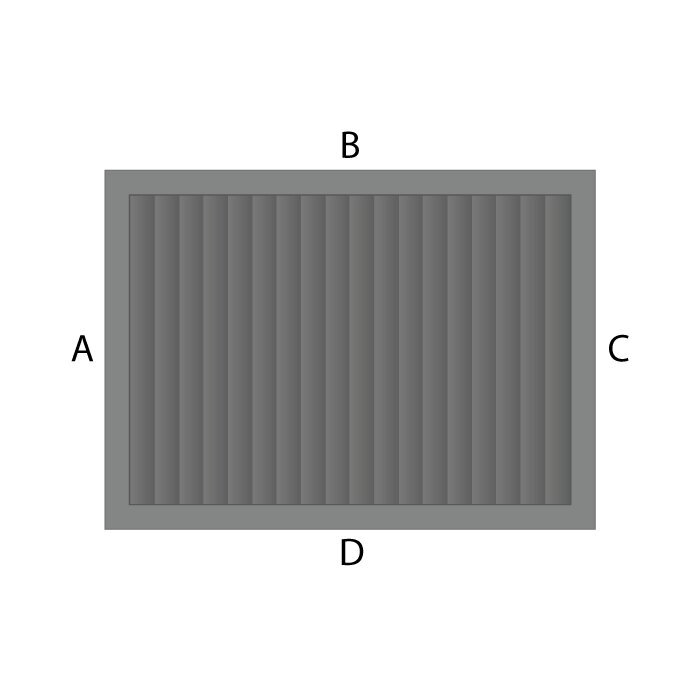
Translate your sightline notes into a side-by-side plan. One side may need substantial coverage while another needs only a short section, or no screen at all. Think about entry points, steps, and the routes people use to reach chairs or a table. A screen that blocks a view but makes a commonly used route awkward may be a poor fit for everyday use. Also note whether you want the screen to span the full side or stop short to preserve a view or opening.
Do not assume that separate panels meet neatly at a corner or form a continuous enclosure. Check how the proposed arrangement treats corners and openings, and whether coverage can be divided into sections. Include any gate, doorway, or service access in the sketch, because these practical openings can create the very sightline you are trying to address. Before comparing another pergola listing, write down which sides you want screened, the approximate area on each, and whether coverage should be fixed or adjustable. Then confirm that the screen arrangement being discussed matches those requirements. This makes comparisons more useful than choosing by the total number of screens alone.
Compare screen materials and openness
Material and construction affect how much you can see through a screen, how much light it lets through, and what kind of care it needs. A label such as mesh, fabric, or slatted panel does not by itself tell you how open or opaque the surface is. Weave, spacing, color, and the viewing angle can all affect what is visible from either side. Compare descriptions of the actual screen surface rather than assuming that two products with similar names will provide the same privacy.
Look for screen-specific information about material, openness or transparency, sun exposure, cleaning, and any stated weather limits. If a sample is available, seeing it at the intended viewing distance may help you judge appearance, but still check the written specifications. Ask whether the surface looks materially different from the outside than it does from within the pergola, especially if privacy is important after dark when interior lighting may be in use. When reviewing the separate pergola listing, do not transfer a description of the pergola frame to an accessory: confirm that the information refers to the screen itself and to the version you would order. Images and color names are not substitutes for those details.
Balance privacy with airflow and views
A more opaque surface can block more views, but it can also reduce the view outward and make the space feel more enclosed. A more open screen may preserve a sense of openness, yet leave more sightlines visible. Neither approach is right for every yard. Decide what matters most on each side: privacy at a seating area, a clear view across the yard, or a boundary that feels less exposed without hiding everything behind it.
Consider what happens when you look toward the screen from different seats and at different angles; gaps or open sections may matter more from one position than another. If airflow is important, ask for information about the screen's openness rather than guessing from a photograph. Also consider whether a screen would interfere with the view needed to supervise children, pets, or activity elsewhere in the yard. If the linked pergola page does not describe screen options, request the details for any compatible screen separately. Think about the experience of the whole space, not just how the screen looks in a close-up: a small change in coverage can affect both privacy and the feeling of openness.
Confirm the screens fit the pergola
Treat the screen and pergola as a matched configuration unless the manufacturer confirms otherwise. Check the exact pergola model, the sides where screens can be fitted, the dimensions of the openings, and any tracks, brackets, or other components required. Similar-looking frames are not proof of compatibility. If the screen is intended to attach to a wall or another existing structure, confirm that arrangement with the manufacturer or a qualified installer rather than assuming that a standard accessory will fit.
Clarify whether the screen is included, sold separately, or available only with a particular configuration. Ask which parts are supplied and whether the screen can be operated as planned without interfering with access or other components. Confirm who is responsible for supplying any screen-related parts that are not listed with the pergola, so the proposal and final order describe the same arrangement. Use that pergola product page to identify the model under consideration, then verify screen compatibility and requirements for that exact model. If the product information does not answer those questions, get an explicit response before ordering. A mismatch discovered after purchase can affect both the fit and the way the space can be used.
Check wind exposure and screen limits
Think about how exposed the planned location is. An open yard, a passage between buildings, or a corner with little surrounding shelter may experience different wind conditions from a more sheltered spot. Nearby trees or structures can influence local airflow, but their presence does not establish that a screen is suitable for the site. A broad, relatively closed panel may behave differently in wind from an open-weave surface, so do not judge wind performance by appearance alone.
Look for manufacturer guidance that applies to the pergola with the screens installed in the configuration you intend to use. Ask whether the instructions specify limits or steps to take in certain conditions, such as opening or securing a screen. Describe the site's exposure accurately when asking: a sheltered patio and an exposed corner lot may call for different advice even when the pergola model is the same. For a further pergola product page, a general description of the pergola is not enough to establish screen limits. If the information is missing or unclear, ask the manufacturer or seller for written guidance and consult a qualified local professional about the site. Do not estimate a safe wind limit from a photograph or from another model.
Check exposure to sun, rain, and seasonal weather
Consider what the screens will face on each side of the yard: prolonged sun, wind-driven rain, humidity, dust, or cold-weather conditions. These exposures can vary around one pergola, especially where one side is more sheltered than another. Check the manufacturer's information for the screen material's intended outdoor use and care. Ask how to clean it and whether the instructions call for particular storage or handling during parts of the year. Avoid assuming that a material is weather-suitable just because it appears in an outdoor product photo.
A side screen does not establish that the roof is watertight, that water will be directed away, or that the overall pergola is suitable for every seasonal condition. If rain or snow protection is part of your buying decision, evaluate the roof and its stated limits separately from the screens. Think about where water may collect or be blown near the screened area, since a screen can change how exposed the seating zone feels without changing the roof's capabilities. Before using the pergola details to make a weather plan, check that each claim applies to the screen as well as the pergola. Ask whether screens are intended to remain in place in the conditions you expect at your site, and follow the manufacturer's care and use guidance.
Account for daylight and changing sun angles
Side screens change what you see and how much light reaches the area beside them. Think about the sun at different times of day and during different seasons, not just the conditions when you first view the space. A screen may block a view and also make that side feel darker; a more open surface may retain more of the view but provide less visual separation. The effect depends on the screen's material, color, coverage, and position, so avoid treating a picture as a reliable forecast of the light at your home.
Observe the planned location at the times you expect to use it, and note which side faces the most direct sun or an important view. Record this on more than one day if possible, since nearby trees, fences, and buildings can create changing shade patterns. If a product image for a listed pergola option helps you compare appearance, make sure the screen material and configuration shown match what you are considering; otherwise it may not represent the final setup. Ask whether the screen is fixed or adjustable, if that information is offered, and consider whether changing its position would help you balance privacy with daylight. Choose the arrangement for how the space works across the day, not for one ideal moment.
Check operation, upkeep, and everyday access
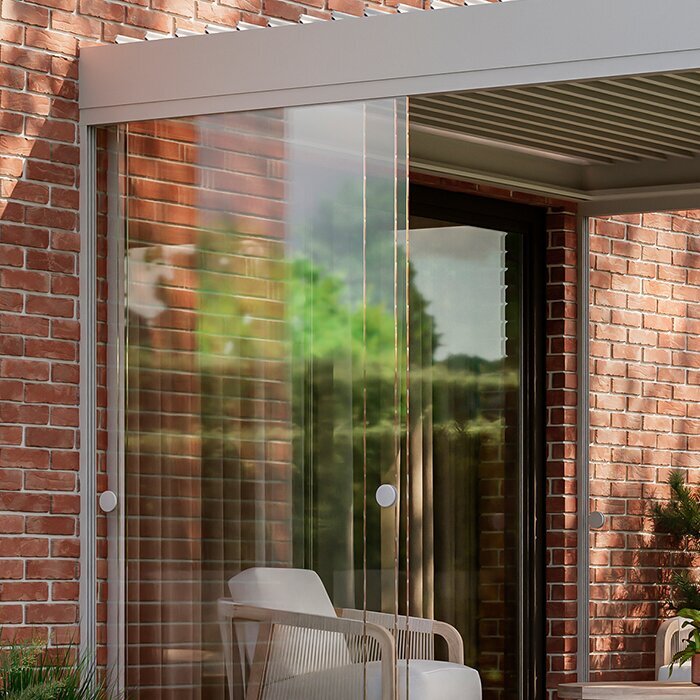
If a screen can be opened, closed, rolled, or moved, understand how that operation works before choosing it. Ask how it is secured when open or closed, how much effort it takes, and whether the mechanism needs clear space along the frame. A fixed screen may suit a side where coverage is always wanted; an adjustable option may be useful where views, sun, or access change. These are different use patterns, not a ranking of screen types. Check that the arrangement leaves practical room for people to enter, move around furniture, and carry items through the area.
Ask what routine care the manufacturer recommends for the screen material and any tracks or moving parts. Find out whether cleaning requires access to both sides, whether the screen should be opened or stored in particular conditions, and whether replacement components are identified. Do not assume a mechanism is maintenance-free or easy to operate based on a product photo. The best choice is one whose day-to-day operation fits the people using the space and whose care instructions are realistic for the time you want to spend maintaining it.
Compare the full order specification
Compare options using the same set of details rather than relying on a general impression. Record the pergola model, the sides and areas to be screened, the screen material and openness, how it operates, and what components are included. Add any stated compatibility, wind, weather, and care information that matters for your site. Keep unknowns visible instead of filling them in from a similar product or an image. A short comparison sheet makes it easier to see whether one option offers the coverage you need or simply has a more appealing presentation.
Before placing an order, make sure the written product information or seller response identifies the intended screen configuration and any separately purchased components. Confirm the side orientation, material, operation, and any conditions or limitations that affect your planned use. If an important detail is unclear, pause and ask for clarification rather than assuming the listing covers it. This is especially important when a pergola and screens are shown together but their inclusion or compatibility is not stated. A precise order record helps ensure that the privacy plan you compared is the one being purchased.
Frequently asked questions
Do side screens make a pergola fully private?
Not automatically. Privacy depends on which sides are screened, the coverage and any gaps, and the angle of view. Check from the places where you sit and stand, including nearby paths or windows.
Will a pergola side screen keep out rain?
Not necessarily. Screen materials and edges vary, and a side screen does not establish how the roof handles rain or drains water. Check the screen and roof information separately.
Is mesh always the best choice for a windy yard?
No. The word mesh alone does not tell you its openness, wind limits, or suitability for a particular setup. Look for manufacturer guidance that applies to the exact screen and pergola configuration.
Should I screen every side?
Only if that coverage suits the site and how you use it. Consider sightlines, access, airflow, daylight, and exposure on each side; more screening is not automatically more useful.
What should I confirm before ordering?
Confirm which screens are included or sold separately, the sides and areas they cover, material, operation, compatibility, and any wind, weather, and care guidance. Get unclear details in writing before you commit.
The best pergola with side screens is not necessarily the most enclosed one. It is the arrangement that interrupts the sightlines you identified without making access, airflow, or daylight less comfortable than you want, and whose stated limits match your site's exposure. Compare screens as a specified part of the pergola purchase, not as an assumption attached to a product photograph. That keeps both privacy and practical weather considerations in view.
