
Buying a Bioclimatic Pergola: How to Evaluate Its Adjustable Roof
Pergola buying guide
Buying a bioclimatic pergola is less about choosing the roof with the most movement on paper than finding adjustment that is useful in your space. Before ordering, learn how the roof operates, which positions it can actually hold, and what those positions change during normal use. Then check controls, weather limits, rain handling, and care requirements against the documentation for the exact configuration. This helps separate practical roof features from assumptions based on the word bioclimatic, a product photograph, or a simple open-and-closed description.
What the adjustable roof is meant to change
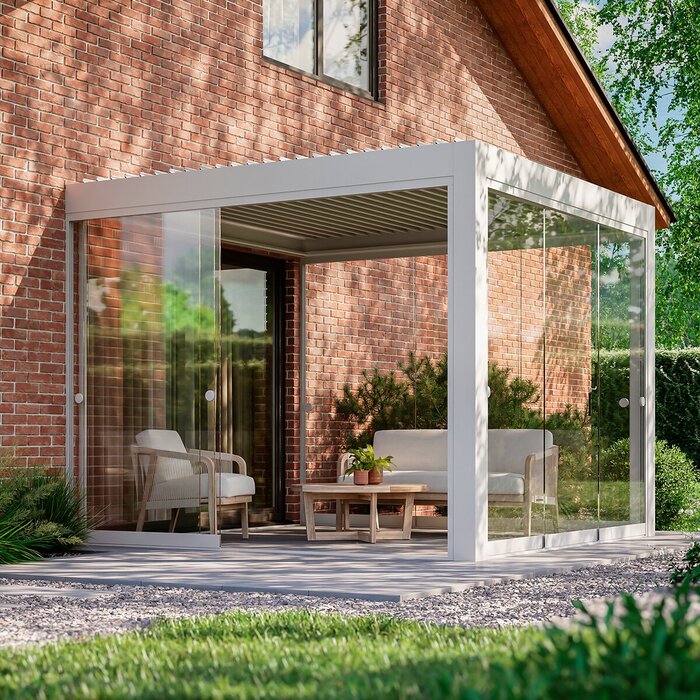
In this buying decision, the useful question is what the adjustable roof lets you change: how much sky is exposed, how direct sunlight reaches the area, and whether the roof can stay at positions between its endpoints. If the design uses louvers, their movement may make exposure adjustable, but the category name alone does not tell you the mechanism, usable range, rain behavior, or operating limits. Confirm those details for the exact configuration. Roof movement is a way to manage exposure, not a guarantee of a particular temperature, all-weather cover, or comfort level. Ask which roof elements move and which remain fixed.
Write down a few ordinary moments when you expect to use the pergola: a meal in full sun, an afternoon when you want less direct light, or a time when an open view matters more than shade. Note which part of the area matters and whether conditions change enough that you would adjust the roof during the day. Those practical goals give you a way to assess product descriptions. Review the Bloomcabin pergola product page alongside other information for the specifications it actually publishes; its name or image does not establish a roof mechanism or adjustment range.
How the roof opens and closes
Ask how the roof starts and stops moving, not simply whether it opens. The product information should say whether operation is manual or powered, what control is used, and whether one command moves the whole roof or a defined section. For a manual system, consider where you would operate it from and whether the handle or control would be reachable when the space is furnished. For a powered system, ask whether movement is continuous, stops at set positions, or offers other options. Not every design works the same way, so request a demonstration or a clear explanation of the exact mechanism.
For a motorized option, identify any power, controller, remote, or connectivity requirements and whether each is included in the configuration you are considering. Do not assume that a phone app or smart-home function is standard. Ask what happens after a power or connection interruption, whether a manual backup is provided, and how the control behaves at the end of its travel. These are product questions, not instructions to wire or modify equipment; have electrical requirements reviewed by a qualified professional. Bloomcabin’s pergola listing is a place to inspect published information, but the product name does not establish its control type.
What the adjustment range includes
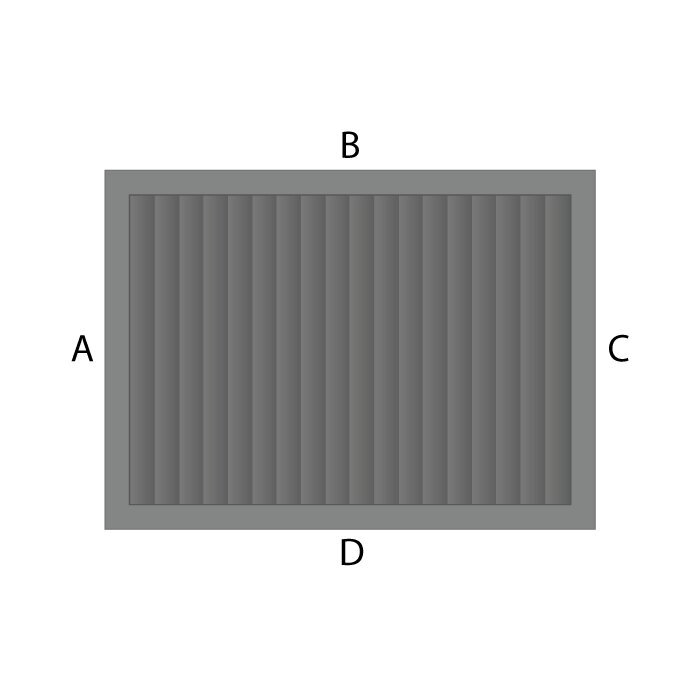
An adjustable roof may offer more than a fully open and a fully closed position, but the word adjustable does not explain how much movement is available. Ask for the stated endpoints or a diagram showing the roof at different positions. Find out whether the louvers can stop at intermediate angles, whether they hold there without continued input, and whether all parts move together. If the description uses terms such as partly open, ask what those terms mean for the actual roof. A drawing or operating demonstration can make the answer clearer than a feature label alone.
Compare the usable positions with the situations you wrote down, rather than searching for the largest number of possible settings. Check that diagrams show the view from below as well as the roof’s profile, since those views can help explain how much sky or direct light each position admits. A roof that appears nearly open from outside may still interrupt the view or cast a pattern of shade from below. Ask which positions are normal operating settings and whether any are restricted. Also consider whether the positions can be repeated easily: a setting that is difficult to judge or return to may be less useful than a smaller selection of clearly defined positions. The Bloomcabin pergola details page can be reviewed for published information, but do not infer missing angles or functions from its photographs.
How sun direction affects useful positions
Roof adjustment matters in relation to the sun’s path across the intended location. Note when direct sun reaches the seating area, doors, or nearby windows, and whether the issue is strongest in the morning, midday, or later in the day. Low sun can enter from the sides even when the overhead roof is angled, so roof movement cannot control every direction of light. Conditions also change over the seasons, and shade cast by trees, neighboring buildings, or the house can change the result at different hours. A simple observation log at the times you expect to use the space can help you ask focused questions without treating a generic diagram as a prediction for your yard. Mark where chairs and tables are likely to sit, because the useful setting for one part of the pergola may not be the useful setting for another.
Compare those observations with the direction in which the roof elements move and the positions the product documentation describes. Consider whether you need to change the setting often as sunlight shifts, or whether a few useful positions would be enough. If you are comparing product pages, treat each as a source of specifications to check rather than proof that its roof will shade a particular spot. Another Bloomcabin pergola page may help you review published details, but suitability depends on information for the specific configuration and site.
Shade, daylight, and airflow trade-offs
Changing a roof position can alter how much direct sunlight and open sky reach the area, but a more open setting is not automatically the best choice. Think about whether you want a view of the sky, a more shaded surface, or a balance between the two. If you expect to read, dine, or work beneath the pergola, consider the light where those activities take place rather than judging the roof from a distance. The effect of each position depends on the roof geometry and surrounding conditions, so ask for diagrams or demonstrations that show the actual settings.
Air movement is another point to assess, not a performance guarantee to infer from the word bioclimatic. An open roof may change the feeling of the space, but airflow also depends on wind and on how open or enclosed the sides are. Consider whether nearby walls, screens, or other features affect the setting you have in mind. If daylight entering adjacent rooms matters, observe that too. the product page for a Bloomcabin pergola can be checked for its published details, but no general roof description predicts the result at your home.
What a closed roof means for rain
Treat rain performance as a separate specification. A roof’s fully closed position does not, on its own, prove that the area beneath it will stay dry. Joints, seals, channels, drainage design, and installation can affect how water moves. Ask whether the roof is intended to be used during rain, what level of water exclusion is stated, how water is collected, and where it is directed. Ask whether the guidance changes with roof size, attachments, or other selected options. Request written guidance for the exact product and configuration rather than relying on a general description of an adjustable roof.
Ask about partial positions as well as the closed setting. Water may behave differently when the roof is not fully shut, and the operating instructions may set conditions for changing positions as weather shifts. Find out where water can drip or discharge in relation to seating, doorways, and walkways, and whether any optional components change the arrangement. Consider where runoff will go after it leaves the pergola rather than focusing only on the area beneath the roof. It is also useful to ask whether routine cleaning of channels or outlets is needed to keep the stated drainage arrangement working as intended. If keeping a particular area dry is essential to your plans, treat that as a requirement to confirm in writing. Do not assume that a roof photograph or a simple open-and-closed label answers it.
Choosing controls you will actually use
Think about where you will stand when adjusting the roof and whether the control will be easy to reach in normal use. A control that is awkward to access can make a feature less useful if you expect to change the setting often. Ask whether the proposed control is a hand-operated mechanism, a wall control, a remote, or another option, and confirm which of these are available for the exact configuration. If the roof is divided into sections, find out whether those sections move together or can be operated separately. A Bloomcabin pergola listing can be checked for published control details, without assuming features that are not stated.
If several people will use the space, make sure they can understand how to operate the roof and know which settings are available. Ask whether any preset positions or automatic functions are offered, and whether they are included or optional. If a control depends on an app or network connection, clarify how the roof can be operated without it. Also ask what happens during an interruption and whether a backup method is provided. These answers help you weigh everyday convenience against dependence on power, connectivity, or additional components.
Weather limits and roof operation
Separate the weather limits for moving the roof from information about how the structure performs when stationary. Wind, snow, or accumulated debris may affect what positions are appropriate, but the permitted conditions are product-specific. Do not assume that an adjustable roof can be left in any position or operated whenever weather changes. Ask for the manufacturer’s documented limits and instructions for the exact model, including any guidance about the position to use when the pergola is unattended.
If sensors or automatic responses are offered, ask what they detect, what action they take, and whether they are included in the configuration. Do not treat an automatic feature as a substitute for written operating limits. Conditions at a particular site may call for a qualified building or installation professional to review the product documentation and local exposure. The Bloomcabin pergola page is a place to look for published details, not evidence of a rating or suitability that the page does not state.
Maintenance for moving roof parts
A moving roof has care requirements worth understanding before you buy. Ask what routine maintenance applies to the louvers, pivots, actuator, seals, drainage paths, and controls, and how often the manufacturer recommends it. Find out which cleaning methods and products are approved; do not assume that a generic lubricant or cleaning solution is suitable. Ask whether maintenance can be carried out safely from normal access points or whether service access will need to be planned around the installed location. Seasonal debris such as leaves can matter where drainage paths or moving components are exposed, so ask what inspection the manufacturer expects from the owner. Ask how to recognize a problem that needs service, such as movement becoming uneven or a control no longer responding as expected. Follow the product’s own directions rather than improvising a repair.
Clarify what service involves and which parts may need attention over time. Ask whether moving components can be replaced, what support is available for troubleshooting, and whether a replacement control must be compatible with other parts of the system. Establish who provides service and how service requests are handled before purchase, especially if access to the roof will be limited after the pergola is in place. Keep the operating and maintenance information with your order documents so that later questions can be matched to the exact configuration. Review the written warranty terms separately rather than assuming what they cover. The point is not to predict a repair, but to understand the care and service responsibilities attached to a roof with moving components before you commit to a configuration.
A practical comparison before ordering
A short comparison sheet can make differences easier to see. Use the same headings for every option: operating method, positions available, how the positions are controlled, rain guidance, weather limits, power or accessories required, and maintenance instructions. Then test each against the same everyday use, such as shading a seating area at a particular time of day. This keeps attractive images or broad feature names from dominating the decision. The Bloomcabin pergola listing can be reviewed for the details it publishes, without assuming that missing information means a feature is included.
Before placing an order, confirm that the information applies to the precise model and configuration you intend to buy. Check whether controls, sensors, or other components discussed in the description are standard or optional, and make sure the roof positions and operating limits are clearly stated. A photograph can illustrate a pergola, but it cannot confirm its mechanism, adjustment range, or weather performance. If an important answer is missing or ambiguous, ask for written clarification rather than filling the gap with an assumption. That record gives you a sound basis for comparing the roof you will actually receive.
Frequently asked questions
Does a closed louvered roof keep rain out?
Not necessarily. The roof’s joints, channels, seals, and installation affect how it handles water. Ask for the rain-use guidance and drainage details for the exact configuration; do not assume that a closed position means the area will stay dry.
What adjustment range should I look for?
There is no single range that suits every space. Find out what the fully open and closed positions mean, whether intermediate positions are possible, and whether they hold in place. Compare those settings with the sun and shade you want at the times you will use the pergola.
Is a motorized roof better than a manual one?
That depends on how often you expect to adjust the roof, how accessible its controls are, and whether the required power and backup arrangements suit your project. Confirm exactly what the control operates and what is included rather than assuming all motorized systems offer the same functions.
Can I leave the roof in any position during bad weather?
Do not assume that every position is suitable in every condition. Ask for the manufacturer’s operating instructions and documented weather limits for the exact model. Static load information and rules for operating a moving roof are separate details.
What should I confirm before ordering?
Confirm the roof mechanism, adjustment positions, control method, required power or accessories, rain guidance, operating limits, and maintenance instructions. Make sure the information applies to the exact configuration you are ordering, not just to a similar image or general product description.
A useful adjustable roof is one whose real positions and controls suit the way you plan to use the space. Judge it by more than the promise of movement: understand how its settings affect light and exposure, and confirm its rain guidance, operating limits, and care requirements. When those details are clear for the exact configuration, it is easier to choose a pergola with expectations grounded in its documented features rather than its name or appearance.
