
Fabric-Roof vs. Aluminum Louvered Pergola: What to Compare
Pergola roof guide
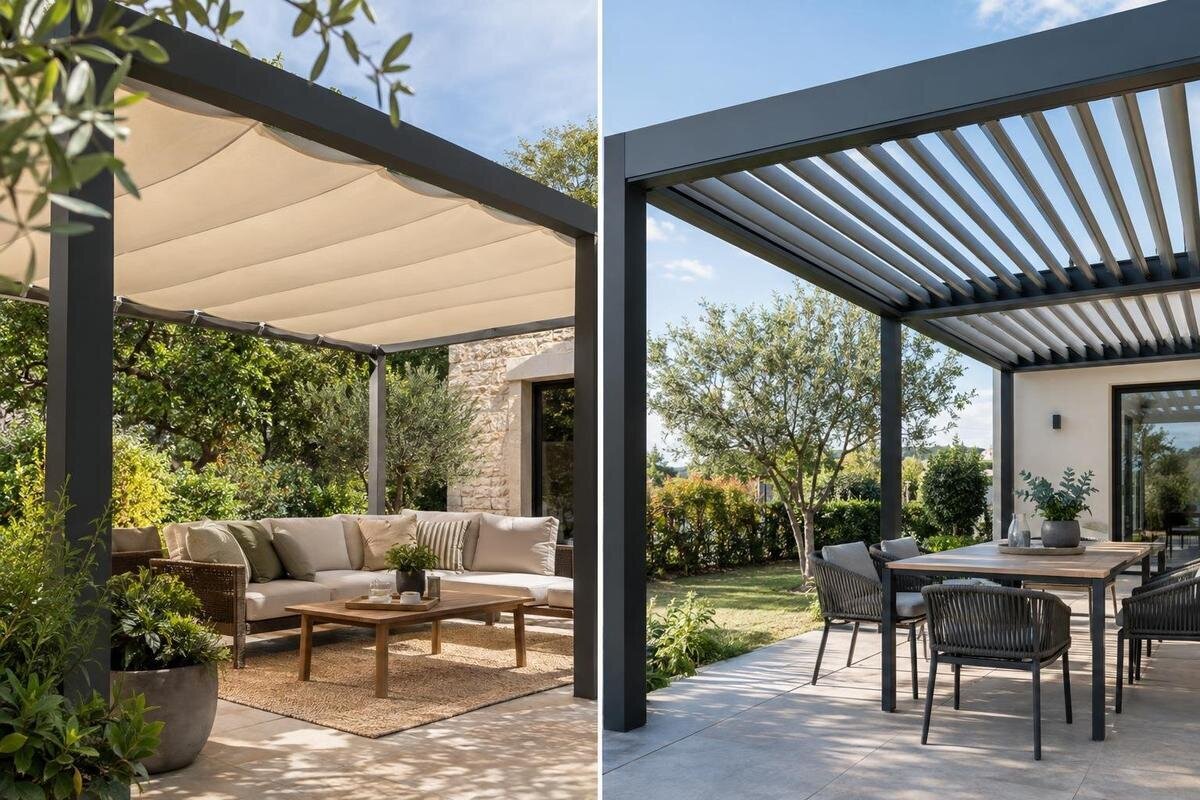
Fabric and aluminum louvered pergolas both provide overhead cover, but they change the patio in different ways. Fabric may be fixed, retractable, or removable; louvers pivot to vary the opening between blades. Those broad labels do not tell you how a particular roof is operated, where rain goes, or what weather limits apply. Compare the documented mechanism, care routine, and safe-use instructions before treating either option as an all-season solution.
How fabric and louvered roofs change the patio
Fabric roof describes the covering, not one specific deployment design. Some fabric stays fixed across the frame; another canopy may slide or retract along a track; a third may be designed to come off for storage. These arrangements differ in whether overhead coverage is always present, can be parked elsewhere, or involves handling a separate cover. Check which arrangement is supplied, where the material sits when moved, whether it can stop partway, and what the maker permits while it is partly deployed. Do not assume a fabric roof retracts just because adjustable coverage sounds useful, or that a removable panel is intended for routine daily handling.
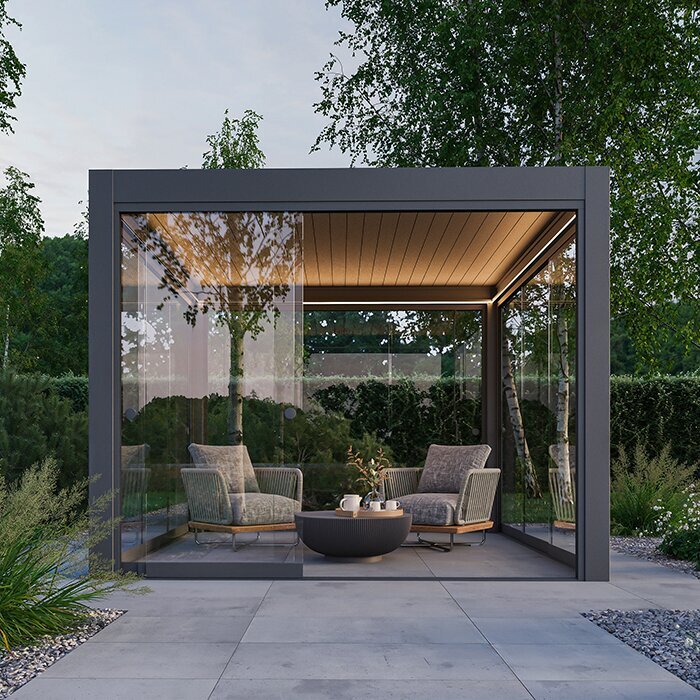
An adjustable louvered roof uses rigid blades that pivot. Changing their angle changes the opening between blades; tilting is not the same as retracting the roof completely out of view. Look for an operating diagram that shows the blades in their available positions, including what remains overhead when the roof is open. The Bloomcabin Bioclimatic Aluminum Pergola listing is one product entry to include in your research. When comparing mechanisms, distinguish three separate results: exposing more sky, changing the angle of shade, and closing the gaps between blades. A roof may offer one without offering all three. This distinction helps you describe what you actually want rather than using open and closed as if they meant the same thing for every roof.
How each roof is operated
Think about how often you expect to change the cover. A fixed textile roof offers no on-the-fly opening; a retractable version can change overhead coverage only in the ways its track and stopping positions allow. Ask how it is deployed, whether one person can operate it comfortably, where the cover sits when open, and what clearance the frame needs. If it is removable rather than retractable, include handling and storage in the routine. These details matter more than a general claim that a roof is easy to use, especially if you expect to adjust it during a meal or as the sun moves.
For louvers, find out whether adjustment is manual or powered, whether movement is continuous or limited to preset positions, and what the operator must reach or turn. Ask for a demonstration of a complete adjustment, including any release, locking, or stopping step. Think about whether the control remains accessible with your dining table and chairs in place and whether everyone who will use the roof can operate it comfortably. When reviewing the Bloomcabin Pergola product entry, request the operating instructions for the configuration being quoted rather than assuming that the name identifies its mechanism. If powered operation is documented, check how the roof is stopped and what operation, if any, is available during a power outage. Motors, remotes, sensors, and app controls are separate features to confirm, not standard benefits of either roof material.
Rain handling depends on the exact design
A textile description does not by itself establish how a fabric roof performs in rain. Ask the manufacturer what its terms for water resistance mean, and whether the seams, edges, tension, and installation position are intended to manage rainfall. Find out where water leaves the cover and whether it can collect in low areas. For a retractable design, also ask whether it may remain deployed in rain and whether it needs to be moved to a particular position. A canopy that provides shade is not automatically a rain shelter.
With louvers, a closed-looking roof is not enough to confirm rain protection. Look for information on how the blades meet, whether there are gaps at the edges, and how any channels or gutters collect and discharge water. When researching the Bloomcabin bioclimatic pergola product page, ask for a drainage diagram and the conditions under which any stated rain performance applies. Trace the whole route from roof to outlet: water reaching a gutter is only part of the question if the outlet empties beside a chair or across a walking path. Also ask what happens when the roof is opened after rain, including whether residual water can drip onto the area below. Wind-driven rain can enter an open-sided patio from the sides even when overhead drainage works as intended, so distinguish protection directly under the roof from keeping all furniture dry.
Shade and daylight depend on more than roof material
A deployed fabric panel creates a continuous overhead covering, but how much light passes through depends on the actual textile and its specifications. Ask for any stated information about shade or light transmission rather than relying on color or a marketing description. A fixed cover cannot reveal the sky without being moved or removed; a retractable one can expose only the area and positions its mechanism permits. Consider the time of day and the direction of the sun as well: overhead coverage does not block low-angle sunlight entering from the side.
Tilting louvers changes the amount of open sky between the blades, so the balance of shade and openness can vary with their position. Ask to see the roof from below in several positions rather than judging it only from an exterior photograph. Consider whether bands of sunlight would cross your table, reading chair, or screen at the times you use them. If the pergola is near the house, include the effect on daylight through nearby windows in your comparison. Use the Bloomcabin Pergola model page as a starting point for requesting the relevant roof drawing or viewing examples, not as evidence of a particular light level. Air movement also depends on breeze and surrounding obstructions; an opening overhead does not guarantee a cooling effect. Compare shade, the view of the sky, and airflow as separate qualities rather than treating an open roof as a single benefit.

Routine care for a fabric roof
Use the textile’s own care instructions to plan cleaning. Dust, leaves, pollen, and spills may need different treatment, and not every fabric is suitable for the same brush, cleaner, or washing method. Find out whether the maker permits rinsing or particular cleaning products, and whether the cover needs to be dry before storage. Avoid assuming that a household cleaner or a forceful cleaning method is safe for the fabric, stitching, or finish. A short, regular inspection can also help you notice fraying, loose seams, abrasion, or changes in tension before deciding whether the maker needs to assess the cover.
The operating arrangement adds its own routine. If the roof retracts, check the instructions for maintaining any rails or moving parts; if the cover comes off, confirm how it is removed, cleaned, dried, and stored. Do not force a stiff mechanism or add lubricant unless the manufacturer directs you to do so. Ask whether a replacement textile is available for the exact model and how it is fitted. Those answers help you estimate the ongoing effort without assuming that every fabric canopy can be detached, washed at home, or replaced in the same way.
Cleaning and inspecting aluminum louvers
Dust and loose debris can reach the spaces between blades, around moving joints, and into any drainage path. Follow the maker’s instructions for clearing accessible areas and keeping documented outlets unobstructed. Before choosing a roof, ask how those areas are reached: a clean-looking underside does not tell you whether debris can be removed from above or whether service access is needed. Do not plan to stand on the roof or improvise access to hard-to-reach parts. Cleaning directions also depend on the surface finish, so request the approved products and tools for the Bloomcabin bioclimatic aluminum model if it is on your shortlist. Include nearby trees in your maintenance planning, since leaves and other debris may make access to channels especially important. A practical care comparison accounts for both the cleaning task and the safe access it requires.
Include the moving parts in your inspection. Notice whether blades move unevenly, catch, or make an unusual sound, then consult the product instructions rather than forcing them through resistance. Ask which parts the owner may clean and which service tasks require a qualified professional. Keep an eye on the drainage route as well as the visible roof surface: debris that blocks an outlet can affect water movement. The goal is not to eliminate care, but to understand what the particular mechanism and finish require before choosing it.
Wind, snow, and seasonal weather limits
Neither fabric nor aluminum alone establishes how a pergola performs in wind. Find the specific model’s instructions for using, retracting, removing, or positioning the roof in windy conditions, and note whether the guidance changes with the roof’s position. Do not borrow a limit from another pergola simply because it uses a similar material. Ask for the manufacturer’s stated conditions and follow the manual for the assembled product. A retractable fabric cover and pivoting louvers have different mechanisms, but neither category has one universal wind rule that applies to every design.
Snow, hail, freezing temperatures, and ice call for the same model-specific approach. Ask whether snow may remain on the roof, whether there is a specified position or seasonal procedure, and how cold or ice affects movement and drainage. Do not estimate a safe load or create a clearing plan from the roof’s appearance; get instructions from the manufacturer and consult a qualified professional where structural questions arise. The Bloomcabin Lean-To Pergola listing identifies a wall-mounted format, but a mounting label does not supply a wind or snow rating.
Installation and patio fit
Roof mechanism and support arrangement are separate choices. A fabric cover may be part of a freestanding or attached structure, and a louvered roof also needs a frame and a suitable installation. The Bloomcabin Lean-To Pergola product page identifies a wall-mounted option to investigate, but choosing an attached format requires more than checking its projection from the house. Have a qualified professional assess the proposed support using the exact product’s attachment requirements. Clarify who is responsible for assessing the existing wall or patio, preparing the site, and resolving the junction between the structure and the building. Ask what installation work is included in the quote and what remains separate. These questions let you compare complete projects rather than a freestanding structure with an attached roof whose necessary preparation has not yet been accounted for.
Measure the planned footprint, height, and projection, then map nearby doors, windows, gutters, downspouts, lights, and access routes. Distinguish the outside frame dimensions from the clear space between posts and the area actually covered by the roof. A table may fit within the overall footprint while leaving too little room to pull out chairs or walk around a post. Include space for any fabric that moves, access to louver controls, and the location of the roof’s drainage outlets. Check the roof in its operating positions against doors and windows rather than measuring only the closed structure. For a raised deck or rooftop proposal, confirm that the exact product and supporting structure are appropriate with the manufacturer and a qualified professional; a patio listing does not establish rooftop suitability. A dimensioned layout helps reveal these conflicts before you choose either roof system.

How to compare pergola models fairly
Use the same comparison sheet for each candidate, with separate entries for overall footprint, clear space between posts, covered area, roof movement, drainage, care, weather limits, and support requirements. Record the source of each answer so a stated specification does not become mixed with a sales impression. The listed Lean-To Pergola size range is 97–258 sq ft; that range is useful context, not proof that two selected configurations have identical dimensions or usable coverage. For cost comparisons, request quotes for the same intended seating area and identify what each includes: the roof and frame, any documented controls, installation, site preparation, and optional accessories. Keep required items separate from upgrades you could omit. A lower initial quote may cover a different scope, so compare the completed installation and the care tasks you expect to handle, without assuming that either material is always cheaper.
The supplied Bloomcabin model entries share a stated range of 97–258 sq ft, but that does not make them a like-for-like comparison of roof systems. The verified details identify product names and an area range; they do not establish the operating mechanism, rain performance, or weather limits needed for a model-level comparison. The supplied details also do not identify a fabric-roof model. For a fair decision, obtain the drawing and instructions for each exact roof configuration, including any separately offered textile system. Leave unanswered comparison fields marked as unknown rather than filling them with assumptions about the category. If an essential requirement—such as permitted use in rain or the ability to remove the cover—remains undocumented, that candidate is not yet ready for a final comparison.
Which roof fits your patio routine?
A fabric roof may suit you if you want a textile covering and the specific model’s fixed, retractable, or removable arrangement fits your habits. Consider how often you would adjust it, whether its care and storage steps are manageable, and whether its documented rain and weather guidance matches the conditions in which you plan to use it. The choice is not simply between a basic and a more advanced roof: fixed fabric and a movable canopy can ask for different routines even though both use textile.
Consider aluminum louvers if changing the opening between blades is a priority and the documented operating routine suits you. To make the choice concrete, picture two ordinary uses of your patio: a short afternoon break and a longer meal. Would you want to expose most of the sky, fine-tune shade while seated, or leave the covering unchanged? Then consider what happens when you finish: does the chosen roof need repositioning, drying, or seasonal storage? Match those preferences to the movements and care steps of the exact candidates. If you rarely adjust overhead cover, a more elaborate mechanism may offer little value to you; if frequent adjustment matters, convenient operation may deserve greater weight. The best fit is the roof that meets your important daily needs within its documented limits, not the one with the longest list of features.
Frequently asked questions
Does a fabric-roof pergola always retract?
No. A fabric roof may be fixed, retractable, or removable, depending on the model. Check the operating instructions to see how the cover moves, whether it has intermediate positions, and what the maker says about storing or removing it.
Are closed aluminum louvers waterproof?
A closed-looking position does not prove that a roof is watertight. Ask for the model’s rain-performance details, including how the blades meet, where water drains, and whether the roof must be in a particular position.
Which roof is easier to maintain?
There is no universal answer. Fabric may need textile-specific cleaning and storage; louvers may have moving parts and drainage paths to keep clear. Compare the care instructions for the exact models rather than judging by material alone.
Can either roof stay in place during wind or snow?
Do not assume so from the roof type. Find the manufacturer’s limits and instructions for wind, snow, hail, and freezing conditions, including any required roof position or seasonal steps. There is no universal safe limit for every model.
Should I expect a motor or weather sensor?
No. A product category or model name does not confirm a motor, sensor, remote, app, or backup operation. Look for those features in the specific product documentation, along with instructions for what happens if power is lost.
Choose the roof whose normal position, adjustment steps, care routine, and documented weather limits fit the way you use your patio. Fabric is not necessarily retractable, closed louvers are not automatically watertight, and neither material label establishes safe weather conditions. Compare each system as a complete operating roof, not simply as fabric versus aluminum.
