
Hedges or Pergola Screens: Immediate Privacy Versus Growing Space
Pergola privacy guide
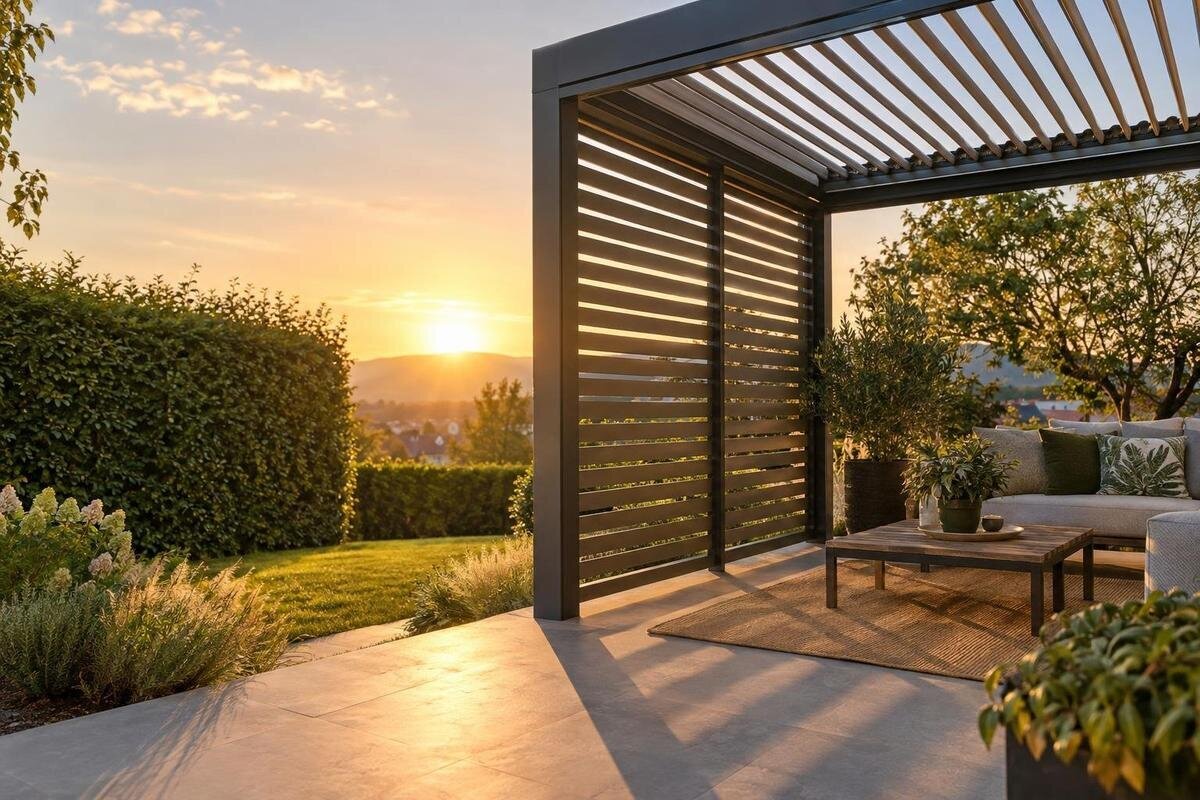
Choosing between a hedge and a pergola screen involves more than appearance. A hedge needs a planting strip and time to fill in; a compatible screen can change a defined sightline once installed, but it occupies a pergola side and may affect light or airflow. Compare the view you need to block, the ground you can spare, and when privacy matters most before settling on either approach.

Before you decide 1
Define the view you need to block
Begin with the view you want to block, not with a plant or panel. A neighbor’s upstairs window, a person walking along a side yard, and someone seated across a fence line create different sightlines. A side screen can interrupt one directional view from within a pergola, while a hedge can follow a property edge or soften a longer boundary. Neither automatically shields every seat or angle. Mark the exposed area and note where observers stand or sit; that narrows the target before you compare height, density, or material.
Decide whether privacy is needed throughout the day or mainly at particular times, and whether the area is used from seated, standing, or both positions. Think about the view you want to keep, such as a garden bed or an open route across the yard. A hedge can close a broad view; a screen across one pergola side can leave other sides open, although end gaps may still matter. If the exposure comes from several directions, one short panel may not address it. Write down the protected zone and the view to preserve so a solution for one sightline does not hide more of the patio than necessary.
How much ground does a hedge need?
A hedge needs a strip of ground, not just a planting line. Plan for the plants’ expected mature width, recommended spacing, and room to reach the bed for pruning and weeding. A young plant may sit comfortably beside a path while its mature branches narrow the route, so include clear walking space, door access, steps, seating, and any service path. If you cannot reach both sides easily, consider how you will maintain the side facing a fence or structure. Ask a local nursery to interpret mature size and spacing for the specific species and cultivar; the plant’s size at purchase does not show how much room it will eventually need.
Roots vary by plant and site, so do not assume they will stay directly beneath the visible foliage. Have buried utilities located before digging, and consider nearby paving, drainage, and irrigation when placing a bed. A screen shifts much of the privacy surface off the soil, but a pergola still takes its own footprint and needs side clearance. The Bloomcabin Pergola listing gives a 97–258 sq ft range; that does not establish clearance beside a screen. Use the exact plan for the configuration you are considering, then plot the planting bed, access route, and seating together. Measure the narrowest remaining passage rather than only the total open area. A generous patio can still have a tight corner where branches, a post, and a pulled-out dining chair compete for the same space.
Before you decide 2
How long does a hedge take to fill in?
Planting day is not the same as having a finished privacy boundary. A hedge must establish, put on growth, and close the gaps at the height and direction that matter. The time varies with plant type and size at purchase, site conditions, weather, and care; even plants in one row may fill in unevenly. A plant can gain height before it fills out sideways, so height alone does not guarantee that it will block a view. Ask a local nursery how the selected plants typically develop in your conditions and what coverage to expect in different seasons.
Starting size is only one part of the picture. Look for gaps at the base, between plants, or near the ends of the planned row, and consider whether those gaps align with the sightline you want to cover. Do not assume that planting closer together will automatically create a dense screen sooner; follow advice for the particular plants and leave room to care for them. If you need privacy while the hedge establishes, plan an interim measure separately. Do not count on young plants to screen the area immediately or on a general growth figure to predict an exact finish date.
What a pergola screen changes immediately
A compatible screen can change a defined sightline as soon as it is installed and set in its intended position; it does not need to grow into place. That makes it useful when the exposed area is small and privacy is needed sooner than plants can provide it. But installation does not mean complete privacy from every direction. Check the panel’s height, openings, and gaps at the top or sides, as well as what can be seen from farther along the yard or from a higher window. An operable screen, if offered for the chosen configuration, may also leave the view exposed when moved aside.
Ask whether the proposed side treatment is opaque, slatted, open-weave, or another design. With slats, the direction of the view matters: a panel that conceals the background straight on may reveal it from an angle. For fabric or mesh, request a sample if available and look through it toward the actual background rather than judging only its color. Small samples help compare openness, but do not show the gaps around a complete installation. When considering the Bloomcabin Lean-To Pergola, ask which privacy accessories are approved for the exact configuration, whether they are included or sold separately, and what coverage each provides. The supplied model information does not establish accessory compatibility. Get that confirmation before treating any illustrated or third-party screen as part of the purchase.

Before you decide 3
Compare the full footprint, not just the barrier
A screen’s main privacy surface is vertical, so it may use less planting area than a hedge along the same side. That does not mean it takes no room. If you are adding a pergola, include the structure’s footprint and posts, not just the panel. A fixed treatment can occupy a side edge, while a treatment that moves may need space and access to operate. Paths, doors, chairs, and maintenance routes still need to work when the screen is in use and when it is open.
Put both choices on one site plan. For the hedge, show its mature width, bed, and space needed to reach it. For the pergola option, show the structure, the proposed screened side, and the clearance needed around that side. Use dimensions for the selected configuration when evaluating the Bloomcabin Bioclimatic Aluminum Pergola. Then draw furniture in its occupied position: chairs pulled away from the table, a recliner extended, and the route someone takes to leave a seat. This reveals conflicts that an empty patio outline can hide. If a hedge and screen would sit beside each other, also show the gap between mature foliage and the panel. That space must remain accessible for plant care and screen maintenance rather than becoming an unreachable strip behind the seating.
Seasonal coverage, daylight, and airflow
A hedge’s coverage can change through the year. Many evergreen plants retain foliage, while deciduous plants may become more open after losing their leaves; the amount of privacy also depends on how densely a particular hedge grows. If year-round screening matters, ask about the specific species and cultivar rather than treating all hedges as equally dense in every season. Consider how a mature hedge could affect the light reaching nearby windows or garden beds, too. Its eventual height and location matter as much as the appearance of the young plants when you buy them.
A screen’s effect depends on how open or closed its surface is and where it sits in relation to the sun and nearby windows. Sketch the sun’s path at the times you use the patio instead of judging only from a midday view. Low afternoon sun may reach a side that appears shaded earlier, so compare the proposed barrier’s position with the light entering nearby rooms as well as the seating area. When evaluating the lean-to pergola model, include the house windows and doors in that sketch. A more closed side treatment can also reduce air movement around the seats and change wind forces on the structure. Ask the supplier or a qualified professional to assess the proposed configuration for the site; visual privacy alone does not establish its suitability.
Before you decide 4
Compare upkeep over time
A hedge brings living-plant care. During establishment it may need attention to watering and weeds, followed by pruning and occasional replacement if plants fail to thrive. The amount of work depends on the selected plants, their growth, and how formal you want the boundary to look. Include access for routine care when laying out the bed: a hedge that is difficult to reach can become harder to keep tidy. Also consider where clippings and fallen leaves will go, particularly if the row sits beside a walkway or patio.
A screen has a different set of tasks. Its care may involve cleaning the surface, checking its condition, and keeping any moving parts accessible; the exact requirements depend on the design. When considering a side treatment for the Bloomcabin Pergola product page, request the accessory’s care instructions separately from those for the frame. Find out whether both faces must be accessible for cleaning and how damaged components would be serviced. These questions matter if a fence or hedge will stand close behind the panel. For either option, compare who will do the work and how equipment will reach the area. A planting bed may need access for pruning tools, while a screen may need an unobstructed service area. Include those practical demands in the layout, not just in the maintenance budget.
Test the sightline before planting or fitting a screen
Draw a simple plan of the patio, pergola, proposed hedge row, neighboring windows, paths, and the seats you use most. Add a side view as well as a top-down view: a plan alone can miss a view that passes over a low barrier or through a gap. Mark the intended position of the hedge or screen and the line between the exposed seat and the observer. This does not require a detailed architectural drawing; it is a way to check whether the proposed barrier sits in the path of the view you want to interrupt.
Test the drawing from both seated and standing positions, then check whether moving a chair or changing the screened side would solve the problem with less coverage. A temporary visual marker can help you compare the proposed height with the actual view; it is a planning aid, not a structural test or installation method. Check from several seats, including the one nearest the open end, because coverage can differ across the patio. For a hedge, mark both its initial size and expected mature outline so the drawing does not assume full coverage on planting day. If the bioclimatic pergola listing is under consideration, request the selected configuration’s dimensions and proposed panel position for the same drawing. Record any remaining views above or around the barrier before choosing its extent.

Before you decide 5
Compare the full cost and project timing
Compare the costs involved without assuming that either option is always less expensive. For a hedge, account for plants, preparing the bed, any watering setup, replacements, and the time spent maintaining it. For a pergola screen, ask about the compatible side treatment, any required fitting work, and access needed for installation and later care. If you are adding a pergola as well, keep its cost separate from the screen so the comparison does not treat the structure as a free part of the privacy solution. Use itemized estimates for your own site rather than relying on a general rule.
Timing matters alongside the budget. A hedge’s progress depends on establishing and growing; plant availability and suitable planting conditions can vary. A screen can provide coverage after installation, but its schedule depends on the chosen product and project arrangements. Confirm those details directly instead of planning around an assumed delivery or installation date. For the Bloomcabin wall-mounted pergola, request an estimate that identifies the exact approved accessory and any additional site work. Separate the date the installation is expected to be usable from the longer period in which plants may fill in. If you plan to combine both options, decide whether the screen will remain permanently or serve only during establishment. That distinction affects whether its eventual removal, storage, or continued maintenance belongs in the project budget.
When to choose a hedge, a screen, or both
A hedge is a stronger fit when you can reserve a planting strip, want living greenery along a longer boundary, and can wait for plants to establish. A pergola screen is worth evaluating when a specific side of an existing or planned pergola creates the exposure and you want an earlier change. In either case, match the option to the views you want to block and the ones you want to keep. Check the hedge’s mature dimensions or the screen’s fit with the exact pergola configuration before designing the rest of the patio around it.
Combining the two can address different needs: a compatible screen can serve the seating area while a hedge provides greenery beyond it or along another section of the yard. Avoid automatically placing both across the entire same boundary. That can consume more space and close more of the view than necessary without solving an overlooked angle. Instead, use the screen where immediate coverage matters and reserve planting space where a living boundary adds value. If you are considering the Bloomcabin Bioclimatic Aluminum Pergola model, compare that combined layout with a screen-only plan before selecting the configuration. Leave enough separation for mature branches and access to both features. The useful combination is one in which each element has a clear purpose, not simply twice as much screening.
Frequently asked questions
Which gives privacy sooner, a hedge or a pergola screen?
A compatible screen can interrupt its intended sightline once installed. A hedge needs time to establish and fill in, and gaps may remain as it grows. A screen is not automatically private from every angle, so check its height, openings, edges, and compatibility with the pergola.
How much space does a hedge need beside a pergola?
Allow for the hedge’s expected mature width, recommended planting spacing, and room to reach it for care. Leave clear access to paths and seating, too. If you are also adding a pergola screen, plan for the structure and screen’s operating clearance rather than assuming the side of the patio is unused.
Will an evergreen hedge provide year-round privacy?
Evergreen plants generally retain foliage, but density and coverage vary by species, cultivar, and site. Deciduous hedges may become more open when they lose their leaves. Ask a local nursery what to expect from the specific plants you are considering rather than relying on the word evergreen alone.
Does a pergola screen block every view?
No. Coverage depends on the panel’s height and openness, its position, and the direction of the sightline. Views may remain around an end or from a higher window. Check the proposed screen from the places where privacy matters, including the usual seating area.
Can I use both a hedge and a pergola screen?
Yes. A screen can address an exposed seating area while a hedge provides living greenery along part of the yard. Plan the hedge’s mature width and leave room to reach and maintain both features. Confirm that any screen is approved for the exact pergola configuration.
The practical trade-off is between ground space and time on one side, and an installed side treatment with its own fit and clearance requirements on the other. A hedge can create a living boundary as it grows; a compatible pergola screen can address a chosen view sooner. Start from the sightline and the space available, then compare seasonal coverage and ongoing care. That keeps the choice grounded in how the patio is actually used.
