
How to Grow Kale in a Greenhouse
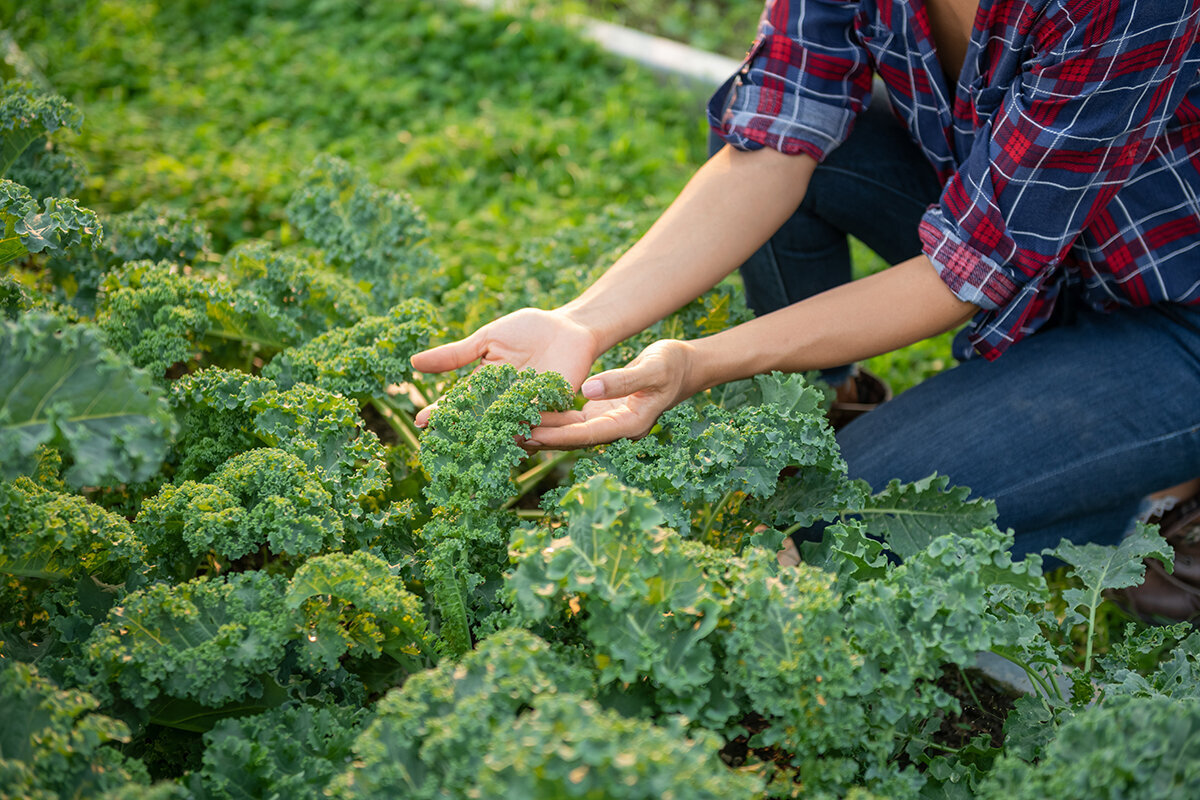
Bloomcabin field notes / cool season
How to Grow Kale in a Greenhouse
A ruffled winter crop with serious structure: grow kale under glass for sweet leaves, repeat harvests and a greenhouse that remains useful after tomatoes and peppers have gone quiet.
Crop characterCool-season, cut-and-come-again brassica
Best greenhouse roleFall, winter and early-spring leaf harvests
Comfort rangeCool days, bright light, steady moisture
Signature disciplineProtect the central growing point
The winter-light argument
Kale does not need a tropical greenhouse. It needs a greenhouse that makes cool weather more legible: fewer soaking rains, calmer root zones, cleaner leaves and enough ventilation for its dense, pleated canopy to dry.
Read the crop, not only the thermometerFirm blue-green leaves and a widening center signal steady growth. Toughness, bitterness, yellowing or wet inner foliage are climate notes worth answering early.
A greenhouse does not eliminate seasonality; it refines it. Day length still slows winter growth, and an unheated structure is not automatically frost-free. Yet shelter gives you control over variables kale dislikes most: saturated foliage, wind stress, erratic watering and abrupt temperature swings. In a small greenhouse, reserve the brightest bed edge for kale and keep the central path open so every crown can be inspected. Bloomcabin’s greenhouse setup and layout guide is useful when deciding where a permanent kale bed, container line or seed-starting bench should sit.
Kale is cold-tolerant, but it is not indifferent to stress. The most tender leaves come from plants that grow continuously rather than from plants that alternate between cold, wet roots and sudden greenhouse heat. The goal is not to force rapid winter growth. The goal is to create a stable room where each new leaf can unfold cleanly, dry after humid nights and remain harvestable for as long as possible.
01 / Choose the silhouette
Choose kale by the room it will occupy.
A cultivar is not merely a flavor decision. It determines height, leaf density, harvest style and how much air can move through the bed. Choose a form whose scale suits both your aisle and the length of your intended season.
Curly kale
Traditional ruffles create a generous picking surface and a classic bunching crop. It is beautiful and resilient, but its folds retain moisture; spacing and early ventilation matter.
Best forRepeated outer-leaf harvest
Greenhouse noteAllow 14–18 in. for mature plants
Tuscan / lacinato
Long, dark, blistered leaves make a composed vertical rhythm in a bed. Its comparatively open architecture is easier to inspect, wash and cook once mature.
Best forSmall beds and containers
Greenhouse notePick lower leaves before they harden
Red Russian
Flatter oak-like leaves and violet stems bring softness to low-season planting. It is especially useful for baby leaf and tender salads, although insects may favor its soft growth.
Best forBaby leaves and succession sowing
Greenhouse noteInspect inner leaves for aphids
Compact types
Dwarf selections solve narrow-bed, low-eave and container problems. Their smaller footprint can produce a serious crop without turning the path into a damp wall of foliage.
Best forContainers, benches and tight plans
Greenhouse noteUse pots at least 10–12 in. deep
For full-sized plants, 12–18 inches of in-row spacing is a useful practical range; closer spacing belongs to baby-leaf production or planned thinning. In a compact greenhouse, prioritize access over maximum plant count. You should be able to see the base of every plant, water the root zone and pick without brushing against damp leaves.
Use a fertile, well-drained mix rather than a heavily compacted bed. Kale performs best in soil rich in organic matter, with a pH generally around 6.0 to 7.5. Before refilling an old greenhouse bed, remove crop residues, loosen only what needs loosening and add finished compost. Avoid fresh manure, which can introduce food-safety and weed concerns. A soil test is particularly helpful where the same greenhouse beds have produced intensively for several years.
02 / Begin in waves
Sow a braid, not a single batch.
One large sowing can produce a handsome harvest and then a gap. Three smaller sowings create a better greenhouse rhythm: one young section, one picking section and one section that can be cleared before quality declines.
First thread
Direct sow
Sow seed about 1/4–1/2 in. deep in a fine, evenly moist mix. For a leaf crop, direct sowing avoids transplant interruption and works well when the greenhouse bed is ready.
Thin deliberately. Crowded seedlings can become a baby-leaf harvest; retain the strongest plants for full crowns.
Second thread
Transplant with restraint
Start seedlings in cells while a warm-season crop still occupies the bed. Transplant at roughly four weeks, before roots coil and before plants experience a hard interruption in growth.
Set transplants at the same depth as the cell mix, water them in thoroughly and provide only brief shade if a bright fall day arrives unexpectedly warm.
Third thread
Repeat every 2–3 weeks
Continue modest sowings while there is sufficient light and a clear plan for heat. In autumn, succession planting gives an excellent return. During the darkest winter weeks, accept a pause rather than forcing soft growth.
Keep notes by date, cultivar and bed. Your greenhouse is its own microclimate, and those notes soon become more useful than a generic calendar.
A useful United States pattern is to sow for fall harvest in late summer, then make small follow-up sowings while days remain workable in your region. Northern gardeners often use a greenhouse to gain precious weeks before severe weather; southern gardeners use it to moderate rain, insects and fluctuating winter temperatures. If you are fitting kale into a larger annual plan, use Bloomcabin’s year-round greenhouse calendar to reserve transition space instead of planting every bed at once.
For germination, keep seed mix consistently moist but never saturated. Once seedlings emerge, give them bright light and gentle air movement so they develop short, sturdy stems. If you start kale on a bench during late summer, check the bench temperature as well as the room temperature: a hot tray in direct afternoon sun can dry quickly and delay even germination. Transplants should be hardened gradually when moving from an indoor start area to the brighter, cooler greenhouse bed.
03 / Climate observatory
Cool air, dry crowns, even roots.
Kale is a cool-season crop, and leaf quality follows the steadiness of its environment. Aim for conditions that support even leaf expansion instead of rapid soft growth followed by stress.
Sowing
Day length
Heat pressure
Harvest
A seasonal braid: sow, light, heat and harvest move together.
Read the four tracks together. As daylight falls, growth naturally slows, so reduce expectations rather than increasing fertilizer or water. As daylight rises again in late winter and spring, vent earlier because greenhouse heat and bolting pressure increase faster than the calendar suggests. Small sowings spread this transition across several plant ages, giving you harvestable leaves while younger crowns establish.
Open ruffles
Clear channels
Crowded ruffles
Held moisture
With open spacing, air reaches the soil surface and inner leaves. You can direct water at the base, remove an aging leaf and see whether the crown is dry after a humid night.
In a crowded bed, overlapping leaves retain moisture and make pest scouting guesswork. The apparent gain from extra plants is often lost to weak quality, slower drying and poor access.
Ventilation is a winter skill as well as a summer one. In a closed greenhouse, plants and soil release moisture into a small volume of air. A brief exchange of air, sometimes paired with gentle heat in very cold climates, carries that moisture away. Roof windows are especially useful because warm, humid air rises. The roof ventilation built into the Bloomcabin Classic Aluminum Greenhouse supports this simple daily practice while preserving the clean-lined structure a year-round growing room deserves.
Watering should follow the root zone, not a fixed weekly rule. Push a finger or moisture probe below the surface before irrigating; a dry crust does not always mean a dry root ball, especially in cool weather. Containers dry faster than in-ground beds, while kale in dim winter light uses much less water than kale in bright spring conditions. Water early enough that any splash on leaves can dry before evening, and keep saucers beneath containers from holding standing water.
04 / Crown care
Harvest the perimeter. Guard the future.
The most productive kale technique is also the gentlest: remove mature outer leaves individually and preserve the compact center where new leaves are formed.
Outer leaf ring / active inner ring / protected center
Outer ringPick the oldest full-sized leaves first. Twist or cut cleanly close to the stem.
Active inner ringLeave expanding leaves in place; they form the next harvest.
Protected centerNever cut into the compact growing point. A damaged crown can stall or end production.
Unsafe cutRemoving the entire top gives one large harvest but sacrifices the repeat-harvest plant.
Wait until a leaf is large enough to justify the plant’s energy, then take a few leaves from each crown rather than stripping one plant bare. Begin low on the stem, where foliage is oldest, and work around the rosette. Clean snips are useful for thick petioles; a steady downward twist works when stems are tender.
“The center is not a leaf to harvest. It is the season still held in reserve.”
For baby kale, cut several inches above the soil only when the crop was deliberately sown densely for one or two quick cuts. For full plants, the outer-leaf method is better. It keeps the growing point active, maintains a handsome upright form and distributes your harvest across weeks.
Pick in the morning after foliage has dried but before the greenhouse becomes warm. Refrigerate unwashed leaves in a bag or container lined with a paper towel; wash just before cooking. Older leaves are particularly good braised, sautéed or blended into soups, while tender inner leaves suit salads and quick sautés.
05 / Read the distress signals
Correct the condition before treating the symptom.
Kale problems are commonly cumulative. A crowded canopy plus wet leaves plus a warm afternoon is more meaningful than any one factor alone. Inspect undersides, centers and soil before reaching for a product.
Symptom
Small holes in young leaves
Likely cause
Flea beetles, caterpillars or other brassica pests, especially when doors and vents stay open during warm periods.
Correction
Scout twice weekly, hand-remove caterpillars, use insect screening where practical and clear old brassica debris. Identify the pest before selecting any registered control.
Symptom
Sticky, curled inner leaves
Likely cause
Aphids sheltered deep within the crown, where ruffled foliage makes colonies easy to miss.
Correction
Part the center and inspect new growth. Dislodge light infestations with water early in the day; remove heavily infested leaves and improve spacing so every crown can be scouted.
Symptom
Yellow triangles or dark spots
Likely cause
Possible disease encouraged by wet foliage, poor airflow or infected crop residues.
Correction
Remove affected leaves promptly, sanitize tools, water at soil level and avoid planting kale after other cole crops in the same unrefreshed bed.
Symptom
Tough, bitter or limp leaves
Likely cause
Heat stress, drought stress, an exhausted root zone or a plant moving toward flowering.
Correction
Vent sooner, restore even watering and give a modest feed only if the crop is pale and actively growing. If the central stem elongates, harvest what is good and re-sow.
Good greenhouse hygiene is quiet prevention: clear lower yellow leaves, wash soil from tools, do not leave harvested stems on a bench, and rotate away from broccoli, cabbage, cauliflower, collards and other brassicas where possible. Cabbage aphids favor young inner leaves, so the crown deserves special attention during every inspection. For broader practical foundations in watering, layout and crop rotation, see Bloomcabin’s USA greenhouse gardening guide for beginners.
When pesticide use is necessary, use only a product registered for the crop and situation, and follow its label exactly, including harvest intervals and greenhouse-use restrictions. For a household-scale crop, early detection, hand removal, sanitation, screening and improved airflow are often the most useful first decisions. Avoid applying soaps or oils during hot, bright conditions, when foliage damage is more likely.
06 / Use your latitude
Three American greenhouse realities.
Local weather, glazing, heat retention and exposure matter more than a single national date. Use these notes as a planning lens, then let a thermometer, a soil probe and your own records make the final call.
Cold-winter North
Prioritize fall sowing and establish sturdy plants before low light arrives. In deep winter, kale may hold rather than grow; harvest modestly and expect production to resume as daylight returns. Inner covers or carefully planned supplemental heat can help where the greenhouse and energy budget justify them.
Temperate coasts and Mid-Atlantic
Fall through spring can be a long kale window, but humidity is often the central management task. Vent on mild days, avoid wet foliage overnight and sow in small waves so spring heat does not turn every plant tough at once.
Warm South and Southwest
Think of kale as an autumn, winter and early-spring crop. Shade cloth, ventilation and attentive watering can extend its season, but a sunny enclosed greenhouse heats rapidly. Clear mature plants as temperatures rise and use the bed for summer crops.
In the Pacific Northwest and other mild but damp regions, controlling condensation can matter more than preventing cold. In high-elevation and continental climates, thermal mass, row cover and weather monitoring can extend the picking season, although limited winter daylight still dictates growth. In desert locations, a greenhouse is valuable for protection from chilly nights and wind, but venting and shade management remain essential even in winter.
Kale also works beautifully in the visual cadence of a greenhouse: a dark, low crop beneath bright glazing, with herbs or quick radishes occupying the small spaces between young plants. For a fuller seasonal planting sequence after spring arrives, consult the Bloomcabin spring greenhouse guide and plan the handover from cool leaves to fruiting crops before it becomes urgent.
07 / Field questions
Kale greenhouse FAQ
Simple answers for decisions that determine whether kale becomes a short experiment or a dependable cold-season ritual.
Can kale grow in an unheated greenhouse?
Yes. In many United States climates, kale is well suited to an unheated greenhouse during fall, winter and early spring. Growth slows sharply under short days and severe cold, so treat the structure as season extension and weather protection rather than a guarantee of uninterrupted midwinter growth.
What temperature is too hot for greenhouse kale?
Quality declines when the greenhouse repeatedly becomes hot. Once sunny days drive indoor temperatures well above the cool-season range, vent aggressively, use shade where appropriate and harvest promptly. Persistent heat encourages tough leaves, bitterness and bolting pressure.
How often should I water kale under glass?
Water according to the root zone, not a fixed calendar. Check below the surface: the mix should be evenly moist but never waterlogged. Containers dry faster than in-ground beds, while winter plants use less water than spring plants growing in brighter light.
Can I grow kale in containers in a greenhouse?
Absolutely. Choose a pot with drainage holes at least 10–12 in. deep for a compact plant, or a larger 5-gallon container for a full-sized kale. Use quality potting mix, water consistently and feed lightly through active growth.
Why is my kale bolting?
Bolting is encouraged by lengthening days, heat and plant stress. Once the center stem starts stretching upward, harvest useful leaves soon. Starting a fresh batch is usually more productive than trying to restore a plant that has committed to flowering.
Should I remove yellow lower leaves?
Yes. Remove yellow, damaged or soil-splashed leaves promptly. This improves airflow and cleanliness, helps you inspect the stem and prevents decaying foliage from becoming shelter for pests or disease.
Research shelf
Sources &
further reading
These university extension and integrated pest-management resources informed this guide. Your county or state Extension office remains the best source for locally timed planting, disease identification and greenhouse-specific advice.
- University of Minnesota Extension — Growing collards and kale in home gardens
- Oregon State University Extension — Succession planting
- Penn State Extension — High tunnel production
- UC Statewide IPM Program — Cabbage aphid management in cole crops
- UC Statewide IPM Program — Integrated pest management for cole crops
- University of Minnesota Extension — Crop and field planning tools
A protected winter growing room
Turn low-season light into leaves you can harvest again.
A greenhouse gives kale more than shelter. It gives you a place to read weather closely, maintain a steady climate and keep the kitchen supplied when the outdoor garden is resting.
Explore the Classic Aluminum Greenhouse