
How to Grow Parsley in a Greenhouse
The Verdant Engraving House · Greenhouse Herb Edition
How to Grow Parsley in a Greenhouse
Parsley is not a decorative afterthought. Given a bright, cool, well-aired place and a patient start, it becomes one of the most useful, continuously cut plants in a greenhouse.
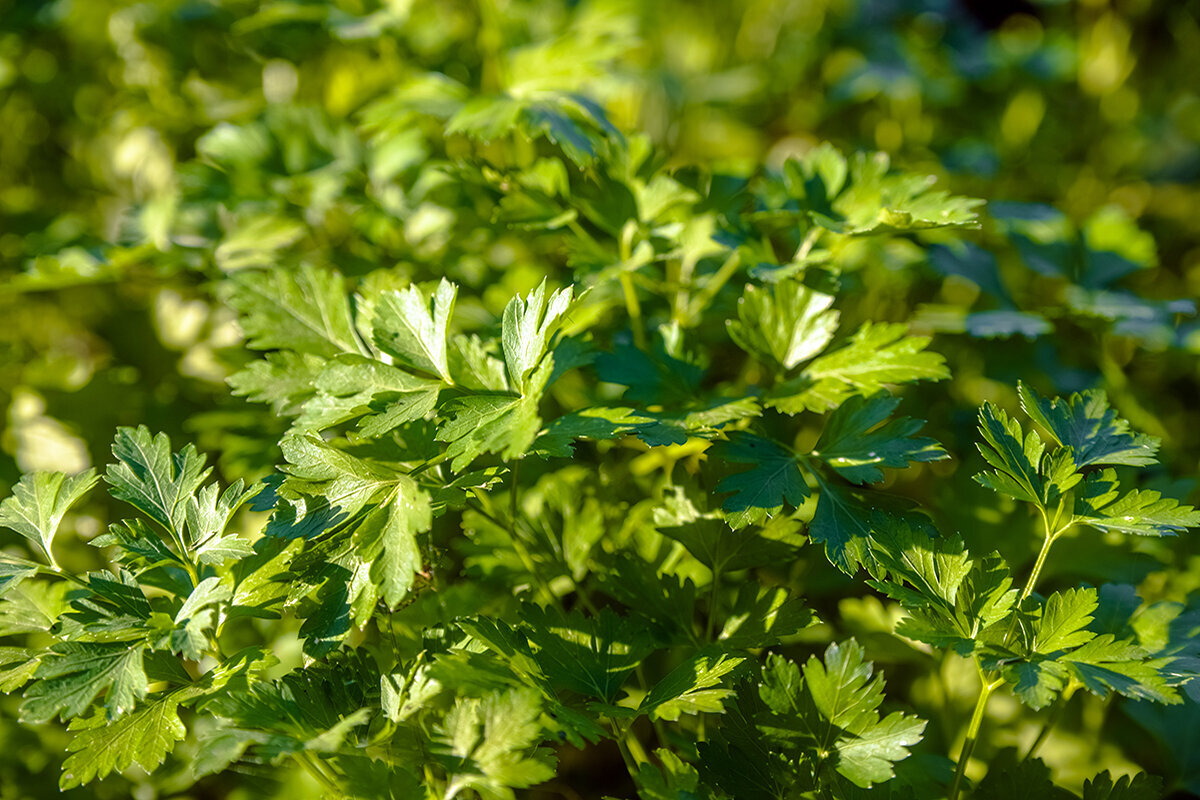
Flat-leaf parsley offers open, broad leaf architecture, easy washing and strong kitchen presence. It is often the practical choice for sauces, salads and finishing dishes.
Curly parsley makes a denser, ornamental mound with finely cut leaves. It earns a place beside a greenhouse path where its texture is as rewarding as its harvest.
Proof 01 · An herb worth establishing
Parsley beyond the garnish
A good parsley plant has presence: a low, generous crown of divided leaves, a clean herbal scent released by the hand, and enough reserve in its roots to offer cutting after cutting. In a greenhouse it can be treated as a small permanent crop rather than a packet of leaves to use once and forget.
That distinction changes how it is grown. Parsley does not reward haste at sowing, and it does not enjoy the overheated, stagnant conditions that suit neither cool-season herbs nor the gardener working among them. It prefers a dependable routine: fresh seed, airy growing medium, even moisture, bright light, and ventilation before the house becomes close and humid. Once established, it occupies little space but makes a serious contribution to the kitchen.
For US gardeners, the greenhouse advantage is control rather than constant warmth. A protected bench lets you begin plants before outdoor conditions settle, grow a clean crop through cool shoulder seasons, and shelter containers from punishing rain or abrupt temperature swings. In a hot summer climate, the same structure must be managed as a light-filled, ventilated room—not sealed like a sunroom. See Bloomcabin’s greenhouse setup and layout guide for wider principles that make a productive growing space feel orderly year after year.
Proof 02 · Leaf architecture
Plate A · Open impression
Plate B · Dense impression
Flat-leaf, curly and one useful outlier
Choose parsley according to the way you cook and maintain it, not simply its appearance on a seed packet. Both principal leaf forms make fine greenhouse crops. The important point is to buy a named culinary variety from a reliable supplier and start enough plants to keep a succession moving.
Flat-leaf
Open leaflets. Easy to rinse and easy to cut by stem.
- Broad, spreading habit
- Excellent for sauces and salads
Curly
Fine frill. Decorative texture with carefully selected outer stems.
- Dense, cushioned habit
- Ideal at a visible bench edge
Flat-leaf parsley, often called Italian parsley, presents smoother, more open leaflets. Its architecture makes it easier to rinse away greenhouse dust, occasional soil splash, or a stray aphid before the leaves reach the kitchen. The larger, more distinct petioles are also particularly easy to follow down to the crown when harvesting. It is a natural choice for robust handfuls in tabbouleh, salsa verde, soups, sauces, and salads.
Curly parsley is more compact in effect, with beautifully frilled leaves that give a herb bench an almost engraved texture. It can be slightly more meticulous to wash, but the plant is exceptionally handsome and useful. Position it at the front of a bed or bench, where the texture can be appreciated and mature petioles can still be reached without disturbing the young center.
Root parsley note: In some seed catalogs you may see Hamburg or root parsley. It is grown primarily for its enlarged root and needs a deeper, stone-free medium than leaf parsley. It can be an interesting specialist crop, but it is not the simplest choice for a small, repeatedly harvested herb bench.
Proof 03 · The slow germination workshop
Make room for a patient beginning
Parsley’s reputation for slowness is deserved, but it need not be discouraging. Freshness matters, and emergence can be uneven. University of Minnesota Extension notes that parsley germination can range from two to five weeks depending on seed freshness. Rather than digging in the tray every few days, build the sowing around stable moisture, suitable temperature and a clear label.
ISeed and medium
Fresh seed; fine, airy starting mix.
IIDepth and cover
Sow 1/4 inch deep; label each tray.
IIIMoisture continuity
Keep evenly damp, never sodden.
IVTemperature and light
60–75°F; bright light after emergence.
Seed and medium. Use fresh seed and a fine, clean seed-starting mix. Fill cell trays or small pots without compressing the mix into a hard layer; germinating seeds need oxygen as much as they need water.
Depth and cover. Sow shallowly, about 1/4 inch deep. Cover gently, firm only enough for seed-to-medium contact, and label the variety and sowing date. A humidity dome can help initially, but remove it at emergence.
Moisture continuity. Keep the medium evenly damp, never sodden. Letting the surface dry repeatedly interrupts the process; keeping it waterlogged drives out air and can lead to failure before seedlings are visible.
Temperature and light. A root-zone range around 60–75°F is a practical target, with 75°F listed as the optimum in Penn State’s germination table. Once seedlings emerge, give them strong light immediately and gentle airflow.
A calm seed-starting method: soak seed in room-temperature water overnight if you wish, then sow the next day. It may help speed water uptake, but it does not replace fresh seed and consistent conditions. Check moisture daily, not by calendar. When the first true leaves form, begin a light, balanced feed and avoid keeping seedlings crowded in a dim tray.
Proof 04 · Establishment and atmosphere
Give the roots depth, the leaves light, and the house air
Transplant when seedlings have several true leaves and enough root mass to hold the plug together. Handle them by the leaves or root ball rather than tugging the stem, and disturb the developing taproot as little as possible. In a greenhouse bed, set plants roughly 6–8 inches apart for a compact cutting crop; University of Maryland Extension gives 6 inches as a straightforward home-garden spacing. In containers, use a pot at least 8 inches deep with drainage holes and quality potting mix.
A single large trough can be handsome, but do not overpack it. A little space between crowns improves air movement, allows you to cut entire stems without crushing neighboring plants, and makes it easier to spot leaf problems early. On a narrow bench, arrange pots with the tallest plants toward the rear so parsley’s low canopy receives the light it deserves.
For greenhouse design, reserve the brightest practical portion of the herb bench for parsley, but protect it from hot, trapped air. A well-proportioned greenhouse gives you room to separate delicate herb production from taller fruiting crops that cast shade or demand a warmer atmosphere. In very sunny states, shade cloth during the fiercest part of summer can be more useful than extra heat. In northern climates, clean glazing and careful bench placement often make the largest difference in winter and early spring.
Proof 05 · Water, fertility and clean leaf growth
Grow substance rather than surplus
- +Water deeply, then observe. Check moisture below the surface rather than watering by habit. The medium should feel moist through the root zone, but a pot should never sit in a saucer of stagnant water. University of Minnesota Extension advises against allowing parsley to dry out completely and recommends deep watering during active growth.
- +Feed modestly. Start with compost-enriched bed soil or a quality potting mix. Once plants are growing, use a diluted, balanced fertilizer according to its label or a light compost top-dressing. Excess nitrogen produces lush, tender leaves that are less resilient and can attract sap-feeding pests.
- +Water the medium, not the crown. A narrow-spout can, drip line or low-flow wand helps keep the leaves dry. Morning watering gives splashed foliage time to dry as vents open.
- +Separate crop zones. Do not let parsley share the same wet, congested corner as disease-prone seedlings. A simple spacing plan and a clean pathway can prevent much more trouble than a reactive spray routine.
For a greenhouse that works as a long-term herb room, include a bench at a comfortable cutting height, a waterproof surface beneath pots, and easy access to fresh water. Bloomcabin’s guide to automatic window openers is useful reading for gardeners who cannot always be present when a sunny morning turns abruptly warm.
Proof 06 · The cutting theatre
Harvest whole stems for continued production
The most important parsley technique is also the simplest: cut individual mature outer stalks close to their base. Do not merely clip leaf tips across the top of the plant. The crown needs its young central growth intact, and the remaining bare stalks from a superficial haircut make the plant less productive and less elegant.
- Start outside. Select the oldest, largest petioles around the outer edge.
- Follow the stalk down. Use clean scissors or snips and cut low, near the crown, without slicing through neighboring new shoots.
- Leave the center. The tight, upright emerging leaves are the factory for the next cutting.
- Harvest little and often. Frequent measured picking is preferable to stripping a small plant bare.
Wash harvested leaves in cool water only when you are ready to use them, then dry thoroughly. If you are planning a substantial harvest, cut in the morning after foliage has dried and before the greenhouse reaches its warmest part of the day.
Proof 07 · The biennial second act
Know when parsley changes the assignment
Parsley’s leaf-producing first season is the one most home gardeners want. Given winter survival, the plant may renew growth in its second year, then send up a flower stalk, set seed and complete its life cycle. Leaves from flowering plants are generally tougher and more bitter, so treat the second year as a decision point rather than a failure.
Year one · Leaf work
Establish and cut
Winter transition
Hold, slow or replace
Year two · Flower work
Allow seed or clear the bench
Year one: establish and cut. Sow, transplant, water consistently and harvest the largest outside stems. In much of the United States, this is the principal productive period. Make a second sowing if your household uses parsley in generous handfuls, rather than expecting one crown to perform indefinitely.
Winter transition: hold, slow or replace. In a lightly heated or protected greenhouse, plants may remain green but grow slowly under low winter light. Keep them on the dry side of evenly moist, provide daytime ventilation, and do not force soft growth with heavy feeding. In cold regions, an unheated greenhouse may shelter containers from wind and excess wet without guaranteeing winter survival.
Year two: allow seed or clear the bench. As weather warms, an overwintered plant may elongate and form flower stems. Keep one only if you want to observe pollinators or collect seed from an open-pollinated variety. Otherwise, remove it and replace it with young plants for tender leaves. In warm regions, ventilation and shade are often the greater challenge; the useful constant is succession.
Proof 08 · Problems and hygiene
Read the crop before treating it
Most parsley problems in a home greenhouse begin with an inspection question: is the medium too wet, is foliage staying damp, is the crop crowded, or is a pest concentrated on tender growth? Remove badly affected leaves, clean tools between tasks, and correct the environment before reaching for a product. Follow all label directions if you choose a treatment.
Symptom
Inspect first
Measured response
Priority
Sticky leaves; curled tender growth; small insects clustered beneath leaves or along stalks.
Look for aphids and their shed skins. Check neighboring seedlings and new shoots, not just the most damaged leaf.
Isolate the pot if practical. Rinse small colonies off with a directed stream of water, improve airflow, and repeat scouting. Avoid overfeeding with nitrogen.
Act soon
Yellowing lower leaves; medium remains heavy and wet long after watering.
Check drainage holes, saucers, compaction and whether irrigation is reaching the pot more often than the plant uses it.
Pause watering until appropriate, improve drainage, and remove any decaying material. Do not compensate with fertilizer; stressed roots cannot use it well.
Correct routine
Dark or pale leaf spots, especially when foliage has stayed wet.
Inspect both leaf surfaces and look for crowding, dripping condensation, dirty tools or plants arriving with symptoms.
Remove affected leaves, keep foliage dry, vent early, sanitize snips and avoid handling wet plants. University of Maryland advises prevention and reducing spread for bacterial and fungal parsley leaf diseases.
Sanitize
Thin, pale, stretched growth with long leaf stalks.
Review available light, shade from taller crops, dirty glazing and day length. Check whether the greenhouse is warm but dim.
Move plants into brighter light, space them, clean glazing where safe, and avoid forcing them with fertilizer. Supplementary light can be considered for winter production.
Reposition
Kitchen proof
The best preservation strategy for parsley is a living crop placed close enough to cut at the moment of cooking.
Handle the harvest like a fresh ingredient
Parsley is at its most persuasive fresh. Cut what you need, rinse only if necessary, spin or pat leaves dry, and use them promptly. For a short hold, wrap dry leaves loosely in a towel and refrigerate in a container or partially closed bag. Avoid sealing wet leaves into a humid pocket.
For larger harvests, freeze chopped parsley in small portions or in ice-cube trays with water or olive oil for cooked dishes. Drying is possible, but it softens the fragrance and bright green character that makes greenhouse-grown parsley so satisfying. Illinois Extension similarly recommends refrigeration after washing and drying, and notes that parsley may also be frozen.
When planning your year, use the Bloomcabin month-by-month greenhouse growing guide alongside your local frost dates. Parsley fits especially well between vigorous summer crops and in the lower-light, cooler months when its restrained pace becomes an advantage.
Reference register
Parsley greenhouse FAQ
Can parsley grow in an unheated greenhouse?+
Yes, particularly during spring, fall and mild winters, provided the plants receive enough light and the pots do not freeze solid. Growth slows considerably in low light and cold conditions. An unheated greenhouse extends opportunity; it does not turn every US winter into a summer growing season.
How long does parsley take to germinate in a greenhouse?+
Expect patience rather than a single fixed day. Seed freshness, temperature and moisture all matter. Two to five weeks is a useful expectation range from University of Minnesota Extension. Keep the medium consistently moist and resist the temptation to discard a tray too quickly.
Should I grow parsley in beds or containers?+
Either works. Beds provide stable moisture and room for a broader crop, while containers allow easy movement away from heat, cold snaps or pest pressure. Choose containers at least 8 inches deep with reliable drainage, and avoid overcrowding either system.
Why is my greenhouse parsley flowering?+
Parsley is a biennial. An overwintered plant commonly makes a flower stalk in its second year, especially as temperatures and day length rise. Heat stress can also hasten this transition. Replace flowering plants for the best tender leaf crop, unless you intentionally want seed.
How often can I harvest parsley?+
Harvest as soon as plants have enough mature outer stems to spare. Take a few complete outside stalks at a time, leave the center untouched, and allow the plant to rebuild. Regular moderate cutting encourages continued production more effectively than occasional drastic shearing.
Sources and further reading
Reference impressions
- University of Minnesota Extension. Growing parsley in home gardens. https://extension.umn.edu/yard-and-garden/growing-parsley
- Penn State Extension. Seed and Seedling Biology: soil temperature conditions for vegetable crop germination. https://extension.psu.edu/seed-and-seedling-biology
- University of Maryland Extension. Parsley. https://extension.umd.edu/resource/parsley
- University of Illinois Extension. Parsley: culture, varieties, indoor growing and harvesting. https://extension.illinois.edu/herbs/parsley
- University of Maryland Extension. Parsley bacterial and fungal diseases. https://extension.umd.edu/sites/extension.umd.edu/files/2026-02/Parsley.pdf
- Colorado State University Extension. Vegetable Planting Guide: cool-season crop conditions and planting references. https://extension.colostate.edu/resource/vegetable-planting-guide/
