
What to Inspect Around Your Pergola After a Storm
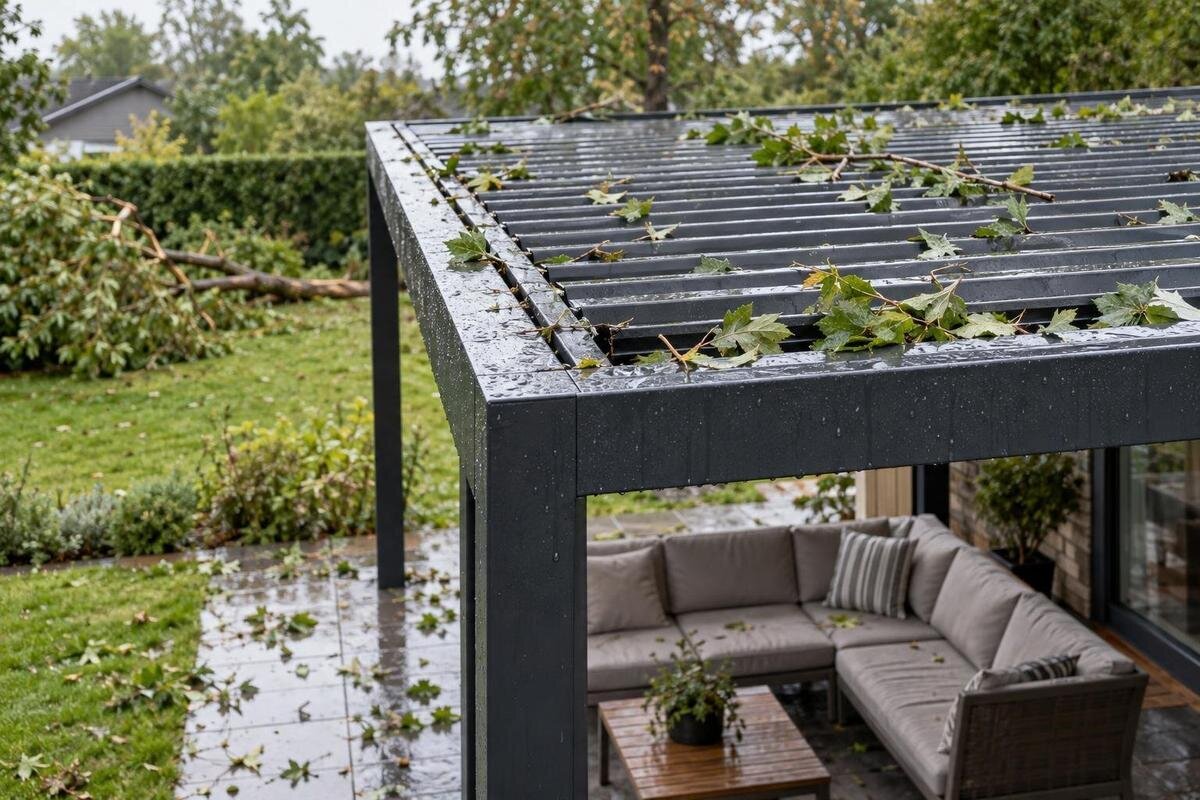
Pergola care
After a storm, a pergola can look unchanged while a connection, roof component, wall junction, or nearby surface has shifted. A cautious first inspection is visual and ground-level: wait for safe conditions, stay clear of anything that may fall or move, and note what you can actually see. This guide explains where to look, how to record findings without disturbing them, and which signs call for a qualified professional rather than a do-it-yourself adjustment.

Wait until the area is safe to approach
Do not begin while wind is still gusting, lightning is active, rain makes it difficult to see, or debris is moving. Wait until the storm has passed and the ground and surrounding area are stable. A fallen branch, damaged fence, soft soil, or downed line can make the approach unsafe even if the pergola appears still. If standing water or poor light hides where you would step, postpone the check rather than taking a shortcut. Leave unstable branches and large debris alone; clearing a path is not worth entering an uncertain area. If you cannot tell whether footing is firm, the inspection can wait.
Before walking closer, scan from a safe distance for hanging limbs, loose overhead pieces, visibly tilted posts, broken glass, and wires touching or near the structure. Keep children, visitors, and pets out of the area while you assess it. Do not pass beneath a visibly sagging roof or stand beside a part that may fall. Stay away from downed power lines and do not approach to identify them; contact the appropriate utility or emergency service if one is present. If a hazard makes the area inaccessible, keep it closed and arrange help instead of starting a closer check.
Make a ground-level circuit around the pergola
Once conditions are stable, choose a route that stays outside the pergola’s footprint where possible and gives you views of all sides. Use firm, stable ground; do not step onto the structure, climb a fence, use a ladder, or lean on a post for a better angle. A phone camera’s zoom or binoculars can bring a joint into view without putting you underneath it. Avoid stepping into standing water or onto an unstable retaining edge for a photo. If landscaping, a vehicle, or debris blocks one side, note that it could not be seen rather than entering an unsafe spot or moving an obstruction.
Work around the structure in a repeatable order—front, right, back, left, for example—and note the side and viewing position for each observation. Use a nearby wall, patio, or doorway to describe which side you mean. Check adjacent paths, the fence, the house wall, and nearby objects as well as the pergola itself. A displaced chair, a scuffed wall, fallen branches, or pooled water can add context, but none proves what caused a change. Record what you see before any safe cleanup, and distinguish direct observations from guesses. A note such as “south side, base partly hidden” tells a professional what your inspection did not cover.
Look for movement at posts and supports
Start with each upright post and any support or base visible from ground level. Compare a post’s apparent angle with older photographs or its own earlier position, not only with another post. Note a new-looking gap between a base and paving, a lifted plate, an exposed or displaced anchor, cracked concrete or masonry, or soil washed away beside a support. Make one pass for every post instead of focusing only on the side where debris landed. Photograph any concern in context and note when a support is obscured. An uneven paver, weathered crack, or stain may predate the storm, so describe what is visible rather than calling it a failed footing.
From a safe position, scan the visible joints where posts meet beams and, if applicable, where the pergola meets a building. An open seam, displaced-looking bracket, bent or missing visible hardware, or gap that appears wider than in older images deserves a note. If vegetation or an object hides a connection, record the obstruction rather than reaching behind it. Do not pull a post, test a joint, tighten a fastener, remove an end cap, or cover a gap. When reporting a connection problem on a Bloomcabin Bioclimatic Aluminum Pergola, identify the affected post and beam as well as the model. That location helps the service team understand which connection needs assessment.
Inspect visible frame and roof components
Follow the frame visually from each post to the beams and across any roof parts. Look for a new bend or sag, a twisted-looking section, a separated corner, a scrape, or a mark where an object may have struck. Camera angle and perspective can make straight lines look uneven, so compare with earlier photographs before describing an apparent change. Note the location and direction of the affected part instead of estimating how far it moved. If a piece hangs loose, looks bowed, or rubs against another part, widen your distance and do not stand underneath for a closer photograph. Capture a wide view and a zoomed view if both are safe.
Where your model has louvers, panels, fabric, screens, gutters, or other attachments, note visible displacement, torn material, cracked edges, loose-looking pieces, or debris caught against them. Features vary, so record only what is actually present rather than assuming every pergola has the same roof or accessories. Don’t tug a screen, turn louvers, cycle a powered roof, or move a panel to test it. Note the position of any moving parts as you find them. For a service inquiry about a Bloomcabin Lean-To Pergola, describe the installed roof and attachments separately from the model name. Include any accessory records you already have so the team can identify the affected assembly.

Check drainage, paving, and nearby walls
Water and debris can show where a storm affected the surroundings, but they do not diagnose a pergola defect by themselves. From safe ground, note standing water, washout or displaced gravel around a support, shifted pavers, leaf buildup, and the direction water appears to have flowed. If your pergola has visible channels or downspouts, record whether debris appears to block them and where water is pooling or leaving a stain. A quick sketch with an arrow can show the observed flow without changing it. Photograph the condition before safe cleanup. Do not climb to check a gutter, remove a cover, or reach into a channel; some drainage parts are not visible from the ground.
Also scan nearby paving and, where applicable, the house wall. For a wall-attached structure, note a visible gap, cracked or disturbed surface, new-looking water stain, or debris at the attachment zone; a stain alone does not prove that a connection failed. Check the ground beside supports for erosion or displaced edging, and include any new damp mark on an adjacent wall or ceiling without guessing at its source. Do not inspect a high joint from a ladder or wipe away evidence first. In a service request for the Bloomcabin Pergola, include a wide view showing the surrounding surfaces. This helps distinguish a concern about the pergola from one involving the patio or building.
Photograph and label each finding
Take a wide image from each safe side, then zoomed views of individual concerns. Include enough surroundings to show which post, corner, wall, or roof area is pictured; close-ups without context are hard to interpret. Use the same general viewpoints as older photos when possible. A phone’s zoom is safer than moving a ladder or standing below a loose component. Include fixed surroundings, such as a wall or paving edge, as reference points; do not place an object against the pergola to create a scale. If rain, glare, or darkness makes the image unclear, wait for safer, brighter conditions rather than stepping closer or touching the structure.
Keep original files and note when the storm occurred, when you first noticed the condition, and whether each picture was taken before or after safe cleanup. Caption the location, such as the side facing the house or the rear-left post, and separate observation from interpretation: a visible gap is clearer than a claim that an anchor failed. Use your order confirmation for the exact product wording; the bioclimatic pergola product page can help you locate the relevant catalog entry if your records are incomplete. Label wide and close views of the same concern consistently. Keep annotations separate from original images, and preserve enough detail for the service team to examine the surrounding joints.
Separate new signs from pre-existing wear
Separate what is visibly new from what is merely unfamiliar. Compare current views with dated pre-storm photographs, installation pictures, or maintenance notes. Record “not visible in an earlier photo,” “possibly pre-existing,” or “uncertain” when that is the honest conclusion. If an old crack, stain, or scuff already appears in a prior image, say so rather than presenting it as storm damage. Also note when an area is obscured and cannot be compared. An issue noticed after a storm is not automatically an issue caused by it; a timeline helps a reviewer distinguish those things. Avoid marking the frame, scraping a surface, or moving debris to create a comparison point.
Write a short timeline: approximate storm date, when you last saw the pergola beforehand, whether a branch or other object struck nearby, and any unusual movement or sound you noticed from a safe place. If you observed hail, flooding, or an impact, state that plainly; do not estimate wind speed or assign a cause to a damaged part. Include earlier repairs or accessory changes if they involved the affected area. For a Lean-To Pergola service inquiry, distinguish the original installation date from later work rather than treating everything as the same age. If dates are approximate or a previous owner supplied the information, say so. A clear history helps the reviewer decide what additional records to request.
Keep away from electrical and moving parts
Some pergolas have powered roof parts, lighting, screens, sensors, or controls; others do not. If yours has electrical equipment, look only for obvious visible changes from a safe distance: a cable hanging lower than before, exposed wiring, a broken cover, water around an electrical component, or a control box that appears displaced. Do not touch equipment, open an enclosure, test a switch, or operate a roof to check whether it responds. A component may need professional attention even when the exterior looks dry. Note the location of anything that appears damaged and keep people away from exposed or hanging wiring.
Record any loss of function or unexpected movement you noticed safely, without trying to repeat it. Note whether it happened before, during, or after the storm; that sequence is more useful than simply saying a control stopped working. Arrange assessment by a qualified electrician for electrical concerns and a qualified pergola service professional for mechanical concerns. For a Bloomcabin Pergola service request, identify original equipment and later-added lights or screens separately, using existing invoices or accessory records where available. State whether you observed a symptom yourself or someone reported it. Ask the service team which equipment details they need, rather than opening a housing to look for a label.

Know when to pause use and call a professional
Pause use and seek professional assessment if a post appears newly tilted, a base has lifted or shifted, a beam or roof part is sagging, a joint has opened, hardware appears detached, or an overhead piece is hanging. Do the same after a direct impact, visible damage at a wall connection, or signs that soil beside a support has washed away. Keep clear of the structure; do not try to straighten it, retighten it, or stand underneath for a closer look. A ground-level visual check cannot confirm the condition of concealed fixings or connections. If you cannot tell whether a change is serious, do not test the frame to settle the question.
Choose the professional to match the concern: a qualified pergola installer or service technician for the assembly, and an electrician for electrical components. If the structure attaches to a building or the supporting surface is damaged, describe that so the appropriate building or site professional can be involved. Send wide and close photos and say what remains unseen. Ask whether the area should remain unused while you wait. If replacement is proposed, the Bloomcabin bioclimatic pergola listing can provide a starting point for discussing a new unit, but the professional must assess the existing supports and site separately. Ask which damaged components can be replaced and what makes a larger replacement necessary.
Prepare records for a service or parts request
Before contacting an installer, manufacturer, or parts team, assemble a concise file: order confirmation, exact product name, any model or serial number already visible without dismantling, approximate purchase or installation date if known, repair history, photos, and a short event timeline. Identify each photo by location and date, and say which areas you could not inspect safely. Describe what you observed without diagnosing the cause. Preserve the original files rather than sending only cropped close-ups. If you have earlier photos from the same viewpoint, include them with a short explanation; do not risk climbing or removing a cover just to find an identification label.
Ask for the manual or drawing for the exact configuration and a compatibility check before ordering a replacement component or adding an upgrade. When reviewing the Lean-To Pergola product information, keep your existing order details alongside it; a current catalog entry is not a parts diagram for an earlier installation. Request confirmation of the replacement part’s identifier, which assembly it fits, and whether related components also need assessment. Ask what further information the service team needs and whether installation requires a qualified technician. Don’t dismantle or ship a damaged piece unless the provider explains how to handle it safely. Keep the original service correspondence with your photos so the assessment and proposed work remain documented together.
Frequently asked questions
Can I inspect a pergola from a ladder after a storm?
No. Keep the inspection at ground level and use a phone camera’s zoom if you need a closer view. Do not climb onto the structure, use a ladder to reach a roof or wall connection, or stand below a part that looks loose or sagging.
Which signs mean I should keep the area closed?
Keep clear if a post appears to have shifted, a base has lifted, a beam or roof part is sagging, a joint has opened, or anything overhead is hanging loose. Damaged wiring or water around electrical equipment also calls for a qualified professional.
Should I move a fallen branch or loose part before taking photos?
Only document it from a safe distance; do not move unstable or overhead debris to improve your view. If it creates an immediate hazard, keep people away and seek appropriate help rather than approaching it yourself.
What should I include in a repair request?
Send wide photos and close views of the concern, labeled with the side or part shown. Include the exact product name from your records, an order reference if available, a brief storm timeline, and anything you could not inspect safely.
Can I use the pergola if I see no obvious damage?
A ground-level visual check cannot confirm the condition of hidden fixings or wiring. If the structure took a direct impact, moved unusually, or you are unsure about a change, pause use and ask a qualified professional what assessment is needed.
A useful post-storm inspection is a clear record, not a repair attempt. Stay at ground level, describe visible changes without guessing at their cause, and keep people away from anything that looks shifted or loose. Photos from safe, repeatable viewpoints and the exact model information help a professional understand what you found—and what you could not see. If a connection, overhead part, or electrical component raises concern, let a qualified professional assess it before the pergola returns to normal use.
