
Can Outdoor Furniture Stay Under a Pergola All Year?
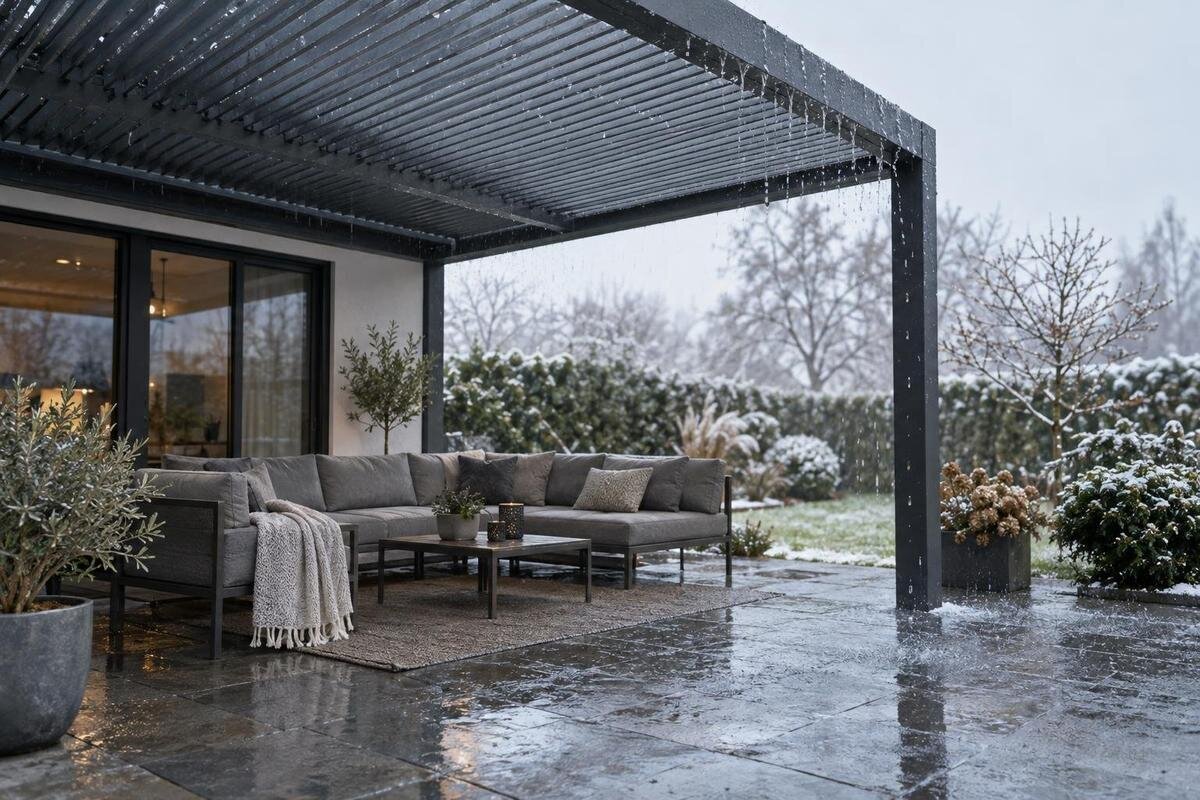
Pergola weather and outdoor furniture
Outdoor furniture can sometimes stay beneath a pergola through every season, but only if the furniture maker allows that exposure and the pergola’s exact configuration provides enough protection for the site. A roof may reduce direct rain, yet wind-driven water, runoff, condensation, and splash can still wet frames or cushions. Treat furniture care, pergola weather limits, drainage, covers, and winter operation as separate questions. In many homes, the practical answer is to leave suitable frames in place while storing cushions or other vulnerable parts. A pergola alone is not a promise of year-round dry storage.

A pergola reduces exposure but does not guarantee dry storage
A pergola can reduce direct exposure, but the word pergola does not mean a weatherproof room. Its roof may provide overhead shelter while open sides leave furniture exposed to wind-driven rain and spray. Roof styles and configurations differ, so a slatted or adjustable roof should not be treated as sealed, and a solid-looking surface should not be assumed watertight without model-specific documentation. Even on a calm day, water may drip from roof edges or run toward the patio. Whether a piece can stay outside depends on how much moisture reaches it and on the furniture maker’s care instructions.
That makes the answer a qualified yes for some outdoor furniture, not a universal yes for every chair, cushion, or pergola. Consider the frame, upholstery, and accessories separately: a table labeled for outdoor use can still have care limits, while removable cushions may need dry storage. Then assess the pergola’s documented weather limits, actual roof and side arrangement, and drainage. A structure that remains outdoors through winter is not automatically a dry storage space for its contents. If the furniture maker calls for off-season storage, the pergola does not cancel that advice.
Wind-driven rain can reach furniture from the sides
Rain does not always fall vertically. A gust can carry it beneath a roof from an open side, while splash can reach legs, lower shelves, and the underside of seats. How much gets through depends on the direction and force of a particular storm, the furniture’s position relative to the roof edge, and the layout around the patio. A nearby wall can change exposure, but it does not guarantee that the sheltered area stays dry. Check the spot after rain arriving from more than one direction, not only after a calm shower.
Look beyond the tabletop: check cushion seams, armrests, chair undersides, furniture feet, and the floor where water may collect. Sketch the seating area and mark which surfaces become wet after ordinary rain from different directions. This helps distinguish occasional edge splash from exposure across the whole seating area. If a seat is consistently damp on the weather-facing side, moving it farther under cover may help, but there is no universal clearance that works for every pergola. Keep enough room to pull out chairs without moving them into a frequently wet strip. If you are considering the Bloomcabin Lean-To Pergola, ask how the proposed roof-to-wall connection and open sides would be configured at your site. Compare that proposed layout with your observations rather than assuming a wall-mounted arrangement will block sideways rain.
Roof runoff and patio drainage need separate checks
Rain protection and water disposal are different questions. A roof can limit direct rainfall over the seating area yet send water to an edge, outlet, or drainage route that wets furniture below or beside it. Conversely, a drainage path that works as intended does not prove that the roof or sides are watertight. Find out where water is meant to go and whether that path changes with roof position or an approved enclosure. Pay attention to splash and pooling around the furniture as well as visible drips from above.
Ask for a drainage diagram for the exact model and configuration, then compare it with the installed layout: roof direction, collection points, outlets, and the route water takes once it leaves the structure. When evaluating the Bloomcabin Pergola, use that diagram to discuss where a table, sofa, or storage chest could sit without obstructing access to drainage components. Leave those components accessible for the maintenance described in the instructions. After ordinary rain, check whether discharged water splashes toward the seating, gathers beneath a cover, or pools around furniture feet. A roof outlet and the patio's surface drainage are separate parts of the water's route; both matter to furniture placement. If water repeatedly collects beside an outlet, ask the installer to assess the arrangement rather than redirecting the drainage yourself.
Condensation can leave furniture damp without rainfall
Moisture can appear even when rain does not blow under the roof. On humid nights, water vapor can condense on cooler surfaces, and damp air can leave fabrics or furniture undersides clammy. Depending on the structure and weather, shade may also slow drying compared with a more open, sunny spot. A pergola is not a climate-controlled room, and open sides do not guarantee enough airflow if furniture is crowded or screens are closed. A dry-looking tabletop may sit above damp cushions, woven surfaces, or floor areas.
Check the spaces that hold moisture: cushion seams, the underside of seats, joints, feet resting on the patio, and any cover left in place overnight. Inspect after cool mornings and several rainy days, not only after a sunny afternoon. Note whether moisture is widespread or concentrated beneath one drip point; that distinction can help you describe the problem without assuming its cause. If you are comparing the Bloomcabin Bioclimatic Aluminum Pergola, ask what ventilation guidance applies to the proposed roof and side configuration. The model name alone does not establish condensation behavior. Leave space between stored pieces so their undersides remain accessible for inspection and drying. Follow the furniture maker's drying directions, and do not seal damp cushions or frames beneath a cover.

Furniture care instructions set the exposure limit
Furniture sold for outdoor use can still have different weather tolerances. Wood species, finish, joinery, and care products affect how a wooden piece responds to prolonged moisture; some finishes need routine attention. Coated steel or other metal frames can be vulnerable where a coating is chipped, and hardware may need attention under the maker’s care schedule. Woven furniture and plastic components also vary by material and construction. These are reasons to read the product’s own care label, not a basis for assuming that one material name guarantees year-round durability.
Check the whole item rather than only the frame: fabric, foam, seams, fasteners, feet, glass or stone surfaces, and any finish can have separate instructions. Look for explicit guidance about continuous outdoor exposure, wet conditions, covers, cleaning, and winter storage; a general outdoor-use label may not answer all of those points. A pergola’s roof does not change the care limits of a cushion or finish. If instructions are unclear, ask the furniture manufacturer whether the assembled piece may remain outdoors in your conditions and what components should be removed.
Cushion storage and side protection
Cushions are often the first part to bring inside because water can enter through seams or remain in the filling even when an outer fabric sheds a brief shower. Follow the cushion maker's label: some pieces are intended to be removable and stored dry, while others have specific cleaning and drying directions. Plan storage around the actual cushion sizes, including thick seat pads and long back cushions, rather than buying a chest based only on its exterior dimensions. Check the chest's own instructions for outdoor exposure and ventilation; placing it under a pergola does not make its contents immune to dampness. Let cushions dry fully before packing them away. A nearby dry storage location can make daily removal practical, while distant storage may be better suited to the off-season. Keep cushions accessible enough that bringing them in does not become a chore you routinely postpone.
Side protection changes how you use the seating area as well as how exposed it is. If you are considering an enclosure for the regular Bloomcabin Pergola, first confirm that the proposed accessory is approved for the exact model. Ask whether its purpose is shade, privacy, rain protection, or a combination, and request any documented weather limits. Do not assume a screen or curtain stops rain simply because it blocks the view. Compare the proposed configuration with your furniture layout: can you still reach cushion storage, pull chairs back, and open any panels without obstruction? Ask how the enclosure affects ventilation and drainage, too. Closing more sides may alter drying conditions, so assess moisture around the furniture after a configuration change rather than assuming that greater enclosure always means drier cushions.
Winter furniture care is separate from pergola operation
Winter adds a separate set of exposures. Prolonged damp, low temperatures, freeze-thaw cycles, and snow left on or against furniture can affect some finishes, joints, fabrics, or water trapped in a piece. The response depends on the furniture’s materials and instructions, so do not assume that a metal frame or outdoor fabric is automatically suitable for months of outdoor storage. Store pieces or removable parts when their manufacturer recommends it, especially before a long wet spell or an extended absence. If you leave a frame in place, inspect it when conditions permit and let it dry as directed.
Furniture care and pergola winter operation must be checked independently. The pergola manual should state the allowed operating positions and relevant weather limits for the exact configuration; the furniture instructions must separately allow the intended exposure. When considering the bioclimatic pergola model, request its winter operating guidance before deciding how the seating area will be used in the off-season. If the required roof setup leaves furniture more exposed, plan to remove vulnerable items rather than changing the roof position merely to shelter them. Keep the route to controls and any maintenance access clear of stacked furniture and covers. Do not infer a snow rating or operating rule from photographs or another model's instructions. Ask the manufacturer or a qualified installer to clarify any gap in the guidance.
What pergola weather documents should you request?
Before relying on a pergola to shelter year-round furniture, request documents that match the exact model and configuration rather than a general statement about pergolas. Useful information includes written weather limits, the roof position or setup those limits assume, the permitted enclosure configuration, and a drainage diagram. If rain performance is described through observations or tests, ask what was observed, under what controlled conditions, and where the water went. A broad claim that a structure is weatherproof or handles every storm is not a substitute for limits and a defined setup.
Use the wall-mounted Lean-To Pergola product page to identify the model when requesting documents, then specify the proposed roof, side features, and installation arrangement in your inquiry. The supplied catalogue information establishes product identity, not rain performance, snow limits, or accessory compatibility. Ask for each accessory to be identified as included, optional, or unavailable for that configuration. A useful written response should also explain what any rain-performance statement covers: overhead rainfall, water entering from the sides, leakage at connections, or runoff management. Those are different questions, and an answer to one does not settle the others. Keep the dated response with the relevant manual and diagrams so you can distinguish documented limits from assumptions. If a condition important to your site remains unaddressed, resolve it before relying on the pergola for furniture protection.

Furniture covers need to allow drying
Use a furniture cover as an additional layer of protection, not as a substitute roof. Choose one whose label matches the furniture and exposure, and follow its instructions for ventilation, fastening, and cleaning. Check the fit with chairs in their intended storage position: a cover that fits a table alone may not accommodate chairs tucked beneath it. Put it over dry furniture and inspect after rain for sagging areas that collect water. Covers can reduce rain, dirt, and debris reaching a piece, but poor fit or incorrect use may hold moisture against its surfaces. Pay attention to contact points where wet cover fabric rests on cushions or finished edges. Remove or adjust the cover as its maker directs, and allow the furniture to dry before covering it again.
Plan cover handling as part of the layout when comparing the Bloomcabin Pergola model with your furniture arrangement. You need room to lift a cover without dragging pooled water over the seats, and somewhere to dry and store it while the furniture is in use. Keep covers and their straps clear of pergola parts that move, drain, or must remain accessible. Use only the cover's specified fastening points; do not attach loose material to the pergola as an improvised enclosure. A furniture cover protects the item it was designed for and does not establish that the structure can support a tarp or other added material. Ask the pergola manufacturer about any proposed structural attachment or enclosure before adding it.
Seasonal inspections catch changes in exposure
Reassess the setup after a run of wind-driven rain, at the start of a wet season, before winter, and when opening the area for regular use. Check beneath cushions, along seams, at joints and fasteners, around feet, and wherever water collects. Note recurring dampness, rust at damaged finishes, swelling or movement, changes in fabric, or a cover that stays wet. These signs do not prove the exact cause, but they show that the current arrangement needs attention. Clean, dry, repair, cover, or store items only in ways their makers recommend.
Keep a simple seasonal record of which pieces stay outside, which need covers, and which removable parts go into dry storage. Include the furniture care labels and the pergola manual so another household member can follow the same plan during an absence. If you are documenting a Lean-To Pergola furniture layout, note the installed configuration as well as the model name, and photograph the furniture positions for reference. Record recurring wet spots after ordinary rain without going outside during hazardous weather. Changes to side panels, drainage, or roof configuration may alter exposure, so compare later observations with the earlier layout. A record of what actually stays damp is more useful than repeating a blanket assumption that everything beneath the roof is protected.
Frequently asked questions
Can outdoor furniture get wet under a pergola?
Yes. A pergola may reduce direct overhead rain, but water can blow through open sides, run off roof edges, splash up, or form as condensation. Whether that exposure is acceptable depends on the furniture maker’s care instructions and how quickly each item dries. Treat being under a pergola as reduced exposure, not guaranteed dry storage.
Can patio cushions stay under a pergola all year?
Only if their maker permits continuous outdoor exposure and the cushions can dry in your conditions. Seams and filling may hold moisture even when the outer fabric sheds a brief shower. Follow the care label, and store removable cushions in a dry place during prolonged wet weather or the off-season if the instructions call for it.
Should I cover furniture that is already under a pergola?
A properly fitted cover may reduce exposure, but use one that is suitable for the furniture and follow its instructions. Put it over dry items and check that it does not trap moisture or collect water. A furniture cover does not turn a pergola into a weatherproof enclosure.
Can furniture remain beneath a pergola in winter?
Possibly, if the furniture instructions allow it and the pergola instructions permit its winter setup. These are separate decisions: furniture care guidance does not establish the pergola’s snow or wind limits, and pergola guidance does not say whether cushions can stay outside. Store vulnerable pieces or parts as their makers direct.
How can I tell if my furniture needs to move?
Check after wind-driven rain and humid nights for wet seams, damp undersides, water around furniture feet, or changes to finishes and fabric. Recurring dampness is a sign to reassess the item’s location or cover against its care instructions. Consult the furniture and pergola documents before changing the setup.
The answer is not a single yes or no for everything beneath a pergola. Leave a piece outside only when its care instructions allow the exposure and your setup gives it a realistic chance to dry; store removable cushions or vulnerable components when their makers recommend it. Check the pergola’s model-specific weather and operating guidance separately, especially for drainage and winter use. That item-by-item plan is more dependable than assuming the roof keeps every chair, table, and cushion protected all year.
